Tags
Today was our much anticipated trip to Birmingham and the National Trust Back-to-Back Houses. The good Mrs. Mayne has family connections with Birmingham, and our family tree explorations have led us to see that many of our ancestors lived in the heart of Britain’s industrial cities in the nineteenth century. What better way to fill in some background than to visit some restored examples of houses of that era?
It was also an opportunity to have a train ride, something that’s rare for us in Canada (there’s a whole other story about trains in Canada, but that can wait for another day), although unfortunately that necessitated us getting to London’s Euston station during the rush hour. What fun!
A walk down to Hackney Central station had us boarding the London Overground train to Highbury and Islington, then onward on the tube to Euston. We could have taken the bus to Euston, but that is a wholly unreliable form of transport for anything over about 10 minutes in the rush hour, especially when you have a train to catch. The Overground was, to say the least, packed. I’ve commuted in London before, but the good Mrs. Mayne was a bit uncomfortable being squashed in an extremely full train. Still, it wasn’t far, and while the tube train was also packed, it wasn’t quite as bad.
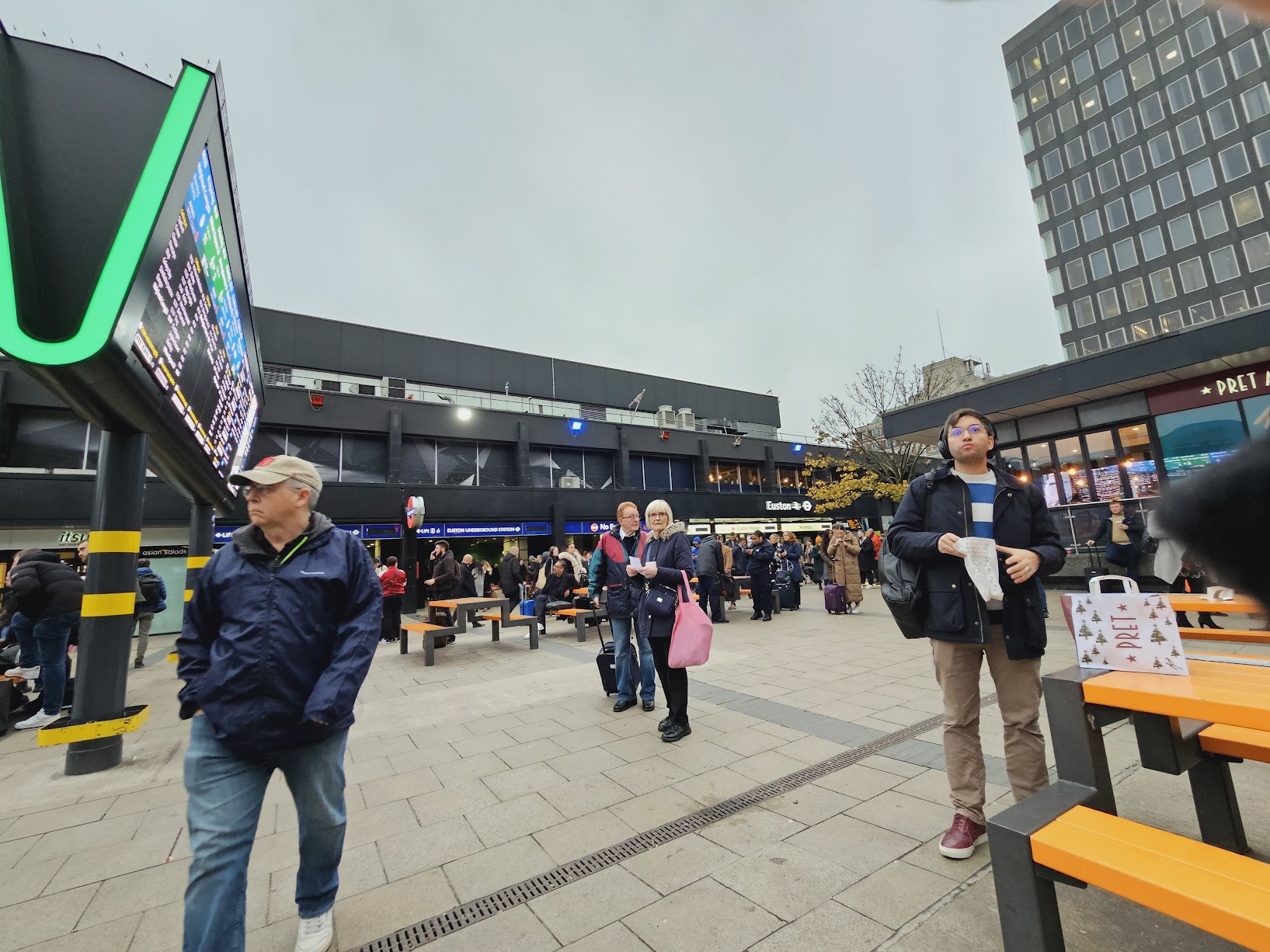
At Euston, I had a foul up with my Oyster card when the automatic barrier stuck open and didn’t register my “tap” as I went through. I had to go back and get the situation remedied by a helpful member of the station staff or I’d have been charged £9.60 rather than the regular £3 something. Anyway, problem sorted, we waited in the outdoor plaza while our train north was prepared. I hadn’t noticed the outdoor plaza on my last visit to Euston, and I wish I had. Lots of food and drink vendors, plenty of seats, and a good arrivals and departures board for all to see, it was the ideal place to wait, even in the cold, grey morning.
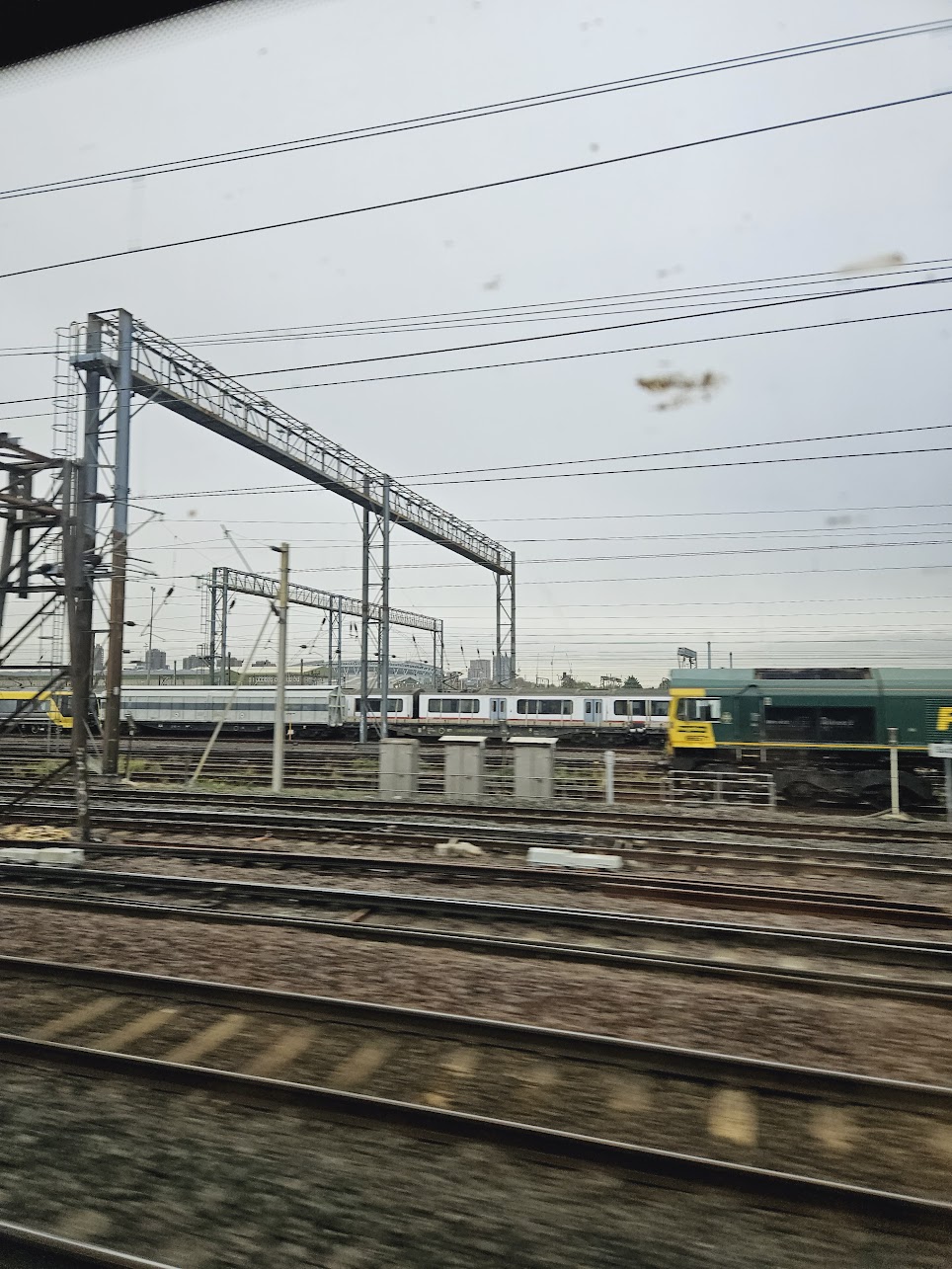
The Avanti West Coast train we were booked on not only wasn’t cancelled, but it was a new and very swish set of wheels that whisked us to Birmingham very quickly. OK, so it was 20 minutes late arriving at New Street, but who cares when there’s no time crunch? We’d paid a little extra to get better seats, and they were fairly comfortable for the nearly two hour run. The train itself was quiet and smooth, equipped with Wi-Fi and power points, which was all a far cry from the trains I remember from when I started work in London. There’s nothing quite like whipping along beside the M1 motorway and passing all the cars and trucks like they were going backwards, all while relaxing and enjoying the ride.
Birmingham New Street station has been rebuilt and incorporated into shopping centre (no surprise there), with a confusing layout and such a paucity of signage, and even public information maps, that it took us a while to find the correct exit. I could see that the designers of the station had sought to separate passengers into four separate areas, which would significantly reduce overcrowding and bottlenecks, but I think they’ve rather assumed that users of the station will be somewhat familiar with the layout, because the signage was definitely lacking.
Finally out of the building, it was an easy walk down Hill Street to the Back-to-Backs, that sit next to the still active Hippodrome theatre. We were early, so dropped in for a swift drink at the Sly Old Fox, then hot footed it over to the day’s excitement.
Back-to-Back housing was the Victorian answer to housing the thousands of people required to work in the factories of the big industrial cities. Birmingham was at the forefront of the Industrial Revolution, and in the mid-nineteenth century had around 50,000 of these dwellings. Now there are just these four, preserved for posterity, thank goodness. They consist of a house facing onto the street, with another house built onto its back and facing into a courtyard. The houses were one up and one down, or if it had and third floor, a two up one down. They were generally lived in by one family, usually a large family, and often with a lodger or two. There could be as many as twenty-four houses sharing a courtyard, where there was a privy and a drain and not much else. In Birmingham, a central water standpipe in the yard wasn’t provided initially, and a well some distance away was the only water source for hundreds of people. It wasn’t until almost the end of the century that water was piped into the houses themselves.
The National Trust has renovated four of these houses and set them up to depict different periods of time, from the 1860s to the 1980s, finishing up with George Saunders’ tailor’s shop that really was in one of the houses that fronted Hirst Street.

It’s all fascinating stuff, especially as our family tree research has revealed both our nineteenth century families would more than likely have lived in something similar, and Deb’s family actually in Birmingham. Although the standard of accommodation and hygiene was terrible, the Back-to-Backs were actually an improvement on the slums that organically developed when people moved from agricultural work to supposedly better employment in the cities.
We were taken around the houses by a very knowledgeable fellow, a native of Birmingham, who filled in the factual information with a stack of anecdotes, which made the tour even better. He was quick to point out that the restoration of the houses wasn’t absolutely correct, and in some ways these examples of Back-to-Backs were not typical. However, knowing that made the tour all the better. Our little group of visitors, including us, were all of a certain age and spent half the time recognising things that we’d grown up with and the other half puffing and panting as we negotiated the steep and narrow staircases. The Birmingham Back-to-Backs are highly recommended.
After that tour, we made our way through central Birmingham, via a Gregg’s for lunch of course, to the Coffin Works on Fleet Street. We had planned an hour or two self-guided tour in there, only when we arrived we discovered that it was guided tours only on a Thursday, and we’d missed the last one. (2pm, sorry chaps, that’s way too early to shut up shop, even on a November Thursday). The man at the desk there was full of apologies and did explain a little of what went on there (Not actually a coffin manufacturer, but a manufacturer of coffin furniture, handles, clasps, linings, shrouds and the like.), so we at least left with a bit of a flavour of the place. It hinted of Birmingham’s association with anything metal, and the city’s ability to produce high quality, mass-produced items from pen nibs and coffin furniture, to bicycles and guns.
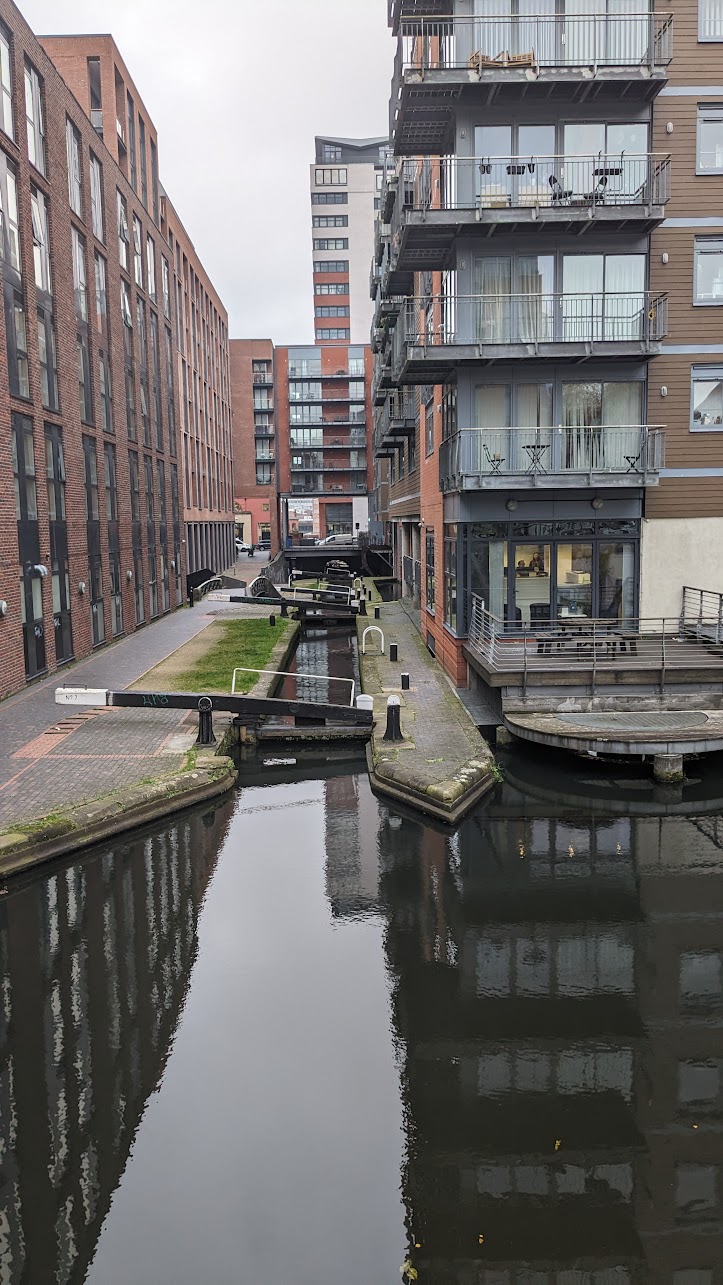
Only mildly disappointed, but with an unexpected couple of hours to kill, we looked awhile at the canal just across the street. I looked in vain for the name of the canal but came to the conclusion that it’s just generically a part of the Birmingham Canal Navigation that linked the factories to the canals coming into the city. We were at the Farmer’s Gate flight of locks, and all down the flight there were places to dock narrow boats, clearly visible even under the modern buildings that line the canal now. It’s easy to see that the Newman Brother’s factory making coffin furniture would have made use of the canal to ship goods in and out. If you’re thinking that the locks look too small (72’ x 7’ with manually operated paddles and gates), just remember that these operate in the same manner and the locks on the Great Lakes canals (776’ x 80’).
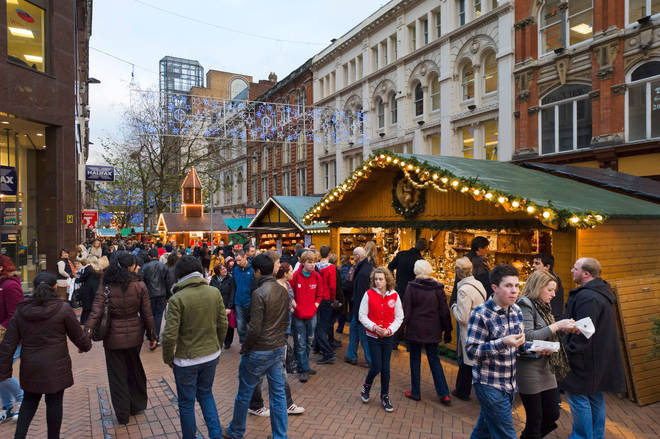
We might have visited the museum in town, but were too knackered to do that, so we had a quick mooch around a very busy main shopping (pedestrianised) street, replete with a faux German Christmas market stretching along its length. We had an early supper of a rather fine Pizza and a bottle of wine before repairing to the station, via a pub, for the train home. I should add that we were booked on a specific train, so we were sort of killing time by the end of the trip.
A complaint about pubs, and other businesses, in the UK this trip, is the music they insist on playing all the time. I’m not averse to music, but when it’s loud enough to prevent conversation, at least without having to substantially raise your voice, then it’s just irksome. Yes, I know I sound like an old fart (I am one), but I’ve left shops without spending any money because the music has become too intrusive. I can’t imagine how I would have felt had I been using my hearing aids.
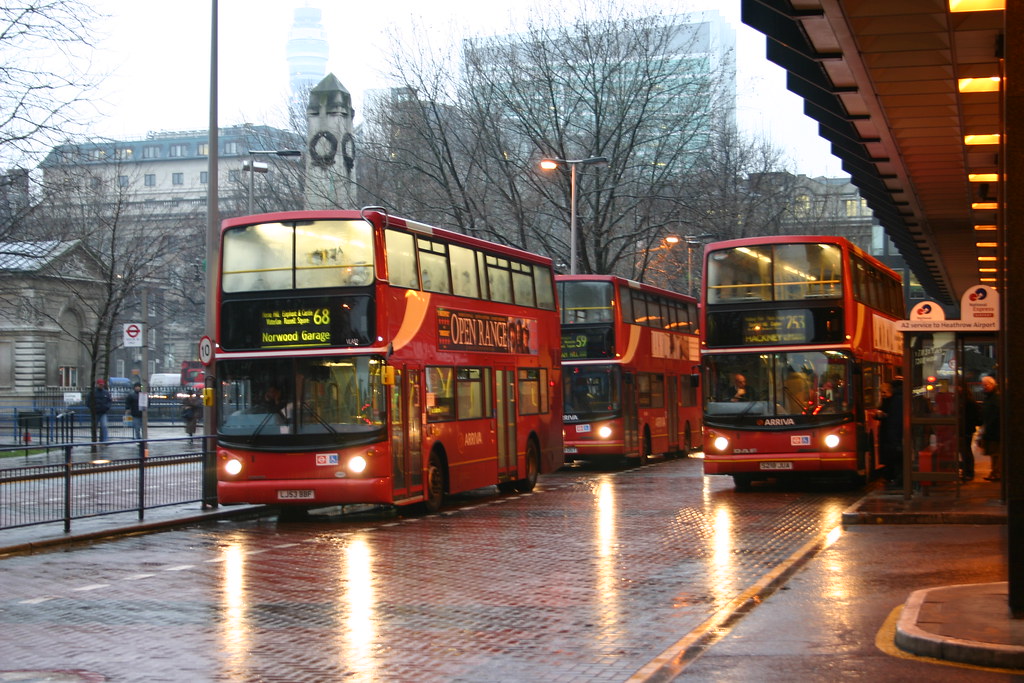
The train trip home was also fast, although the rolling stock a little older and not so swish. We opted to take the bus home from Euston, which was far more direct that the trains, and I’m glad we did. We were driving through still busy streets at nearly 10pm with shops, pubs and restaurants open and doing good business. Indeed, after 15 years in Canada where hardly anyone walks anywhere, the foot traffic in British cities is a sight to behold.
Tomorrow is a down day, so I’m not sure what will occur. We really do need this down day, though, because we are shattered.
 Stevemayne's Blog