Between finishing my Clerical Assistant contract and starting in London in a permanent job, I had a two week hiatus. As I’d paid my National Insurance dues, I went to the Job Centre to sign on as unemployed.
Anyone who has ever had to “sign on” will know, the first question they ask you is “Are you available for work?”. I said yes, but only for two weeks, and she said “Good, that’s how long you’ll be needed.” So it was that I fetched up at a company called Solartron in Farnborough as a temporary labourer. Solartron made measurement instruments (it says here, I don’t really remember), but I and another couple of press-ganged youngsters were engaged to move the accounts department from one part of the building to another. This was in the days before desktop computers, so apart from furniture, cabinets, and racking, most of the move involved paper; tons of it.
It was fairly hard work physically, but quite rewarding in getting a specific task completed. It also helped that I could cycle into the factory, and get paid forty pounds a week for my trouble.
What I learned at Solartron, though, was that there were some very lazy people around, and a couple of people on my crew worked harder at avoiding work than they did actually working. I was quite shocked. Still, it was only two weeks, and I was very happy to be paid more than twice the amount that the unemployment benefit would have paid.
I was ready for “The Big Smoke”.
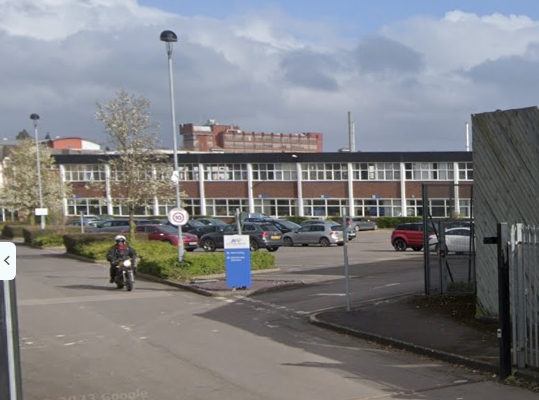
The Solartron factory is long gone now, all bar a small part of it. The rest is now a new B&Q DIY warehouse.
The only bit of the old Solartron factory remaining. Picture from Google StreetView
While at the Lakeside, I had applied for a job as a Civil Servant in the Department of Health and Social Security (DHSS). The posts available were for Clerical Officers, and were at various places in the North Hampshire and South Surrey areas. My shiny new ‘O’ Level passes were a requirement for the job, and I felt pretty confident as I turned up for an interview at Hippodrome House in Aldershot for an interview. My confidence was misplaced.
My problem was that I had never had a sit-down interview before, not even a practice one, so I went in there completely clueless. I was sufficiently aware that I was struggling because even now I can remember the sweat trickling down my back as I stumbled over the questions. If my dad, also a Civil Servant, had coached me a little then I’d forgotten any advice he’d given me, so I crashed and burned. I didn’t get the job.
All was not lost, though, as I was offered a Temporary Clerical Assistant post at the same office in Aldershot, on a six month contract. I gladly accepted, although I hadn’t given enough thought as to how I was going to commute from home.
I pitched up at the Aldershot London Benefits Office, ALBO for short, and started to find out about office work. The office paid short-term benefits to people with London addresses, so we didn’t get too many actual claimants turn up at the door. All the claims came by post, and I very soon found out just how much post when I was sent daily to the Post Room to open mountains of envelopes, stamp, then sort their contents. Every Clerical Assistant (CA) in the place was roped in to do this task daily, and it could take a couple of hours. The bosses were always hurrying us because the rest of the office was waiting on their daily heap of claims and claims documentation.
Had I managed to get the Clerical Officer (CO) job, I’d have been one of the people waiting on that daily mail.
I was assigned to a section of around seven or eight people, and was their clerical support. I filed, I found forms, I put letters in envelopes, and just about every other clerical task you can think of. It wasn’t demanding work, nor did it require a great deal of brain power, especially when tasked with filing papers in the hundreds of thousand of paper files that were stored in the open plan office.
The job paid thirty pounds a week, after deductions, and it came in the form of a Giro Cheque on a government account, which I had to cash each Thursday at the Post Office.
As I found out at the Lakeside, the repetitive nature of the work was a killer, and after about four months I was bored rigid. That said, six months wasn’t a lifetime and I felt that it would be a waste to give up the thirty pounds each week without having found another job first, so I stuck at it. I did at least get to experience an office environment, some great teamwork, and I met a few very nice people there.
The travel to and from home was an issue. There was a bus from Farnborough, but it was the best part of a two mile walk to the bus stop from our house, much of it on a fairly busy road without pavements (sidewalks), which was not great during those winter months I worked in Aldershot. My dad gave me a lift to the bus sometimes, but I always had to walk back, so it was never ideal. Now I was earning, though, I decided to get myself some wheels, and bought a 70cc motorbike, with the help of a loan from my parents. That was great while it lasted, but I managed to write the bike off of an accident after a couple of months of ownership, not my fault I hasten to add, so I was back to the bus. That was until one of my co-workers took pity on me and gave me a lift each day, to and from where I would have caught the bus. She demanded a fee, rightly so, but kept it a wee bit below the bus fare. I still had the walk, but as the evenings were getting lighter, it wasn’t so bad.
With the end of my contract looming, I started to look for other jobs, and this time was successful in getting a Clerical Officer post in the Ministry of Defence (MoD). While there were plenty of MoD places close to where I lived, the job I was offered was in London, which meant leaving the safety of home. I was young and stupid, so off I went into the wild blue yonder.
The little card I’d picked from the rack in the Job Centre was for a labourer to work at the Lakeside Club in Frimley Green. The job paid sixty-five pence an hour and was a good half-an-hour bicycle ride from home, but I accepted the job and started to earn a living.
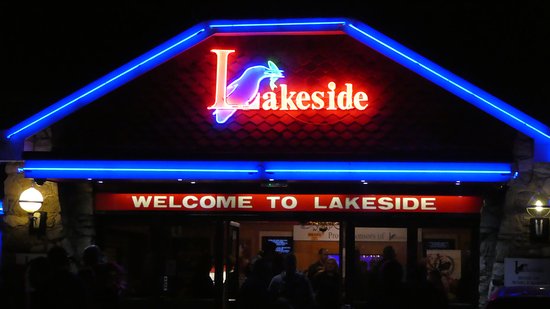
The Lakeside Country Club was a nightclub in the sense that it only operated in the evening and in the night. There was a central stage, a dance floor, and on three side of that, tables, chairs and booths. At the back of the club was ranged a number of bars, and behind them, the kitchens. If you’re British and into darts, then you’ll know the Lakeside as it was home to the darts world championship for many years. When I was there, though, it was dinner and cabaret six nights a week. Not for me the nightlife, though, I was strictly a day-time worker.
The first thing I had to do was to negotiate the time clock, something I’d only ever seen in films. Punching time in and time out on a piece of card, for pay purposes I was told, but it was also a management tool for attendance. I was assigned to work with a man who looked like he should have retired years before, but he was sympathetic to a greenhorn like me, and directed me to do my daily tasks, the primary one being vacuuming the whole darned place! My memory is a little hazy now, and I can’t believe that I did that, day-in-day out. I do remember sitting out in the yard behind the bars, sorting empty drinks bottles into their respective crates. Completion of that task was the ultimate in job satisfaction, from the chaos of the bottle bins to the tidiness of the crates. It wasn’t, though, intellectually stimulating, which is why I didn’t stick the job very long; I needed to get a better job.
While that employment instilled a little of the idea that I was going to have to work if I wanted to live, its regularity was an eye-opener, having to do the same tasks every day, week after week. School had not prepared me for this, but I knew there would be better.
Some years after I left, the original Lakeside had a fire and the entire place was rebuilt with accommodation, pool, sauna, and the rest. The darts world championship only arrived after the rebuild.
I had a warning from the good people at WordPress that one of my blog entries had used someone else’s photograph without permission, and that entry had been suspended until such time as I removed the offending photograph. I will say now that I quite probably did use the man’s photograph without his permission, and that was wrong of me. The entire blog entry has been removed and I hope that’s an end to the issue.
It did get me thinking, though, just how one photograph, hidden away in a little-viewed personal blog should gain the attention of the photograph’s owner. The blog entry was years old and was only one of a few photographs I published, and the only one to cause a stink. My blog isn’t monetized in anyway, I make nothing from it, and I only ever use photographs to illustrate a point, so it bothered me how that one photograph could be picked up and a warning issued.
Then I started thinking about AI. Clearly the owner has set an AI crawler to scour the Internet looking for any instances where his photographs have been used without permission, then to kick off a warning process. It all seemed a bit over the top to me, and like so much else on the Web, quite without context. AI can rarely see through anything that uses nuanced context, an example being the Facebook warning I received about something I’d written and the algorithm had failed entirely to notice the context. People make a great fuss about AI, but until it can understand nuance and meanings beyond the literal, it’s never going to work for me. Back to the photograph crawler, the irony is that the AI systems used will have scraped up his, and many other photographers, work, without permission, in order to perform the task asked of it.
I do think that people concerned about copyright on their work should watermark anything they publish on the Internet. It’s not hard to do, and indicates the intentions of the work’s owners. I guess we could work on the principle that anything published on the Web is automatically copyrighted, but think what that would do to AI systems, if indeed AI systems took any notice at all of copyright, which they rarely do.
No photographs in this blog, copyright or otherwise.
With Remembrance Day just around the corner, it was fitting that I should come across another of my relatives who lost their life in the First World War.
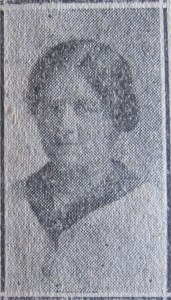
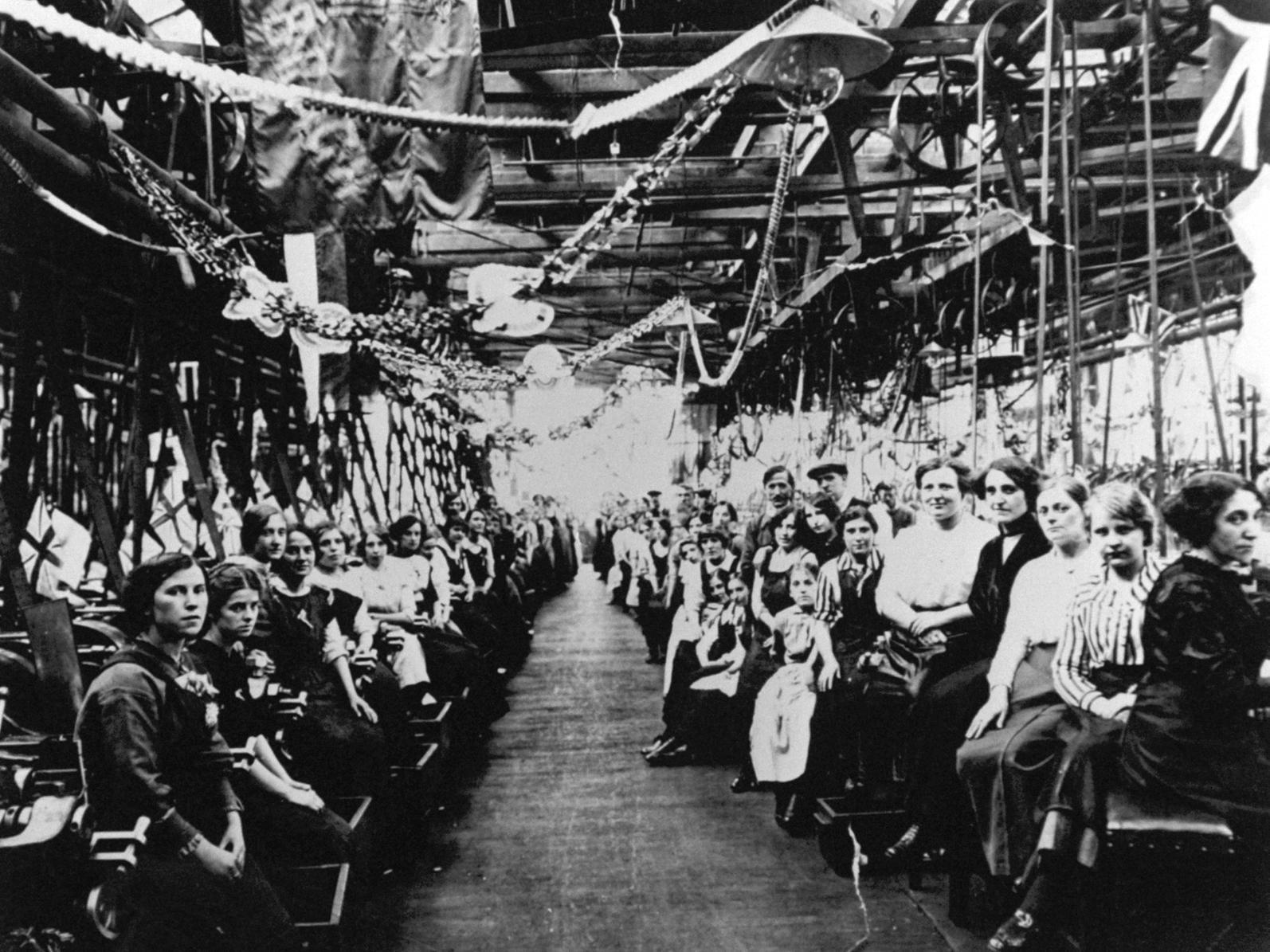
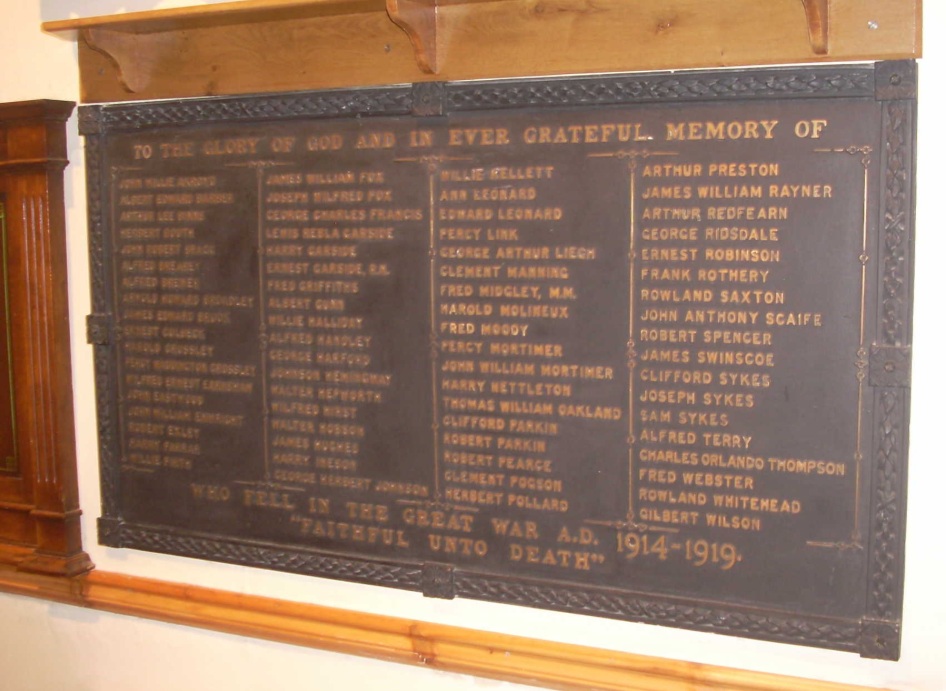
Ann Leonard, a second cousin once removed, was just twenty-four when she succumbed to TNT poisoning while working at the Barnbow munitions factory near Leeds, Yorkshire, England.
Born in October 1891 in Morley, Yorkshire, she was one of ten children to William Leonard, a Coal Miner, and his wife Emma. Her death certificate said she had died from “atrophy of the liver” as a result of working with munitions. She was one of many women killed in the production of weapons and ammunition throughout the Great War; explosion and disease were constant threats in the workplace. While Ann died from liver failure in the July of 1916, on December 5th of the same year, an explosion tore through part of the Barnbow factory and killed 35 women outright, and maiming and injuring dozens more.
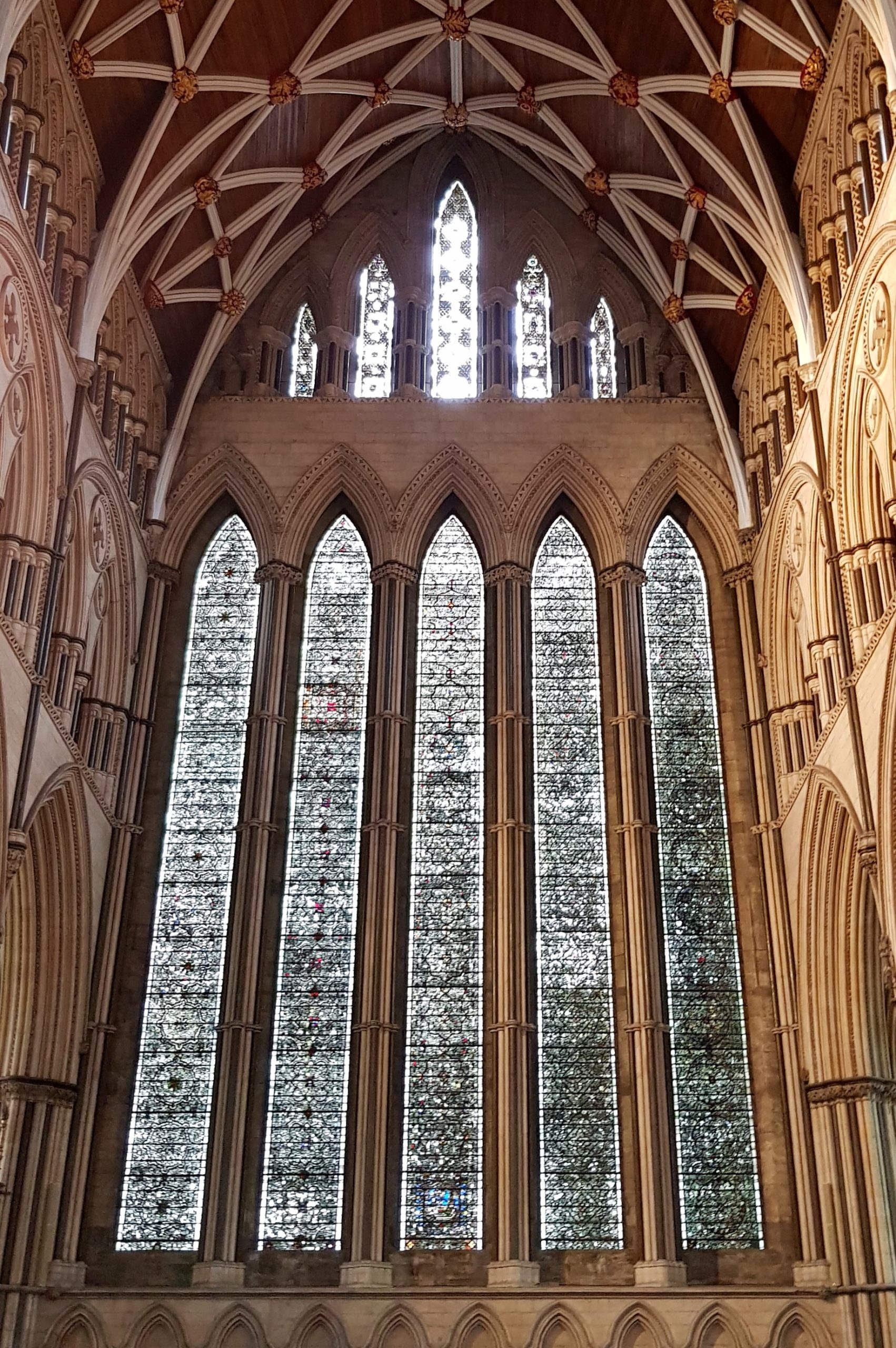
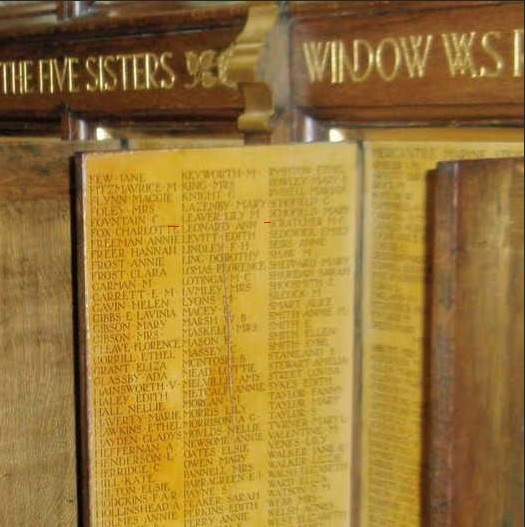
I was surprised to hear that Ann’s name appears on a Roll of Honour in York Minster, underneath the 13th Century series of stained glass windows known as the Five Sisters. The window was renovated between 1923 and 1925, and then dedicated “Sacred to the memory of the women of the Empire who gave their lives in the European war of 1914–1918” as a lasting memorial for all those women who died as part of the conflict.
In a cruel twist of fate, her brother Edward, himself only twenty-two, was posted as “Missing presumed dead” in France, just twenty four hours after Ann died. I can’t begin to imagine what their parents, must have gone through.
Aside from the Roll of Honour in the Minster, both Ann and Edward are featured in a plaque in the church of St John the Evangelist in Carlinghow, Batley, Yorkshire.
The Imperial War Museum maintains records of the casualties of war, and Ann’s entry can be found here.
I have more than seventy family members recorded in the Commonwealth War Graves Commission records, across the First and Second World Wars. Family war casualties came from the UK, the USA, Canada, and South Africa. This November 11th I will be keeping Ann uppermost in my thoughts as we remember all those who have died in modern wars.
I started looking into my family tree a short while before my father died in 2009, but didn’t get very far. I think Ancestry.com was around then, but I hadn’t signed up, and anyway I was heading off for my new life in Canada.
Finding myself with more time than I’d anticipated, I picked everything up again a few years later, and this time I did sign up with Ancestry, which opened up more doors than I thought possible. I now have a family tree with over fourteen thousand people listed (not all that I’d call very close relatives, to be fair), and many of them are, or were, situated in places that I didn’t know my family had reached.
Two things set the ball rolling in an unstoppable way. One was Mary, a native of Indiana, contacting me out of the blue, and the other was doing the Ancestry-linked DNA test.
I was, I will admit, perplexed that I appeared to have a relative from the United States. My family, my dad’s side at least, was pure Yorkshire, from Leeds, I thought. Goodness, how wrong I was. Mary pointed out that we had a common ancestor, Joshua Mayne (b. 1761), and everything fell into place from there. With Mary’s help, I was able to discover that one of Joshua’s offspring had left Britain in 1822, bound for New York, and from there had built a formidable Mayne dynasty in the New World. Not only that, another of Joshua’s sons had, in 1849, taken his young family to Durban in South Africa and had set up a similar Mayne dynasty there. To top it all, Mary established that Joshua himself, and his wife Elizabeth Collins, were not from Yorkshire at all, but had arrived in Leeds from Cork, Ireland in 1792.
The DNA test came up with equal amounts of potential contacts on my mother’s side of the family, as well as my dad’s, and that was an area I hadn’t addressed up to that point. Building up her side of the tree has shown that we were drawn from agricultural stock in the north of Devon, England, and while many of the family had stayed there and are there to this day, many more had moved away from the land for a new life in Canada and, ultimately, in the United States. Indeed, direct Devon relatives had made it to rural Southern Ontario 150 years before I did.
I haven’t yet found the outer limits of the family tree, either on my dad’s or my mum’s side. I can find very little about my paternal grandmother who’s father arrived in Leeds from Belfast, Ireland, at some point in the early 1880s, although my 24% Irish DNA is in part her legacy to me. Her mother was from Leeds, but her father was from Liverpool, and with a name like Garrett, the chances are that there’s Irish blood from him as well.
On the whole, both sides of my family are from poor stock. Some have done well, though, the South African connection has links to the DeBeers diamond industry. There was some conspicuous DeBeers-related wealth on show in the early twentieth century, with homes in Portman Square and Kensington in London, and even a family burial plot in a Royal Park, the Royal Brompton Cemetery in West London.
My grandfather married into, worked for, and eventually took over, the Pickersgill family business in Leeds in the 1920s. Joe Pickersgill, a very wealthy Turf Accountant, was said to have held the Prince of Wales own betting account in the 1910s and was a millionaire when he died in 1923.
On the American side of the tree, a distant cousin married Mariko Terasaki, the daughter of Hidenari Terasaki and Gwendoline Harold, in 1953. Hidenari was a Japanese diplomat who married Gwen, a Tennessee girl, and worked to avoid Japanese conflict with the USA in the late 1930s. Both were forced to flee to Japan after the Pearl Harbor attack, but Gwen wrote a book about her experiences which was made into the Hollywood movie A Bridge To The Sun. Mariko’s children, those that survive, are prominent peace campaigners, following their grandfather’s lead.
But most of my family tree is comprised of poor people doing poor people’s work, and very much echoing the social structure nineteenth and early twentieth century Britain. Farmers, farm workers, labourers, coal miners, and factory workers, all living in mostly poor conditions but surviving nonetheless. One thing that does jump out is the number of war deaths, at the moment numbering seventy-two. One of the first on my family recorded in the Commonwealth War Graves Commission databases was killed when his ship exploded in the Thames estuary in 1914. One of the latest was a young Canadian naval officer, killed two days after D-Day in 1944 when his ship was sunk in the English Channel.
As I’ve grown the tree, there have been a lot of fascinating stories come out about the individuals in it. In future posts here I’ll try to record some of their stories; not about my family necessarily, but the places they lived and the lives they led, which were in large part, entirely typical.
It’s been an education thus far, and I’d like to document as much of it as I can.
We had occasion to visit the lovely town of Blyth, Ontario, in Huron County. It’s about two and half hour’s slow drive from home, and a lovely place to enjoy a play at the annual Blyth Festival. It’s also close to the place where a large group of my relatives, on my mother’s side, had ended up after emigrating from England in the middle of the nineteenth century.
From my family tree research, I had discovered a few graves of those relatives just twenty minutes from Blyth, and this was too good an opportunity to be missed.
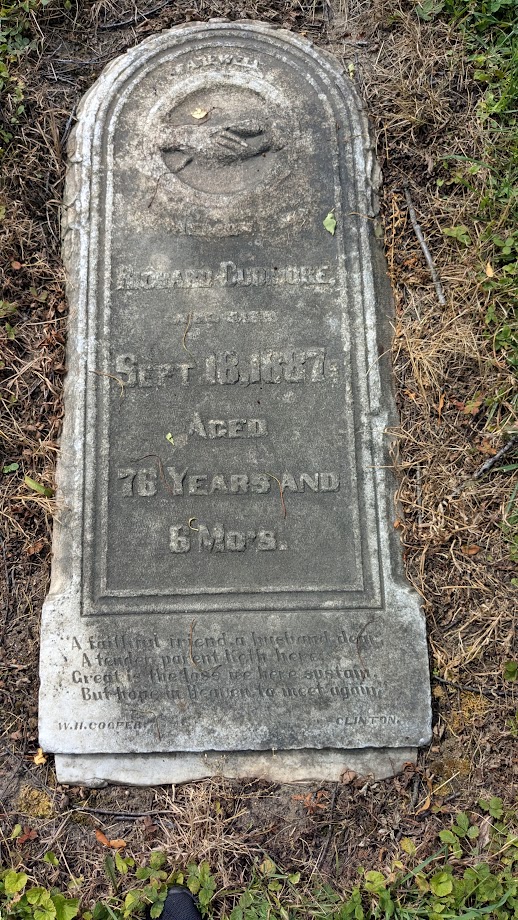
At the top of the list was John Richard Cudmore (1811-1887), my great-great-great-granduncle. His sister, Elizabeth Cudmore (1796 – 1873) was my great-great-great-grandmother, and the mother of William Bater (1829-1894), my great-great-grandfather, whose grave we had visited in the churchyard of St Edmund’s, Dolton, when we were in England last year. John Richard, better known simply as Richard, arrived in Canada at some point between 1841 and 1845, and his first Canadian born son, William Horace Cudmore, entered this world while the family were in Tuckersmith Township, now Clinton Township, in 1845.
In the England and Wales Census of 1841, Richard Cudmore is shown as being an agricultural labourer and living in Dolton, Devon. In the Census of Eastern Canada for 1861, Richard is listed as being a farmer and living with his wife Alice and their six children in a single story, log-built house. I can’t verify whether he was farming his own plot of land or working for someone else, but Tuckersmith, like most other rural townships in North America, had been divided up into small parcels of land and it’s likely that he worked one of these. I’ve seen maps of other areas, notably in Kansas and in North Dakota, with the land parcels’ owners named, but the records of Huron County, at least those I’ve found so far, don’t go into that detail.
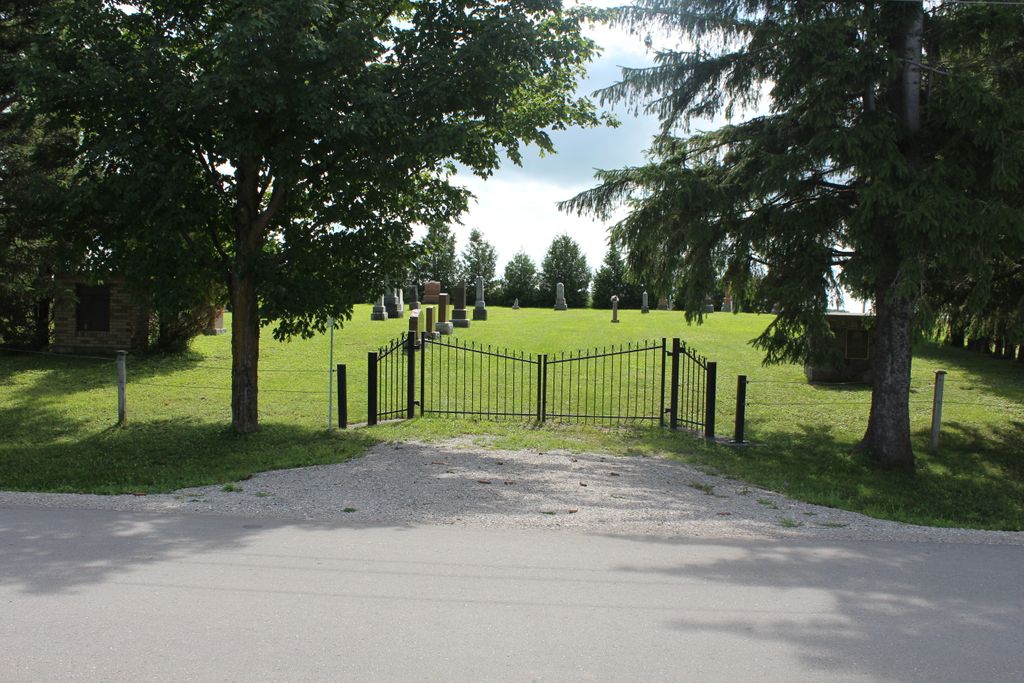
Richard Cudmore stayed in Tuckersmith for the remainder of his life, and died in 1877. He was buried in Turner’s Cemetery, just south of Vanastra, Ontario, between Clinton and Seaforth, and there he remains. It wasn’t hard to located the cemetery, nor the grave, and it was quite the feeling to be close to one of my relatives, but in a country thousands of miles away from our shared homeland. The cemetery is small, but meticulously maintained (by whom I don’t know), and is fittingly surrounded by the rich, arable farmland that Richard had worked.
Talking of land, I must acknowledge that the area around Tuckersmith is native land and was the subject of Treaty 29, The Huron Tract Purchase, signed by the English Crown and certain Anishinaabe peoples on July 10th, 1827. Full details of the treaty can be read here.
Of course, Richard Cudmore wasn’t the only one of my dead relatives in Turner’s Cemetery. His son John and his daughter Elizabeth are there, as is another daughter, Sarah Alice Crich. There are many members of the Crich family in Turner’s cemetery, as there are on the census listings for the time. It was inevitable that a Cudmore would marry a Crich at some point in Tuckersmith, and of all those Crich family members resting alongside Richard Cudmore, I’m certain that there will be family connections. Indeed, subsequent research has shown up many more family graves in Clinton itself, right up to Keith Ward Jenks, a direct descendent of Richard Cudmore, who died in 1944 when he was aboard a Royal Canadian Navy vessel taking part in the D-Day Landings.
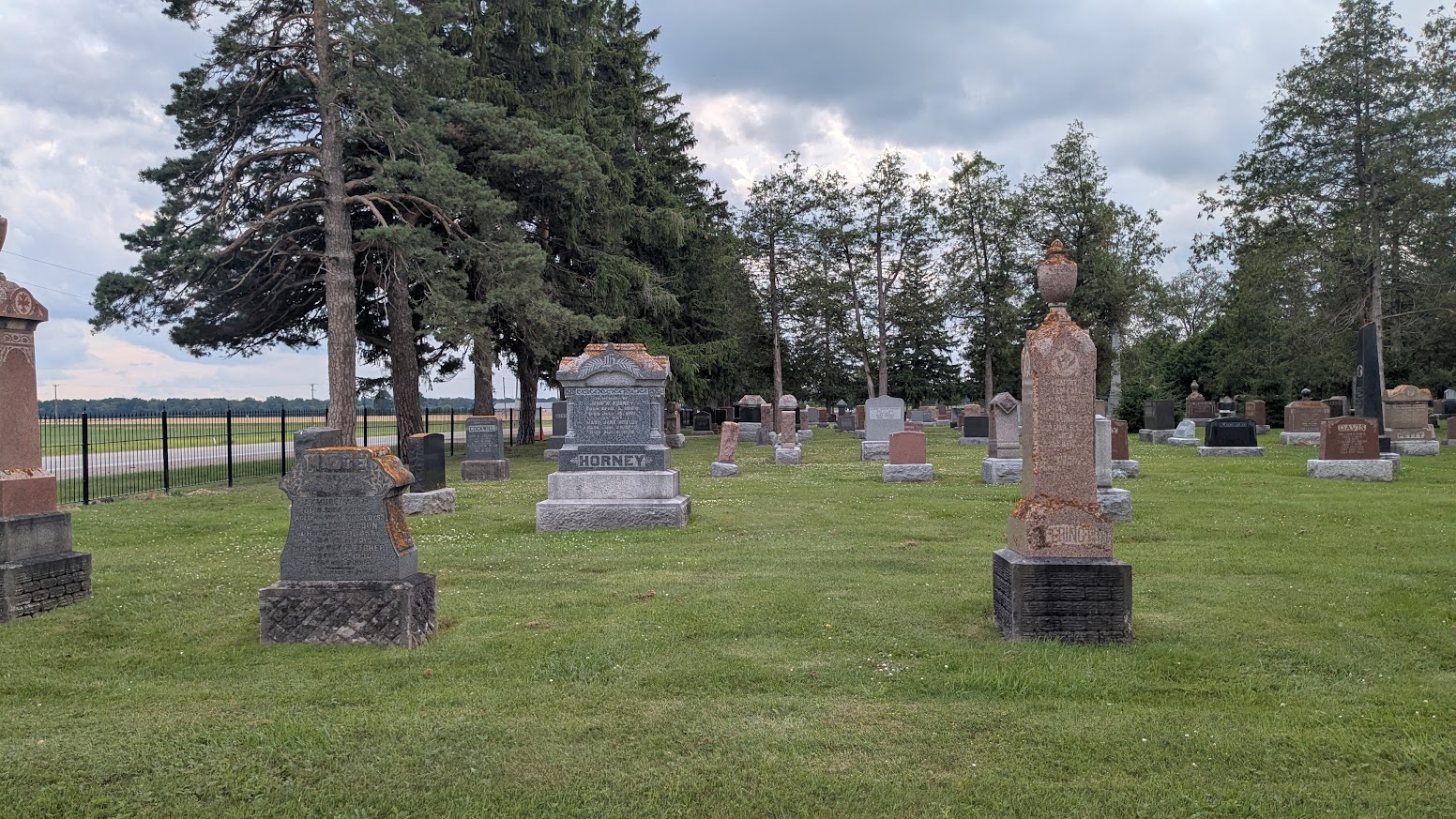
While we were out and about in Huron County, we visited a grave in Harpurhey Cemetery near Seaforth, that of another of Richard Cudmore’s sons, Henry, and his wife Ann. Henry died in 1930 and Ann died in 1945, so their gravestone was significantly newer than those we found in Turner’s Cemetery.
On the way home we called in at the Exeter (Ontario) Cemetery looking for a member of the Crich Family. As it’s quite a large cemetery compared to the country burial sites, and I couldn’t work out the plot numbers, I didn’t find the grave. I’ve since discovered that he’s in his wife’s family plot, the Rowcrofts, so if we go again I know what to look for.
I can only speculate what drove agricultural workers from North Devon to get on a ship and travel to the New World. It may have been a lack of work in England, or it may have been the prospect of being able to own (subject to the treaty of course) some land of their own. My family tree is littered with Baters and Cudmores who travelled from Devon to Canada and to the United States, sometimes landing in one country and ending up in the other, but they were nearly all farmers, or in a trade related to farming.
Following up the descendants of these immigrants, I’ve discovered that after they established themselves, some made their way to other homesteading projects both in Canada and in the USA. Crich family members set up in Saskatchewan, while others went to North Dakota, curiously not too far apart geographically, even if they were in different countries. Indeed, after Richard Cudmore’s death in 1877, his wife Alice went to live with their daughter Ann and her husband John Fitzpatrick, in Park River, North Dakota, and never returned to Tuckersmith Township in Canada.
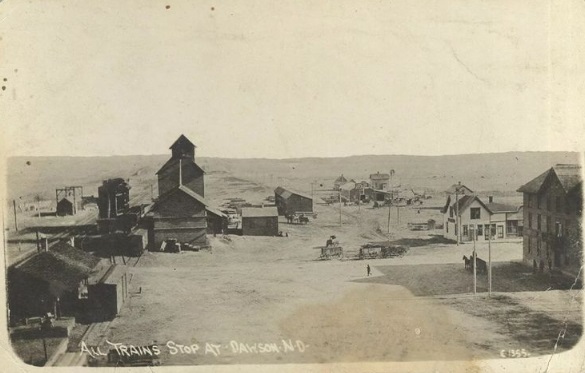
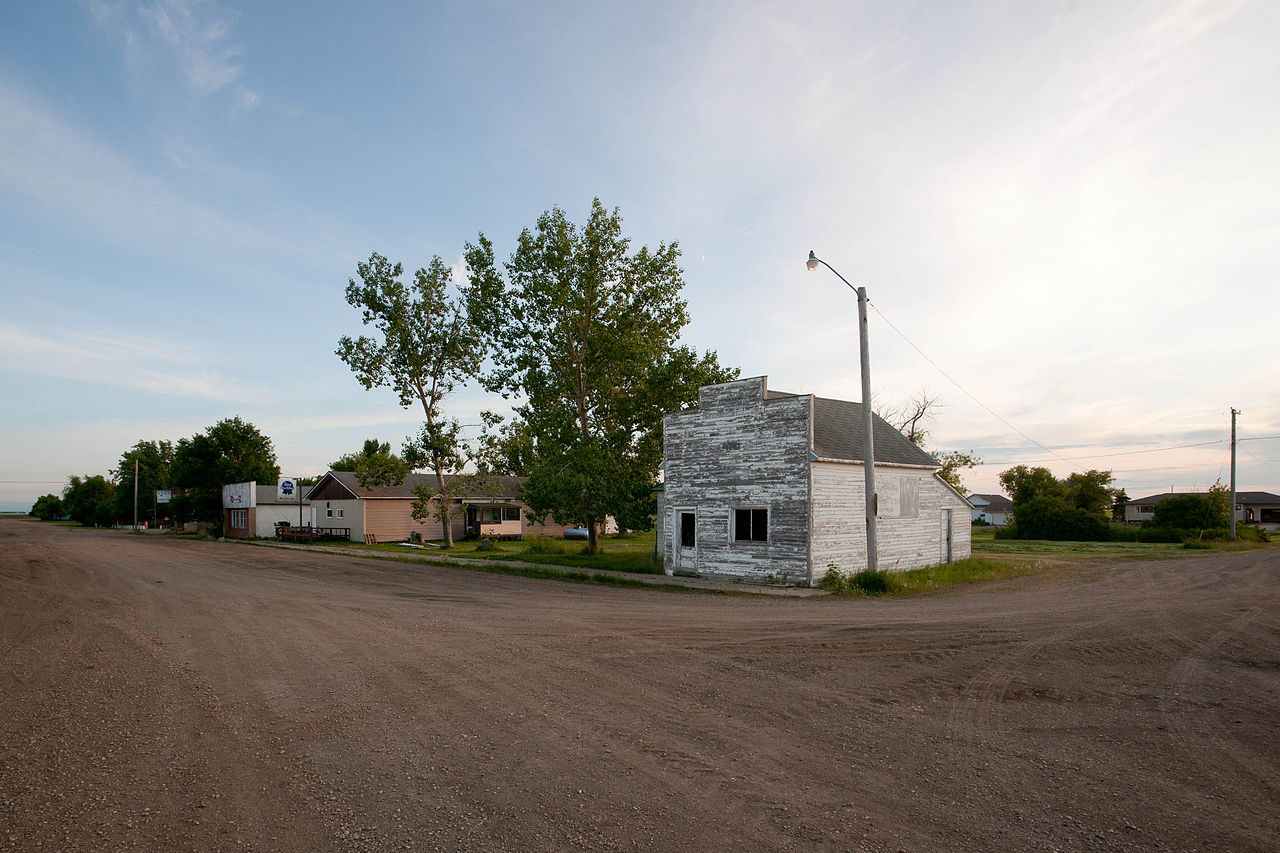
Browsing through Google Maps and Streetview, as I do, I was hugely interested to see the settlements these immigrants made their way to, and what they look like now. One was a town called Wales, North Dakota, which even in it’s heyday was little more than half a dozen grain elevators by the railway track, and Hannah, a little further north, at the end of the railway line, and just a few miles south of the Canadian border. Hannah was very similar to Wales, except that there is a cemetery there and yes, there are some of my family’s graves there. Both Wales and Hannah are little more than ghost towns now, with Wales listed as having a population of ten. However, the land around the towns is still extensively farmed and probably doesn’t look too much different now than it did in the 1920s and 1930s.
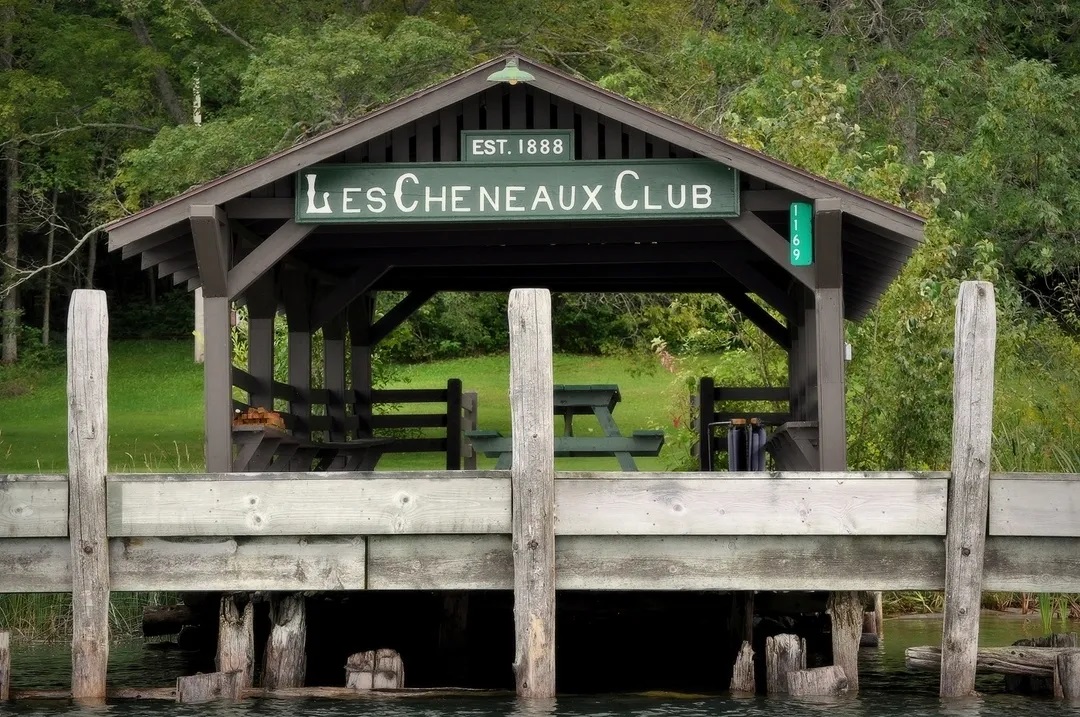
Another branch made their way to Cedarville, Michigan, not too far from Ontario’s Huron County. As some point the family became involved with the Les Cheneaux Club on Marquette Island, which is in the Mackinac Straits and not too far from Mackinac Island. Marquette Island, and specifically the Les Cheneaux Club, was a summer getaway for wealthy Chicagoans when their summers became too hot, and my relatives were caretakers of the Club in summer and winter in the early part of the twentieth century. Indeed, my fourth cousin, once removed, Uldene Ethel LeRoy (nee Rudd), wrote a book called Six on an Island: childhood memories from Lake Huron, which was published in 1956. While searching around for the book, I discovered an undergraduate paper from Grand Valley State University in Grand Rapids, Michigan, written by Uldene’s grandson, Joshua Lycka. It references her book and compares his own memories with hers. The things you find on the Internet!
Both my mother’s and father’s families have extensive connections with emigration to the New World. The Mayne’s led the way, but the Caters and the Cudmores from North Devon, and quite a few of them, followed up a decade or two later, and both branches of the family are now spread far and wide across Canada and the United States. I wonder how much more I will discover as I delve even deeper?
I’ve not written anything for ages, so, as it’s well into the new year, I thought I should knuckle down. The trouble is that there’s so much “noise” out and about, what with Trump, Musk, et al. Still, life goes on and I can always look away from the awfulness unfolding around me.
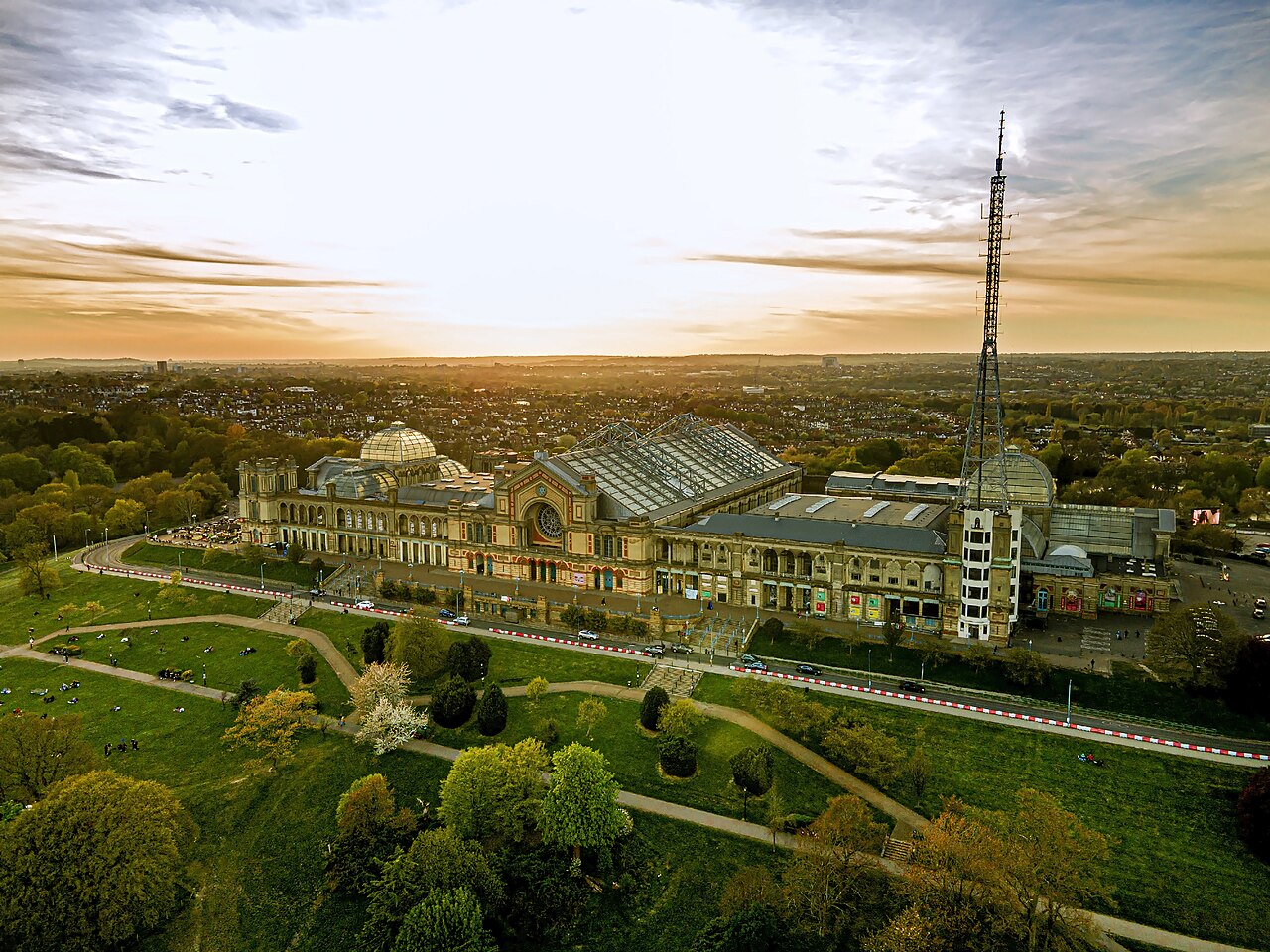
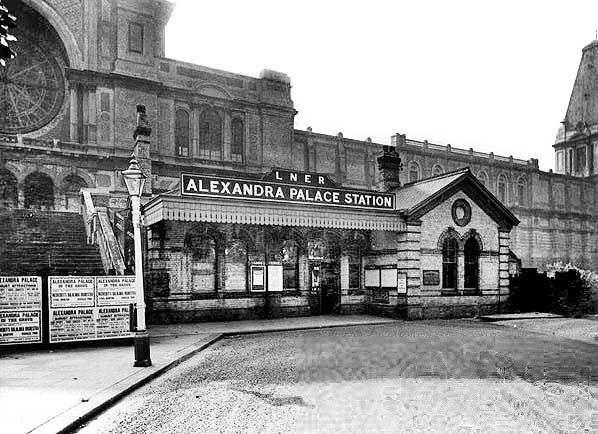
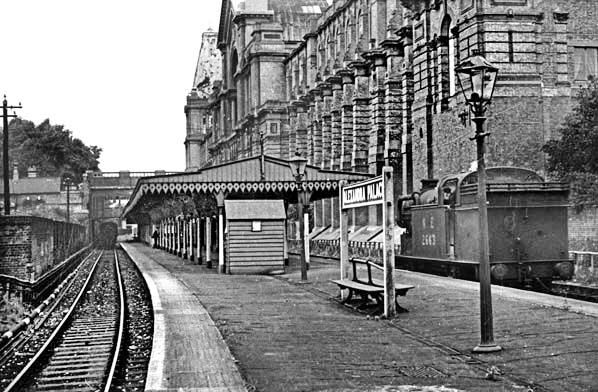
Someone posted a photograph on Facebook of an old railway station at Alexandra Palace in North London (UK). It was built right into the main structure of the Palace, too, which caught my eye, not least because I didn’t know there had been a railway there. I have no great connection with Alexandra Palace beyond my living in North London myself for a few years, but I did travel past the place every day when I was commuting from Stevenage in Hertfordshire into London every day in the early 1980s.
Alexandra Palace isn’t a palace in the royal sense, but a palace of entertainment and sports. It’s known affectionately as “Ally Pally”, and because it sits atop a big hill, you can see it for miles around, even in the suburban jungle of North London. It was opened in 1873 and has gone through many iterations in its lifetime, most notably perhaps as the BBC’s first home for a regular television service, starting in 1936. Ally Pally is still functioning, too, as concert, exhibition, and community venue. Curiously, though, despite having seen it every day for years, and lived relatively close by, I’ve never been inside.
But I digress. The station was the terminal point for a broad loop of line coming out from the London to Edinburgh Eastern main line. It must have been quite a slog up the hill with a full load, because it’s some climb up to the Palace. The branch was opened in 1873, along with the venue, but closed in 1954. The track bed is still in use, only now as walking trail, known as the Parkland Walk (North), and still utilises some of the old railway infrastructure to traverse the now busy roads.
I write all of this as a way of both highlighting my total ignorance of the history of North London and it’s many esteemed buildings and infrastructure, and the fact that my trips past Ally Pally were now over forty years ago. Where on earth did the time go? Indeed, this realisation of time past manifested itself on a trip to the UK in 2023. We were on a train going from Hackney Downs into Liverpool Street and I was remarking to the good lady wife that the trains were somewhat improved compared to the ones I’d used on that route in, wait for it, 1981! I hadn’t even begun to consider the passage of time, beyond a decade or two, but four decades and counting? It was no wonder things had changed.
Anyway, enjoy the photographs of Ally Pally station, and check out the links below, while I go away and consider how time passes so darned quickly.
My old PC, an HP all-in-one with a 34″ curved screen, was showing signs of imminent failure. Microsoft Blue Screens of Death started happening with WHE (Windows Hardware Error) codes, and the screen started to get intermittent yellow lines on it, from top to bottom, and none of that looked good. The old girl had to have been at least seven years old and didn’t really owe me anything, so I thought I’d pension her off before she turned up her digital toes. It’s a bit sad because I’d done some good upgrades, including replacing the original 150GB Solid State Drive (SSD), that was supposed to be the boot drive with a 1TB upgrade, and I swapped out the old 1Tb mechanical hard disk for a 1Tb SSD. That upgrade on the mechanical hard drive was a bit of disaster because I managed to damage the LCD screen when putting it all back together, and lost an inch of visible screen on the left side, and suffered a growing dark stain over about a third of the bottom of the left-hand side of the screen. It was still useable, especially as the screen was so big, but the problem was getting worse.
The HP all-in-one cost me an arm and a leg when I bought it, and right now I don’t have the cash to lay out for a similar system, so I downsized. Now it’s an HP all-in-one with a 27″ screen, but with a bit more memory and slightly faster processors than the old PC. Happily, it cost less than one third of the old machine, which pleased me greatly. My needs are fewer these days, so I’m quite content with the downgrade. Anyway, I can see my desk again, now.
Buying a new PC is quite easy. I shopped around, checked out a few early Black Friday deals and settled on the new HP, direct from HP Canada. I managed to get nearly $700 off the list price, so that was the clincher. I ordered it on the Tuesday night, and I had it in my grubby little hands on Friday afternoon, which was pretty much Amazon speed. Alarmingly, HP Canada proudly boasts Canadapost and Purolator as its partners, which was a quite concerning given that Canadapost is on strike right now. However, it didn’t appear that Purolator was involved in the strike, even though it’s the parcels arm of Canadapost, and I was mightily relieved to see the Purolator van pull up outside my house.
The packaging of the computer was quite ingenious, and the way it was all fitted into the box, meant that because I followed the instructions properly, I didn’t have to handle the screen while getting it out from all the padding. Take it from one who has manhandled a 65″ thin screen TV onto a wall, that’s a real bonus. The keyboard and mouse were both wired models, actually perfect for my needs, and battery-free, but they are very cheap and cheerful, so it hasn’t taken me long to replace those with better models that I had knocking around at home.
Then I began the set up process. Years ago when I was in IT support, I installed hundreds of software packages onto hundreds of PCs, and all using boxes full of floppy disks. It was a slow and painful business, and done at a time when very few PCs had an Internet connection, or even a Local Area Network. Compuserve was our friend back then, but only on the PC that had a modem and telephone line attached. Today, all I had to do was plug a network cable into the back of the PC and let it do its thing. The PC came with Windows 11 pre-loaded, but that all has to be updated and tweaked, but even then I had the thing working within a few minutes and was downloading all the paid software I have collected over the years. I could have cloned the boot disk from my old machine as it was the same size, but doing it the long way, by treating it as a first-time set up, I’ve been able to leave things out and make a few adjustments. A clean start is a good start, even if it takes a little longer.
Early impressions of the new PC are good. The screen resolution isn’t as tight as I’d like, and I could probably tighten it up a little, but I’ll leave it as it is because I’m sure to get used to it. I did hang a second monitor from the PC, and marvelled at how easy it is to do these days with an HDMI cable and Windows 11. The boot up is fast, and the response is good, although as so much is done through the Internet these days, it’s as much about having a decent connection as it is about the speed of the computer. I am slowly switching off all the little things that Windows likes to add, the bells and whistles as it were, that I have no need for. The very first thing I did was revert the right-click context menus to the Windows 10 version. The newer iteration of Windows uses little pictograms for Cut, Copy, and Paste, and if you want a full context menu you have to select it from the top menu, a retrograde step in my view. It seems that there are many Windows users out there who think the same as I do, though, because when you Google “Windows 10 Context Menu”, there are thousands of hits showing you how to achieve your aim. Perhaps Microsoft should take note and offer a choice of context menus at startup?
It’s probably an age thing, but I don’t get the use of so many pictograms in place of the written words. The Windows symbol for “Crop”, for example, means nothing to me. Sure, use the symbol, but put the word “Crop” underneath it for those of us that can read. It’s not just Microsoft, though, smartphone-based Millennials have been brought up on using pictures rather than words, and it’s they who are writing today’s software. Won’t anyone think of the old folk?
Time will tell if the new PC is up to the job, and I do intend to work it quite hard. For now, though, I will sit back and reflect on how all those years of setting up computers at work have proved to be very useful in retirement, even if I don’t need floppy disks anymore.
I had an e-mail a couple of weeks ago that came with a PDF file. In that file was a letter to me from someone I didn’t know, claiming that they knew things about me and that my “secrets” would be made public if I didn’t send some money to them. Given that the street address, phone number and e-mail address was correct, it was a little frightening. Or it would have been but for some fundamental errors in the letter.
The first error was that they thought the phone number they were quoting was a cell phone, which it wasn’t. Threatening to put all manner of malware on my phone wasn’t going to work on an old fashioned landline. Then there was the issue of the person claiming to “see” inside my home, presumably through a camera on a computer or my cell phone, but that can’t happen with my computer and phone set up at home. Having access to my computer was another claim, and while I can’t claim to have the most secure set up, I do take precautions and I’m confident that no one has access to my computer, at least not that I’m not aware of. But, armed with some genuine information, data that is actually publicly available or maybe had been gleaned from a data breach somewhere, someone has attempted to extort money from me.
I toyed with reporting the matter to the Police, but the e-mail address was not traceable, and while they may have investigated, it would have taken a long time and probably revealed nothing. So, I deleted the e-mail, and the PDF file and awaited further contact.
The issue here is that if you’re not particularly tech-savvy, you might take this kind of threat seriously and be goaded into parting with money. Push out a ton of these letters and you’ll get some return from your efforts, I’d guess. The world can be a dark place sometimes.
What the incident did do, though, was prompt me into reviewing my online security arrangements. I subscribe to three different security packages covering phones and PCs. They were all up to date and reporting nothing untoward, which was good. I made sure all my Operating Systems were updated, too, as they are the front line of security. I also use a Virtual Private Network (VPN), at least some of the time, although I’ve found that online functionality can suffer with the VPN running, at least when working with certain software, or on certain websites. Where I lacked security, and it’s not directly associated with the attempted extortion, was with passwords. I had used the same passwords across a broad range of online accounts, and while not having had an issue so far, I thought it was time to tidy that up. With the use of a paid third-party password manager, I revisited all my online accounts, changed the passwords where I needed to, and took advantage of the additional protection the password manager software gave me. I looked back through the password records of my web browsers and was amazed to find data going back years. While the browser providers will always assure you that this data is safe, it is information that could be compromised, so I’ve stripped that data right down and now the browsers carry no significant password data. Changing passwords regularly is a must, anyway, and made easier with the use of the password manager. As an added layer of protection, I’ve gone to using just a single browser, rather than the chopping and changing browsers as I’ve been doing. There are issues with that, “all the eggs in one basket” so to speak, but at least I don’t have more than one Browser password file to manage now
No word back yet from my extortioner, and the original contact was a month ago. There have been no notified attacks on my computers, either, so it’s looking like it was a fishing trip. Obviously you never engage with people like that, but if I did I’d than them for boosting my online security, it’s been a very productive exercise