I was reminded again this afternoon of just how much some people are in too much of a hurry when they’re driving. I had to make a right, on a red light, onto LaCroix Street, but to my left is a bridge. When I’m looking to see if the way is clear, I get about 100 metres of clear sight before the road dips down on the other side of the bridge. That 100m or so should be ample for me to pull out into the road when I can’t see another vehicle approaching from my left. But, and it’s a big but, if the approaching vehicle isn’t speeding. Sadly, they nearly always are. I looked left today, could see no vehicle approaching, so made my move. A quick glance in the mirror as I made the turn and there was a blue car bearing down on me at a rate of knots. No worries, I’m in my lane, but why did the driver of the blue car feel the need to come hurtling over the bridge like that? The car was something anonymous, but it had a personalized licence plate and the driver was a young woman bobbing around in her seat, hopefully to some music. She passed me, but less than 200m ahead I passed her again as we both drew to a stop at the next set of lights.
Quite possibly because I’m officially a Senior these days, and I’m retired, but I genuinely don’t see why everyone is rushing around. The young woman in the blue car gained nothing by driving so fast, and I crossed Richmond Street before her, despite my sticking to the 50Kph speed limit, so what was the point? You see it all the time with people make risky passes on ordinary roads, only for me to come right up behind them at the next set of lights. I absolutely do not get the rushing around when 99% of the time there is absolutely no benefit to speeding and taking unnecessary risks.
I’m certain that people who encounter me on the road cuss and curse me because I don’t generally exceed the speed limit. They’ll call me grandad, and get seriously bent out of shape because they perceive that I’m driving too slowly. Maybe I did when I was younger, although I don’t really remember if I was a one to hurry, even when riding my motorcycle in London.
Anyway, I will continue to drive in an unhurried manner. I will stay aware of people who are in a hurry (even though I know what they do is pointless), and I will keep up with the flow of traffic, up to the posted speed limit, at least. If everyone did that then there’d be far fewer road collisions.
That last sentence reminds me of the fellow who made a Facebook post claiming that he’d been stopped by the cops for driving at the speed limit, and asked why he wasn’t doing at least ten over. If that happened then I’m a Dutchman’s uncle.
Two full years of proper retirement behind me, so it’s time for an update.
Firstly, do I miss work? No, I don’t miss work. I don’t miss the routine of it, and don’t miss the stress of it, real or imagined. To not have that five day a week commitment, to not have to go and do someone else’s bidding, latterly for very meagre compensation, is blissful, it really is.
But, more than forty years of being part of that culture has been very difficult to move away from at times, and there are moments, more than I’d like, where I start to feel a certain guilt that I’m not fully occupied during a work day. It’s more habit, more trying to shed an ingrained routine, than anything else, but I’m working on it.
I haven’t set my alarm clock, bar the occasional day, since retiring, and that’s very freeing. I wake early most days, but can enjoy the feeling of knowing that my day is my own. Every day, too, not just the weekend. In these summer months I get into my walking sessions, and use that first waking hour of my day to pound the pavements hereabouts. It gets warm in this part of the world so the early start is beneficial, but it is so nice to utilize that early time to good effect, not just to get some exercise, but to listen to an audiobook as I walk, which is about as close to multi-tasking as you can genuinely get.
I still don’t get done as much as I’d like during the day. There’s always the necessary, cleaning, laundry, house maintenance and the like, that tends to get put to the bottom of the list because the tasks are boring and to an extent, pointless. Then there are the optional things like the garden, online time (the biggest consumer of my efforts in day), and finally the projects, usually home related, that I am definitely “going to get around to”, eventually. Overarching all that is my innate laziness and the fact that really I don’t want to be “doing stuff” the whole time because sometimes, and this may be the key to retirement, I don’t want to do anything at all. That’s the conundrum that exists when you’re still trying to divest yourself of the habit of work.
I read a piece in the New York Times recently that said maybe retirees should just do nothing, at least for a portion of their day. They should do it and attach as much importance to the down time as they do to the positive tasks in their lives. I’m beginning to think that the author of the piece was right, albeit that most retirees I’m sure are also locked in this personal debate about thinking that they should be doing something, rather than nothing.
I think that this doing nothing, or the acceptance of the principle, should be my task for the next year. Sure there are things I have to do, things I want to do, and things I ought to do, but doing nothing should be right up there at the top of the list, and have as much guilt attached to it as doing the laundry, or cleaning the house; that is no guilt at all!
The garden is work, but the enjoyment of it is guilt-free do nothing time.
I was a bit surprised to read a post in a local Facebook group decrying the state of a neighbour’s back yard. The post was accompanied by photographs of the offending yard, along with the plaintive question “What can I do about it?”.
Not the actual back yard in question
My first reaction was “Mind your own business”. It’s not unknown for the City to require someone to mow down weeds in their front yards, but back yards as well? In fact, what was the complaint about? What is aesthetic? Was it about health? I couldn’t really decide. The person complaining was doing so on behalf of her (claimed) elderly parents and their dog who, it seems don’t like bugs in the yard. I can see that a neighbour’s overgrown yard might attract bugs, but firstly you’d have to prove it was the overgrown yard causing the issue, and secondly to what extent are some bugs a nuisance that should involve the City. Where does a person’s right to have their back yard as they wish begin and end?
Obviously if a yard is likely to be a breeding ground for rats or other pests, then health issues would be a good enough reason for the City to act. Having fires without permits, or the creation of obvious noise pollution like late night parties, will be other reasons for them to act, but I’m still struggling to see why a neighbour’s overgrown yard would be enough for the City to be involved, not least because the owner or lessee of the yard has rights, too.
It’s a fact that the good people of this town like things neat and tidy. There are byelaws, which the City will uphold if you nudge them a bit, but often people assume byelaws to be bigger and more sweeping than they actually are. The man who complained about our trailer being on our driveway hadn’t read the rules, so his bleat to the City failed. No one has yet complained about all the native plants and trees in our front yard, although I feel they could at any time, it’s happened elsewhere in the city, but if they did then again they’d find that the byelaws protect our rights rather than their complaint. But I’m not sure about back yards, and until I feel someone’s back yard is upsetting me (which will never happen), I’m not even going to look at the Byelaws.
There’s the thing, why complain at all? So your neighbour’s yard is a bit overgrown? Don’t look at it, build a tall fence, grow a hedge. Ultimately, unless the neighbour is actually impacting you or your life, and I don’t mean with a few bugs, then stay in your lane and let the neighbours be.
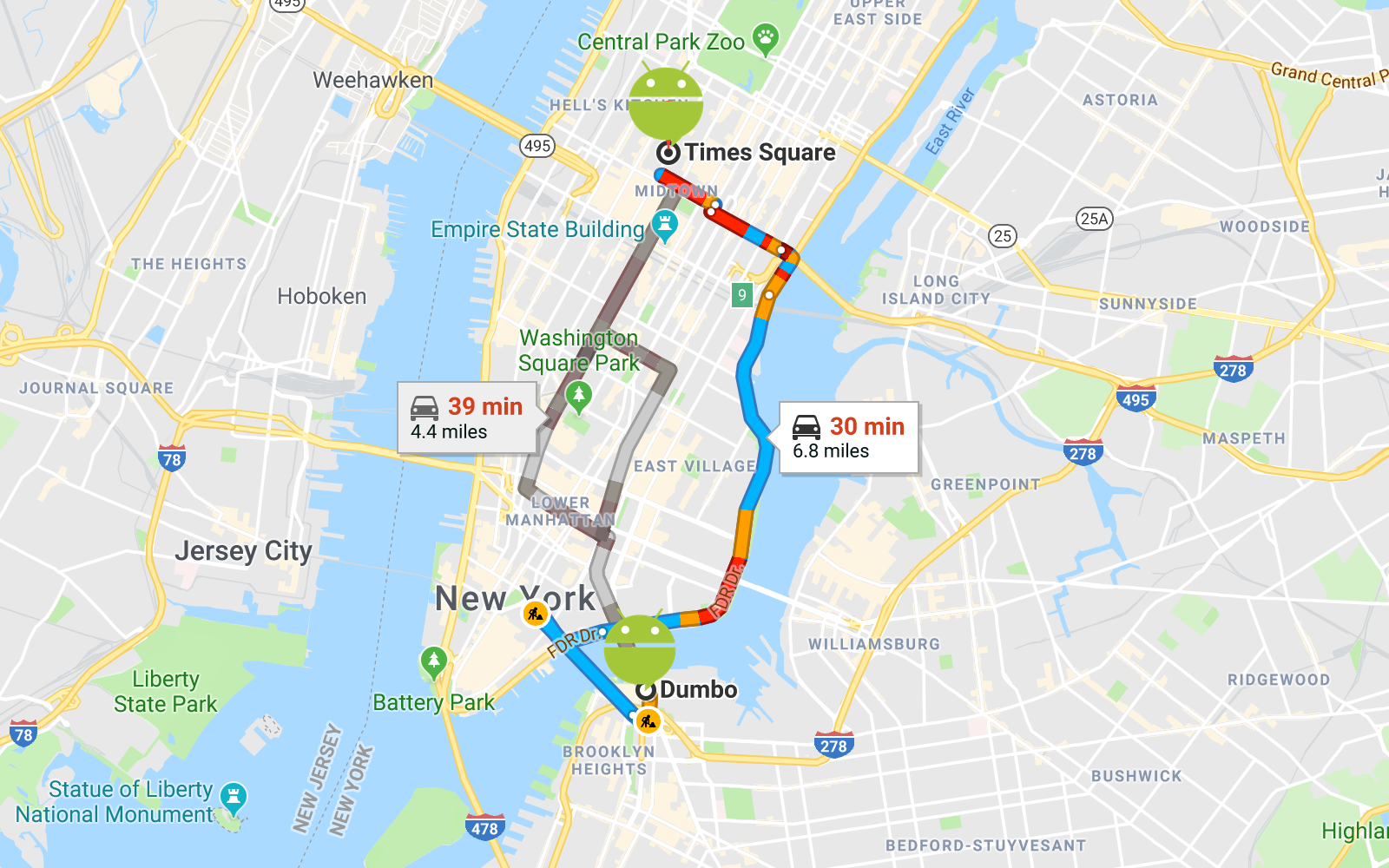
I like maps, and modern digitized mapping is really quite excellent. Instant access to the maps across the world, satellite imagery and Street View, what could be better? Well, understanding its limitations would be a start.
Satellite based navigation for cars really opened up the possibilities, and now cellphone-based navigation systems are bringing in a raft of developments in route planning, especially with traffic information available pretty much in real time. So if I like it so much, where’s my gripe? As it happens, it’s two-fold.
Firstly, the visibility of the map on your hand-held or inboard device is quite limited, generally around 500 metres, even on the big screens available in modern cars. The whole premise of navigation seems to based on that 500m, and the designers of the systems appear to think that you don’t need any more immediate information than that. In a big city with intersections every few yards, I’d agree, but outside of the city, that 500m is pretty paltry. It’s probably just me, but I like to be looking way, way further afield so that I can anticipate things that the navigation system doesn’t let you know, like whether your turn two miles away is to the left or the right. You could argue that you don’t need that information, but I can’t drive without having a general idea of where I’m going. There’s the rub, of course, you may not need that information but without it you’ll end up having to make snap decisions and quite possibly mistakes, all that could have been avoided with more advance information.
The second part of the gripe is the way systems’ developers want to decide the parameters of your journey for you. The prime example is the manner in which systems will constantly suggest route changes as you’re driving, just so that you can potentially save a minute here or a minute there. Seriously chaps, why would be be bothered about single minutes? I drove in a rented car from Plymouth to Manchester and had the navigation system constantly suggesting route changes, to a point at which it became intrusive. I spent some time trying to get the system to stop making suggestions, but when set to “Quickest Route”, those suggestions were not optional. That particular system, in an Audi, sent us on three different routes on three different days between the same two points. Interesting for sure, but why? I couldn’t discern that any of the routes was better than the other. I can’t imagine a long(ish) drive where you did take up all of the system’s supposed time saving route alterations.
There are myriad stories of people being directed down inappropriate roads by their navigation systems and I can’t help thinking that with a bit more information, a wider view, people might not be inclined to blindly follow the instructions.
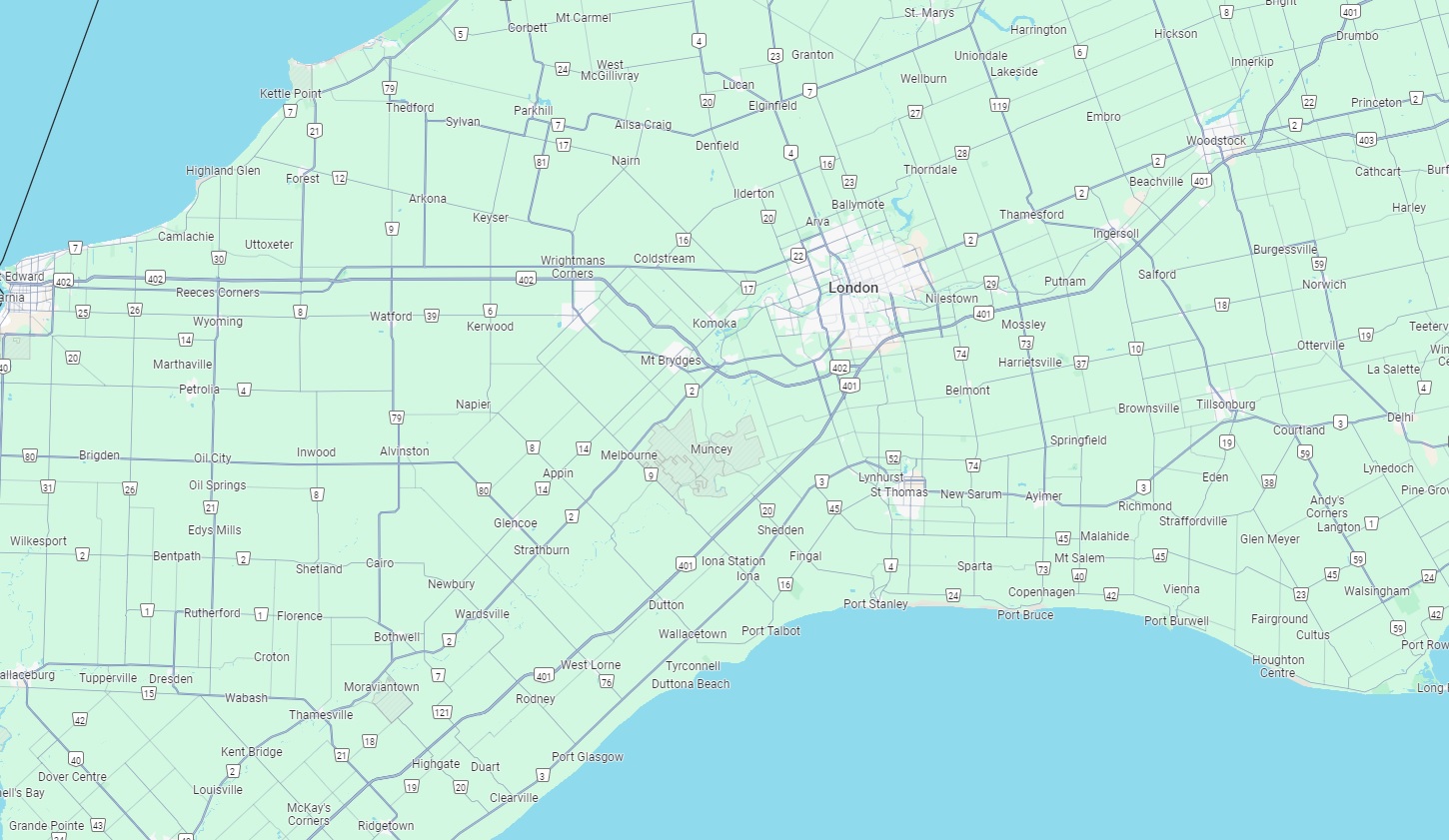
My solution is to peruse a map before I travel, paper or digital. That way I can get a feel for where I’m going, and use the navigation system to augment that broader information. Travelling across London (Ontario) yesterday, I had checked on a digital map to see that I’d need to be travelling from east west to catch a link road that ran north to south. The cellphone navigation system called out the turns, but I was at least able to follow the wider route I had lodged in my memory by making sure I was moving in the correct direction.
OK, it is me, normal people manage with navigation systems just as they are. Me, though, I still like that broader view.
I like technology, computers have revolutionized things over my lifetime and I’m grateful for them. I bought a new car through the Internet while people were still using dial-up modems. But recent developments seem to me to be going off in a bad direction. Let me explain…
In the grocery store there is mounting pressure to use the self-scan checkouts (sadly not for the customers benefit, it’s more about profit for the corporations, but I digress). I’m fully up to speed with the concept of scanning your own purchases, and apart from being far slower than the trained checkout staff, it ought to be a simple process. Not so in the Loblaws stores here in Canada. The hardware’s fine, quite good actually, but it’s the MMI, the Man-Machine Interface, that’s the issue. Whoever programmed the software is unable to read and is probably about twelve years old, at least that’s the impression I get when faced with a touch-screen that has just five pictograms on it. No words, just five coloured blocks with symbols on them.
The big green one in the middle is the start scanning button, although there’s nothing to confirm that, it’s down to your interpretation as to what a picture of a shopping cart means. On the bottom of the screen, the first icon is the store’s loyalty card, Optimum. It’s anyone’s guess what will happen when you press that button because it doesn’t say. Nor does it say when or in what sequence it has to be pressed, if at all. The second icon is for you to let them know how many bags you are using, which is OK, but like the Optimum button, there’s no hint as to when and in what sequence it needs to be pressed. The third key is a bit odd because I think it allows you to access the screen in French. Don’t get me wrong, but on a screen with no words on it, I can’t help thinking that this button is surplus to requirements. The final icon is the Help button which, as I found out, hides a multitude of useful information, not least the means by which you can scan something like fruit that isn’t packaged and doesn’t have a barcode. My point here is that it’s hidden, and there’s no suggestion beyond the “?” what’s there. That screen is an abomination.
I can imagine the design brief for the MMI. Keep it clean and simple, uncluttered. Well it’s that alright, there’s no information at all. The people who developed the screen will have known exactly what the symbols mean, and in what sequence they have to be used, and they’ll have tested it many times over. But, and I’d put money on this, they didn’t let it loose with real customers first. Now I’m no dullard, and I’m quite savvy with technology, but this screen has crossed from being an uncluttered delight into a picture that means nothing. That is a big MMI failure. It’ll will have been designed by very young people who have grown up using just their Smartphones and have been using icons instead of words ever since they found out that you can get cat videos on the Internet. Here’s the thing, how many of Loblaws customers fit that age profile? Precious few I’d wager, and there’s the issue. Real people, most of them anyway, can read, at least well enough to find the words “Press this button to start scanning”. They’re also not that bothered about the screen being uncluttered – I mean, have you seen the self-service screens in McDonalds? Pictures and words, and lots of them.
Curiously, when this software was first introduced it garnered so many complaints that it was reissued with a series of written prompts and titles over the icons. I’m OK at reading, as are the vast majority of people who use the Loblaws stores, so I was quite happy to be guided through the process by the software. Now though, with the latest machines installed, they’re back to their “uncluttered” look and it’s an absolute shambles. From that screen, can you see how you’re supposed to enter a four digit fruit code? Can you tell when you’re supposed to activate the Optimum process? To claim points, or indeed to redeem them? Do you know why there’s a French language option when there’s no English words to translate? No on all counts.
It was a couple of years back when this same company went from a nice, text-based screen for their online credit card statements, to a more graphical interface. Still words, thank goodness, but in a significantly bigger font which meant that whereas you used to read almost the whole statement on one screen without scrolling, now you could only see two lines at once, the rest required much scrolling. Sure, not everyone has great eyesight, but for those with access difficulties, the computer operating systems allow you to make your text bigger if you want, it doesn’t require the MMI to feature giant writing for everyone. I couldn’t see why the change was needed, it was a backward step, so I moaned and complained about the change (and the fact that it puts ridiculous and patronizing greetings at the top of the screen, and initially failed to include an option to download data to Quicken), but I was roundly ignored.
The people who put these systems together are clearly hung up on icons and the thought that words are not required, which is odd when you think about it because everything in Loblaws stores, other than the self-checkout systems, has a ton of words written on it; from everything sold to the huge amount of signage around the store. Well, as a customer I am not going to be using the self-checkouts in Loblaws any more, and not just because they’re doing people out of jobs. If they can’t present a decent MMI for something as basic as a self-checkout system (every other store manages to do it OK), then they don’t deserve the business.
It’s a fact that ever since I achieved voting age, not a single one of my votes over the years has been for the winning candidate. Not one over forty-seven years. Even though I’ve moved to another country, the situation remains unchanged.
In Ontario, Canada, we have a Provincial Government that is run by the Conservative Party. That’s right of centre, anti-welfare, anti-social programs and pro-tax cuts for the already wealthy. To add insult to injury, the Premier Doug Ford is mired in corruption, seemingly getting his friends some advantageous business and property deals in the quest to push through a new road that doesn’t really have the support of the people of this Province. So, when a couple of by-elections went to Ford yesterday, with big majorities, you can see how I might be tearing my hair out, although at least they were in areas that were not mine, so couldn’t vote.
One of the Ridings was adjacent to mine, though, and as has been pointed out, it’s solid farm country and the people of this area will vote Conservative, no matter what. Indeed, the UK voting ward that I’m still registered in, although can no longer vote, is exactly the same. In both cases I wonder if the voters ever look up and see what’s going on.
Back in Canada, the Liberal Party will take a bit of a pasting right now because our Federal Prime Minister is very unpopular, so it’ll be a case of a vote for anyone except the Liberals. The fact that Trudeau is actually a very successful Prime Minister and has achieved a huge amount during his tenure has been swamped by populist rhetoric, lies in fact, about things that Trudeau is responsible for. Inflation, housing, drugs issues, crime are the things he’s blamed for, even though none of those things are under his control. But I guess it’s easy to pin your woes on someone like that and not bother to stop and question whether your reasoning is sound or not.
Come the next general election here in Canada in 2025, I will cast my vote for (probably) the Liberals, not least because I can’t stand to hear the lies that are propagated, and the willingness of people to believe them. My local candidate won’t win because here you could put a blue rosette on chimpanzee and people would still vote for it. Federally I suspect that the Conservatives will take power, largely because of the unpopularity I mentioned before. I wonder how long it will be before people are saying that maybe Trudeau wasn’t as bad as they’d thought, because the candidate to be the Prime Minister is already looking like a disaster. And my vote will have gone to the losing side, again.
If you want to know where the world’s crazies go for recreation, sign on to Twitter for an hour or two. It will become abundantly clear.
As an aside, it’s still Twitter for me, and not the single letter name that its new owner Elon Musk has decided for it. More about Mr. M. later.
Yesterday I responded, almost in passing, to a man who said that Canada and the US were very nearly Communist dictatorships. I suggested that he was wrong, and that he might visit China, or North Korea, to see what a real Communist dictatorship looks like. He replied that he thought I was being myopic, presented ten reasons why he though he was right, and suggested that he could send me more information if I was interested. Well, the ten reasons revolved around suggesting policies of right-wing governments are Communist, guns make people free, and God should be part of any practical government, and by that he meant the Christian god.
Being a reasonable fellow, I took time counter each of his points, without being rude, and point out how his assumptions were somewhat off the mark. I also suggested that without a revolution, both the US and Canada were never going to be Communist, which of course they won’t be. He responded to that with six new posts, all with more detailed parts of his manifesto, and threw in some ghastly conspiracy theories about the World Health Organization (WHO), and the nefarious intent of Justin Trudeau and Joe Biden. When people start telling me that the WHO have some secret plan to take over the world then they’ve lost me, they’ve gone off into fairy land and will never be able to conduct a sensible debate. I read what he’d posted, then blocked him, which is something you have to do when confronted with such ridiculous theories.
That was just one person, and there are thousands, probably millions, more. Sheesh.
It doesn’t help that since Musk has taken over, he’s allowed the algorithms that decide what you see to lurch to his own, twisted, populist worldview. Every day I see posts from people like my friend I mentioned earlier, posts from random right-wing media outlets, ring-wing journalists and right-wing politicians, all of which are summarily blocked, but still they come. It’s curious that I never see any posts from random centrists or left of centre people. Something from Wab Kinew, or Sean Fraser, people like that, but they don’t appear. Yes. I can search those good people out, but why do I get posts dropped into my feed that are clearly counter to my personal views? I’m not the only one who has noticed this, either.
I get it, Twitter is largely free to use, I can disable the ads., and I recognise that it’s not a democratic space, so I treat it accordingly, but the feeding of nonsense to more gullible people than I is something that perhaps needs to be balanced out somehow. It’s my contention that Twitter will collapse in on itself in the end anyway, because even now it’s beginning to look like a bit of a cesspool.
Should that happen, I wonder where the crazies would go?
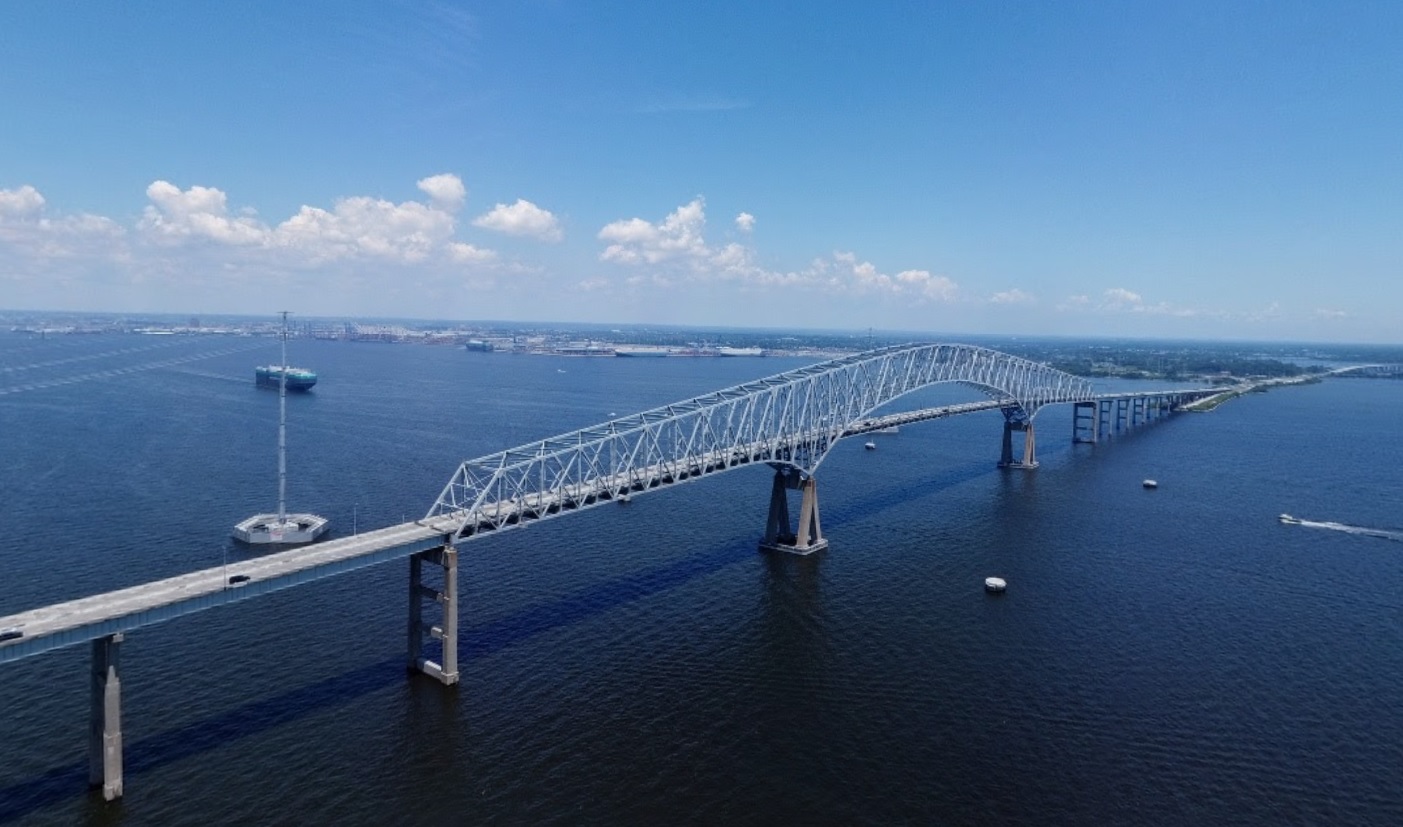
I don’t often write topical stuff, but the collapse of the Francis Scott Key bridge in Baltimore has been a bit of an eye opener. Most importantly I should say that as I write this, the search is still on for at least six people who are listed as missing. Quite rightly, work in and around the bridge right now is concentrated on that. I hope that there is a positive outcome for them and their families.
At the other end of the scale has been the absolutely crazy speculation about the cause of the collapse. Some people on Twitter were categorically stating that this was a terrorist incident, and they knew because they have special sources of information, which is about as crazy as you can get. If I was a terrorist I could think of a whole lot of easier ways to cause a major event that wouldn’t involve crashing a container ship into a bridge at 1.30am. Then there were the many speculators claiming the captain and crew of the ship had all collapsed as a result of taking the COVID vaccine. Never mind that the COVID vaccine is about as safe as a vaccine can be, but the ship was under the command of a pilot at the time. I honestly don’t know if these lunatics believe this stuff or they’re just stirring things up, either way it indicates just how messed up people can be.
In reality, of course, it looks like the ship had a power failure and lost its ability to steer, or to take any other evasive action. The crew did get a Mayday message sent, so they were aware of what was likely to happen, but in the event, the ship did hit one of the two main supporting bridge piers, brought it down, and the rest of the bridge with it. It looks most likely to have been a dreadful accident, as these things usually are.
The catastrophic collapse, though, does raise some interesting questions about single points of failure and business continuity. Obviously it’s very easy to be wise after the event, but when stuff like this happens, all those weaknesses come to the fore.
That bridge and its supporting piers did look very flimsy given that one ship was able to demolish the whole structure. There didn’t seem to be much in the way of measures to protect the piers from possible collisions, which is a bit worrying. There are a lot of similar bridges in North America and I can imagine that there are many engineers currently looking at points of failure, and what they can do to mitigate the issue without rebuilding the whole structure. It’s fair to say that ships of this size were not anticipated when the Key bridge was designed and built, but not building some barrier to protect the piers seems to have been a bit shortsighted now. I’m absolutely certain that other ports with similar points of failure will rapidly be instituting a system of bringing large ships in under tow, or at least escorted by a couple of tugboats as well as the pilot. When the channel is cleared and the bridge rebuilt, as it will be, you can guarantee that the design will address this and other systemic weaknesses.
Beyond the immediate disaster is, of course, the fact that the Port of Baltimore is going to be out of action for quite a while. There’s been much talk of people having to drive trucks and cars on a long detour now that the bridge is out, but what of the trade within the port, and the ships that are currently the wrong side of the collapsed bridge? Ships outside of the port can (probably) go elsewhere for now, but the money tied up in the vessels there, and the port facilities that will be largely idle, are going to cost people and businesses dearly. It sounds like the US Government is going to help them, but what had they done to protect themselves from just such a disaster? You’d like to think that they all have business continuity plans, but as they cost money to implement and affect today’s bottom line, such planning is often not undertaken and everyone trusts to crossed fingers.
There will be lessons learned here. Future builds of port infrastructure will have resilience built in, and existing builds will most likely be improved. The recent blockage of the Suez Canal after a ship was wedged across the channel showed the importance of the continued improvement of that seaway, making it “two lane” along much of its length. Forward planning seems to have been applied for the new bridge across the Detroit River, thank goodness, as its piers have been built on each bank and not in the river itself, something that I’m certain was part of the design brief to minimize the likelihood of ship collisions. What has to be done overall, though, is to recognize the value of contingency planning, even where it costs a lot to implement. One catastrophic even can cost far more than some forward planning costs.
It’s based on the book of the same title, by the film’s leading character, Gwen Terasaki. It’s the true story of an American woman who marries a Japanese diplomat, Hidenari Terasaki, in the 1930s, and how she had to navigate the casual racism of her friends and family at home, and the trouble she had to endure as the wife of a Japanese national, and an influential one at that, after Pearl Harbor.
It’s a powerful tale, that resonates today, especially with people like George Takei keeping the internment of Japanese Americans in the Second World War in people’s consciousness.
I haven’t read the book yet, but from various reviews and summations of that text, it looks like the film played a little fast and loose with the real story, not least with the timeline, but I think it did manage to convey the problems Gwen struggled with. It didn’t deal at all with Gwen’s work before and after Hidenari’s death in 1951 to set up a “peace bridge across the Pacific” to bring the two nations closer together after the war. Also, while the film and book featured the Terasaki’s daughter Mariko, it didn’t go any further to tell of her involvement in the movement to bring the two countries cultures together in the decades after the war.
However, this does raise the reason why we watched the movie at all. In my family tree research I discovered that Mariko Terasaki was married to a fourth cousin of mine, Mayne Miller. Mayne was a lawyer and was only four generations away from the first of my family Maynes to land in the USA in 1822, as am I, hence the fourth cousin designation.
Mayne was the same generation as my dad, and died in 1979. Mariko was a little younger and died in 2016. They had four sons, two of whom survive today, so there is still a living link with me and Gwen and Mariko Terasaki, of which I am very proud.
I do like my football. That’s the game played with the feet and a ball, not hands and an egg; that’s Handegg and only played in North America,
Watching football on TV is very easy in North America, though, and it’s cheaper than if you were watching in the UK. The number of games on offer is very good, as is the quality of the video feed. Well, I say that, but here’s the rub, the commentary is awful.
Games from the English Premier League (EPL) are broadcast in Canada through a streaming service imaginatively called “FUBO TV” (named, I think, by some drunk marketing people after a good afternoon out at the pub). Fubo gets its video direct from the EPL using the “International Feed”, that is for broadcast in English speaking countries that are not the UK. The EPL use a variety of professional match commentators, who are journalists I believe, and a former professional player as a “Summarizer”. I don’t know that there are any rules on impartiality when creating this feed inasmuch as it will be going out to various non-UK countries and isn’t subject to the UK’s broadcasting standards. As a consequence, the commentary and the summarizing is simply awful.
You can bet Beglin was summarizing on this game at Anfield. Slippy Gerrard having a pop at Everton’s goal.
As an initial example, take the number of Liverpool games summarized by Jim Beglin. It seems that every time the reds run out in a televised game, good old Jim is there to provide the insight. That would be OK except that Jim Beglin played 98 professional games for Liverpool in the eighties, and he absolutely adores everything Liverpool, and Liverpool related. Cut him in half and he has the word Liverpool running through him like a stick of rock. (Google it). He has improved over the years and no longer relates everything to his Liverpool playing days, but he still roots for the reds and it’s frankly embarrassing to have to listen to him. Worse than that, the match commentators will often take the lead from the summarizer and amplify the outrageous partisanship. I can only assume that Jim lives in the North West of England somewhere, and finds it easy to get to Anfield. There can’t be another explanation as to why they let such favouritism go unchecked.
A far worse example is that of match summarizer Andy Townsend. Now Andy has played for my team Chelsea 110 times, but he clearly left under a cloud because it’s virtually impossible to get to hear him say anything positive about Chelsea, and it doesn’t matter who their opponents are. He’s being doing it for years, too, as I have bad memories of a game where Chelsea played Stoke City, in Stoke, and Townsend was all but coaching City for about two-thirds of the game. Chelsea won anyway, but I really couldn’t fathom why he was so negative. Things have continued like that for season after season, and the only time he relents is if Chelsea are winning well and there’s not much time left to play. The game with Newcastle United this past weekend was a case in point, with Andy disparaging everything Chelsea did, until they went 3-1 up and the game was sealed. We thankfully don’t get Andy summarizing as much as we used to, at least not Chelsea games.
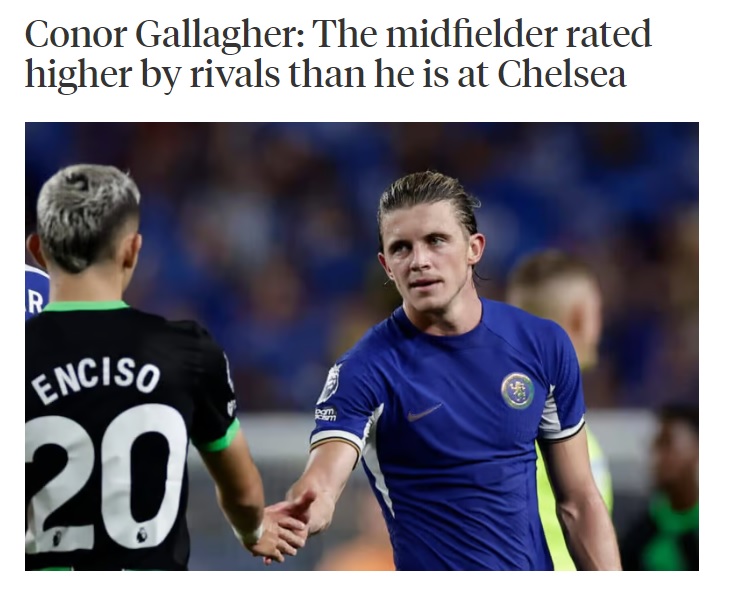
I think the commentators and summarizers read the back pages of the tabloid newspapers before they start work. They keep regurgitating the current gossip and the speculation, 90% of which is nonsense, but I guess they do it for the same reason the tabloid hacks do it, to sell advertising space. Like the people who dreamed up “FUBO TV”, most gossip is formed in pubs by journalists with nothing better to do. I was going to mention the “Connor Gallagher to be sold” story, but it’s pure fiction so not worth mentioning.
More tabloid bollocks, this time from the New York Times’ The Athletic. Pure fiction.
Anyway, words are important and footy fans are not (all) stupid. They no more like to hear favouritism from the commentators than they enjoy seeing their own team lose. I shall be penning a furious letter to the EPL if I hear Townsend summarizing a Chelsea game again this season, but apart from me letting off a bit of steam, I really don’t think it matters to the EPL. Sad.










 Stevemayne's Blog