The Internet and the Advertising

Tags

, , , , , , , , , ,

I may have been here before, but I was reminded of the scourge that is Internet-based advertising when a letter dropped into my real, physical, mailbox inviting me to join the Nextdoor app. Being the introvert that I am, the idea of joining some social media corral filled with neighbours immediately put me on the defensive. I didn’t think “What is this?”, I thought “Who’s making money from this?”.

Nextdoor, as the blurb goes, is a way of using social media to connect with your neighbours. It’s not like a Facebook group in that it’s limited to a set range of people, most of whom have been invited. They touted one of the benefits as “Finding lost pets”, which to me seems a bit of low priority, even for pet owners. Anyway, back to the meat of it. I Googled it, of course, and once I’d sifted through the glowing testimonies (sorry, no “free” app is that good), I came to what I wanted to find, that is who is making money from it.

Of course, revenue is derived from advertising, broad-based and local.

The thing is, no matter how many pets I want finding, I think I already get far more advertisements through my computer than I need, and I take significant steps to prevent them, too. The Nextdoor app is Android (or Apple) based and therefore not as well shielded from advertisements as things on my PC, so should I wish to avail myself of the app to find my lost pet, I’m going to have to suffer an onslaught of advertising.

Yes, I’m aware that much of the good stuff on the Internet is funded by advertising, and I’m sure lots of people get lots of good information from commercials. I’ve even responded to one or two Internet ads myself, but it’s their volume and their relative intrusiveness that bothers me. A few fewer ads, sorry many fewer ads, and I might feel differently, but there are apps out there that are virtually unusable thanks to the advertising overkill. Less is more, people.

I also understand that living in North America now that there’s a different culture around advertising, and by that I mean people are far more tolerant of it. I mean, seriously, how can anyone get excited by advertisements at the Super Bowl? Some will tune in to the game just for the commercials. It’s madness. I went to a summer soccer match in Ohio between two teams from the English Premier League, and they were even sponsoring the damned corner kicks! I know that’s not Internet advertising, but I am pointing out that North Americans clearly have a higher advertisement threshold.

Anyway, I won’t be using the Nextdoor app, mostly because I get too many ads already and I genuinely don’t need any more. As I said in an earlier paragraph, perhaps instead of chasing revenue with higher volumes, which in my case have a negative effect, they could do fewer but make them less intrusive and more interesting. Did I say interesting? Given that North America is the home of modern advertising, I really think ad agencies should be looking at quality before quantity, because right now it’s all quantity and no quality.

More Grave Thoughts

Tags

, , , , , , , , , , ,

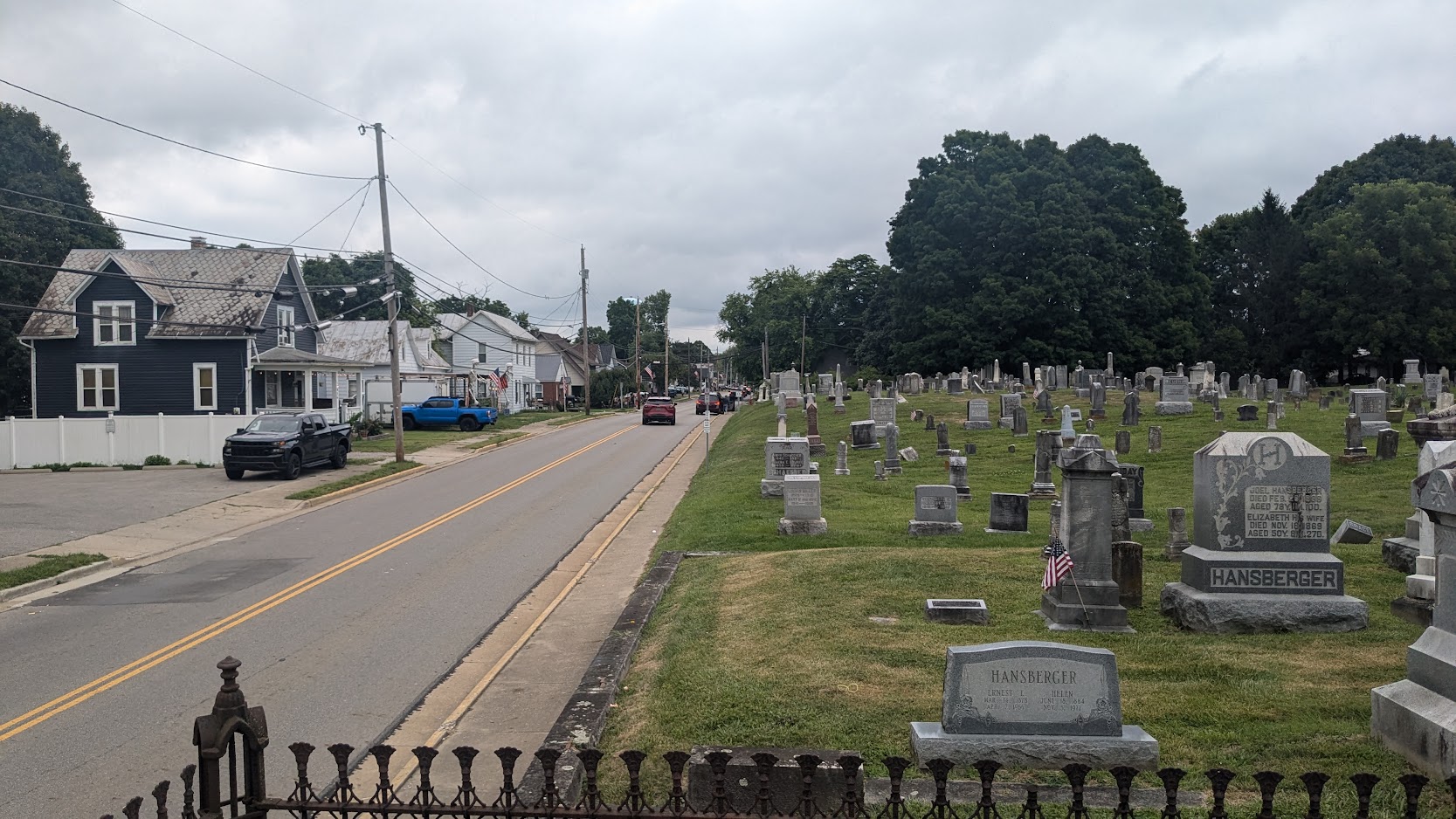
It occurred to me that I hadn’t noted down any details of our trip last August to Fairfield County, Ohio, and the grave of Washington Franklin Mayne. We were in Columbus for the weekend on another matter, but couldn’t pass up the opportunity to visit old WF’s last resting place.

Why? You may well ask.

Washington Franklin Mayne was the third child of Henry Collins Mayne and his wife Anna Robinson, and was born in Loudoun County, Virginia, in 1826. Henry and Anna had arrived in New York from Leeds, in the English county of Yorkshire, in 1822 and made their way to Northern Virginia to set up a farm. Henry’s father, Joshua Mayne, is my great-great-great-Grandfather. Not only was Washington Franklin the third Mayne born on US soil, but he was the last to be born in Virginia as the family moved westwards, to Perry County, Ohio, after his birth.

Not much is known about Washington Franklin as he grew up in the Zanesville Ohio area, but we do know that he studied at Ohio Medical College to become a Doctor and started a practice in the village of Basil, Ohio. As well as being a respected doctor, Washington Franklin acquired a lot of land in Basil and was a well known figure in the area.

The land acquired by Washington Franklin Mayne was on the original lands of the Shawnee, Mingo and Delaware peoples, and their ownership of that land is fully and respectfully acknowledged.

Washington Franklin married Eliza Jane McNeill of Ross County, Ohio, in 1865 and they became the parents of four children while living in Basil.

All that is by way of background as to why I would want to visit a small and very pretty little village in rural Ohio. Washington Franklin died in 1884 at the age of 56, and was buried in Basil Cemetery, just yards from the home and doctor’s office he built in the village. Eliza Jane died in 1924 at the home of her daughter Gertrude, in Piqua, Miami County, Ohio. Although buried in Piqua, Eliza’s name is engraved on the handsome stone memorial that marks Washington Franklin’s final resting place.

As we motored south from Columbus, it’s only a 35-minute drive, we both remarked on how similar this part of Ohio was to our part of Ontario; the same crops in the fields, the same buildings on the land. As we arrived in Basil we came across a town parade, an annual event for the people of Baltimore Ohio, the larger town that swallowed up old Basil. I thought perhaps they were out in my honour, but alas, no. We found Washington Franklin’s gravestone easily, stood and soaked up the atmosphere, and I felt really quite humble to be there at the place were one of the founders of the Mayne’s American dynasty had built his life, and the lives of his family.

Washington Franklin and his siblings were the start of a vast family network covering a good portion of the USA, from Indiana to Tennessee, to Kansas and to Colorado, and many places in between. There are many more graves for me to visit, particularly in Indiana, but for now the is trip to see old WF’s grave and the village he made his mark in will have to do.

A Park In The Sky

Tags

, , , , , ,

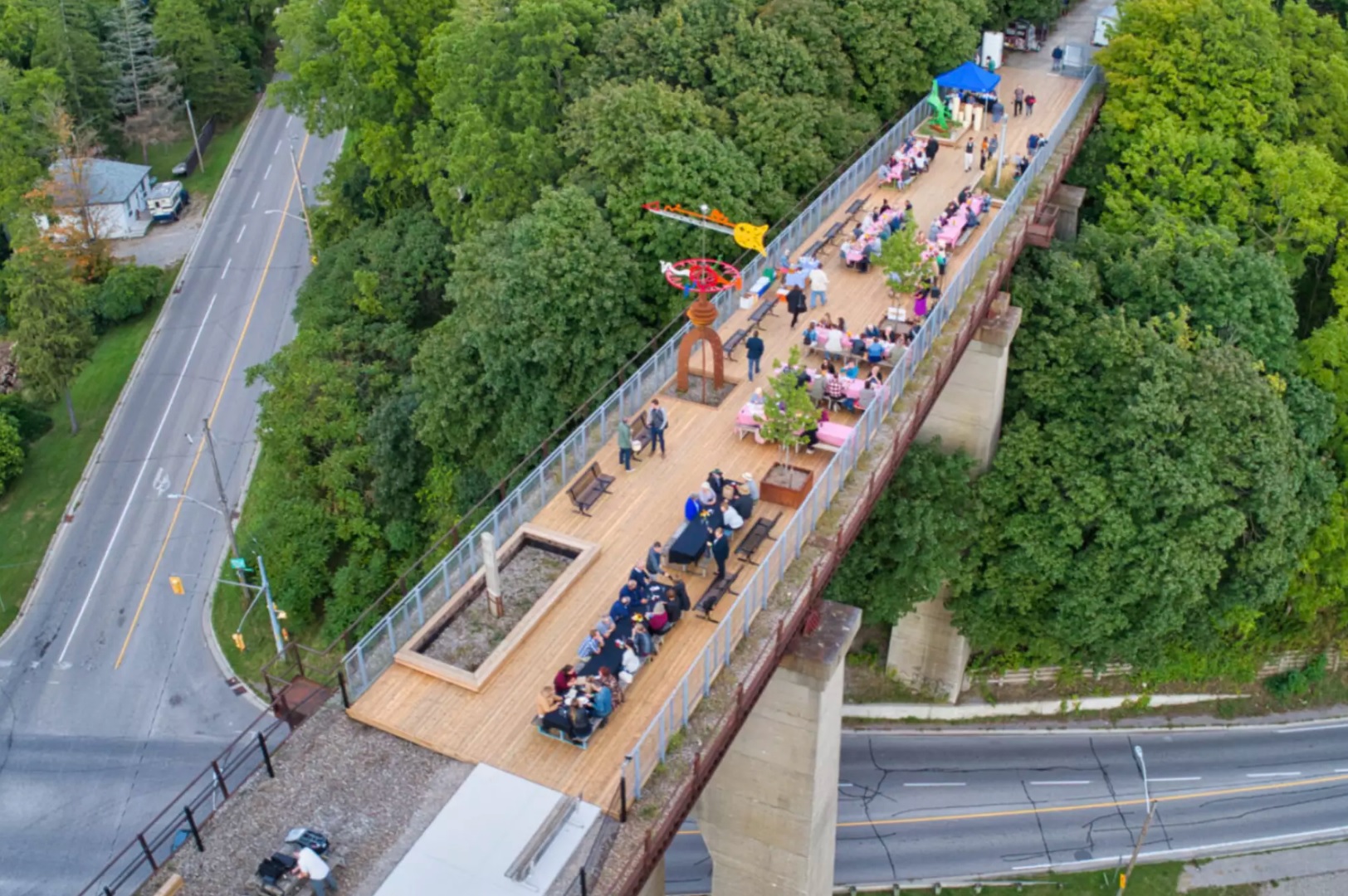
Last week we visited the St. Thomas Elevated Park, in St Thomas, Ontario. Essentially it’s an old railway bridge that has not only been refurbished as a pathway, but it’s also an outdoor art gallery. What a great thing to do with a massive bit of railway infrastructure that’s no longer needed for it’s original purpose.

Of course it’s been done before, with New York’s High Line snaking through that metropolis, but this little bit of modern reuse is much smaller and much more intimate, and a touch easier to get to for us!

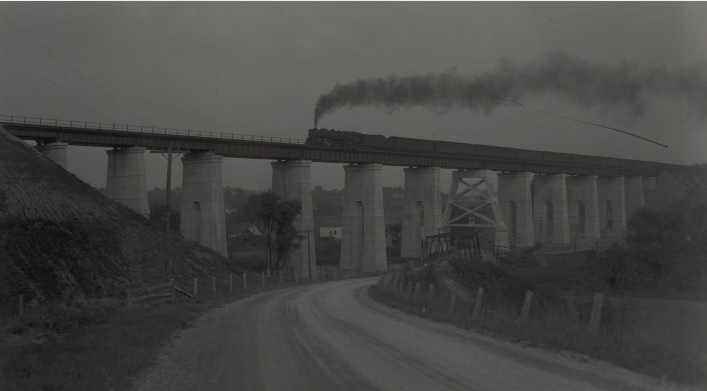
The Elevated Park is a walk along the bed of part of the old Michigan Central Railroad that ran between Buffalo, N.Y., and Detroit, Michigan, through southern Ontario. St Thomas, the Railway City, was about the midway point of the line and served as a major centre for the railroad. The walk stretches a couple of kilometres, east-west, out to the western side of the city, but the key part is the bridge that spans Kettle Creek. The bridge that stands today dates to 1929, was a double tracked structure and stands ninety feet above the river below. It’s been paved, and equipped with unobtrusive modern safety fencing, which doesn’t alter the look of the bridge, and among the benches placed there is artwork by local artists. The whole pathway has been created with public donations and private sponsorship, and is free for anyone to use. I note from the Park’s website that they will take donations any time, so I’ll be sending then a few dollars, I think.

The view from the bridge is spectacular, and dizzying if you look down, albeit that you do look right into the yards of a few houses in the valley. Looking down to the top of the tree canopy is always a joy, and you can do that from ninety feet up. It was very warm when we visited, and while the lead up to the bridge is shady, out on the structure it was a wee bit too exposed to linger without getting sunburned. Not great at the time, for sure, but it does mean that we’ll head back in the cooler weather, and maybe walk a couple of kilometres of the track bed beyond the bridge.

This, of course, ties in with the Grandson’s current obsession with trains. He wasn’t with us on the visit, but I’m not sure we’d have been there at all had we’d not taken him a couple of months ago to visit the Elgin County Railway Museum in the centre of the city, from where trains would have departed to cross the bridge we were enjoying as a park.

Anyway, if you’re ever in the area, I can recommend a visit.

Family Trees

Tags

, , , ,

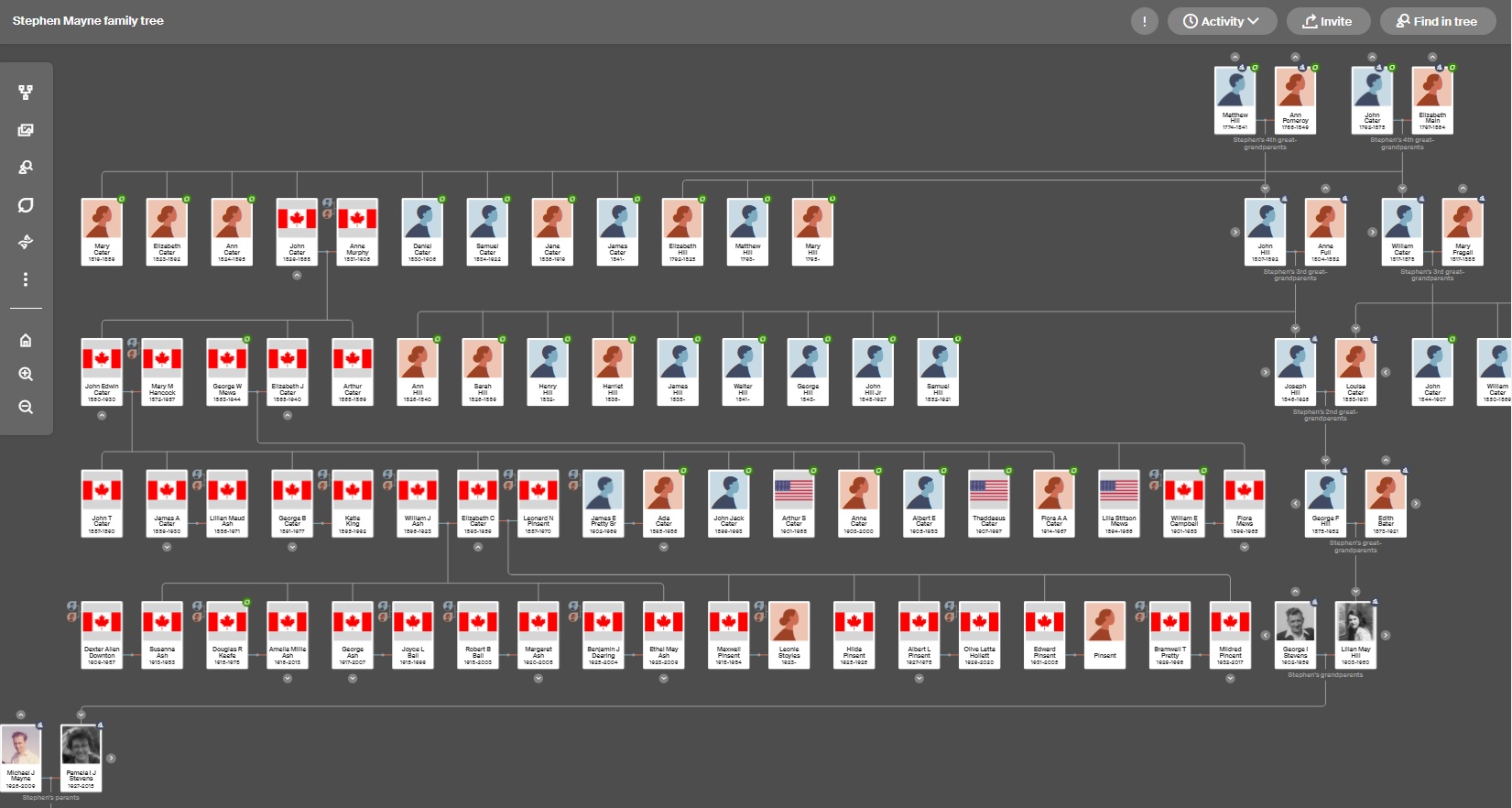
At the outset, let me say that I’m a huge fan of Ancestry.ca (or .com, or .co.uk). The software and it’s underlying data has its detractors, not least because it’s very expensive, but it’s enabled me, and countless thousands of others, to document our families in ways that were simply not possible even just twenty years ago. I’ve met distant cousins, visited graves that I didn’t know existed, and even had them analyze my DNA, so I think the whole thing really is the Bees Knees.

But here’s the “but”.

Because the data entry isn’t controlled, the range and format of what people enter is never ending. All capital letters, no capital letters, abbreviations, codes, misuse of fields, it’s all there. I know it’s true that if you give fifty people a form to fill, it’ll be filled in fifty different ways, so I guess this is something similar. But what, you may ask, does it matter?

Well, it matters a lot. I don’t know if some of the users of Ancestry realise that other people get to see the data they enter; that’s rather the point of Ancestry, that we share information. But including a person’s nickname in the Name field helps no one, and like many of the other data input issues, really screws up sorting and searching. That the nickname is often accompanied by quotation marks or parentheses just adds to the confusion.

Then there are the people who invent their own coded method of data entry, including mothers’ names and spouses names in a person’s First Name and Surname fields not only confuses the database and makes reading the data hard, it’s all unnecessary because these nuggets of information are held elsewhere and linked by the system.

Perhaps what I’m really complaining about is having to go through and re-enter data when it pops up in my family tree, not just to keep it consistent and workable, but to make it look reasonable.

Anyway, nothing will change and I’ll spend a good proportion of my time righting wrongs, in data entry at least. In between times I can happily discover 164 people in my tree who were born in Newfoundland (a week ago I hadn’t heard of any), and realise that a long-lost cousin lived two streets away from where I lived in North London, albeit twenty years earlier. It’s nothing if not interesting in the world of Ancestry.

Things to be grateful for…

Tags

, , ,

Yesterday we went to the flag raising ceremony that marks the start of the local Pride Week, at the Civic Centre. I’m grateful that we have a sympathetic and caring Municipal administration that supports these things, and I’m grateful that the Council, the Fire Department and the Police were all there in support. In a town that can be deeply religious, it’s good to see that Pride Week is seen as positive.

We walked on down to Turns and Tales, a café and bookshop which is a friendly space for all minorities. I’m grateful that such a space exists, and absolutely loved to see the events night schedule that included many curious things, including a Bridgerton Trivia Night; who knew that was a thing? While we were enjoying our lunch, we watched the people on King Street, the town’s main street, and ruminated on the idea that it should be pedestrianized. The shopping has been killed off by the out of town stores and strip malls, but the space is slowly being taken up by cafés and restaurants, and we thought how much nicer it would be to be car-free. Then we watched a youngish woman rifling through the bins in an alley. She had picked up a discarded cigarette butt, but she appeared to be mostly picking up plastic and padded envelopes. She didn’t look like she lived on the street, although she likely did, but she was either high on something, or mentally ill. I’m grateful that no one I know is suffering from mental illness, at least not to that extent, or lost to drugs and homelessness, because I can’t imagine how awful that could be. I’m grateful that my parents imbued me with sufficient common sense and a sense of how to survive. We should, all of us, be doing more to help those who are not so fortunate, and we should be pressuring those in charge to adjust their priorities so that official help can be available. It’s frustrating to hear just this morning about the movement to prevent our City Council from trying to get an affordable housing scheme running, on the grounds that they’ll need tax payer’s money to do it, but I’m grateful that the City is trying something.

I’m grateful that I live in a comfortable home, with people I love, and that I really want for nothing. Certainly, a lifetime of mostly good decisions, and a big slice of luck, has brought us to where we are, but I’m still grateful.

I’m not a believer in a god, or a higher authority, but it does me the power of good to sit and reflect sometimes, on life in general and how lucky we are to be here. Have you tried it?

Why The Hurry?

Tags

, , , , ,

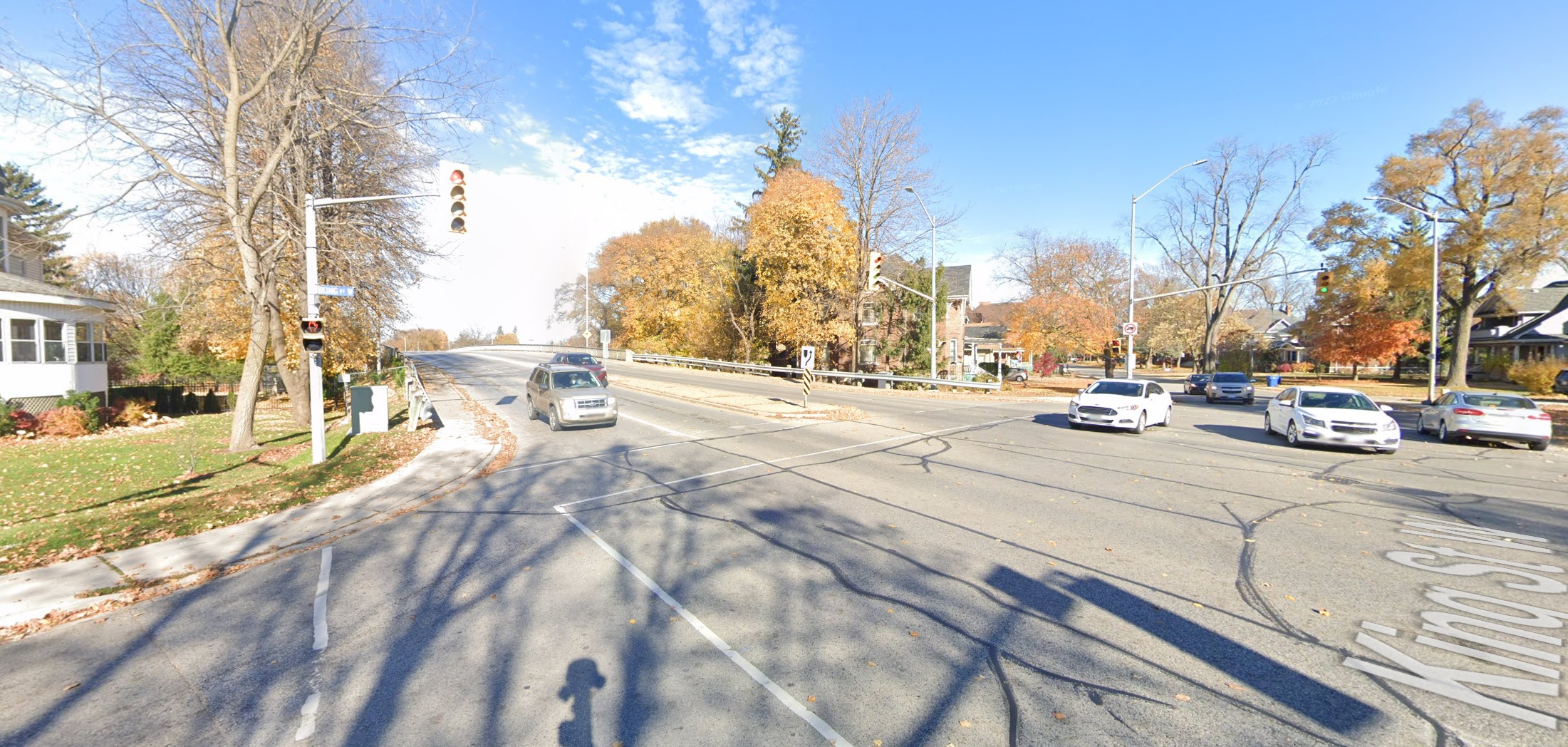
I was reminded again this afternoon of just how much some people are in too much of a hurry when they’re driving. I had to make a right, on a red light, onto LaCroix Street, but to my left is a bridge. When I’m looking to see if the way is clear, I get about 100 metres of clear sight before the road dips down on the other side of the bridge. That 100m or so should be ample for me to pull out into the road when I can’t see another vehicle approaching from my left. But, and it’s a big but, if the approaching vehicle isn’t speeding. Sadly, they nearly always are. I looked left today, could see no vehicle approaching, so made my move. A quick glance in the mirror as I made the turn and there was a blue car bearing down on me at a rate of knots. No worries, I’m in my lane, but why did the driver of the blue car feel the need to come hurtling over the bridge like that? The car was something anonymous, but it had a personalized licence plate and the driver was a young woman bobbing around in her seat, hopefully to some music. She passed me, but less than 200m ahead I passed her again as we both drew to a stop at the next set of lights.

Quite possibly because I’m officially a Senior these days, and I’m retired, but I genuinely don’t see why everyone is rushing around. The young woman in the blue car gained nothing by driving so fast, and I crossed Richmond Street before her, despite my sticking to the 50Kph speed limit, so what was the point? You see it all the time with people make risky passes on ordinary roads, only for me to come right up behind them at the next set of lights. I absolutely do not get the rushing around when 99% of the time there is absolutely no benefit to speeding and taking unnecessary risks.

I’m certain that people who encounter me on the road cuss and curse me because I don’t generally exceed the speed limit. They’ll call me grandad, and get seriously bent out of shape because they perceive that I’m driving too slowly. Maybe I did when I was younger, although I don’t really remember if I was a one to hurry, even when riding my motorcycle in London.

Anyway, I will continue to drive in an unhurried manner. I will stay aware of people who are in a hurry (even though I know what they do is pointless), and I will keep up with the flow of traffic, up to the posted speed limit, at least. If everyone did that then there’d be far fewer road collisions.

That last sentence reminds me of the fellow who made a Facebook post claiming that he’d been stopped by the cops for driving at the speed limit, and asked why he wasn’t doing at least ten over. If that happened then I’m a Dutchman’s uncle.

A Bit Of An Update on Retirement

Tags

, , , , , , , , , ,

Two full years of proper retirement behind me, so it’s time for an update.

Firstly, do I miss work? No, I don’t miss work. I don’t miss the routine of it, and don’t miss the stress of it, real or imagined. To not have that five day a week commitment, to not have to go and do someone else’s bidding, latterly for very meagre compensation, is blissful, it really is.

But, more than forty years of being part of that culture has been very difficult to move away from at times, and there are moments, more than I’d like, where I start to feel a certain guilt that I’m not fully occupied during a work day. It’s more habit, more trying to shed an ingrained routine, than anything else, but I’m working on it.

I haven’t set my alarm clock, bar the occasional day, since retiring, and that’s very freeing. I wake early most days, but can enjoy the feeling of knowing that my day is my own. Every day, too, not just the weekend. In these summer months I get into my walking sessions, and use that first waking hour of my day to pound the pavements hereabouts. It gets warm in this part of the world so the early start is beneficial, but it is so nice to utilize that early time to good effect, not just to get some exercise, but to listen to an audiobook as I walk, which is about as close to multi-tasking as you can genuinely get.

I still don’t get done as much as I’d like during the day. There’s always the necessary, cleaning, laundry, house maintenance and the like, that tends to get put to the bottom of the list because the tasks are boring and to an extent, pointless. Then there are the optional things like the garden, online time (the biggest consumer of my efforts in day), and finally the projects, usually home related, that I am definitely “going to get around to”, eventually. Overarching all that is my innate laziness and the fact that really I don’t want to be “doing stuff” the whole time because sometimes, and this may be the key to retirement, I don’t want to do anything at all. That’s the conundrum that exists when you’re still trying to divest yourself of the habit of work.

I read a piece in the New York Times recently that said maybe retirees should just do nothing, at least for a portion of their day. They should do it and attach as much importance to the down time as they do to the positive tasks in their lives. I’m beginning to think that the author of the piece was right, albeit that most retirees I’m sure are also locked in this personal debate about thinking that they should be doing something, rather than nothing.

I think that this doing nothing, or the acceptance of the principle, should be my task for the next year. Sure there are things I have to do, things I want to do, and things I ought to do, but doing nothing should be right up there at the top of the list, and have as much guilt attached to it as doing the laundry, or cleaning the house; that is no guilt at all!

The garden is work, but the enjoyment of it is guilt-free do nothing time.

Not In Your Back Yard

Tags

, , , , , ,

I was a bit surprised to read a post in a local Facebook group decrying the state of a neighbour’s back yard. The post was accompanied by photographs of the offending yard, along with the plaintive question “What can I do about it?”.

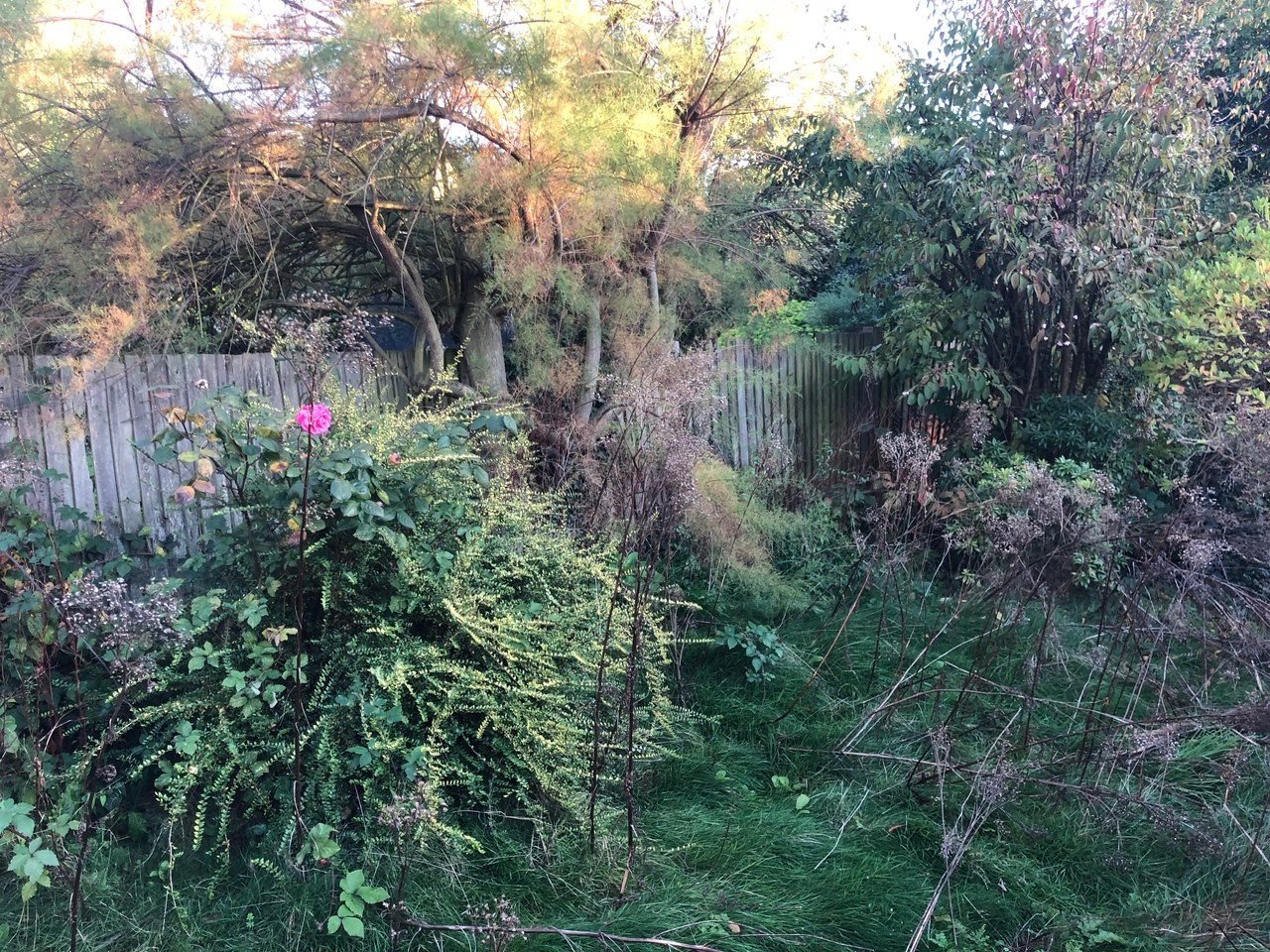
Not the actual back yard in question

My first reaction was “Mind your own business”. It’s not unknown for the City to require someone to mow down weeds in their front yards, but back yards as well? In fact, what was the complaint about? What is aesthetic? Was it about health? I couldn’t really decide. The person complaining was doing so on behalf of her (claimed) elderly parents and their dog who, it seems don’t like bugs in the yard. I can see that a neighbour’s overgrown yard might attract bugs, but firstly you’d have to prove it was the overgrown yard causing the issue, and secondly to what extent are some bugs a nuisance that should involve the City. Where does a person’s right to have their back yard as they wish begin and end?

Obviously if a yard is likely to be a breeding ground for rats or other pests, then health issues would be a good enough reason for the City to act. Having fires without permits, or the creation of obvious noise pollution like late night parties, will be other reasons for them to act, but I’m still struggling to see why a neighbour’s overgrown yard would be enough for the City to be involved, not least because the owner or lessee of the yard has rights, too.

It’s a fact that the good people of this town like things neat and tidy. There are byelaws, which the City will uphold if you nudge them a bit, but often people assume byelaws to be bigger and more sweeping than they actually are. The man who complained about our trailer being on our driveway hadn’t read the rules, so his bleat to the City failed. No one has yet complained about all the native plants and trees in our front yard, although I feel they could at any time, it’s happened elsewhere in the city, but if they did then again they’d find that the byelaws protect our rights rather than their complaint. But I’m not sure about back yards, and until I feel someone’s back yard is upsetting me (which will never happen), I’m not even going to look at the Byelaws.

There’s the thing, why complain at all? So your neighbour’s yard is a bit overgrown? Don’t look at it, build a tall fence, grow a hedge. Ultimately, unless the neighbour is actually impacting you or your life, and I don’t mean with a few bugs, then stay in your lane and let the neighbours be.

Ah, Technology (Part 2)

Tags

, , , , , , ,

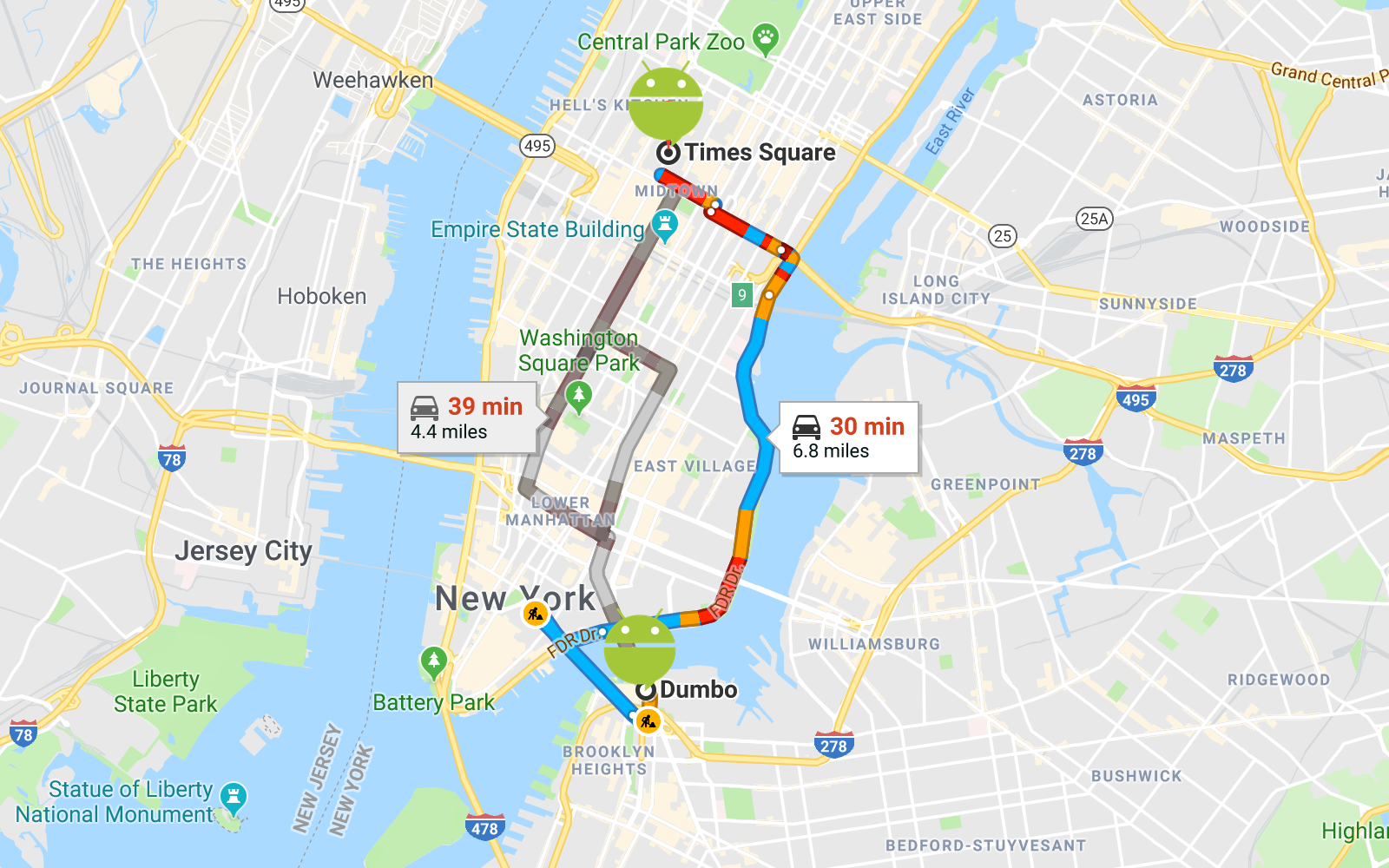
I like maps, and modern digitized mapping is really quite excellent. Instant access to the maps across the world, satellite imagery and Street View, what could be better? Well, understanding its limitations would be a start.

Satellite based navigation for cars really opened up the possibilities, and now cellphone-based navigation systems are bringing in a raft of developments in route planning, especially with traffic information available pretty much in real time. So if I like it so much, where’s my gripe? As it happens, it’s two-fold.

Firstly, the visibility of the map on your hand-held or inboard device is quite limited, generally around 500 metres, even on the big screens available in modern cars. The whole premise of navigation seems to based on that 500m, and the designers of the systems appear to think that you don’t need any more immediate information than that. In a big city with intersections every few yards, I’d agree, but outside of the city, that 500m is pretty paltry. It’s probably just me, but I like to be looking way, way further afield so that I can anticipate things that the navigation system doesn’t let you know, like whether your turn two miles away is to the left or the right. You could argue that you don’t need that information, but I can’t drive without having a general idea of where I’m going. There’s the rub, of course, you may not need that information but without it you’ll end up having to make snap decisions and quite possibly mistakes, all that could have been avoided with more advance information.

The second part of the gripe is the way systems’ developers want to decide the parameters of your journey for you. The prime example is the manner in which systems will constantly suggest route changes as you’re driving, just so that you can potentially save a minute here or a minute there. Seriously chaps, why would be be bothered about single minutes? I drove in a rented car from Plymouth to Manchester and had the navigation system constantly suggesting route changes, to a point at which it became intrusive. I spent some time trying to get the system to stop making suggestions, but when set to “Quickest Route”, those suggestions were not optional. That particular system, in an Audi, sent us on three different routes on three different days between the same two points. Interesting for sure, but why? I couldn’t discern that any of the routes was better than the other. I can’t imagine a long(ish) drive where you did take up all of the system’s supposed time saving route alterations.

There are myriad stories of people being directed down inappropriate roads by their navigation systems and I can’t help thinking that with a bit more information, a wider view, people might not be inclined to blindly follow the instructions.

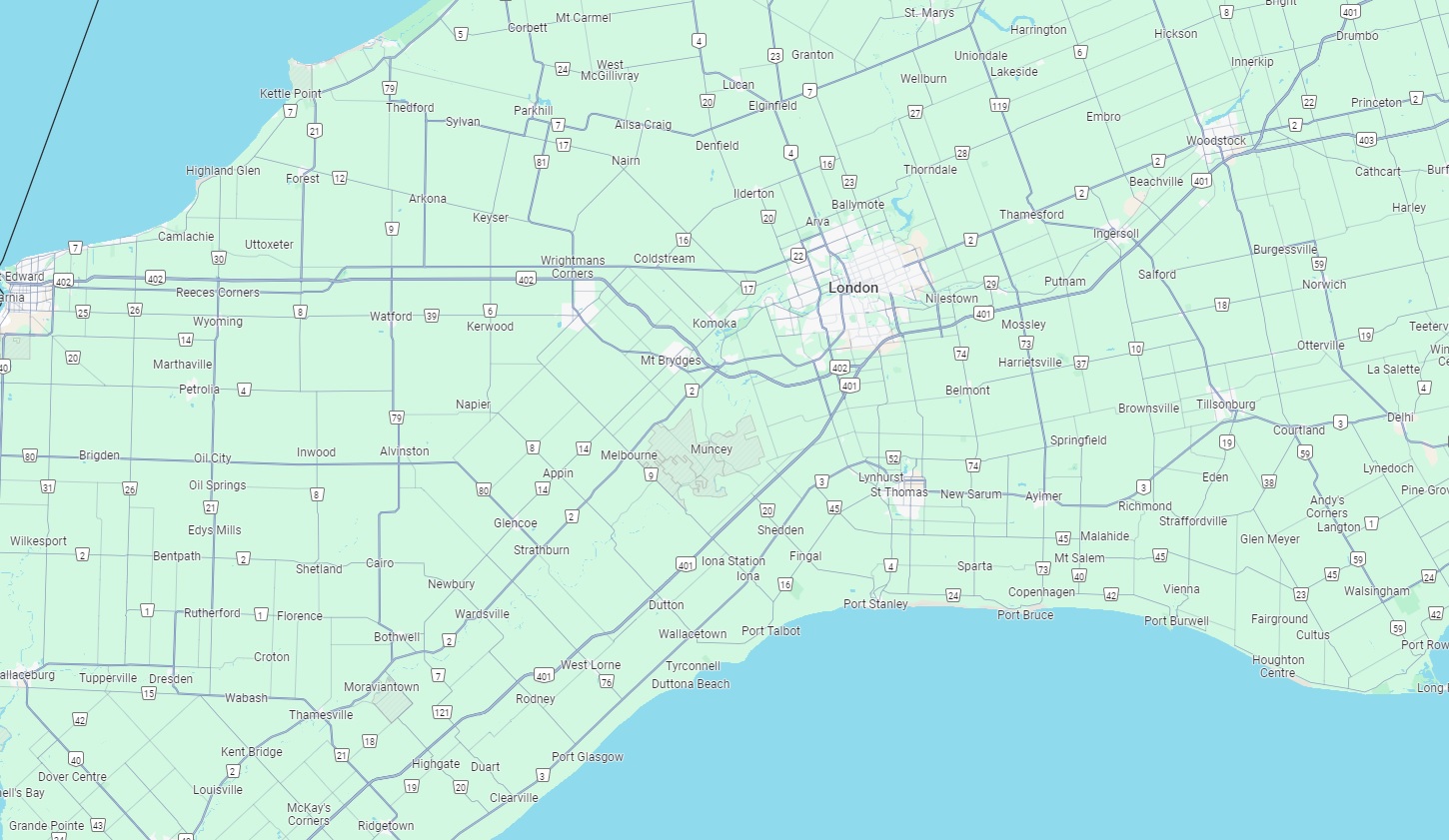
My solution is to peruse a map before I travel, paper or digital. That way I can get a feel for where I’m going, and use the navigation system to augment that broader information. Travelling across London (Ontario) yesterday, I had checked on a digital map to see that I’d need to be travelling from east west to catch a link road that ran north to south. The cellphone navigation system called out the turns, but I was at least able to follow the wider route I had lodged in my memory by making sure I was moving in the correct direction.

OK, it is me, normal people manage with navigation systems just as they are. Me, though, I still like that broader view.

Ah, Technology (Part 1)

Tags

, , , ,

I like technology, computers have revolutionized things over my lifetime and I’m grateful for them. I bought a new car through the Internet while people were still using dial-up modems. But recent developments seem to me to be going off in a bad direction. Let me explain…

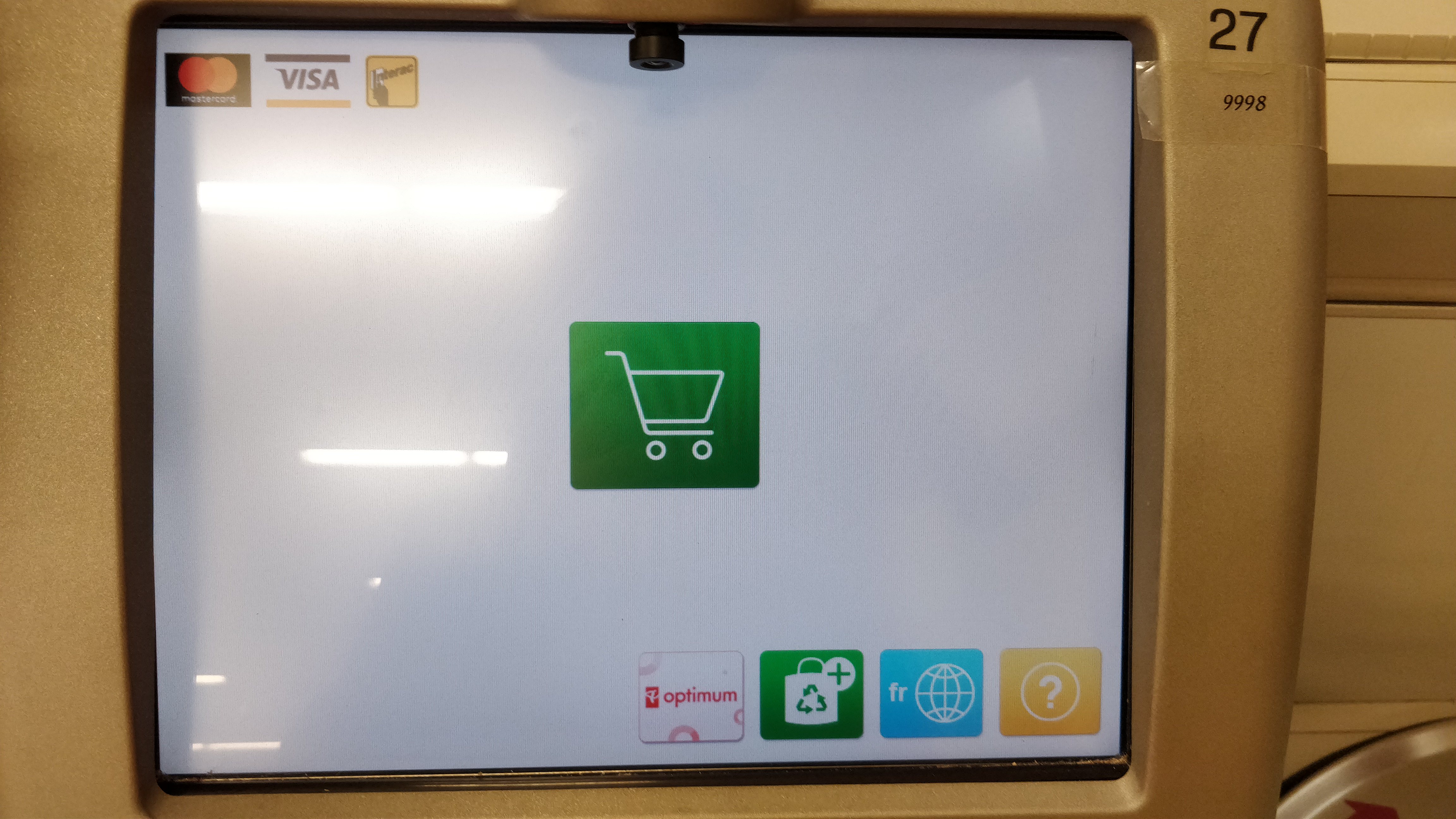
In the grocery store there is mounting pressure to use the self-scan checkouts (sadly not for the customers benefit, it’s more about profit for the corporations, but I digress). I’m fully up to speed with the concept of scanning your own purchases, and apart from being far slower than the trained checkout staff, it ought to be a simple process. Not so in the Loblaws stores here in Canada. The hardware’s fine, quite good actually, but it’s the MMI, the Man-Machine Interface, that’s the issue. Whoever programmed the software is unable to read and is probably about twelve years old, at least that’s the impression I get when faced with a touch-screen that has just five pictograms on it. No words, just five coloured blocks with symbols on them.

The big green one in the middle is the start scanning button, although there’s nothing to confirm that, it’s down to your interpretation as to what a picture of a shopping cart means. On the bottom of the screen, the first icon is the store’s loyalty card, Optimum. It’s anyone’s guess what will happen when you press that button because it doesn’t say. Nor does it say when or in what sequence it has to be pressed, if at all. The second icon is for you to let them know how many bags you are using, which is OK, but like the Optimum button, there’s no hint as to when and in what sequence it needs to be pressed. The third key is a bit odd because I think it allows you to access the screen in French. Don’t get me wrong, but on a screen with no words on it, I can’t help thinking that this button is surplus to requirements. The final icon is the Help button which, as I found out, hides a multitude of useful information, not least the means by which you can scan something like fruit that isn’t packaged and doesn’t have a barcode. My point here is that it’s hidden, and there’s no suggestion beyond the “?” what’s there. That screen is an abomination.

I can imagine the design brief for the MMI. Keep it clean and simple, uncluttered. Well it’s that alright, there’s no information at all. The people who developed the screen will have known exactly what the symbols mean, and in what sequence they have to be used, and they’ll have tested it many times over. But, and I’d put money on this, they didn’t let it loose with real customers first. Now I’m no dullard, and I’m quite savvy with technology, but this screen has crossed from being an uncluttered delight into a picture that means nothing. That is a big MMI failure. It’ll will have been designed by very young people who have grown up using just their Smartphones and have been using icons instead of words ever since they found out that you can get cat videos on the Internet. Here’s the thing, how many of Loblaws customers fit that age profile? Precious few I’d wager, and there’s the issue. Real people, most of them anyway, can read, at least well enough to find the words “Press this button to start scanning”. They’re also not that bothered about the screen being uncluttered – I mean, have you seen the self-service screens in McDonalds? Pictures and words, and lots of them.

Curiously, when this software was first introduced it garnered so many complaints that it was reissued with a series of written prompts and titles over the icons. I’m OK at reading, as are the vast majority of people who use the Loblaws stores, so I was quite happy to be guided through the process by the software. Now though, with the latest machines installed, they’re back to their “uncluttered” look and it’s an absolute shambles. From that screen, can you see how you’re supposed to enter a four digit fruit code? Can you tell when you’re supposed to activate the Optimum process? To claim points, or indeed to redeem them? Do you know why there’s a French language option when there’s no English words to translate? No on all counts.

It was a couple of years back when this same company went from a nice, text-based screen for their online credit card statements, to a more graphical interface. Still words, thank goodness, but in a significantly bigger font which meant that whereas you used to read almost the whole statement on one screen without scrolling, now you could only see two lines at once, the rest required much scrolling. Sure, not everyone has great eyesight, but for those with access difficulties, the computer operating systems allow you to make your text bigger if you want, it doesn’t require the MMI to feature giant writing for everyone. I couldn’t see why the change was needed, it was a backward step, so I moaned and complained about the change (and the fact that it puts ridiculous and patronizing greetings at the top of the screen, and initially failed to include an option to download data to Quicken), but I was roundly ignored.

The people who put these systems together are clearly hung up on icons and the thought that words are not required, which is odd when you think about it because everything in Loblaws stores, other than the self-checkout systems, has a ton of words written on it; from everything sold to the huge amount of signage around the store. Well, as a customer I am not going to be using the self-checkouts in Loblaws any more, and not just because they’re doing people out of jobs. If they can’t present a decent MMI for something as basic as a self-checkout system (every other store manages to do it OK), then they don’t deserve the business.