England ’23 – The London Pad

Tags

, , ,

We’d booked a week in a London apartment, or more accurately a flat, though VRBO. It’s much the same as Airbnb, where people loan out a room, or a whole flat, when it isn’t just a rental property. I think VRBO’s claim is that you always have your own front door.

London is a big place, and there are literally thousands of homes to rent for a week here and week there, so where do you start? Obviously, the closer in to the centre of London then the more expensive they get, and the same applies to the A4/M4 corridor to the airport. But public transit in London is among the best in the world, it’s integrated, plentiful and it’s really quite inexpensive, so staying out a little way is actually quite a good idea.

When the good Mrs. Mayne suggested Hackney Downs as a location, I immediately thought that it would be an ideal base, especially as I’d commuted through that area, albeit many years ago now. Overground trains were available from two very close-by stations, and there are more buses than you can ever use, and yet this all came without central London prices, so a good base it proved to be.
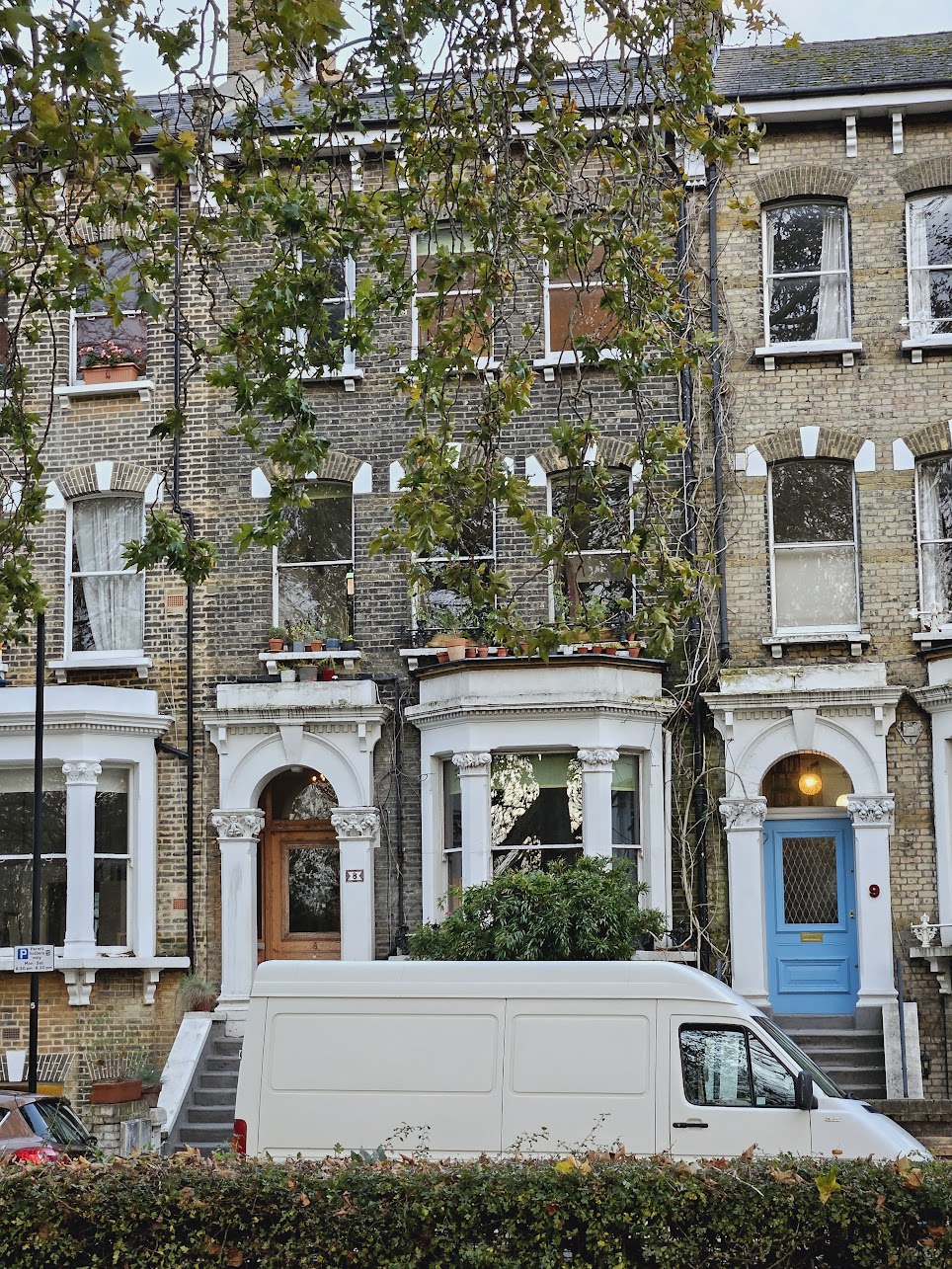
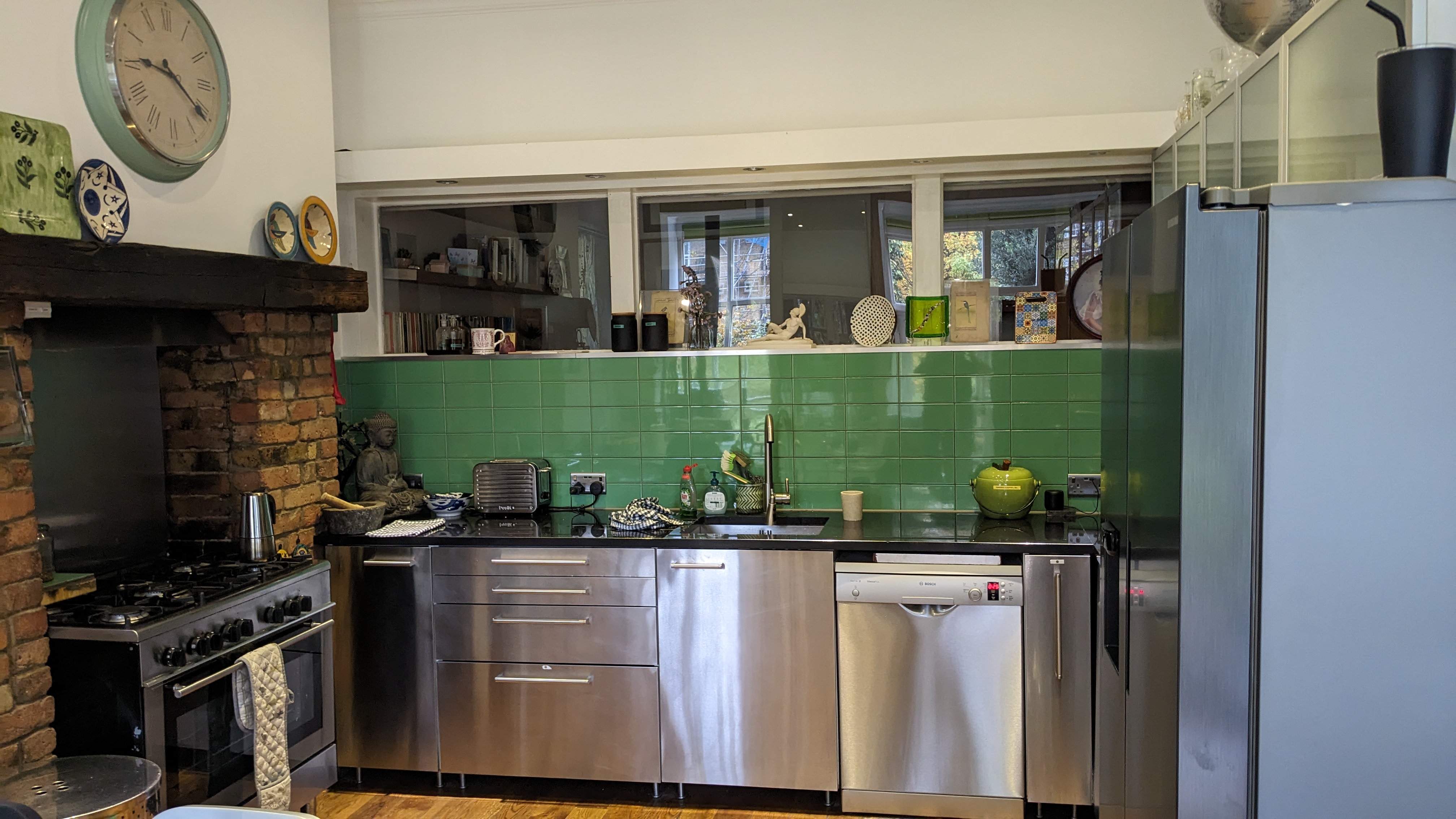
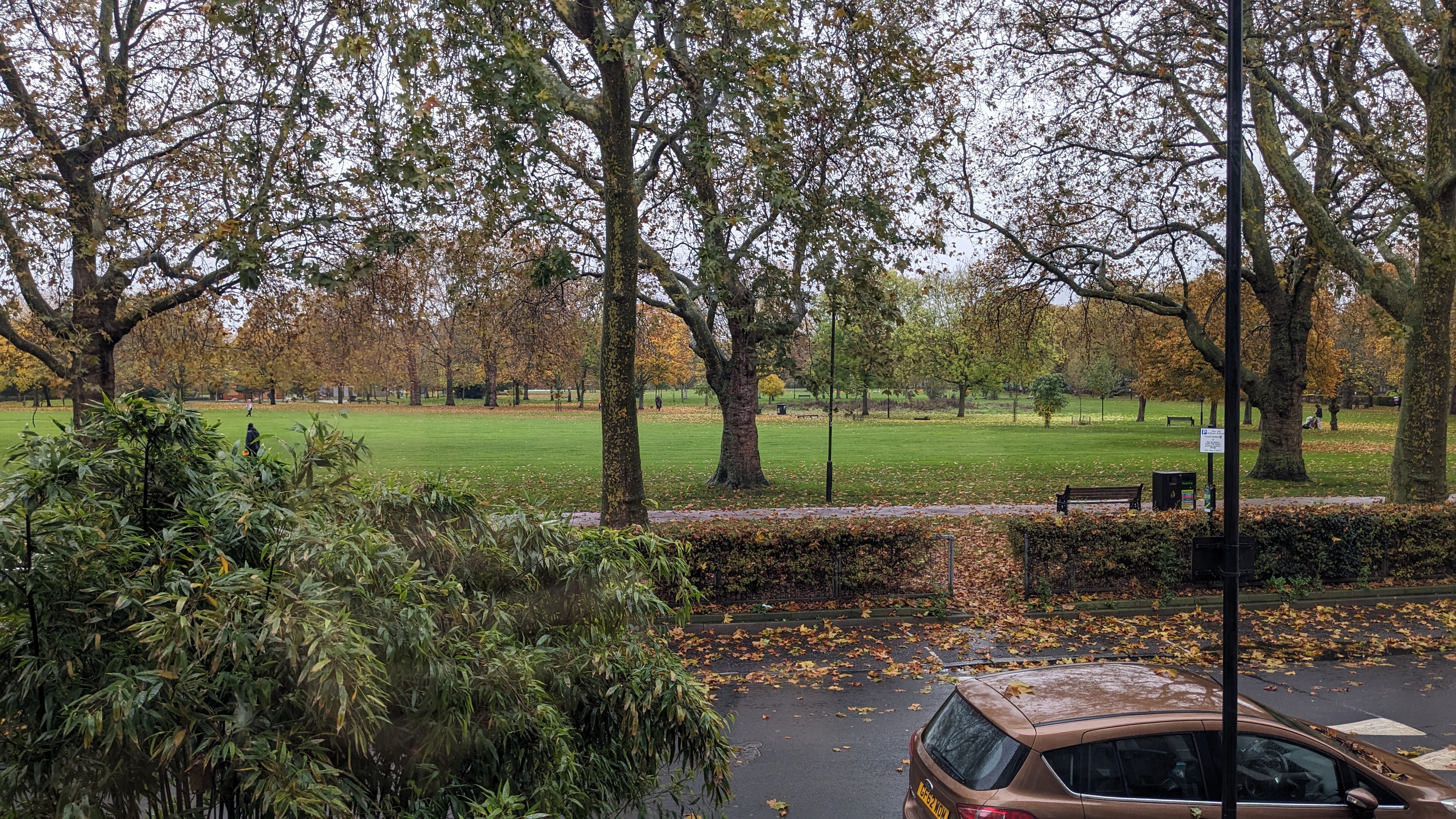
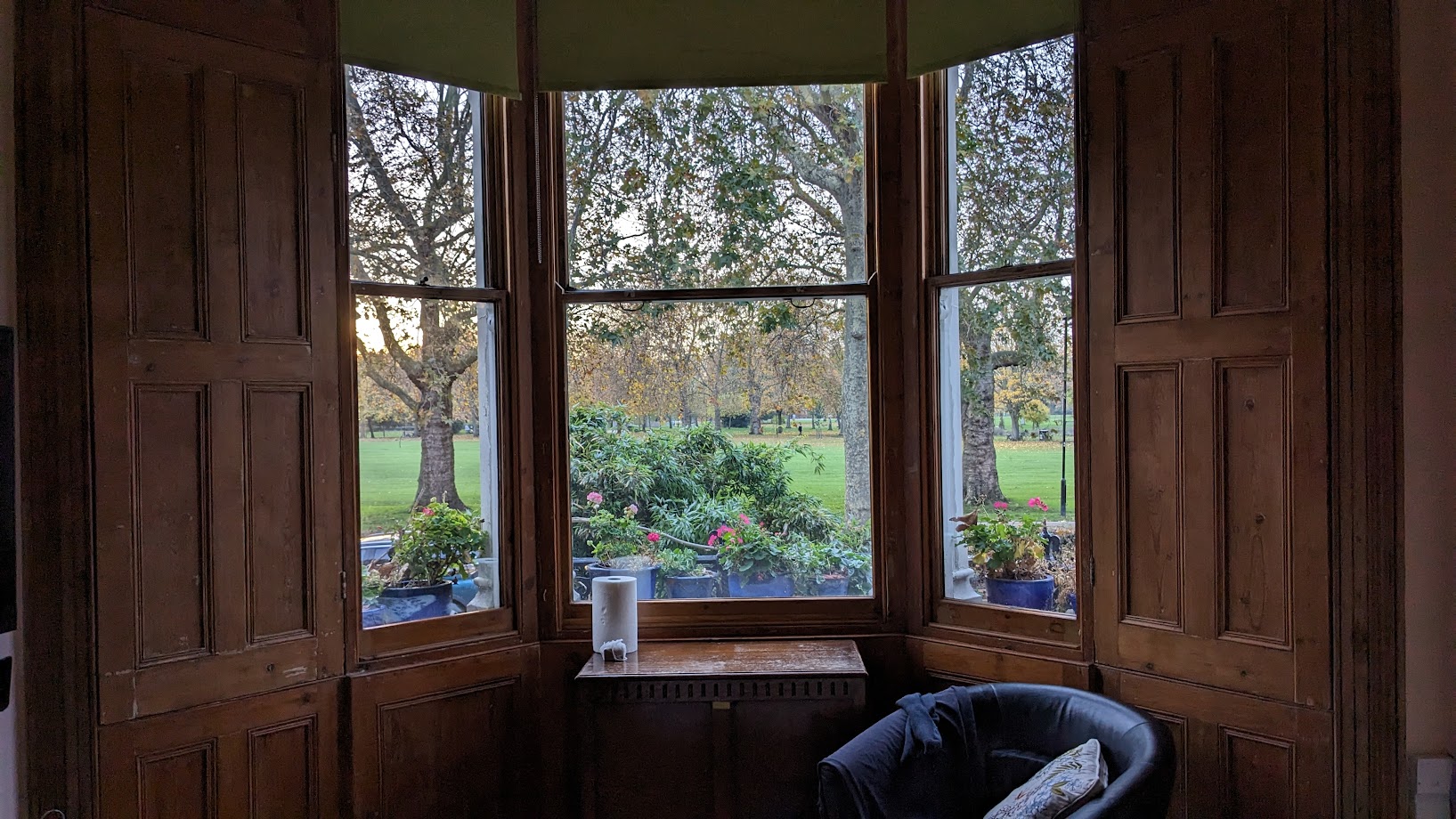
The flat we ended up renting overlooked the large public park known as Hackney Downs, even though it was more accurately Lower Clapton. We had the entire the ground floor of a four or five storey terraced Victorian house. I say four or five floors because there was space in the roof, with large Dormer windows, so I don’t know how many flats the house had been divided into. Including the basement, up to five, but it may only have been three.

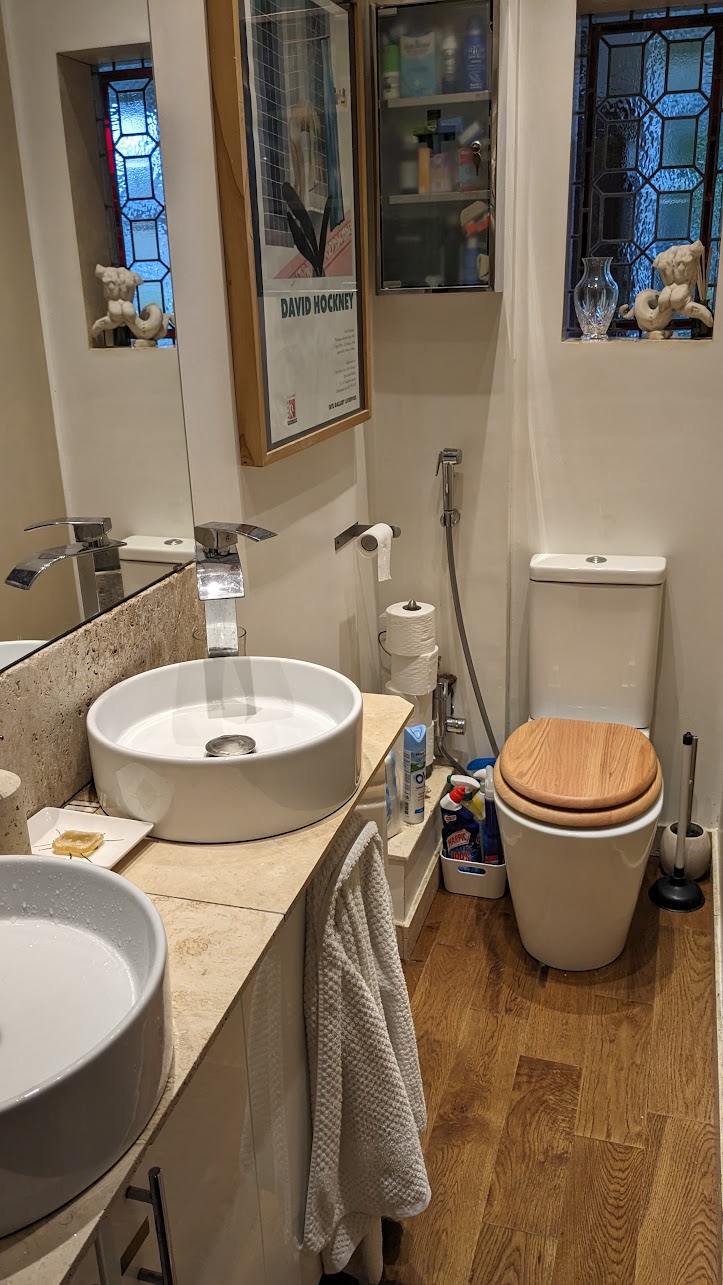
The main front door opened on to two more doors, one being the access to our flat, and the other to those above us. The hallway of the flat was long and narrow, and the two bedrooms came off it. On the left, and literally under the stairs (wake up Harry Potter!) was the world’s narrowest bathroom, although it did have a good sized shower, two sinks and toilet. Woe betide you if you wanted to turn around in there though!
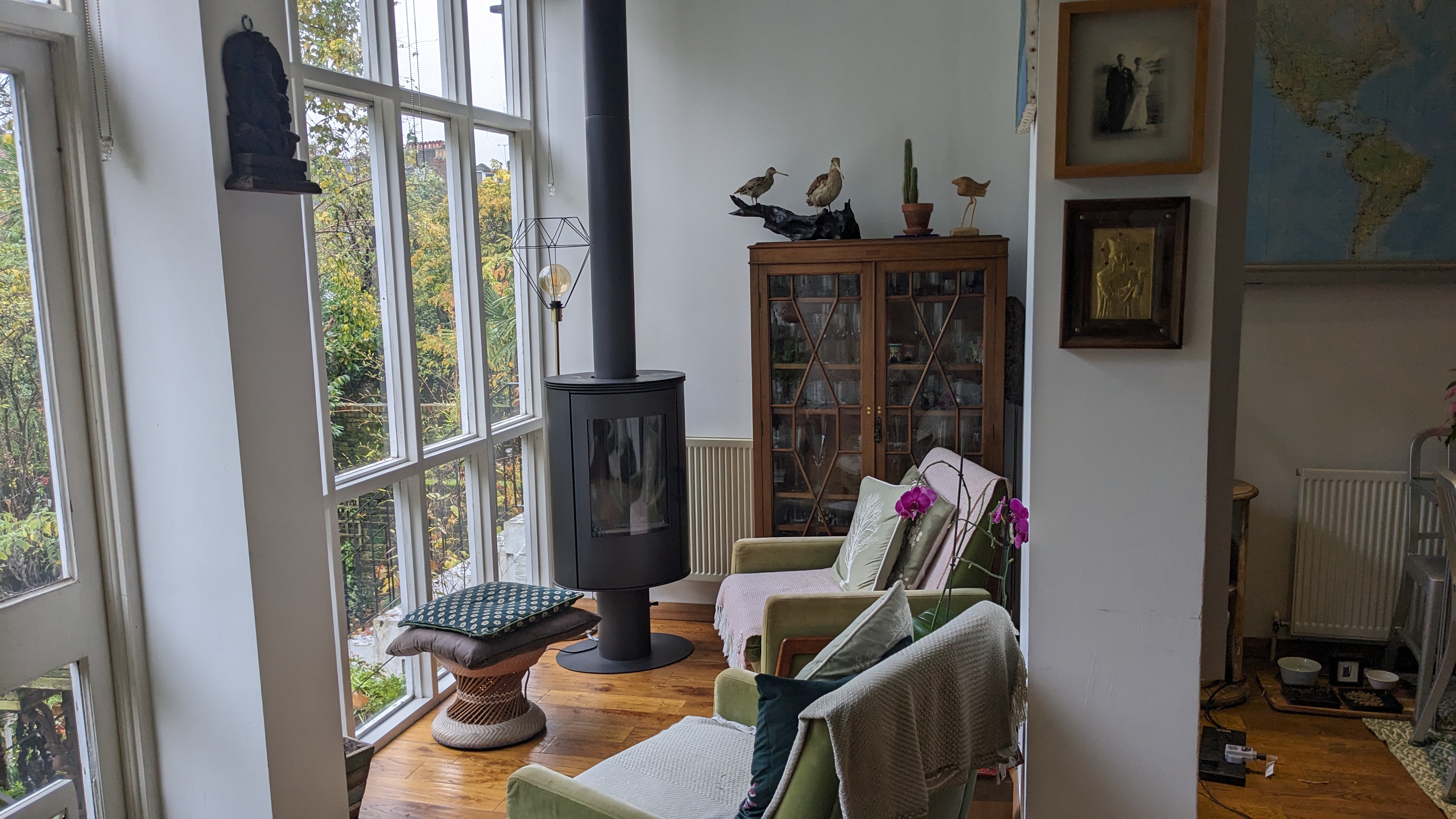
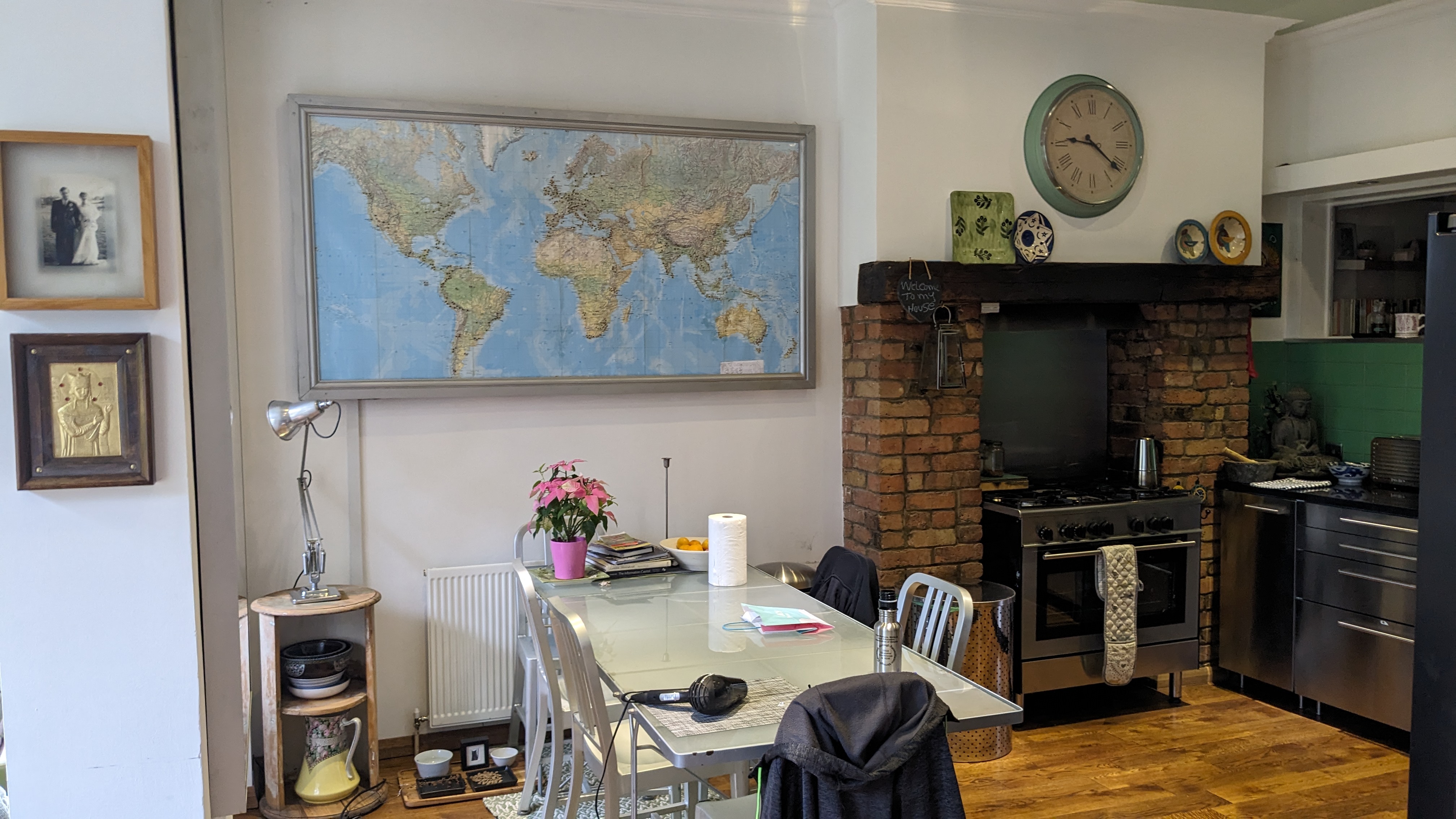
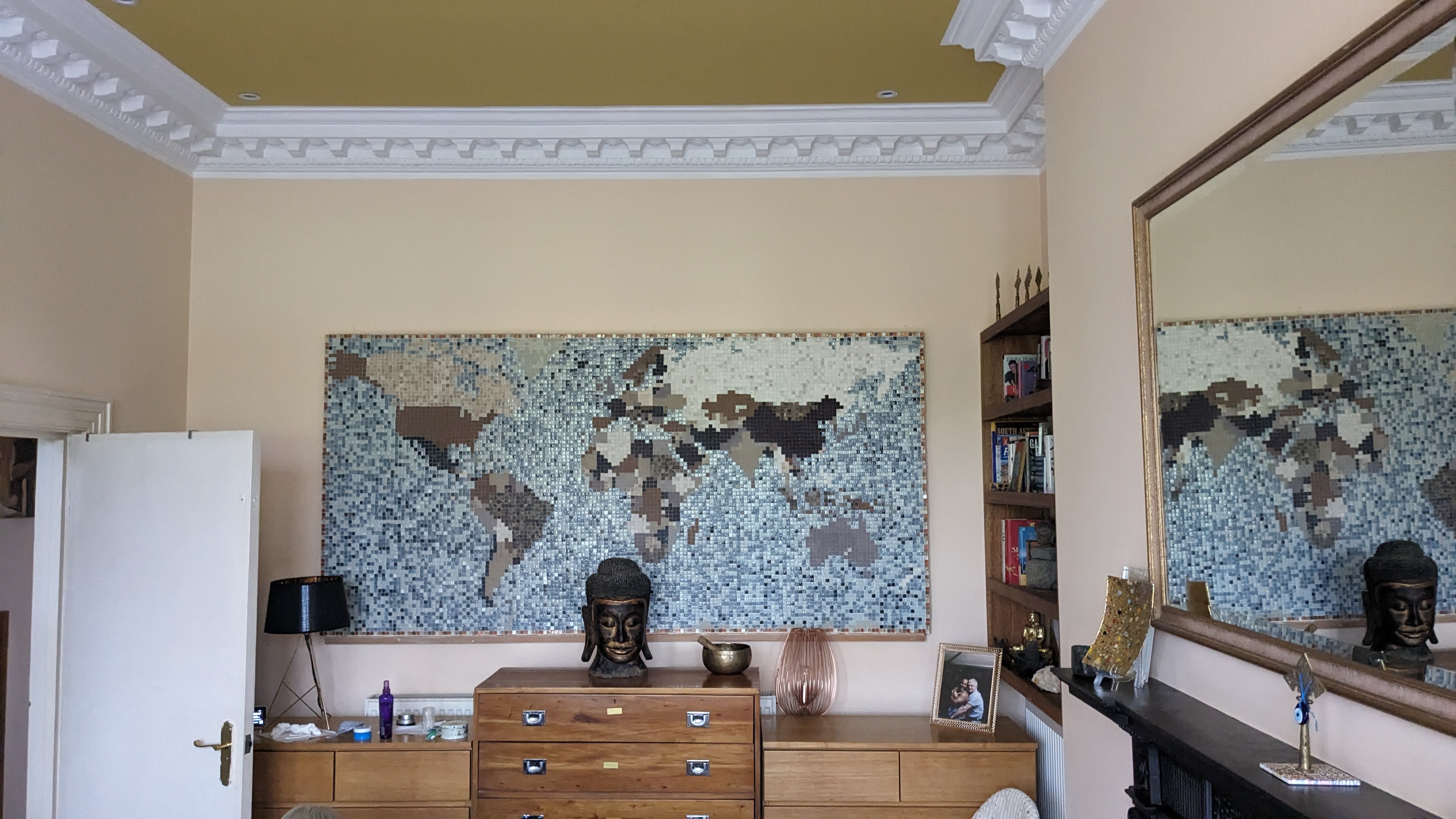
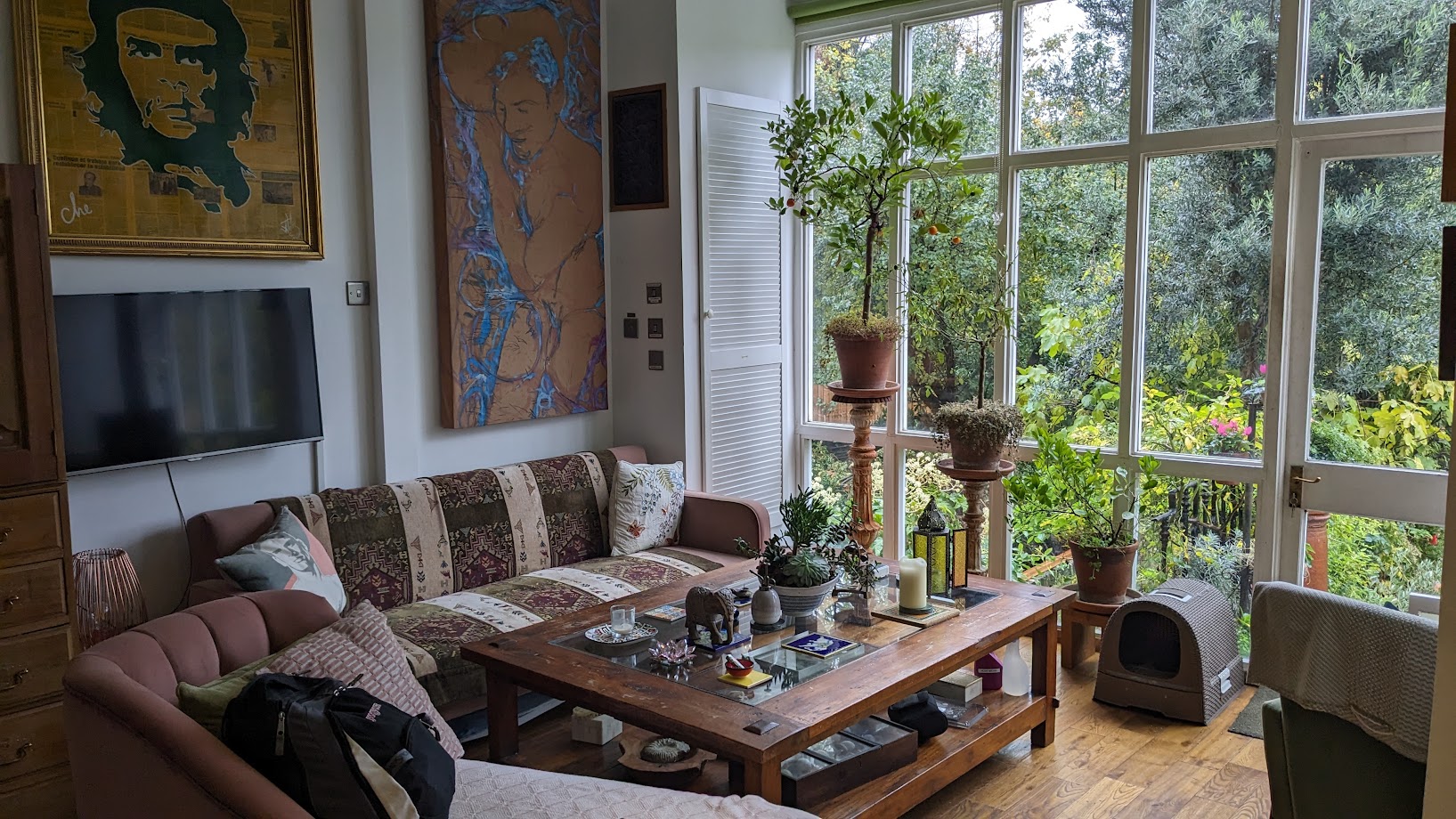
That hallway then opened out into a broad, glass-ended room that looked over the garden, and a good sized kitchen to the rear of that. It was actually a fabulous room, marred only by there being far too much furniture, and what furniture there was being covered in all manner of interesting things, from candlesticks, to birds’ eggs, to pottery. The flat also came with a cat, a cat called Violet, who was very small but very noisy.

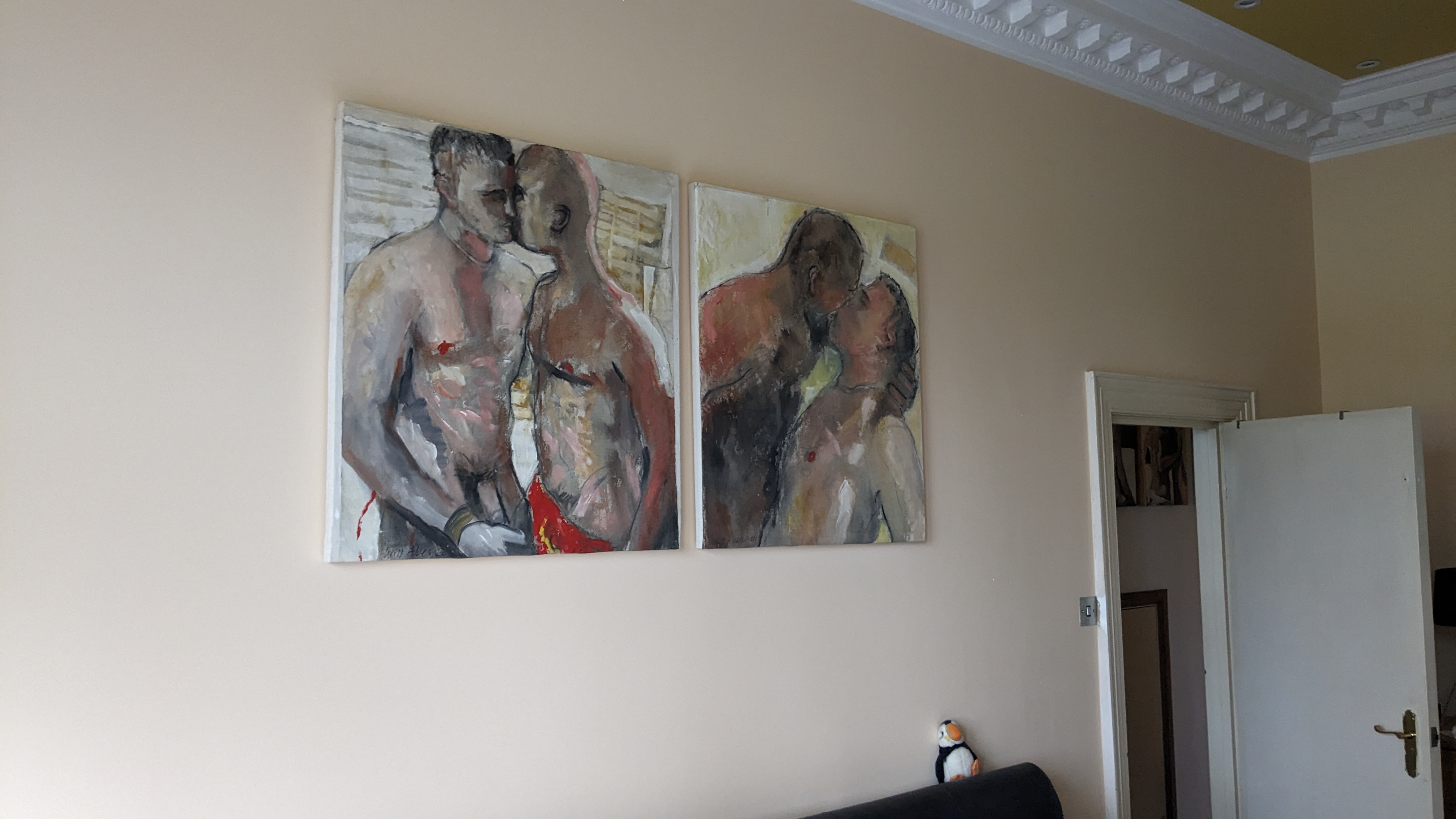
The slightly unusual thing about this flat was that it was genuinely someone else’s home, not a holiday rental. There was so much stuff everywhere, not strewn you about, you understand, but strategically, and probably artfully, placed. It made the flat seem terribly cluttered. Along with the eclectic furniture came the eclectic art, most of it created by the owner himself. Some of it was better than others, and some was a little on the homo-erotic side, although it wasn’t that causing the issue, it was simply the quantity of it. Goodness knows who cleans the place, and it was clean, but it must be so fiddly to do.
Mind you, apart from somewhere to hang clothes, we lacked for nothing. Never have I seen so many teaspoons and tea mugs in a single place, and there was all sorts of little things that you might (or might not) need, from curry powder to tea bags, lying around the place. We had no intention of cooking, but if we had we could have turned out quite a meal. On a slight tangent, the owner also left some visitor parking passes, which would have proved handy had we not taken the car back. But as I said before, there was no need of a car.

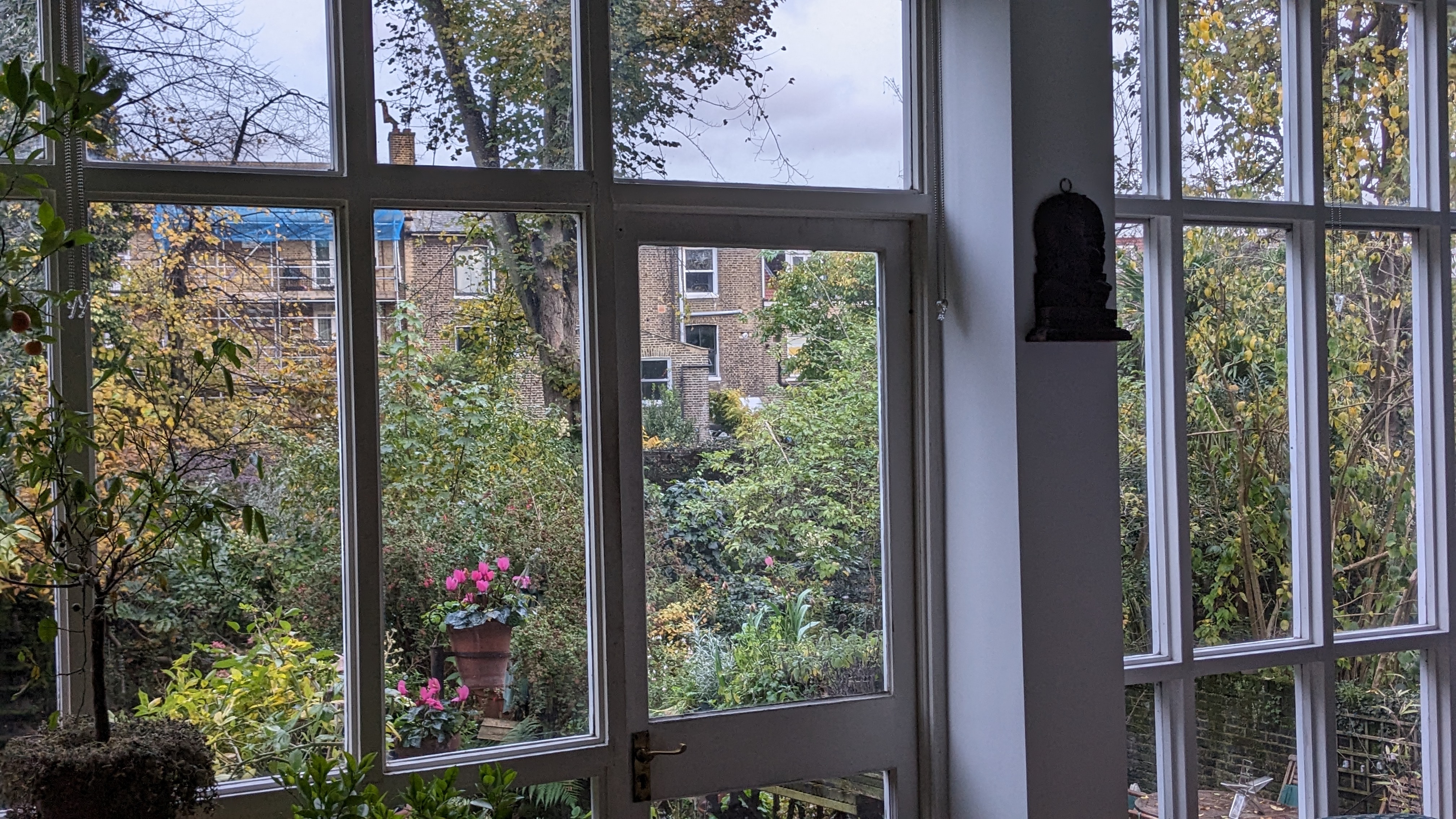
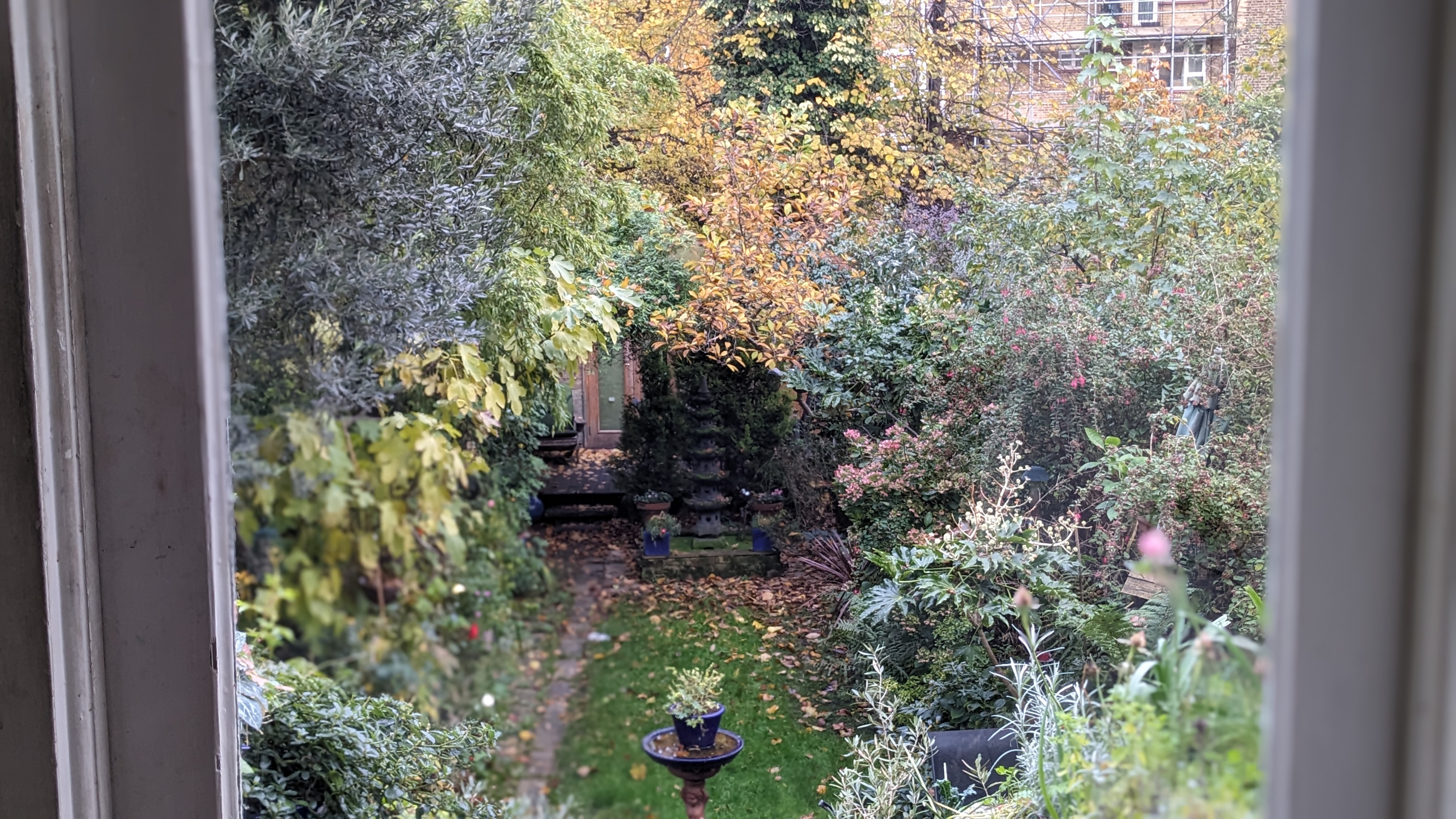
We had sole use of the garden, but it being November and very wet, we just looked at it from behind the glass. There was a kind of summer house at the bottom of the garden that could be used as a guest bedroom, and a toolshed with not only a washer and a dryer, but two trees growing through the roof. There was also an outside shower, a good ‘un, too, but the time of year wasn’t working for us.
The main bed in the flat was enormous and very comfortable. The room itself had a great view across the park, but for some reason I couldn’t fathom, people loved to stand outside on the sidewalk and talk. The first Sunday we were there, there was a person (I’ve chosen that word carefully), doing what looked like drug deals from the garden wall, and this was from about 7am until well into the morning. Then there were two people chatting at 2:45am, which was nice, six feet from the window. Hey ho, it was all good fun, though.

The thing was, though, that we didn’t spend a lot of time there. It was nice to walk in the park on the way to the bus stop or station, but visitors to London rarely want to stay holed up in Lower Clapton, regardless of the accommodation. Would we stay there again? Maybe, but as I said at the top, you really have a lot of choice, so perhaps we’d try somewhere else next time.
England ’23 – Going Home

Tags

, , , , , ,

Saturday arrived, we were all packed and ready to go, so we just had to wait for the car. We’d decided to treat ourselves to a mini-cab ride to the airport, not least because we had three cases now, and manhandling that lot on the Underground and Overground (Wombling free) trains was going to be difficult.

Our driver turned up right on time, and drove us through the very busy streets of London, all the way to the airport. He said it would take about 80 minutes, and he was right, almost to the minute. He did some great ducking and diving through the back streets between Shepherd’s Bush and Chiswick, but these guys know what they’re doing, and we were on a fixed price fare, so there was no chicanery involved.

While his Toyota Prius wasn’t the cleanest mini-cab I’d ever been in, it was most enjoyable having someone else do the driving. We arrived at Heathrow’s Terminal 5 in plenty of time, and tipped the good Salim generously. There’s a £5 charge just to drop people off at Heathrow, and I thought that we’d get charged for that, but no, Express Cars of Clapton included it in the fixed fare.

We had to hang around a bit before the bag check opened for our flight, but when it did there were no lines or crowds, and even though we had to weigh-in ourselves, it all went very smoothly. I’d already checked us in online, but printed new boarding cards from the bag drop machine. I had a faint idea of our seat numbers, and vaguely registered that the boarding passes had different numbers on, but thought nothing of it; a booked seat is a booked seat, after all.

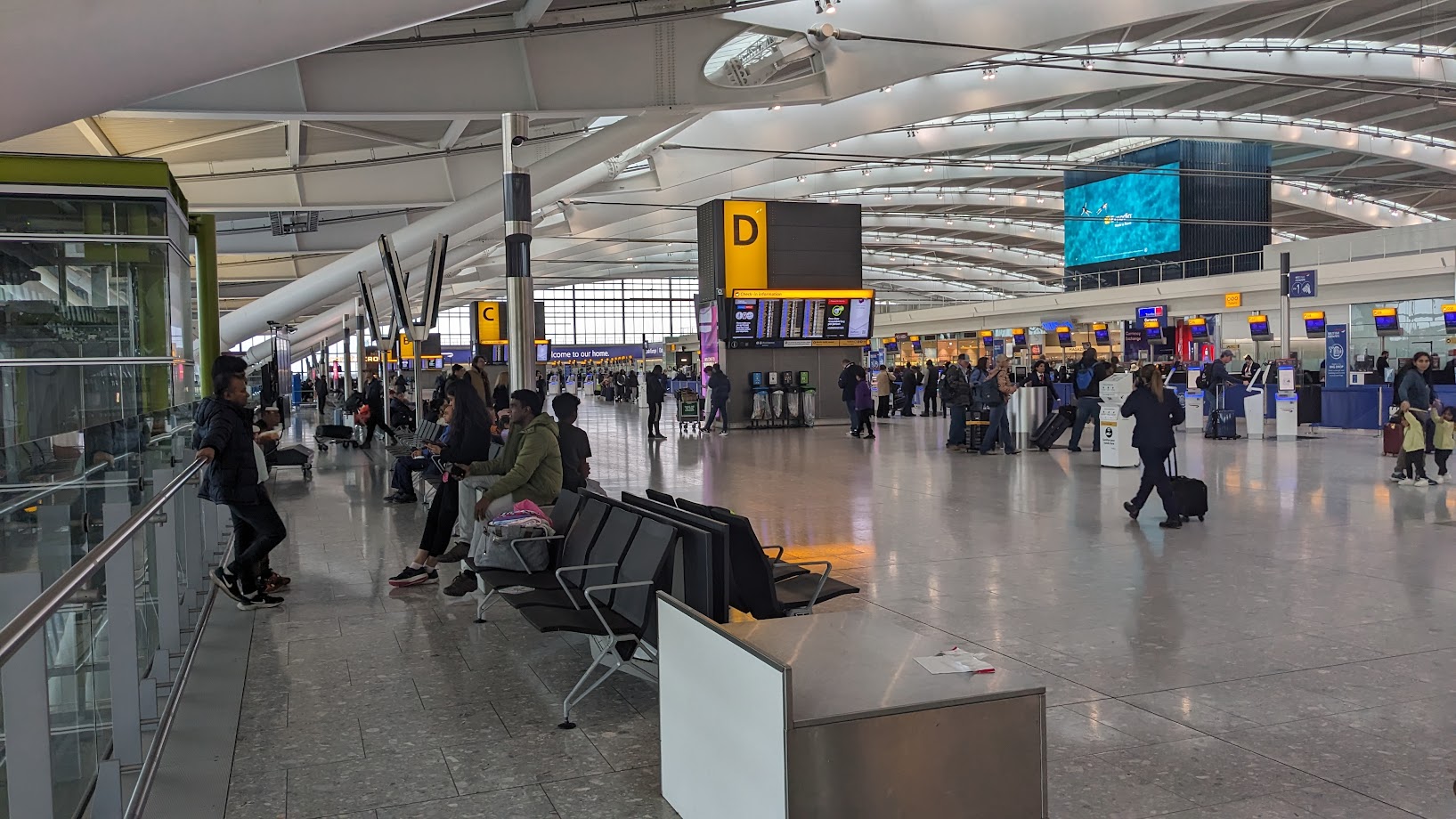
We went through security and sat in the vast departures area, avoiding the shops (mostly), and having an unhurried lunch. At least there is plenty of general seating there, unlike the mess that is Toronto’s Pearson Airport departure areas.

When it was time to head out to the departure gate, we used the little shuttle train. While the terminal hadn’t been that busy, the shuttle trains were packed, and I wondered if they didn’t ought to run a few more trains. Heck, what do I know?

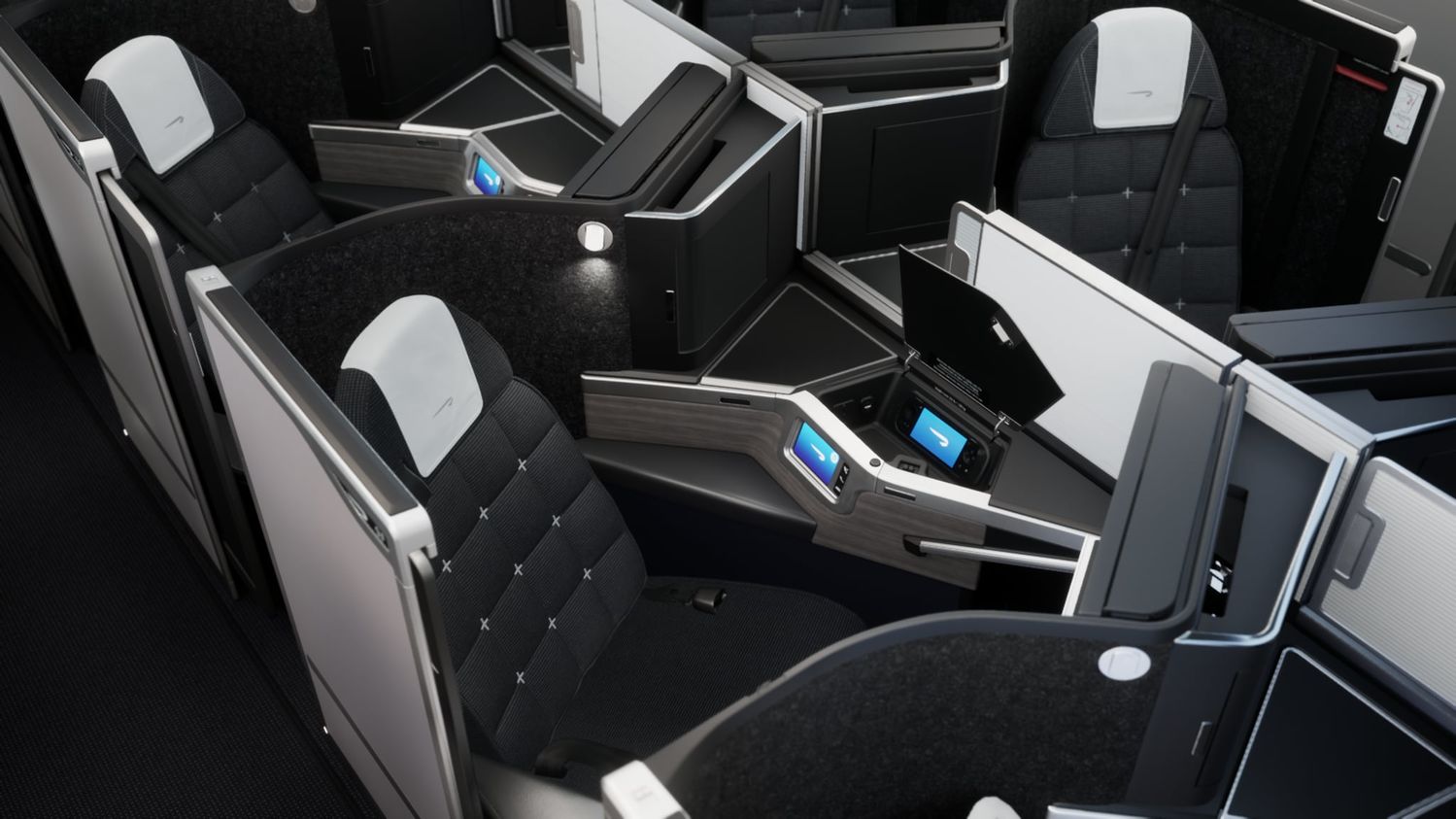
When we arrived at the gate, it was already busy with people standing at the entry point, which you’re always clearly told not to do. We looked at the boarding passes again, checking we were in loading group 3, but we weren’t. It was loading group 2. What’s this? A mistake? No, it wasn’t, because at the top of the boarding card it said “Welcome, enjoy your upgrade to Club World”. Woot! An unasked for upgrade, in part I’m sure because we’re BA Executive Club members. I wasn’t going to argue.

On the ‘plane, a Boeing 777-300, there were lots of those individual “suites” in Club World, with big seats, big TV screens and a little private area to sit in. An unexpected pleasure to be sure, and one that made the tedious flight significantly more bearable. Even the meals were better.

We arrived in Toronto just a little late, and were though customs and immigration in record time. Going through immigration at the airport, we were able to use the new fast-track machines because we’d used the ArriveCan app on our phones to do customs and immigration clearance ahead of time. There is a lot of crap written and spoken about that app, mostly because it came in to help with COVID, and I know there are people who will not use it because they think that the “Gubmint” is spying on them. Well, it worked brilliantly for us and we were through into the baggage reclaim hall in about a minute, while others lined up and struggled completing their declarations in the arrivals hall. The Gubmint collected the same information from everyone else, of course, just not the day before, and not using the app.

We picked up our bags, and our car (they fooled us by using a different collection point, and that had me confused), and we were motoring off to the Four Points Hotel on Dixie Road in a little under an hour after landing. While it may only have been 9:30 pm in Canada, our body clocks were saying 2:30am the next day, and I really didn’t want to drive for three hours in the dark at that ungodly hour, so we’d booked a night close to the airport.

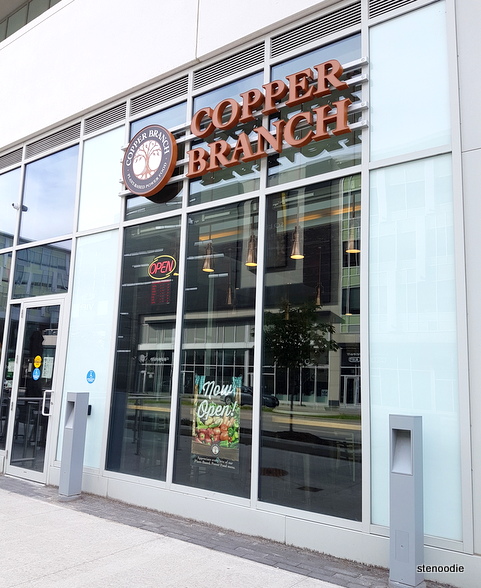
The hotel was OK, clean enough, if a little tired. The bed was comfy, and we both slept well, but those darned body clocks had us up early, at least by Canadian time. The good Mrs. Mayne suggested breakfast at a nearby branch of the vegan fast-food chain, Copper Branch, so in a few short minutes we were breakfasting on plant-based goodies, and feeling very, very mellow.

And that was it. Our run back home was uneventful, the kids were pleased to see us, and we were happy to be home. A good holiday is a good holiday, but coming home is always nice.

England ’23 – The Final Down Day

Tags

, , ,

Friday and a down day. A nice late start, too, which was much needed.

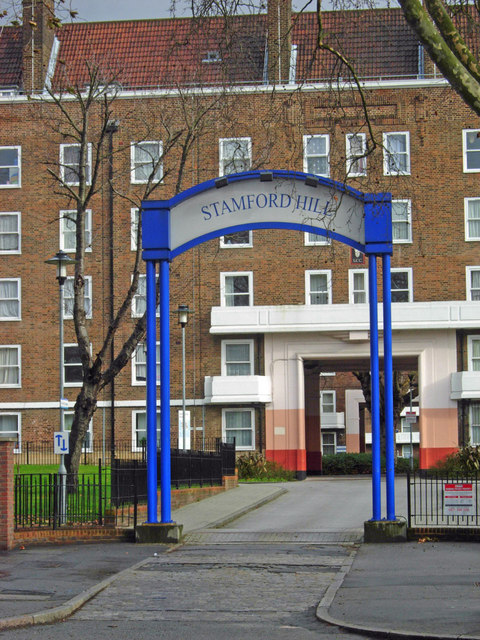
The plan, which was fully executed, was to take a bus ride up to Stamford Hill to have a look at a house that the good Mrs. Mayne had once visited (probably) because her auntie lived there in the 1960s. It’s lovely riding the bus, and thanks to the very real benefits of the London congestion charge, there are many buses out there, so you never have to wait long. They still come in packs, of course, but that’s just down to the traffic.

Stamford Hill is known for its Jewish community, and today being Friday there were many Jewish people on the streets in their traditional garb, all hurrying to get things done before their Sabbath Day, which starts at sundown. (I used the word Sabbath because I think the community we were visiting used a different Hebrew word to the usual Shabbat). The community there is pretty large, and clearly thriving, with most of the houses in the surrounding streets having visible Mezuzahs on their door posts. Kids were in the streets on their way home from school, and Hebrew (or Yiddish, I wouldn’t know which) seemed to be their conversational language. That’s just one more tongue we can add to the list of languages we’ve heard being spoken this week. That’s by no means a complaint, either, because the variety has been wonderful. Diversity is strength.

We found the house, and while we were stood looking at it, a man in a big BMW pulled up. He looked for all the world like the late entertainer, Mike Winters, and even spoke with a stage “Jewish” accent, but more than that he asked us if we were looking to sell our house because he could help if we were. He didn’t say “Oi vey”, but if he had I wouldn’t have been surprised.

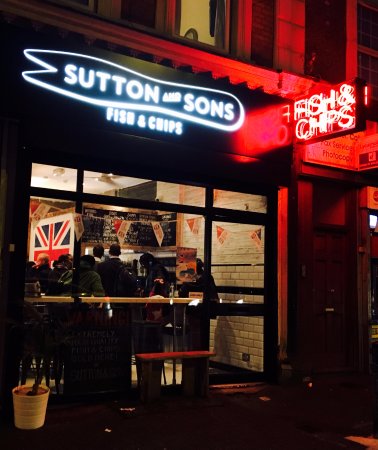
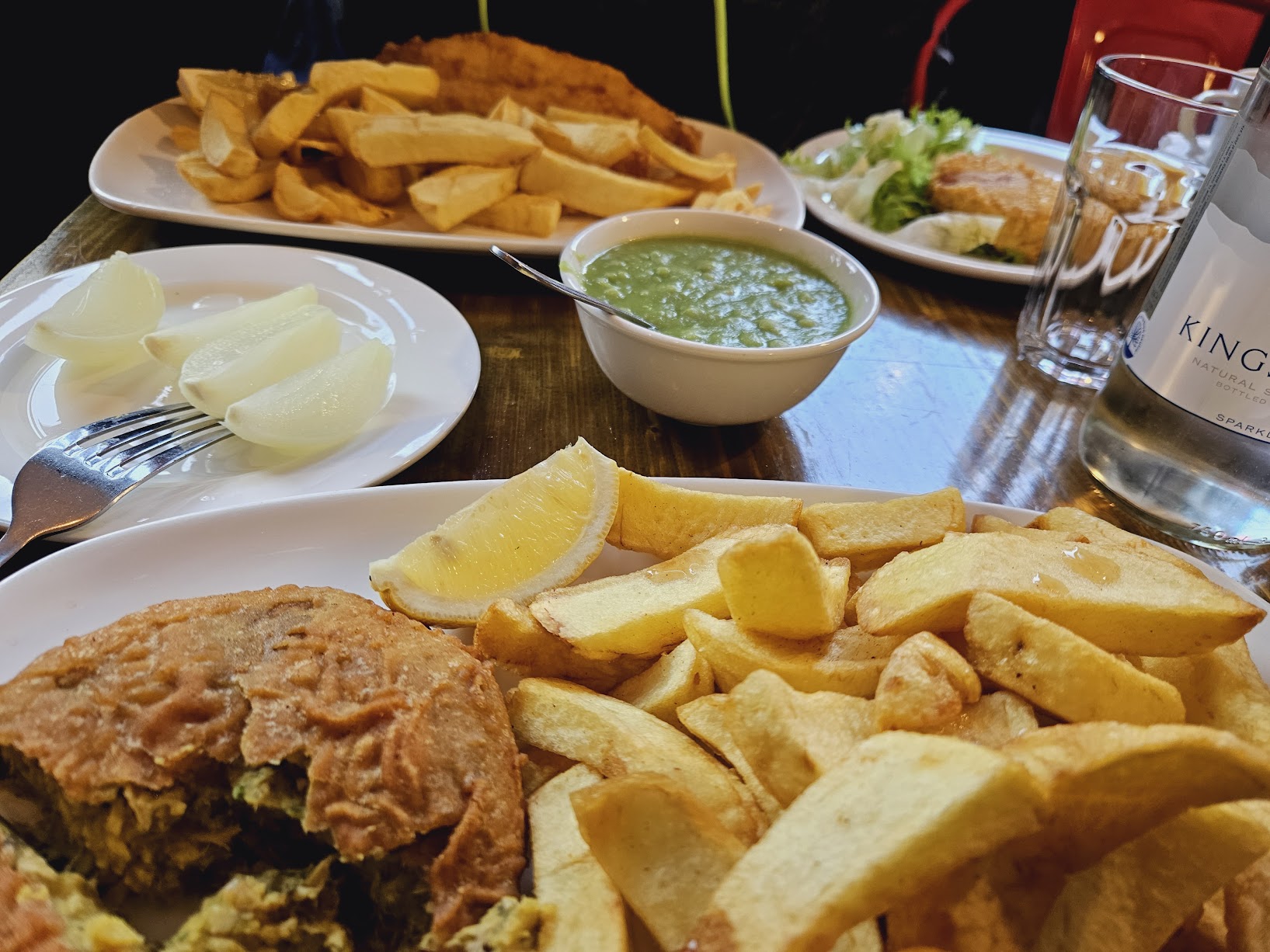
Then we bussed ourselves back to Hackney Central station, using up pretty nearly all the credit on our Oyster cards in the process, and had a glorious fish and chip lunch in Suttons & Sons, in their tiny Dine In area. Sutton & Sons has a full vegan menu, so the missus was in seventh heaven.

Before walking back to the flat, we stopped into a small branch of the Co-op (pronounced Kwop if you’re a Devonian), and while there, a fellow was prevented from stealing a plastic bag full of booze by the quick-thinking staff. You sort of feel for people who need to steal, but this guy didn’t look particularly like he was homeless or anything. Still, you don’t know, do you? He got away, but without the booze, so I guess it ended as well as he could have expected, given that he could have been arrested had he been caught.

Back at the flat, we decompressed. For relaxation, I pulled the contents of the kitchen garbage bin out onto a piece of newspaper, looking for the Toronto Airport parking receipt that I thought I’d thrown away. Then I found it in my backpack. C’est la vie.

Now all we needed to do was to pack and hope that the car we booked to the airport for Saturday morning turned up.

England ’23 – Birmingham

Tags

, , ,

Today was our much anticipated trip to Birmingham and the National Trust Back-to-Back Houses. The good Mrs. Mayne has family connections with Birmingham, and our family tree explorations have led us to see that many of our ancestors lived in the heart of Britain’s industrial cities in the nineteenth century. What better way to fill in some background than to visit some restored examples of houses of that era?

It was also an opportunity to have a train ride, something that’s rare for us in Canada (there’s a whole other story about trains in Canada, but that can wait for another day), although unfortunately that necessitated us getting to London’s Euston station during the rush hour. What fun!

A walk down to Hackney Central station had us boarding the London Overground train to Highbury and Islington, then onward on the tube to Euston. We could have taken the bus to Euston, but that is a wholly unreliable form of transport for anything over about 10 minutes in the rush hour, especially when you have a train to catch. The Overground was, to say the least, packed. I’ve commuted in London before, but the good Mrs. Mayne was a bit uncomfortable being squashed in an extremely full train. Still, it wasn’t far, and while the tube train was also packed, it wasn’t quite as bad.

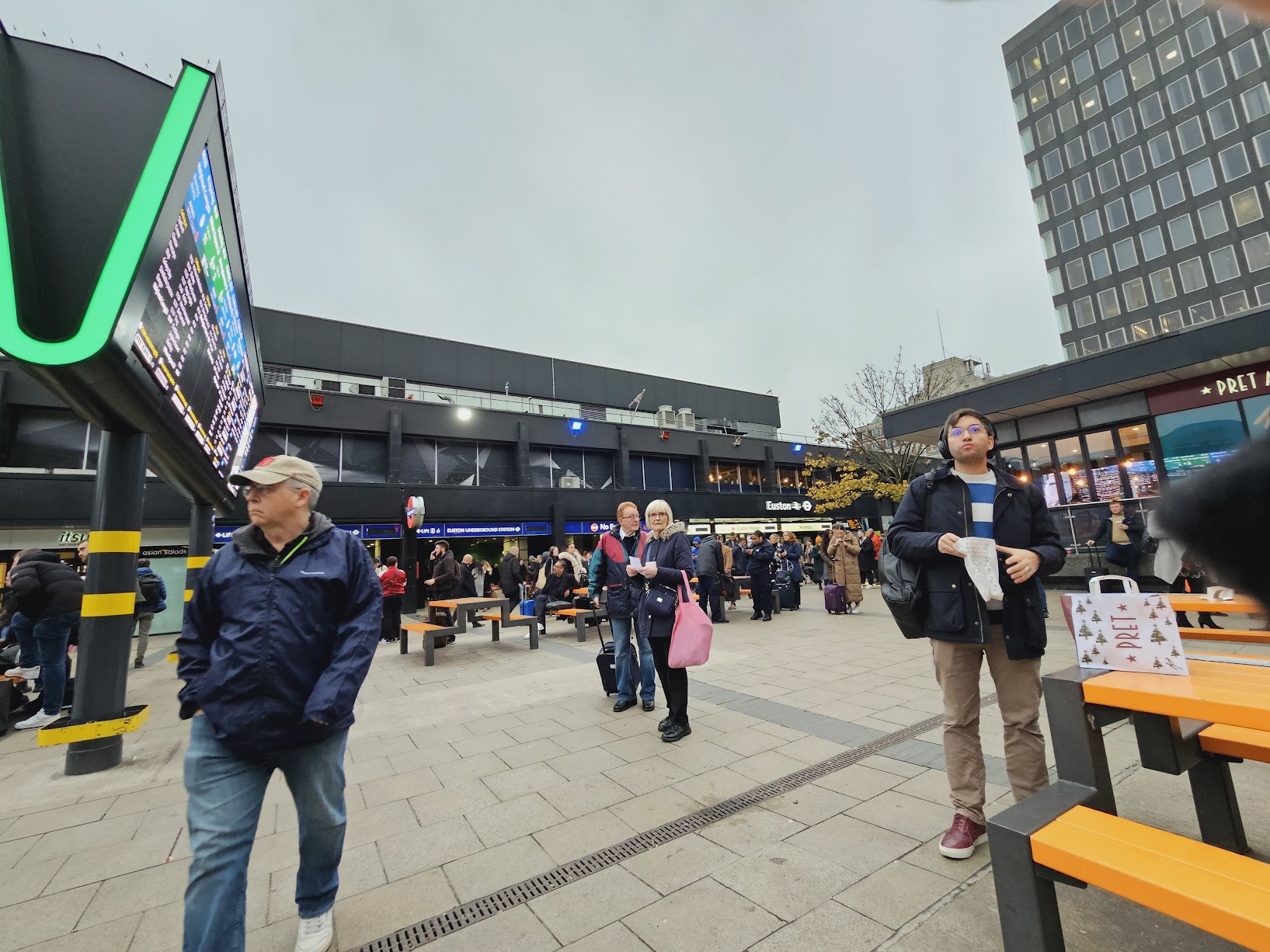
At Euston, I had a foul up with my Oyster card when the automatic barrier stuck open and didn’t register my “tap” as I went through. I had to go back and get the situation remedied by a helpful member of the station staff or I’d have been charged £9.60 rather than the regular £3 something. Anyway, problem sorted, we waited in the outdoor plaza while our train north was prepared. I hadn’t noticed the outdoor plaza on my last visit to Euston, and I wish I had. Lots of food and drink vendors, plenty of seats, and a good arrivals and departures board for all to see, it was the ideal place to wait, even in the cold, grey morning.

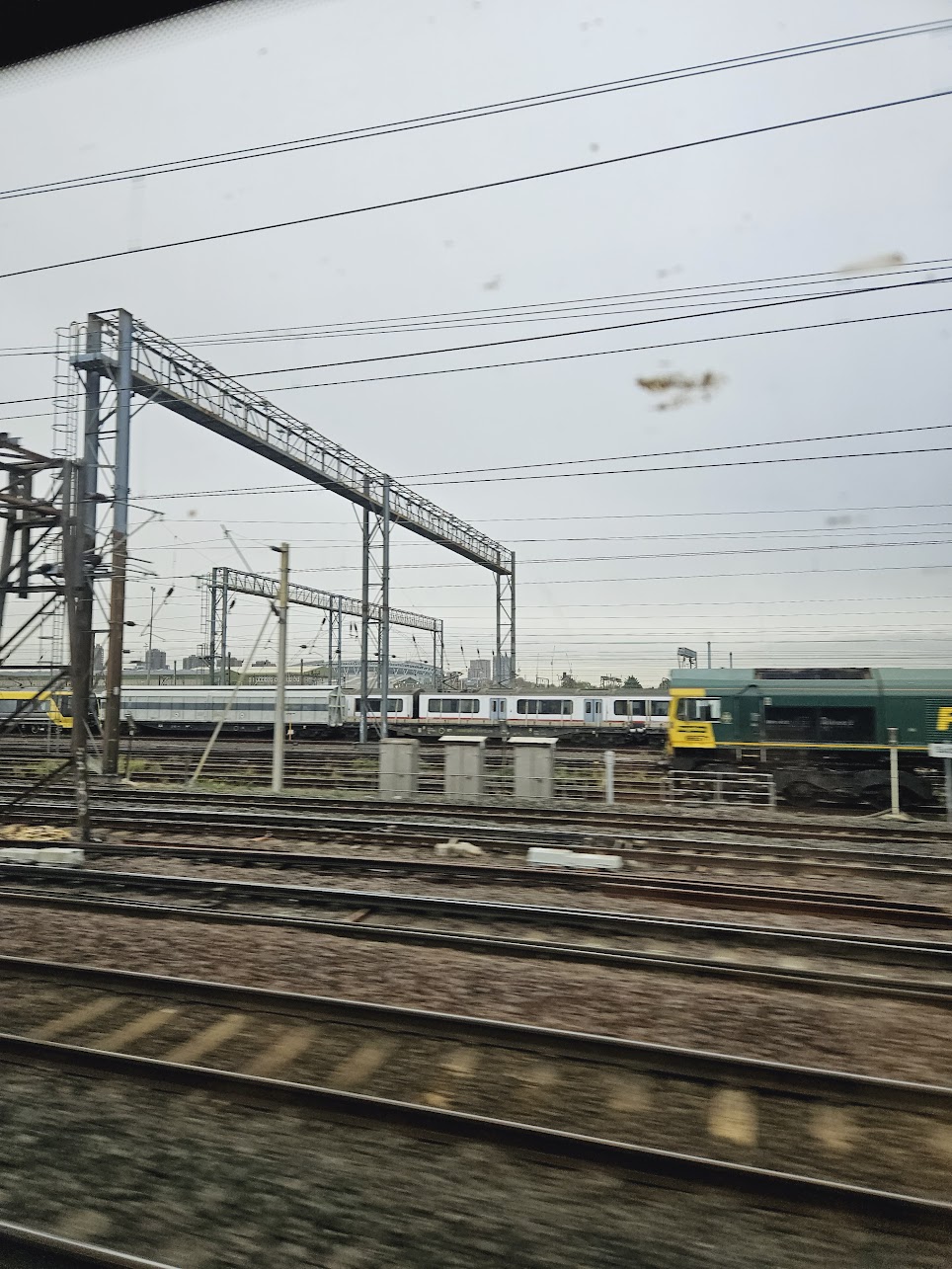
The Avanti West Coast train we were booked on not only wasn’t cancelled, but it was a new and very swish set of wheels that whisked us to Birmingham very quickly. OK, so it was 20 minutes late arriving at New Street, but who cares when there’s no time crunch? We’d paid a little extra to get better seats, and they were fairly comfortable for the nearly two hour run. The train itself was quiet and smooth, equipped with Wi-Fi and power points, which was all a far cry from the trains I remember from when I started work in London. There’s nothing quite like whipping along beside the M1 motorway and passing all the cars and trucks like they were going backwards, all while relaxing and enjoying the ride.

Birmingham New Street station has been rebuilt and incorporated into shopping centre (no surprise there), with a confusing layout and such a paucity of signage, and even public information maps, that it took us a while to find the correct exit. I could see that the designers of the station had sought to separate passengers into four separate areas, which would significantly reduce overcrowding and bottlenecks, but I think they’ve rather assumed that users of the station will be somewhat familiar with the layout, because the signage was definitely lacking.

Finally out of the building, it was an easy walk down Hill Street to the Back-to-Backs, that sit next to the still active Hippodrome theatre. We were early, so dropped in for a swift drink at the Sly Old Fox, then hot footed it over to the day’s excitement.

Back-to-Back housing was the Victorian answer to housing the thousands of people required to work in the factories of the big industrial cities. Birmingham was at the forefront of the Industrial Revolution, and in the mid-nineteenth century had around 50,000 of these dwellings. Now there are just these four, preserved for posterity, thank goodness. They consist of a house facing onto the street, with another house built onto its back and facing into a courtyard. The houses were one up and one down, or if it had and third floor, a two up one down. They were generally lived in by one family, usually a large family, and often with a lodger or two. There could be as many as twenty-four houses sharing a courtyard, where there was a privy and a drain and not much else. In Birmingham, a central water standpipe in the yard wasn’t provided initially, and a well some distance away was the only water source for hundreds of people. It wasn’t until almost the end of the century that water was piped into the houses themselves.

The National Trust has renovated four of these houses and set them up to depict different periods of time, from the 1860s to the 1980s, finishing up with George Saunders’ tailor’s shop that really was in one of the houses that fronted Hirst Street.

It’s all fascinating stuff, especially as our family tree research has revealed both our nineteenth century families would more than likely have lived in something similar, and Deb’s family actually in Birmingham. Although the standard of accommodation and hygiene was terrible, the Back-to-Backs were actually an improvement on the slums that organically developed when people moved from agricultural work to supposedly better employment in the cities.

We were taken around the houses by a very knowledgeable fellow, a native of Birmingham, who filled in the factual information with a stack of anecdotes, which made the tour even better. He was quick to point out that the restoration of the houses wasn’t absolutely correct, and in some ways these examples of Back-to-Backs were not typical. However, knowing that made the tour all the better. Our little group of visitors, including us, were all of a certain age and spent half the time recognising things that we’d grown up with and the other half puffing and panting as we negotiated the steep and narrow staircases. The Birmingham Back-to-Backs are highly recommended.

After that tour, we made our way through central Birmingham, via a Gregg’s for lunch of course, to the Coffin Works on Fleet Street. We had planned an hour or two self-guided tour in there, only when we arrived we discovered that it was guided tours only on a Thursday, and we’d missed the last one. (2pm, sorry chaps, that’s way too early to shut up shop, even on a November Thursday). The man at the desk there was full of apologies and did explain a little of what went on there (Not actually a coffin manufacturer, but a manufacturer of coffin furniture, handles, clasps, linings, shrouds and the like.), so we at least left with a bit of a flavour of the place. It hinted of Birmingham’s association with anything metal, and the city’s ability to produce high quality, mass-produced items from pen nibs and coffin furniture, to bicycles and guns.

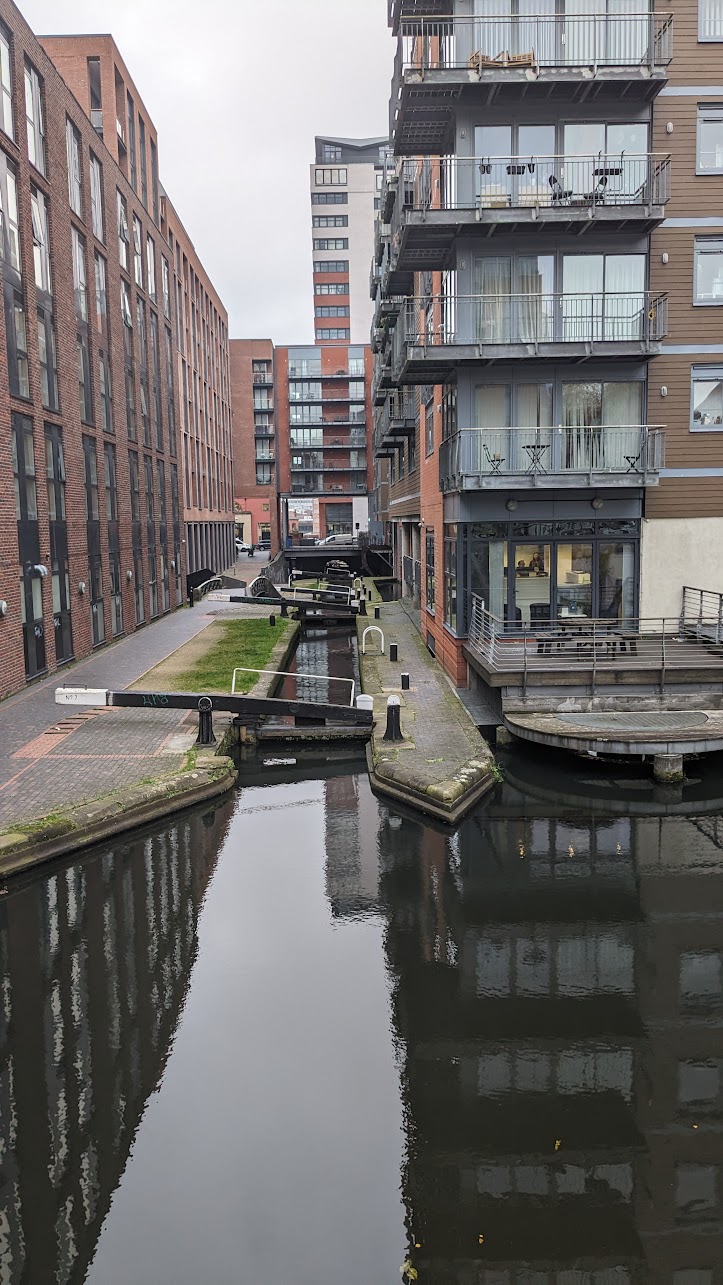
Only mildly disappointed, but with an unexpected couple of hours to kill, we looked awhile at the canal just across the street. I looked in vain for the name of the canal but came to the conclusion that it’s just generically a part of the Birmingham Canal Navigation that linked the factories to the canals coming into the city. We were at the Farmer’s Gate flight of locks, and all down the flight there were places to dock narrow boats, clearly visible even under the modern buildings that line the canal now. It’s easy to see that the Newman Brother’s factory making coffin furniture would have made use of the canal to ship goods in and out. If you’re thinking that the locks look too small (72’ x 7’ with manually operated paddles and gates), just remember that these operate in the same manner and the locks on the Great Lakes canals (776’ x 80’).

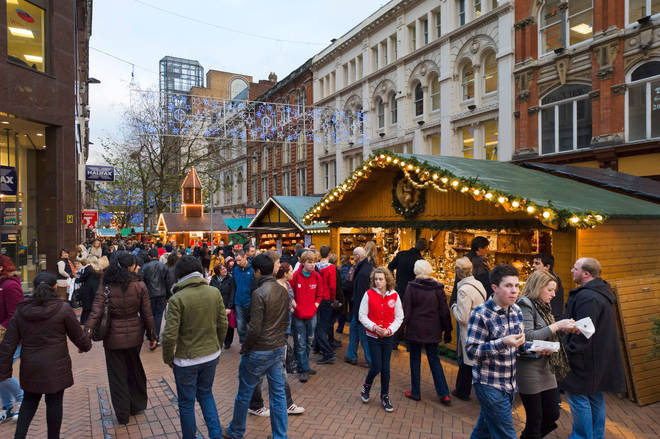
We might have visited the museum in town, but were too knackered to do that, so we had a quick mooch around a very busy main shopping (pedestrianised) street, replete with a faux German Christmas market stretching along its length. We had an early supper of a rather fine Pizza and a bottle of wine before repairing to the station, via a pub, for the train home. I should add that we were booked on a specific train, so we were sort of killing time by the end of the trip.

A complaint about pubs, and other businesses, in the UK this trip, is the music they insist on playing all the time. I’m not averse to music, but when it’s loud enough to prevent conversation, at least without having to substantially raise your voice, then it’s just irksome. Yes, I know I sound like an old fart (I am one), but I’ve left shops without spending any money because the music has become too intrusive. I can’t imagine how I would have felt had I been using my hearing aids.

The train trip home was also fast, although the rolling stock a little older and not so swish. We opted to take the bus home from Euston, which was far more direct that the trains, and I’m glad we did. We were driving through still busy streets at nearly 10pm with shops, pubs and restaurants open and doing good business. Indeed, after 15 years in Canada where hardly anyone walks anywhere, the foot traffic in British cities is a sight to behold.

Tomorrow is a down day, so I’m not sure what will occur. We really do need this down day, though, because we are shattered.

England ’23 – The City of London (and other bits)

Tags

, , , , , ,

Today was a planned slow start, and we didn’t get out of the flat until 1pm, which I suppose is proper holiday mode.

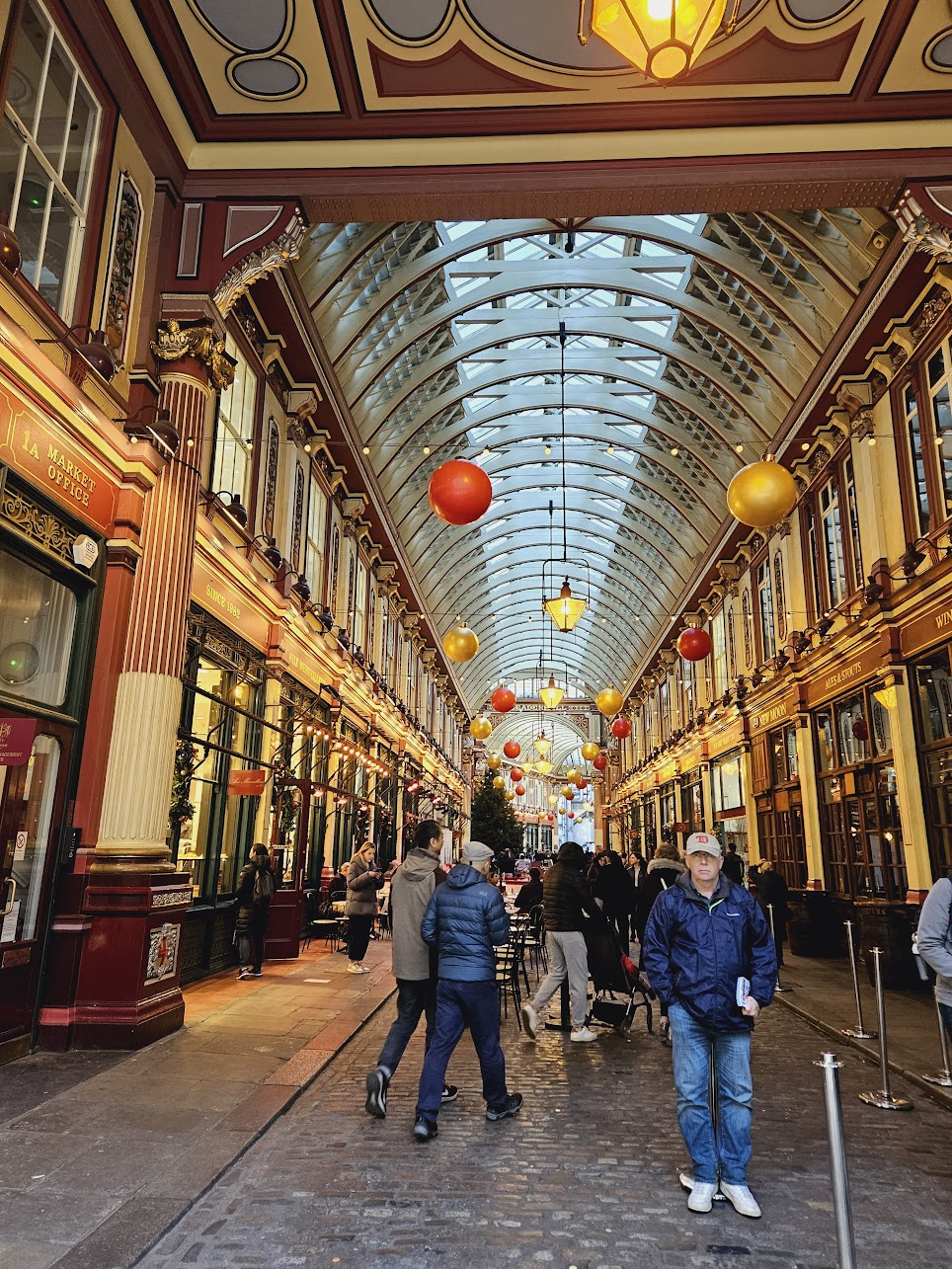
A leisurely run into Liverpool Street station on the Overground was followed by a walk through the City of London, which was full of City types on their lunch break. We stopped in Boots, then Sainsbury’s for supplies, then wandered into a very windswept Leadenhall Market. It’s a high vaulted Victorian arcade with some seriously fancy ironwork on show, and I’d never visited before. Like everywhere else, it was full of people on their lunchbreaks, just like I had been forty years previously.

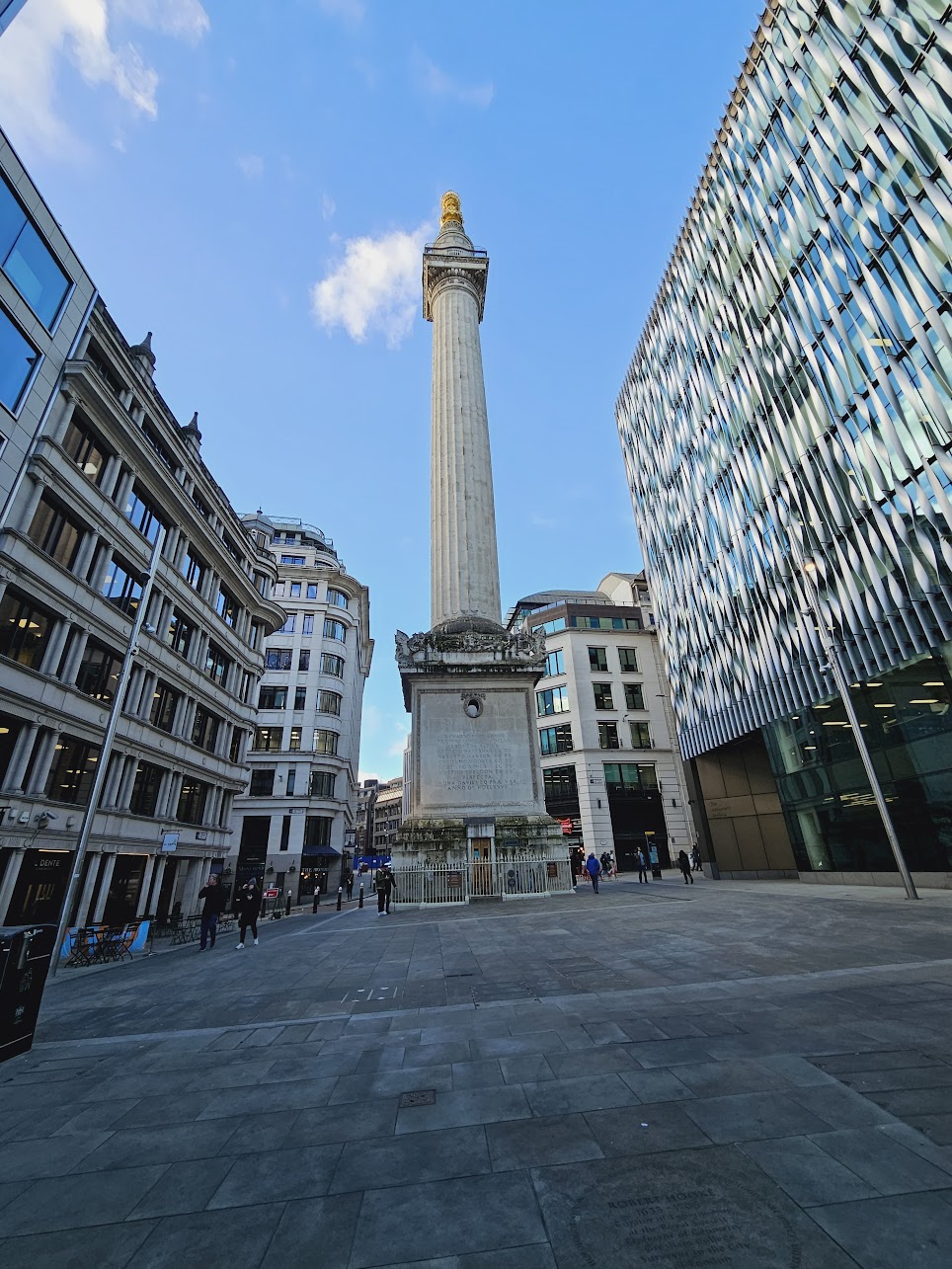
Then we walked down the gently sloping roads to the Monument. It’s a bit like a squat Nelson’s Column and has golden ball of fire on the top that signifies this was the approximate starting point of the Great Fire of London in 1666. You can go up inside the column and stand on a little balcony at the top, and I have done that before. But it has 311 spiral steps that take you up around 200 feet, which for old farts like us is a bit much. You do get a certificate if you make to the top, and presumably back down again, though. Fortunately, it was closed for lunch.

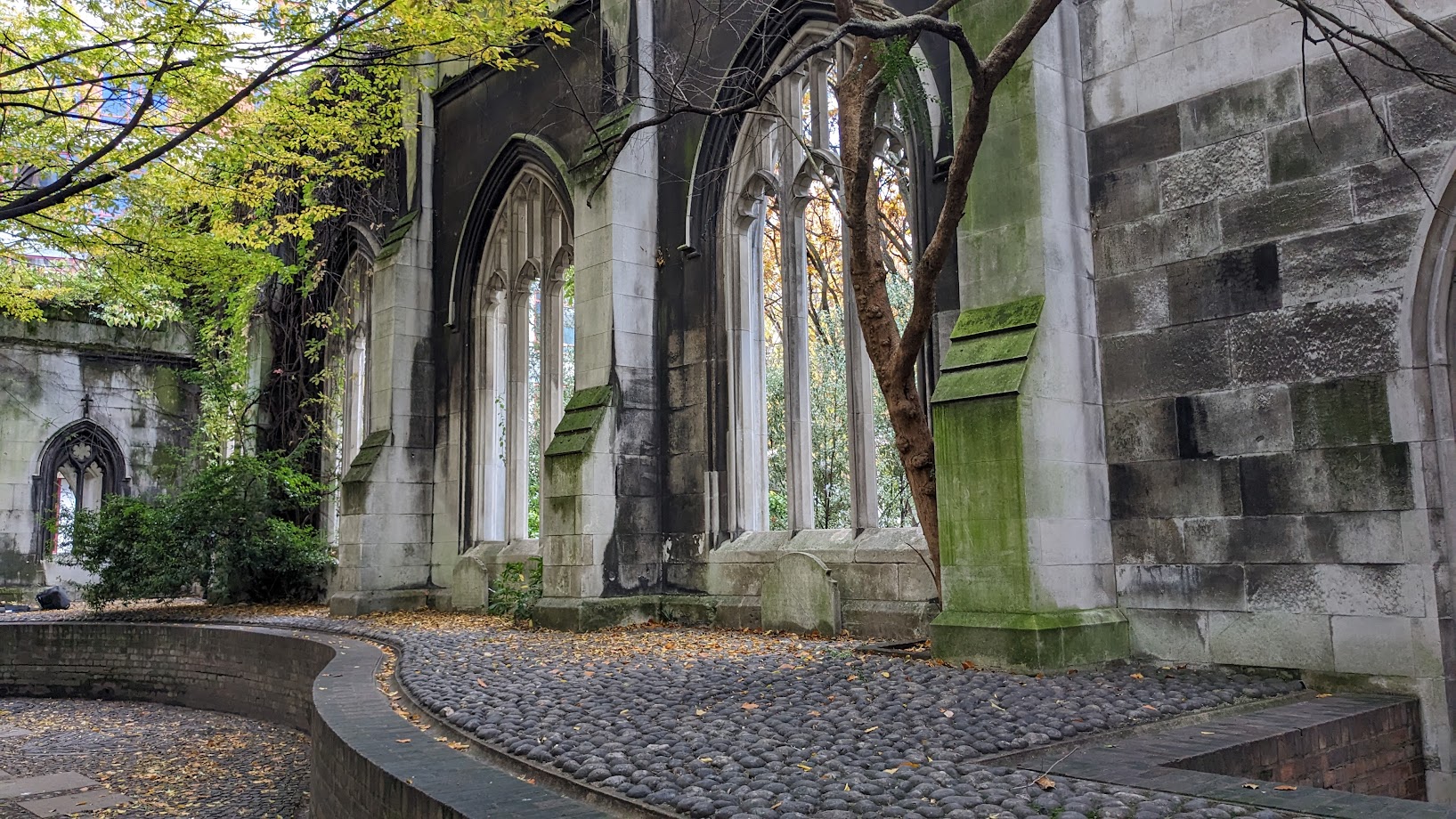
Then we followed the river, past the old Billingsgate fish market, to one of the City’s ruined churches, St. Dunstan’s, which is now given over to a curiously exotic garden. Apart from the surprising number of people in there on a cold November afternoon, it was a calm and beautiful place right in the City, and only yards from the Tower of London. There were notices about not using the place as a set for professional photography without permission, and there were some people in there with photographic paraphernalia, but at a guess I’d have said it was an Internet “Influencer” because the photographers were using their phones to record the pictures, which is hardly professional.

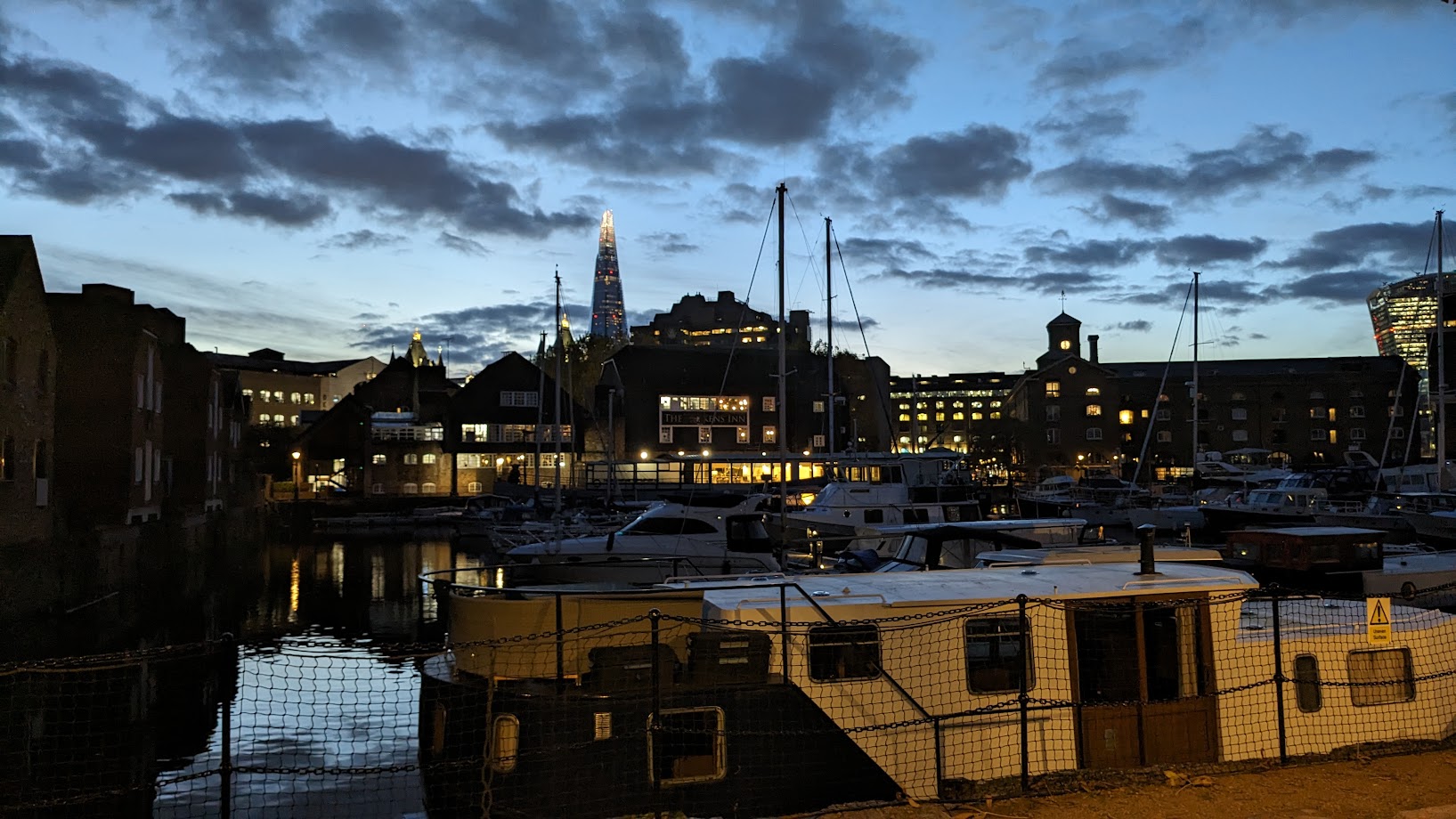
The Tower was looking fine in the sunshine, and of course was packed with tourists, so we skirted around the back (still a fine view) and made our way to St. Katherine Dock. This was the closest dock to the Pool of London and one of the first to cease trading as goods started to be moved in ISO containers in the 1960s. It’s been under redevelopment for decades and is now a place for expensive boats and expensive flats and offices. That said, there are still a fair few council flats to the eastern end, so it’s not all posh. There are loads of bars and restaurants, and it was to the Dickens Inn that we were headed. It’s situated in an old wooden warehouse, the origin of which I’m not sure, but I do know that in 1970 it wasn’t at its current location. It has been rebuilt, though, and is a popular place to drink for locals and tourists alike. The kitchen wasn’t open when arrived, but we had a drink and waited. To be honest, the grub was a little disappointing, but we were tired and would probably have eaten anything. A dull but interesting point is that the place is known as St. Katherine Dock, not St. Katherine’s Docks. When I was using the TfL bus app, I couldn’t locate it using the possessive and plural form. Who knew that it wasn’t St. Katherine’s personal dock, and that there was only one of them?

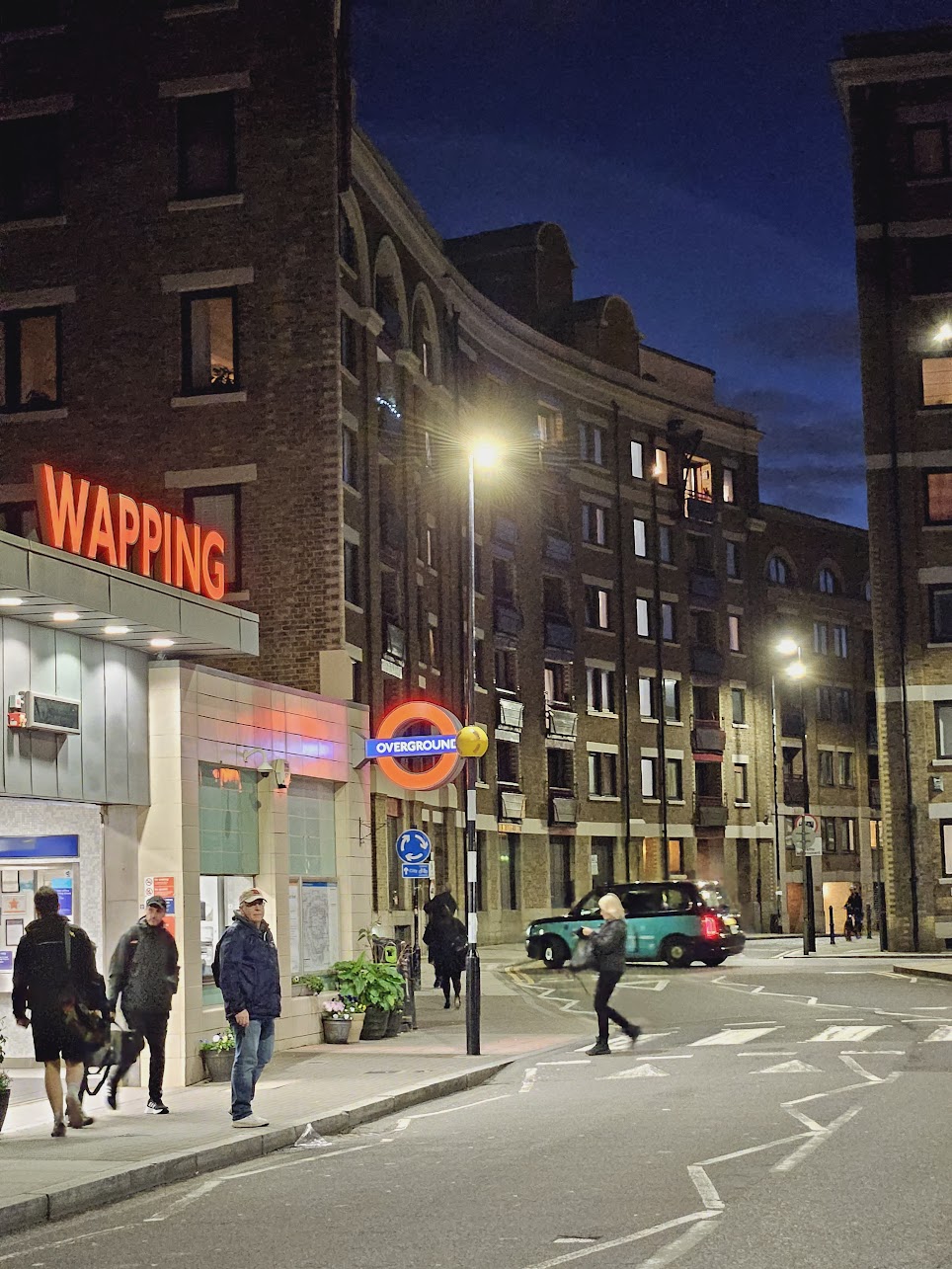
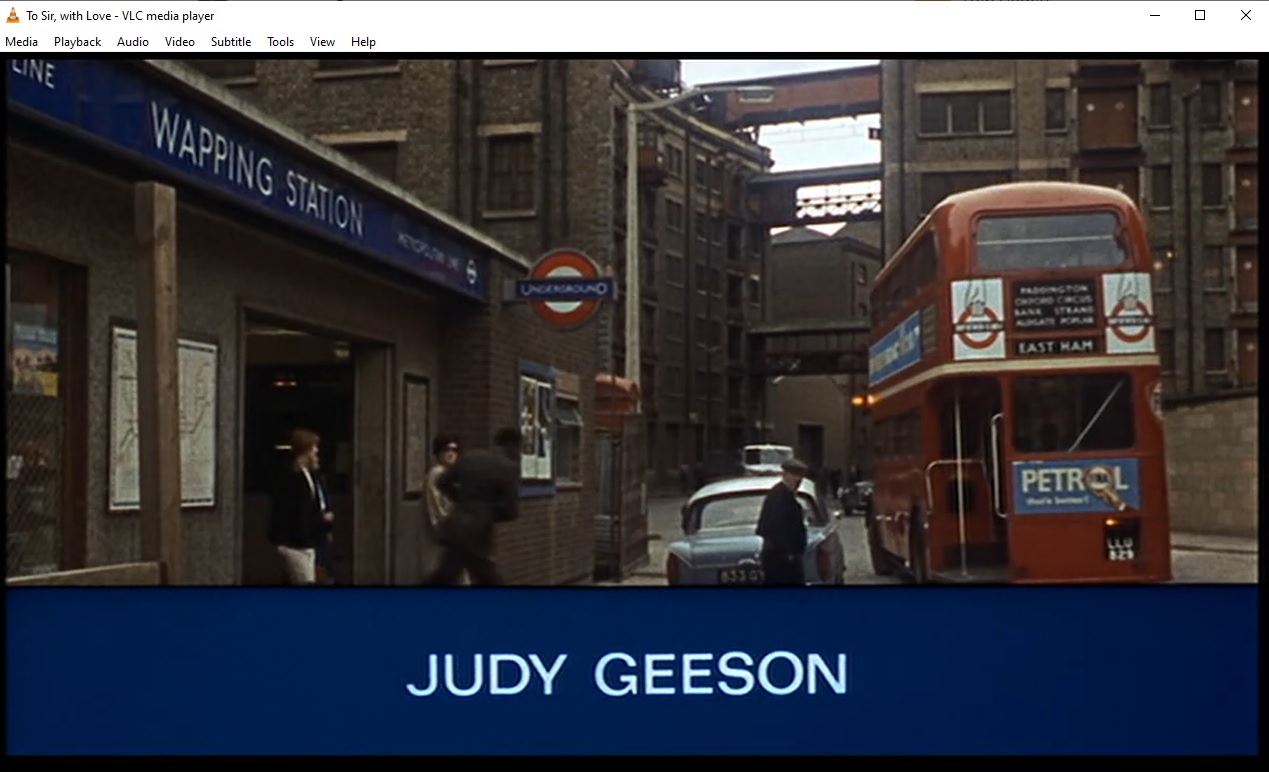
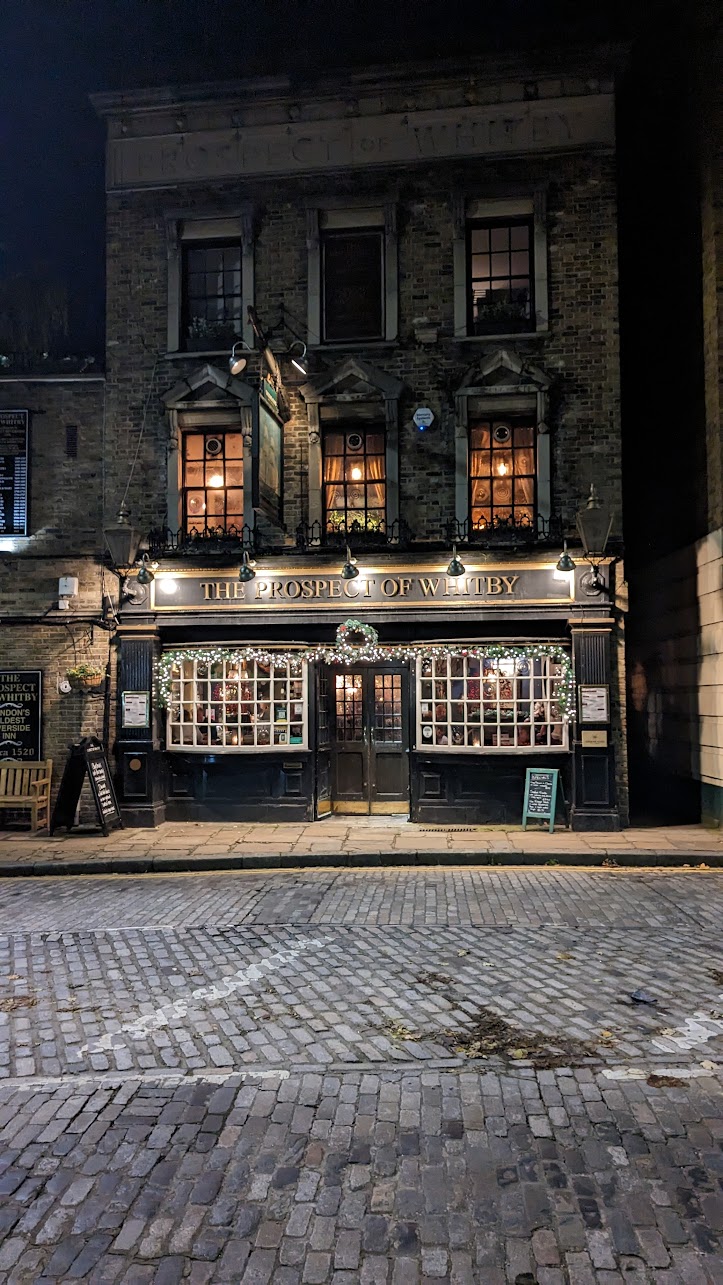
As it was getting dark, my planned walk along the river gave way to a bus ride to Wapping Station, following more or less the same route. There I posed for photographs in a vain attempt to recreate Sidney Poitier’s emergence from the station in the title sequence of the film To Sir With Love. Then we had a short walk along Wapping Wall (actually a cobbled street lined with warehouses, or at least buildings that had once been warehouses) to the Prospect of Whitby pub. The walk was fascinating, the narrow cobbled street lined with the old warehouses, albeit that they were now occupied by monied people rather than goods offloaded from ships. Whatever I think about it, they are at least keeping the place vibrant.

The Prospect of Whitby is a fine old nineteenth-century pub that replaced earlier pubs on the same site. It is claimed to be London’s oldest riverside pub, and I have no reason to doubt that. Because it was dark, we couldn’t see that it was right on the river, but we learned some of its colourful history from a nice little printed card on the table. The menu in the pub looked so inviting that me and the good Mrs. Mayne decided on a second dinner, barely two hours after the last one, and what a good decision that turned out to be. Although just “light bites”, the beetroot tart and salmon fishcakes were simply excellent.

Actually, the whole visit was great. The pub is quite authentic and was filled with people having a good time, and while it was quite noisy, it all added to the atmosphere. It seemed a bit Dickensian, especially with the Christmas decorations up, and I half expected Bob Cratchit and Tiny Tim to come along the street. That’s not such an odd notion of course, because this is one of the very areas that Dickens wrote about.

I did see a fox come trotting down the road, though. He stopped to pee on an e-bike, then carried on with his mission. The things you see…

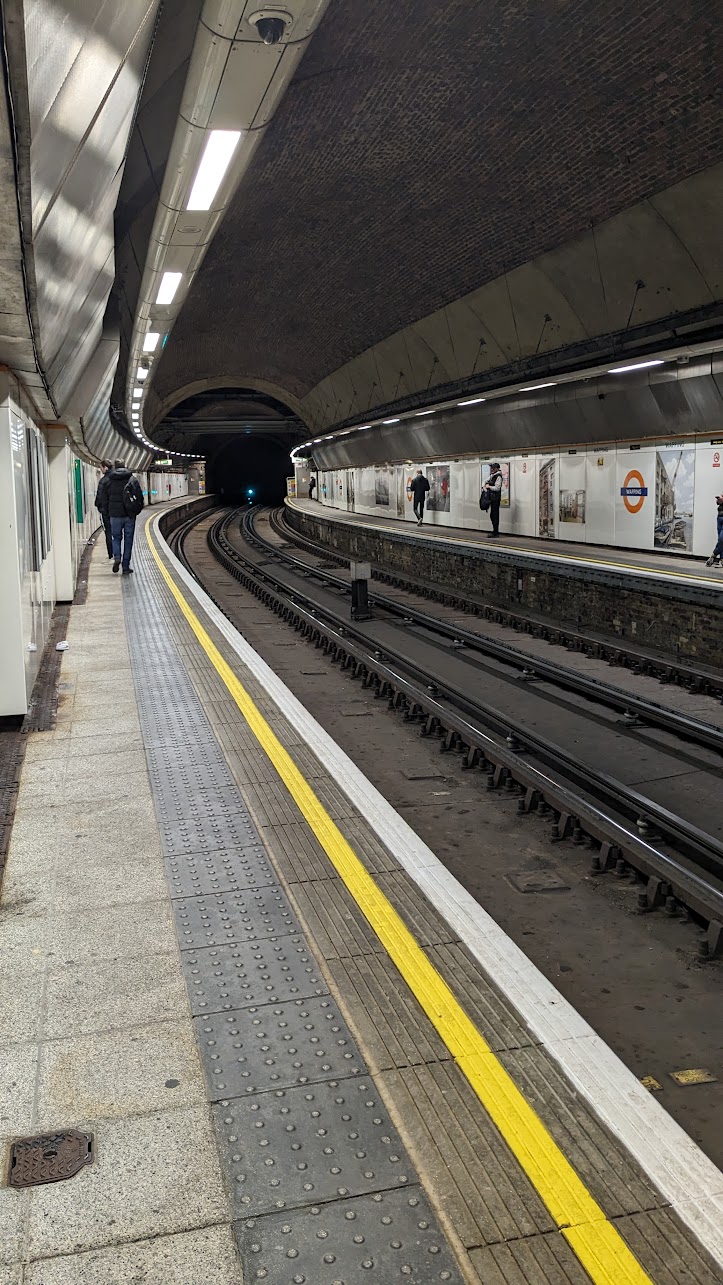
We walked back to Wapping station to catch a train north to Dalston Junction and were pleasantly surprised to see that the train platform, under the street, was at the northern end of the Marc and Isambard Brunel tunnel under the river, completed in 1843. It was originally built for horse and cart traffic, but was more used by pedestrians, and became a tourist attraction. In 1869 it was converted to rail traffic, and that’s what it’s used for today. Mind you, it looked like any other underground railway tunnel to me, and the only thing a little odd about Wapping station was the really narrow platforms.

At Dalston Junction we left the train and did a bit of evening shopping before getting on a number 56 bus and heading home. Kingsland High Street was so busy given the relatively late hour. We remarked that provided you had some money, you’d never starve in London, given all the food outlets.

It had been a long and enjoyable day, the walk in the City proving that there is history on every corner, and in such a small space. Had we gone on the Tube, we’d have missed it all. We were both shattered, though and crashed out early, because our next run out was to be to Midlands.

England ’23 – A Busy Day

Tags

, , , , , , ,

Our first port of call today was Westminster Bridge again, this time to Facetime with Charlie for the full twelve bongs of Big Ben, at midday of course.

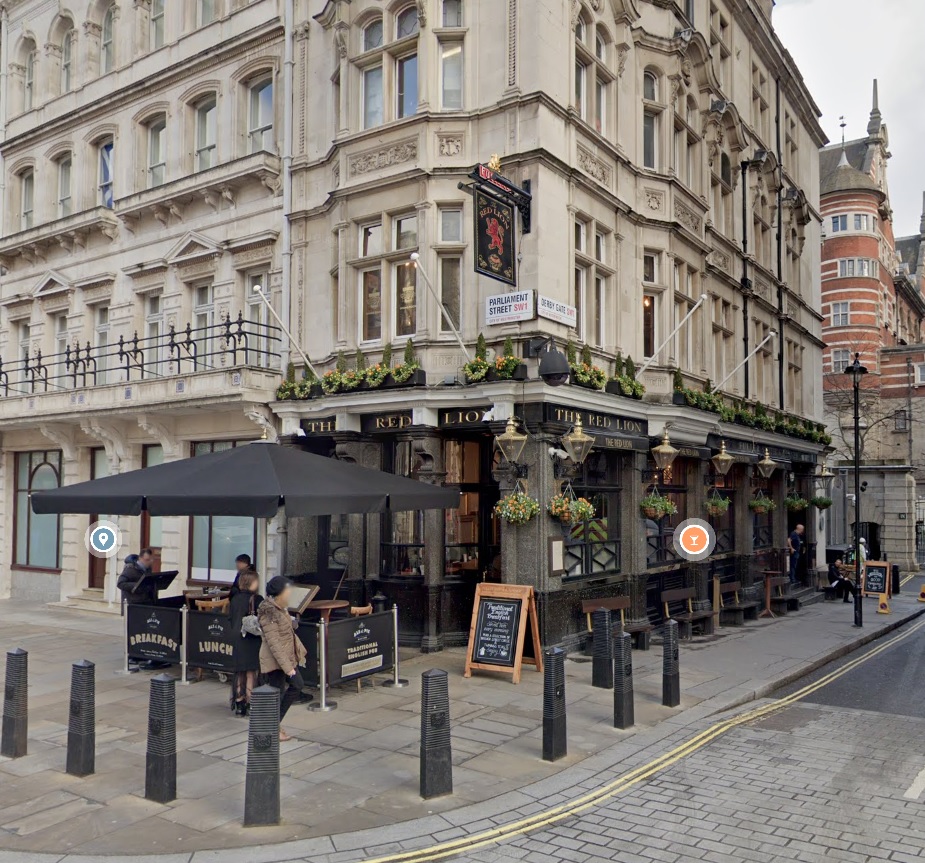
It was raining when we arrived, and the streets around were thronged with tourists, and I’m talking three deep on the pavement here. We had a little while to wait so headed to a pub. It was packed, so we went along Whitehall to the next pub, The Red Lion. Officially it’s on Parliament Street, but who cares when there’s the prospect of a pint of Fuller’s ESB coming your way?

We did find a couple of stools to sit on here, so we stayed. When I was waiting to order, the barman was explaining the Parliamentary Division Bell to a couple of tourists. The Division Bell is a bell that sounds in Parliament when the house “divides” to vote on something. As I caught another barman’s eye he said, “It’s up there”.

I said, “What’s up there?”.

He said, “The Division Bell”.

I said, “I only want a beer”.

At this point he realised that it wasn’t me asking about the bell. Cue one very confused young barman.

Anyway, there is a Division Bell in this pub, as there is in most of the buildings along Whitehall and Downing Street, that sounds when the House is about vote. It lets people like MPs and Lords know to put down whatever they’re doing and head over to the House of Commons, just at the end of the street. Voting in the House has to be done in person, of course. The Division Bell didn’t sound when we were in the pub, so I could enjoy my excellent beer in peace. Or relative peace, because like all other pubs in Central London, this one was quite noisy.

Back to the task in hand, off we scuttled in the rain to Westminster Bridge. The tourists were all there, regardless of the deluge that was about to ensue, but we managed to get onto the south side of the bridge. The rain was hammering down, but we stood fully five minutes in it, talking to Charlie and Emma in Canada, and me recording the event. The Quarter chimes were just starting when a tourist fellow a few feet away started hollering at the top of his voice for his kids to come back to him. I hollered, quite fairly I thought, “Stop shouting!”, and while he grumbled a bit, he did stop shouting. I know he was just trying to attract his kids’ attention, but he effectively drowned out most of the Quarter chimes. Tsk. I have it all on video.

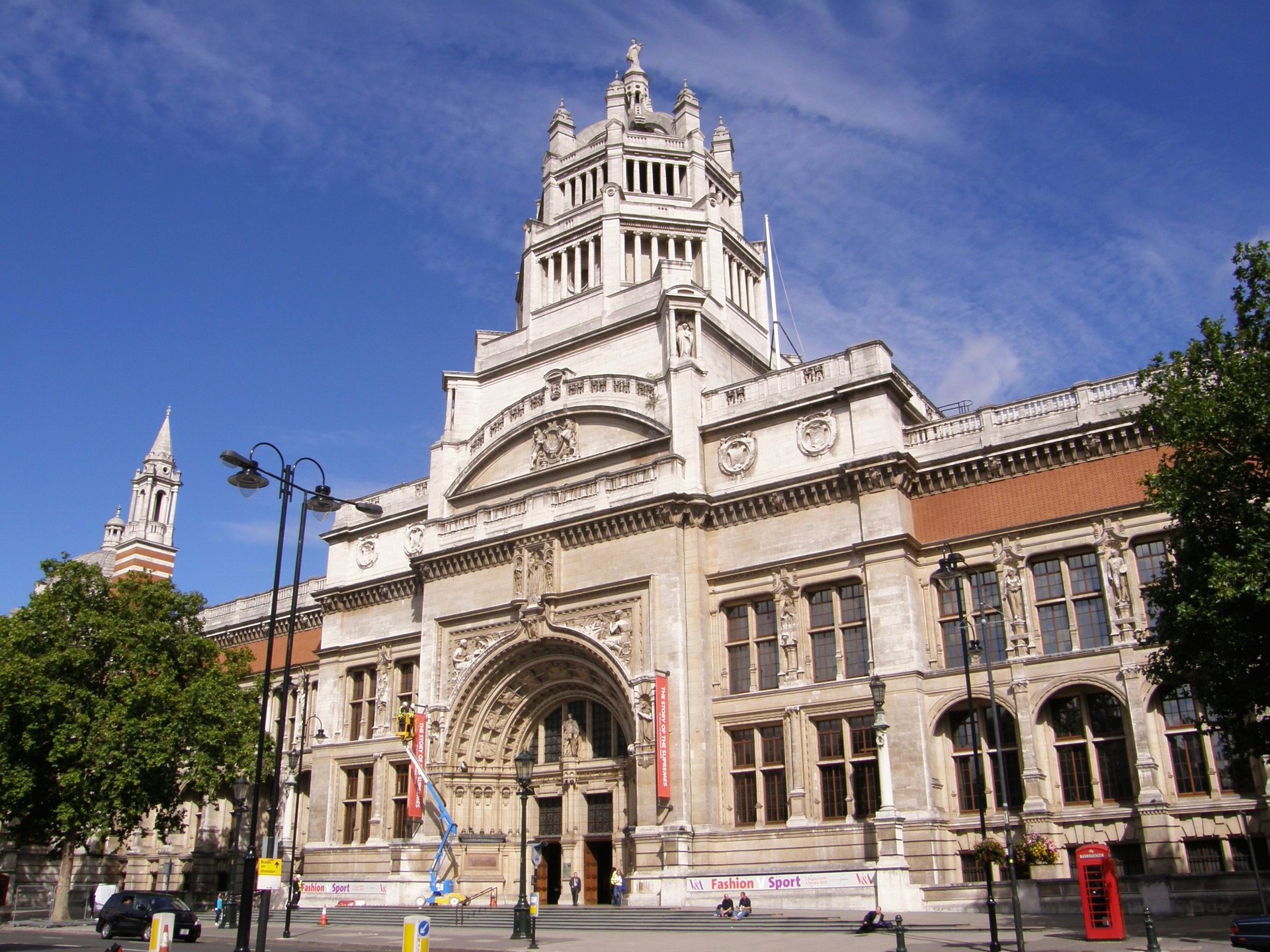
Our immediate plans had to change because the rain was so heavy, and we were soaked through. We decided to head to South Kensington and the Victoria and Albert (V&A) museum.

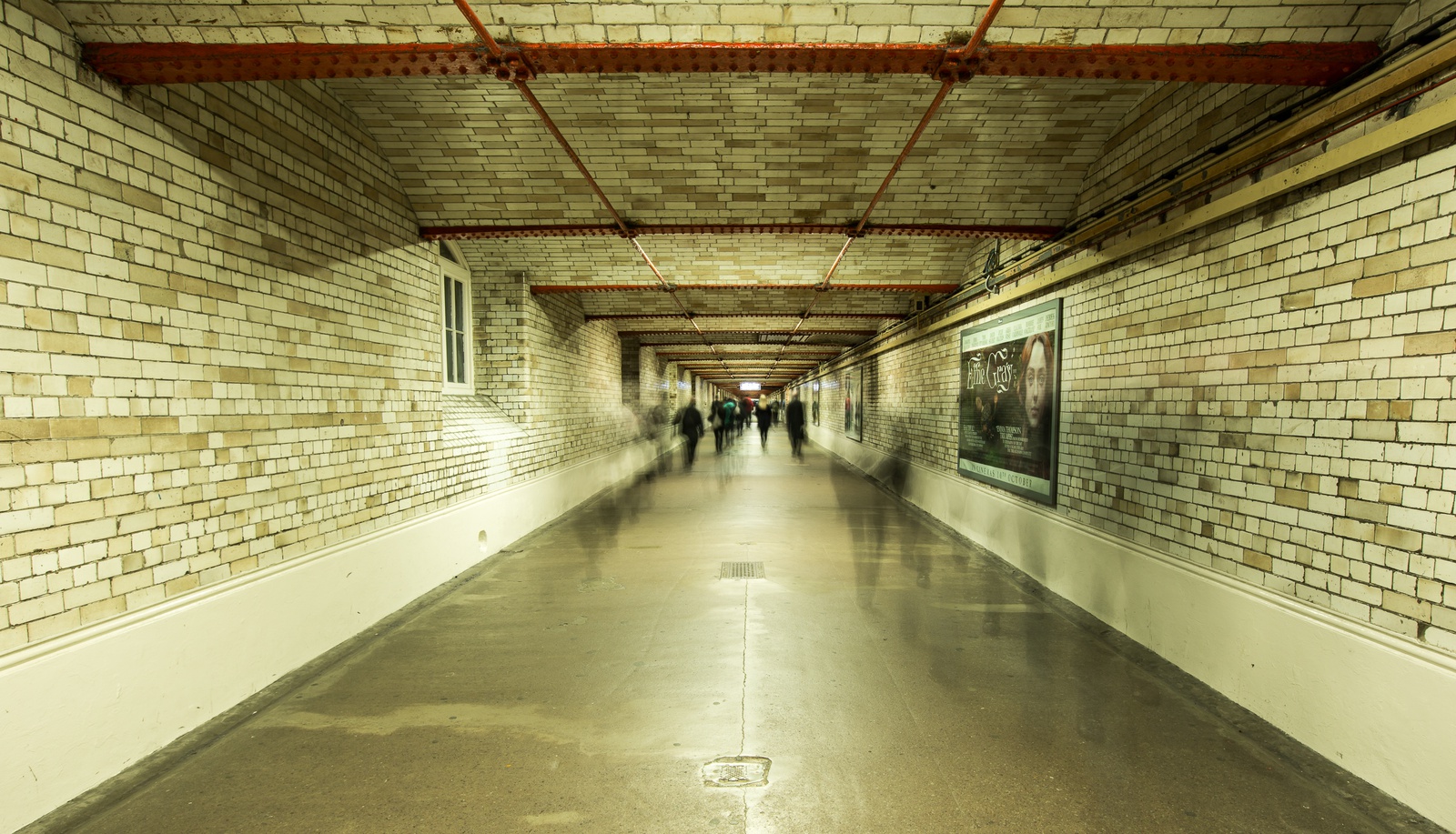
There is a tunnel which runs from the tube station to the V&A, and the other museums, so as we walked to the museum, we stayed out of the rain and away from the traffic, which was good. What wasn’t so good was the stream of visitors heading to the V&A with us, and the galleries closest to that tunnel entrance were packed. The queue for the Café was huge, as was the queue for the toilets, so we moved off to the Diva exhibition of British Fashion through the ages.

I’m sure that the vast numbers in the museum that day were in part due to the weather. Like all the major museums in the UK, it’s free to enter, so it makes a great place to get out of the rain. I’m still slightly shocked, though, at the sheer numbers of visitors in mid-November. What must it be like in the Summer?

We looked at the fashions, which were fascinating, then at all manner of domestic historical items that made up people’s homes through the centuries. While it was all stuff from the homes of the wealthy and well-to-do, it was still really interesting. The problem with the V&A, and the other museums, is that it is vast. We wandered around for an hour two before fatigue overtook us, and we’d barely seen anything. Like the man in the orange V&A jacket said, you really need to decide what you’re going to look at before you arrive, and just go straight there. He’s not wrong.

OLYMPUS DIGITAL CAMERA

The rain had stopped, and we still had some daylight, so we decided to head to Chelsea Football Club’s ground and its superstore, to buy some gewgaws. Well, you have to, really. We hadn’t eaten, so we stopped for a sausage roll and a Samosa from a little kiosk at the tube station, then headed west on the Underground. We got to Earls Court, ready to change onto a Wimbledon train when the announcement came over the PA system that there was a trespasser on the tracks at High Street Kensington, so all Wimbledon trains were stopped. What to do, what to do?

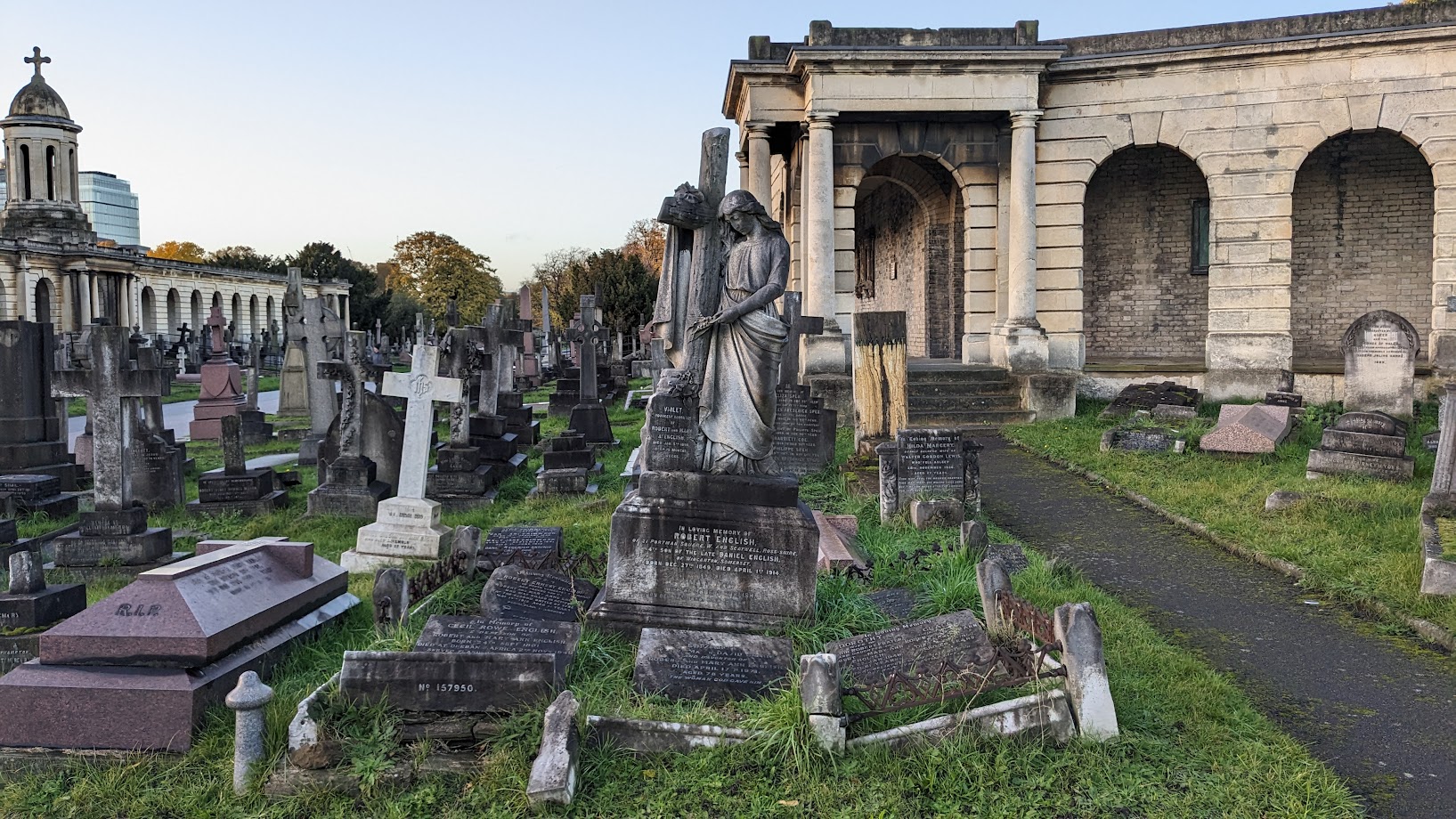
We decided to continue on foot, despite the fatigue, but then I messed up. When you leave a tube station, there are often many exits, and looking at my A to Z map, I incorrectly assumed we had left by the exit on Warwick Road. Not so, apparently. I am sensible enough to keep checking the map, but to put the mistake right it added about 15 minutes walking (that maybe an exaggeration). On the way, though, we were able to walk through Brompton Cemetery, which was on our list of things to do anyway. Unfortunately, it was 3:35pm and the gates closed at 4pm, so we were on a bit of a time crunch, not least because it’s a big place and we had to walk from one end to the other. I was panicking about getting locked in, so it was all a bit of a rush. However, we found the plot we were looking for and took a squillion photographs.

As we were heading to the gates of the Cemetery, a Royal Parks car came through with a loudspeaker on it, telling us all to vamoose, and we made it with barely a minute to spare. Like the museum, the Cemetery is so full of interesting stuff that you really need much, much longer to explore.

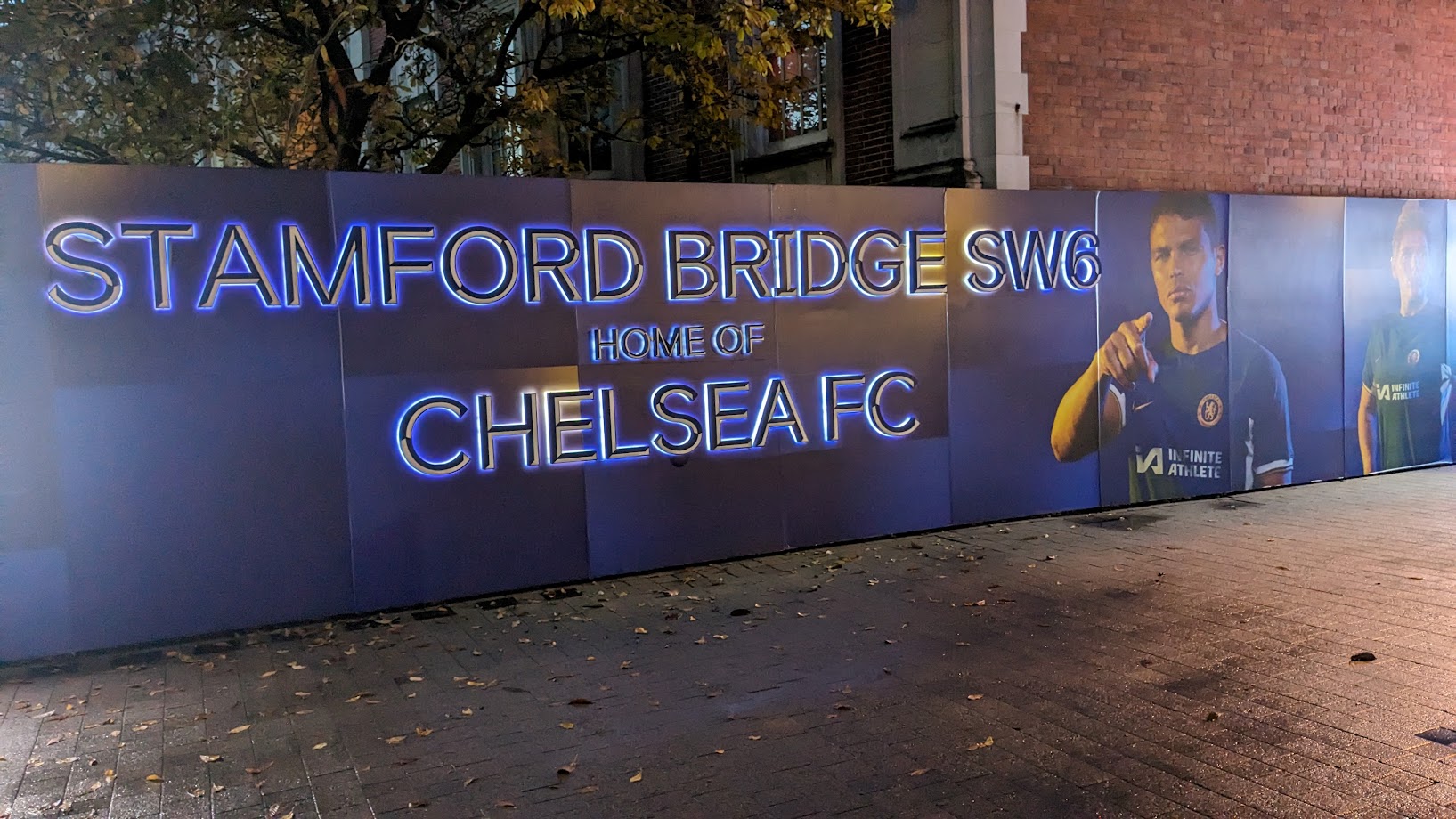
Chelsea FC and Stamford Bridge were excellent, even if the prices of stuff in their shop were daylight robbery, and as it was getting dark we mooched over to Fulham Broadway tube station to get the Underground back into the West End. We’d decided to visit the Marquess of Anglesey pub in Bow Street, Covent Garden, because that was the site of my first pint of beer in London, when my dear departed older brother met me there in 1977. I remember the occasion well, and that the beer was 26p a pint.

On the way to the pub I thought it wise to check out a restaurant to eat at, because although the pub advertised meals, I had my doubts. We eventually ate in the Wildwood Italian restaurant, right opposite the Royal Opera House, where we were skillfully upsold an expensive bottle of Negrini water. Not that the restaurant was any more expensive than anywhere else, but the waiters were clearly pushing to maximise the bill, and why not? We did make it to the pub, and it was packed. The noise level was huge, like all the other pubs we’d been into, and it’s just people socialising, not eating or trying to get drunk; that’s how English pubs work, mainly the socialising.

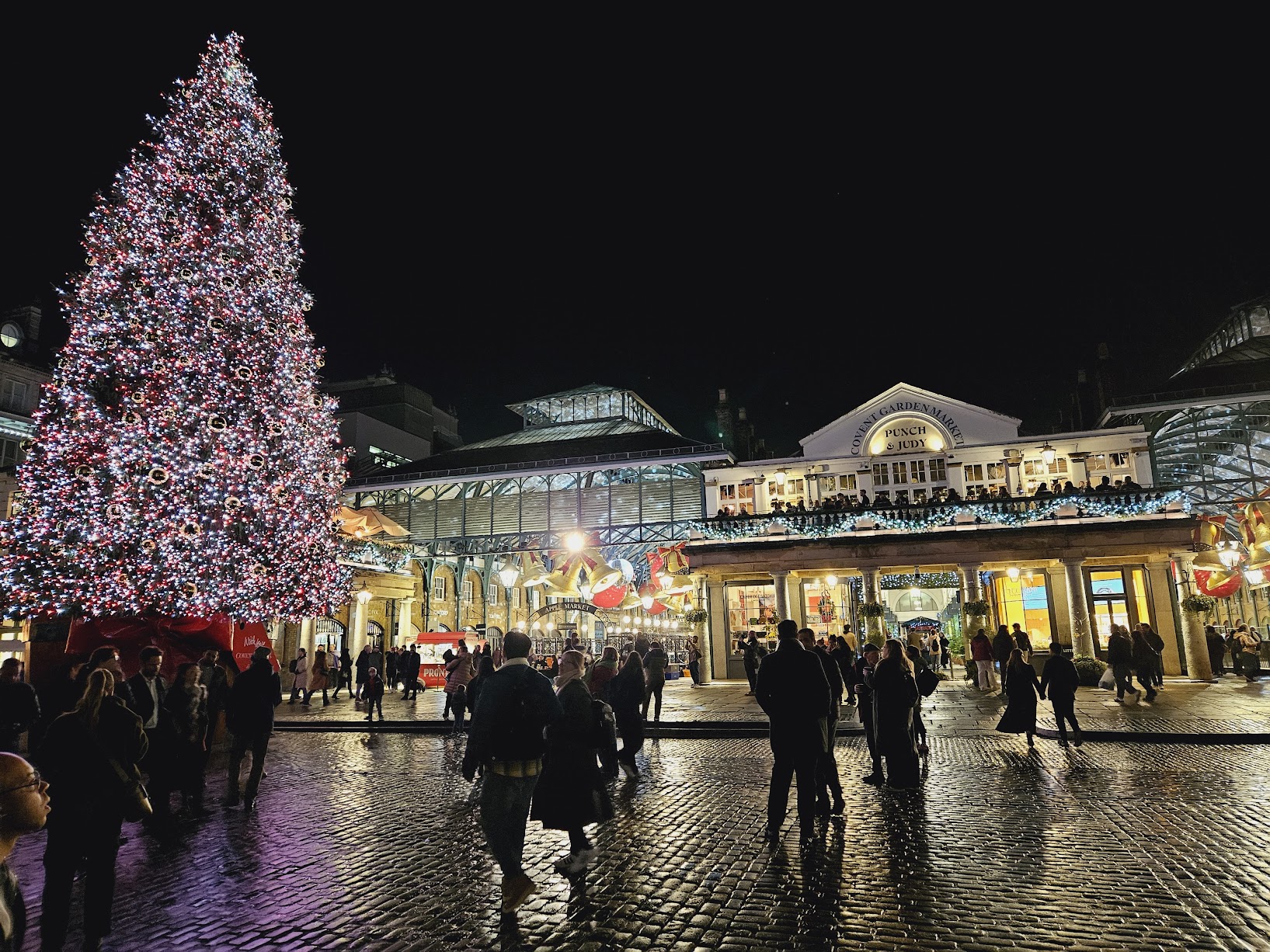
After the one drink, we went outside and had a lovely walk around Covent Garden. We saw the street in which Victorian Maynes had lived, and saw their church where they were baptised and married. The old market building, still boarded up when I first went to London in 1977, two years after it has stopped being a market, was lit up in its Christmas finery. At 7pm, it was packed with people, and most of the shops that now occupy the market were doing a good trade. From there we walked up Neal Street towards where the aforementioned dear departed brother used to live. We stopped on the way to pick up cupcakes (of course we did), then ambled up towards St. Giles. Neal Street used to be almost entirely greengrocers’ shops (being close to the market, of course). Those shops didn’t have windows and doors, but opened straight onto the street, so at night they were closed up with boards. If you went down there on a Sunday, it was a ghost town of boarded shopfronts. Now the street is full of very trendy shops and packed with people, seemingly 24/7.

St. Giles was the site of my first workplace in London, although the building has long since been demolished and replaced by something big and orange. The Angel pub is still there, as is the convenience store next door, the home of my youthful Mars Bar cravings.

We crossed New Compton Street which was, as my family tree research informed me, the home to another part of the Mayne dynasty. It’s all post-war development now, but I never had any idea that my ancestors had been so close when I worked just across the street.

Our target for the evening was Oxford Street, London’s main shopping street, to see the Christmas lights. After Covent Garden’s impressive display, I’m afraid Oxford Street’s offering was paltry. Somehow, Oxford Street always was a bit of a disappointment.

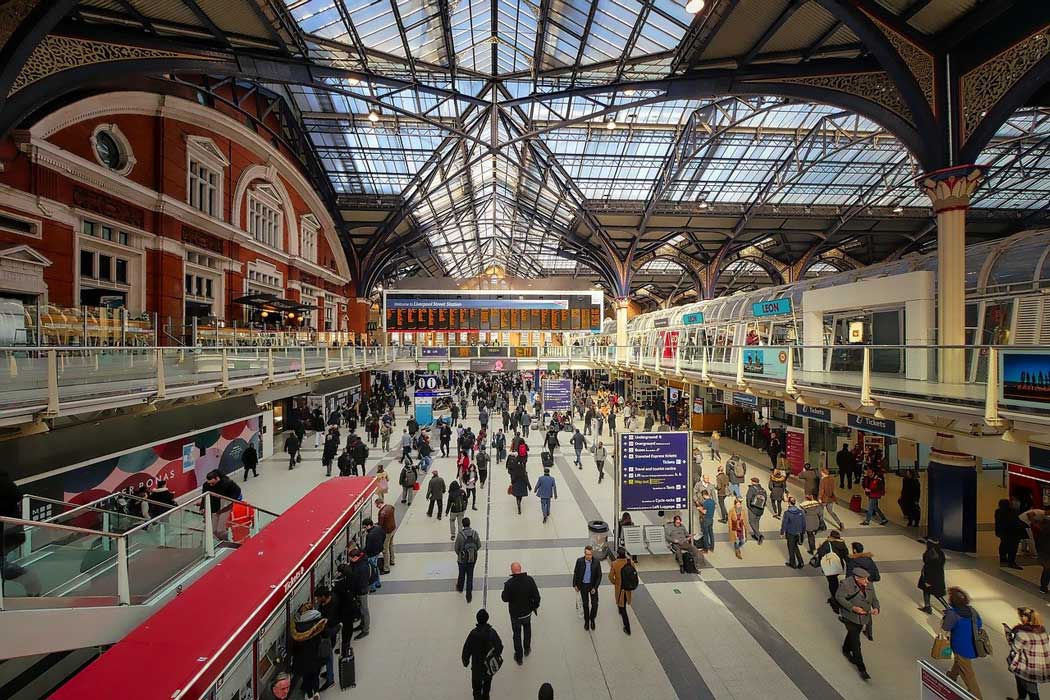
Heading back to Lower Clapton (the official area designation, I’m told), Liverpool Street Station was a bit of mess because there had been a “Passenger Incident” that was affecting trains on the line we were to use. As I had my lucky mascot (t’wife) with me, there was a train waiting to leave, and although it was standing room only because so many other trains had been cancelled, we reasoned it was only four stops, so on we hopped. Two passenger incidents on the same day, it must be some kind of record.

That was a long day, and we were both shattered, but we had covered an awful lot of ground and ticked a few things off the list, so it was all good.

England ’23 – Too Much Stuff

Tags

, , , ,

A late start for us this morning, but an interesting day unfolded before us.

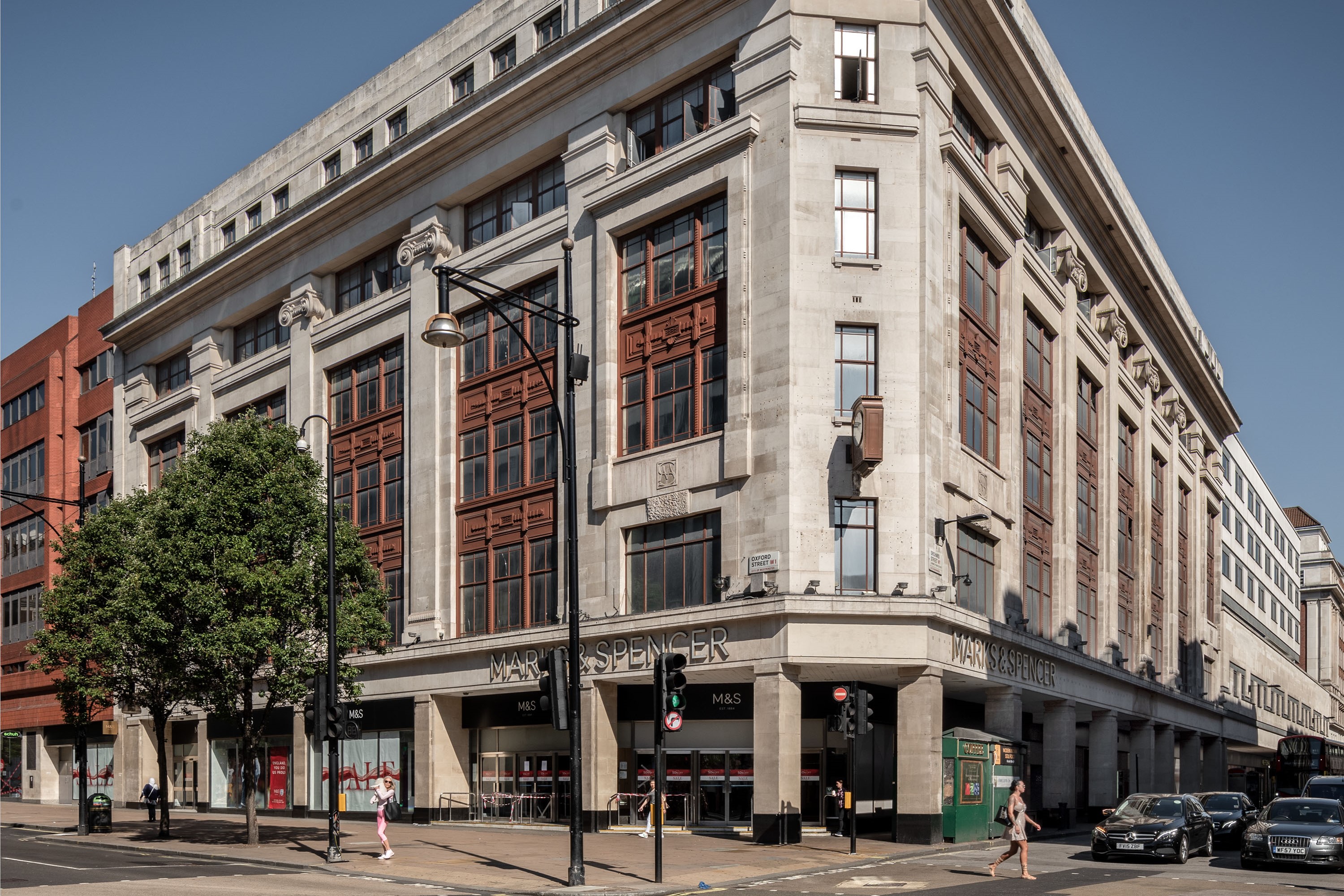
Cards on the table here, we bought too much stuff. So much stuff that we had to buy another case to take it all home. We had contemplated bringing an empty case with us, in anticipation, but that has logistical issues as well. So, we found ourselves on the number 30 bus to Marble Arch, to buy a case in Marks and Spencer.

It may seem a bit odd to do a 50 minute bus ride to buy a case when there are lots of other places you can buy a case, but the M&S Flagship store had what we wanted, and a few other things, and well, we do like a bus ride through the hugely fascinating streets of Hackney and Islington.

I had forgotten just how big that M&S store at Marble Arch is. It’s on four floors and is pretty much an old fashioned department store, but it looked as M&S should, and it smelled like M&S should as well. We bought what we needed and decided to take it straight back to the flat, on the bus, as it’s not a great sightseeing look to be wheeling a suitcase around.

Or is it?

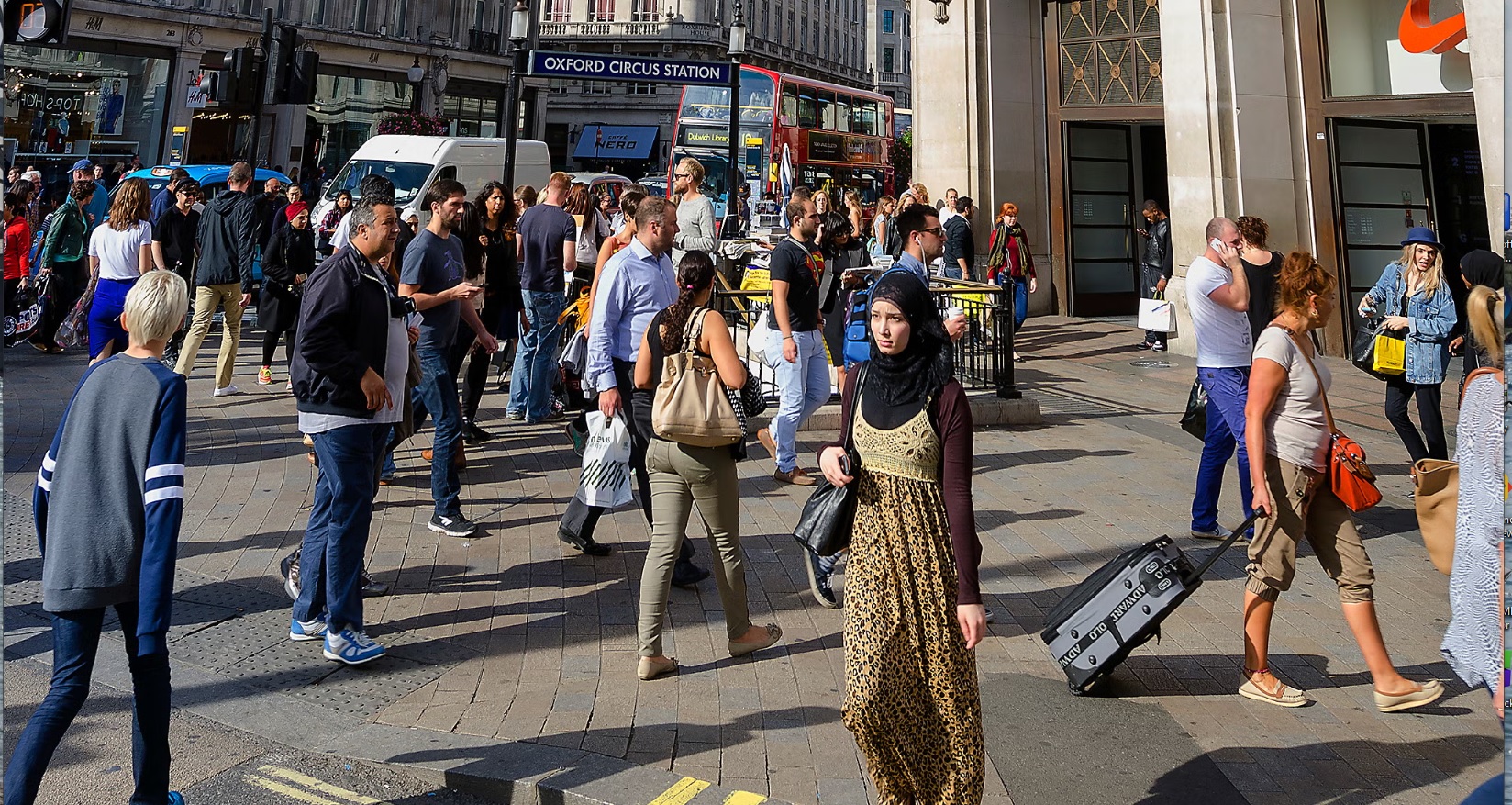
There are hordes of people in London wheeling flight-sized cases around. They can’t all be prepared for an unexpected stopover somewhere, so I’m speculating that these are the replacements for briefcases and big handbags. Sure, they can be wheeled, but even the flight-sized cases are pretty chunky. Still, I guess it’s fashionable. (Not my photo).

On our way to the bus stop, we paused on the corner of Gloucester Place and Portman Square to admire the big house that was once the residence of an ancestor of mine. Mary Anne (Polly) Mayne was born in South Africa in 1856. In 1880 she married Robert English, a man of private means, and moved to London. In the 1911 census, she’s shown as living in the big house I pictured below, with, get this, her family and 11 servants. It’s some pile. Robert died in 1914 and is buried, along with Polly, in London’s Brompton Cemetery. There’s a grave we intend to visit.

We took a lazy day back in Hackney (or is it Clapton?), did some laundry and then headed out to Waterloo to meet up with my brother and his wife who’d come up on the train from Hampshire.

We finally arrived back in Clapton (or is it Hackney?) at around 10pm, absolutely exhausted. It’s a tough gig this holiday lark.

England ’23 – Welcome to London

Tags

, , ,

Our first full day in London was a late start for us. It was Remembrance Parade Day in Whitehall, so we watched it on the TV in the flat. I’m not really a flag-waver, or someone who makes a big deal about veterans and service, but I do like the annual ceremony that takes place here in London. Indeed, I try to watch the one in Ottawa, but that’s often during the week as it’s marked on September 11th rather than the following Sunday as it is in the UK.


Perhaps it’s time to say that I’m uncomfortable with the growing sentimentality around Remembrance Day and the wearing of poppies, so I devote a little time to think about those young lives lost in the many wars inflicted upon us, and to think of the families that lost their men (and women, of course), especially when war became industrialised. It has become more poignant for me as I discover more ancestors in my family tree who perished, particularly in the First World War.


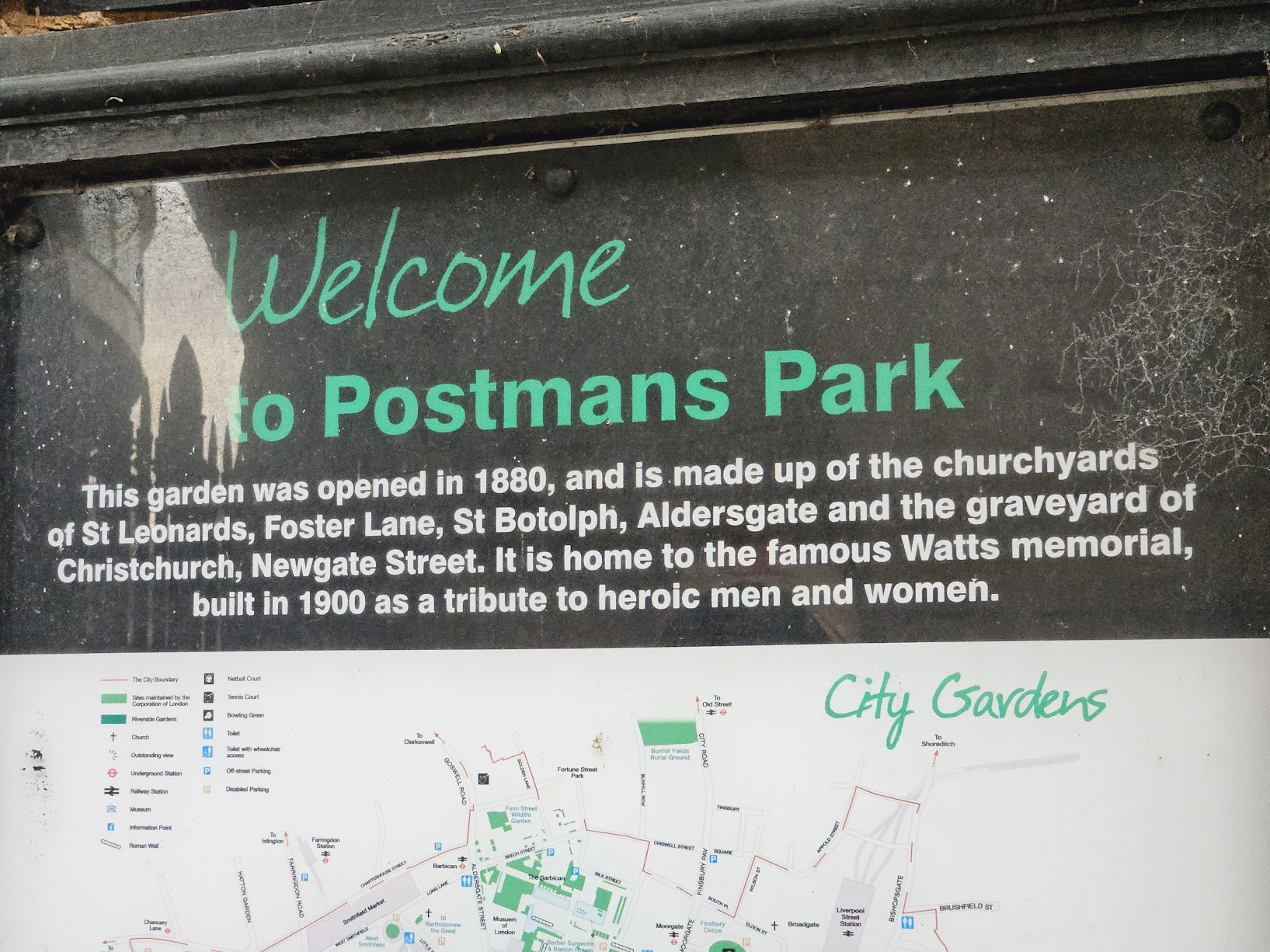
Anyway, leaving later than planned, we caught a bus into the City of London. It stopped short of our intended target, St. Paul’s Cathedral, so we walked from the Barbican and London Wall. Walking was a good idea because we came across a number of things that we’d kind of earmarked to see. First it was the church of St. Botolph-without-Aldersgate, now the London City Presbyterian Church, and the wonderful Postman’s Park on what had been the church’s burial ground. We had been watching John Rogers’ fabulous London Walk videos on YouTube, and this was one of his stops on his Churches series.
There was a service just finishing inside the church, and the park was one of those green corners of calm that you find all over London, but this one is special because of an art installation, the Memorial to Heroic Self-Sacrifice. It’s a roofed bench with a series of painted enamel tiles on the wall that describe, well, acts of self-sacrifice. It’s by the artist G F Watts and was unveiled in 1900. The people mentioned on the tiles are not well known people, just ordinary folk doing ordinary jobs, but doing extraordinary things. This was a great way to start the day.

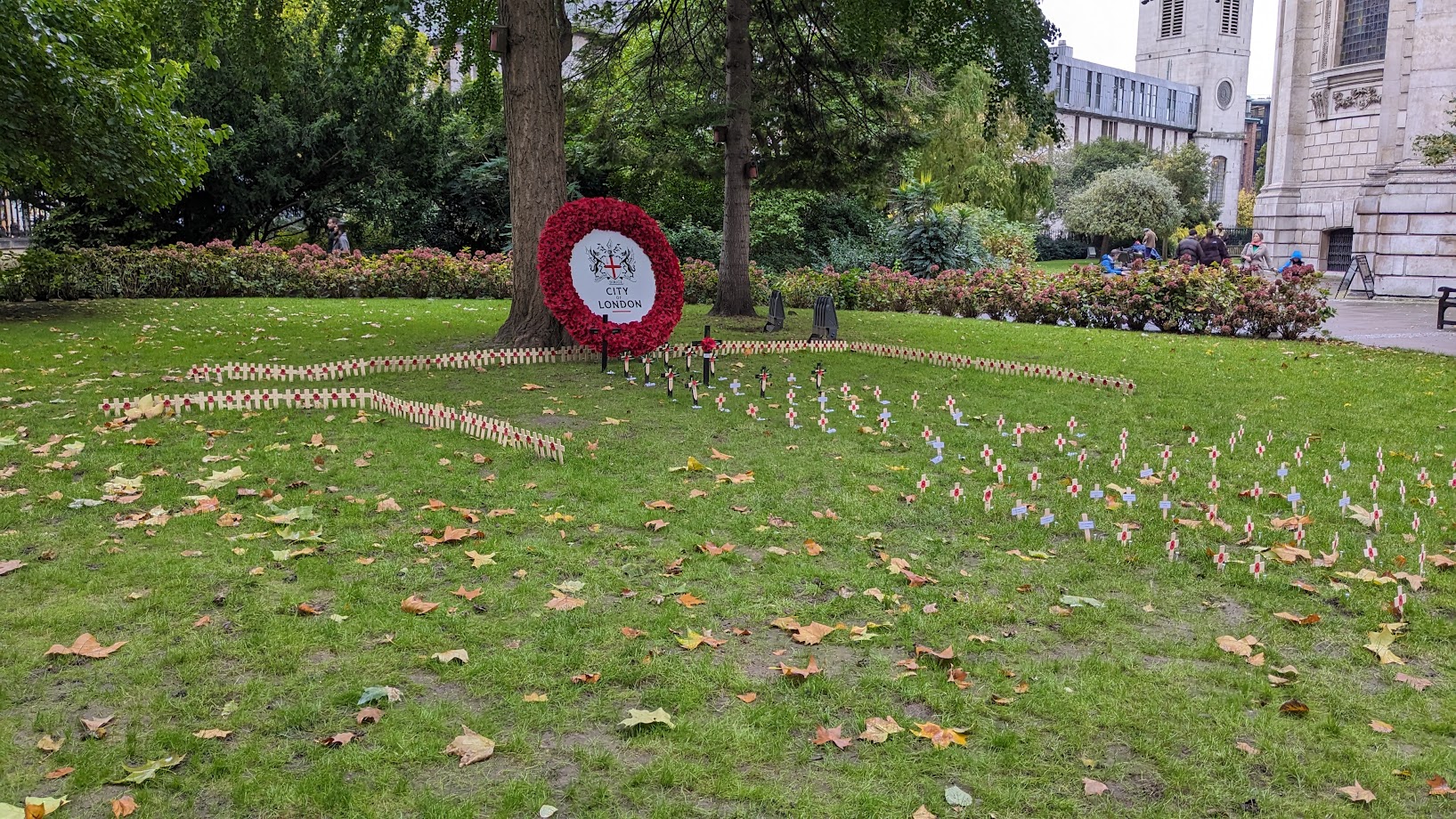
Then it was down to St. Paul’s (I never appreciated the size of the place), just to mooch around as it’s not open to tourists on a Sunday, and quite right, too. The Remembrance Day service had not long finished so the gardens were full of commemorative poppies, which were a nice splash of red on a dull day.

I should say that I’m not really a church enthusiast, or religious, but the City of London is defined by its churches. There were over 100 in the Square Mile prior to the Great Fire of 1666, but that number is much reduced these days. However, Sir Christoper Wren, and a few other architects, rebuilt many after the fire. A few have been lost to German bombing, and a few more through the need to expand the business heart of London, but there are still 59 churches in the City, and you can’t turn a corner without finding one. They are undeniably beautiful, standing or ruined, and make a brilliant contrast to the steel and glass of the modern structures that surround them.

We sat in Paternoster Square, on a very cold stone bench to eat our lunch, then rambled though the Square Mile to find a shop to buy some stuff. We passed more churches, The Bank of England, The Royal Exchange, The Mansion House, and quite a lot of other stuff we didn’t recognise. This was all in a ten minute walk. It’s fantastic history, crammed into a very small area.

The shop in which we were buying stuff was TK Maxx, and very popular it is, too. The Canadian equivalent would be Winners. The place had way too much stock on the shop floor, there were too many people in there and it was a zoo. Stuff bought, we left.

We had a plan to be on Westminster Bridge for four o’clock, so hot-footed it to Bank underground and the long and winding walk, underground, to the District Line, which is in fact Monument station. A quick look at the map confirmed that it would have been far quicker to walk to Monument in the first place. Hey-ho.

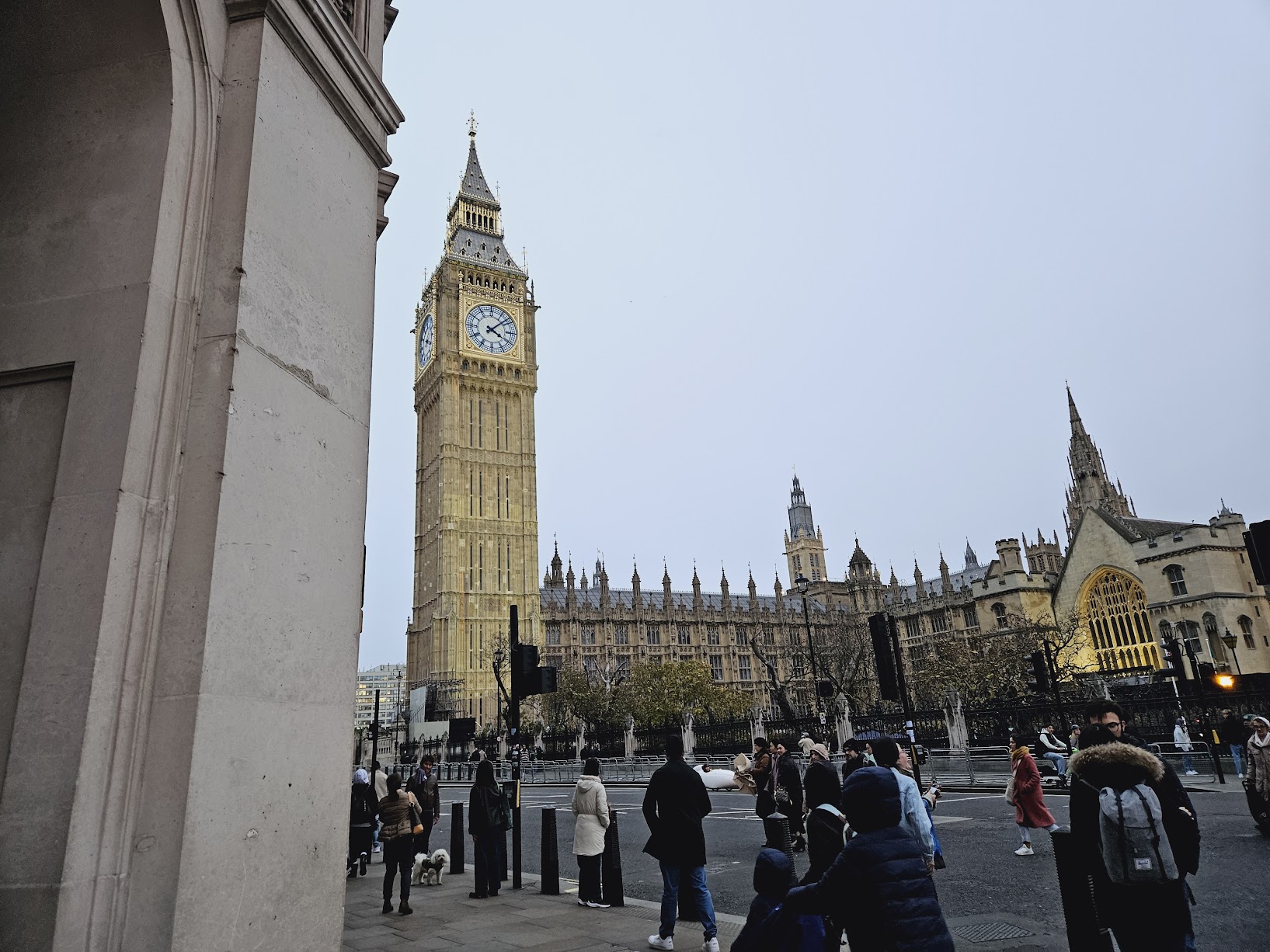
We made it to Westminster on time, but I was a bit taken aback at the sheer numbers of tourists thronging the place on a cold November afternoon. It was probably thanks to the Remembrance Day shenanigans. We FaceTimed the Grand-baby so he could hear Big Ben, about which he was more excited than a three-year-old should be.

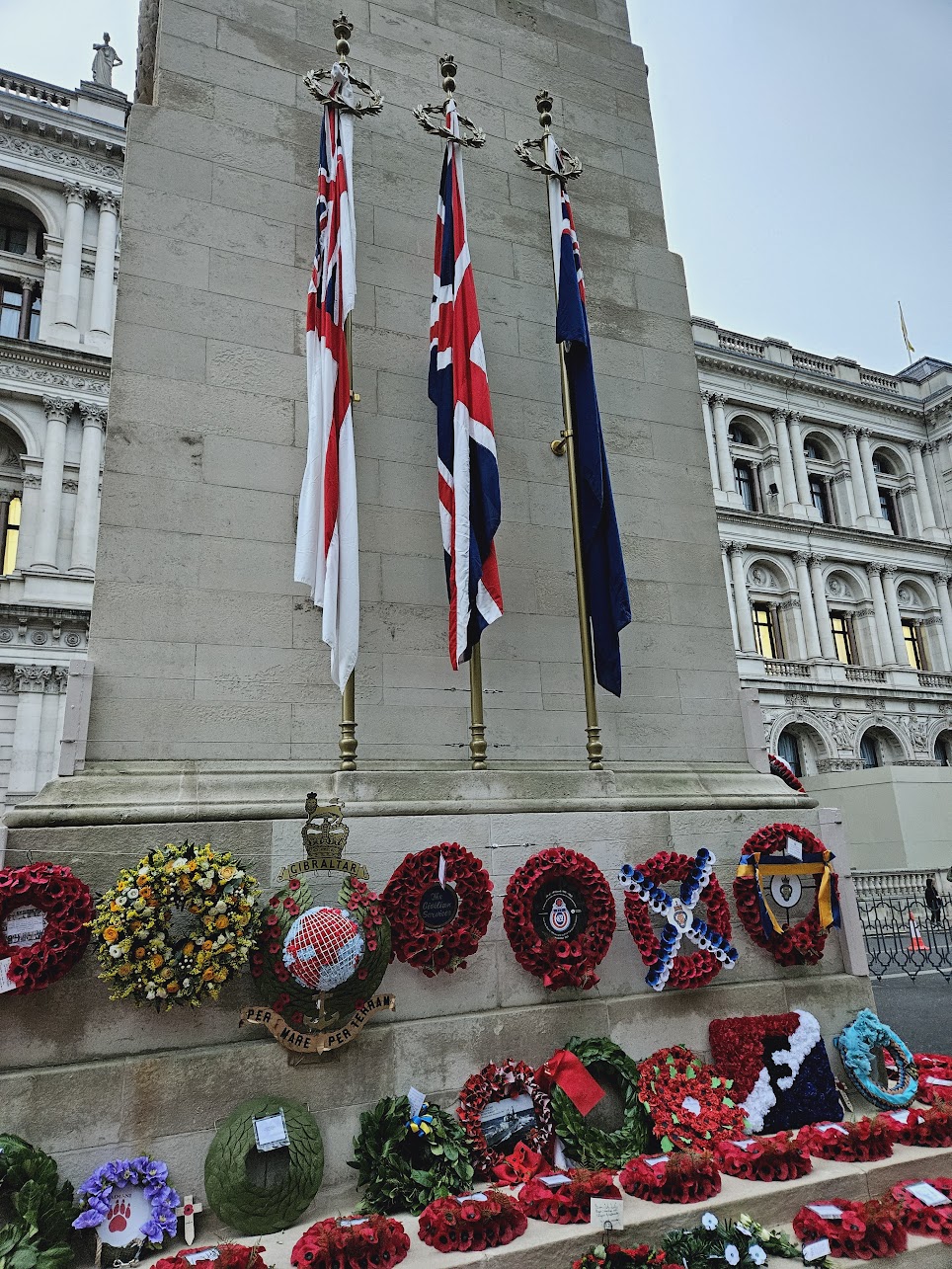
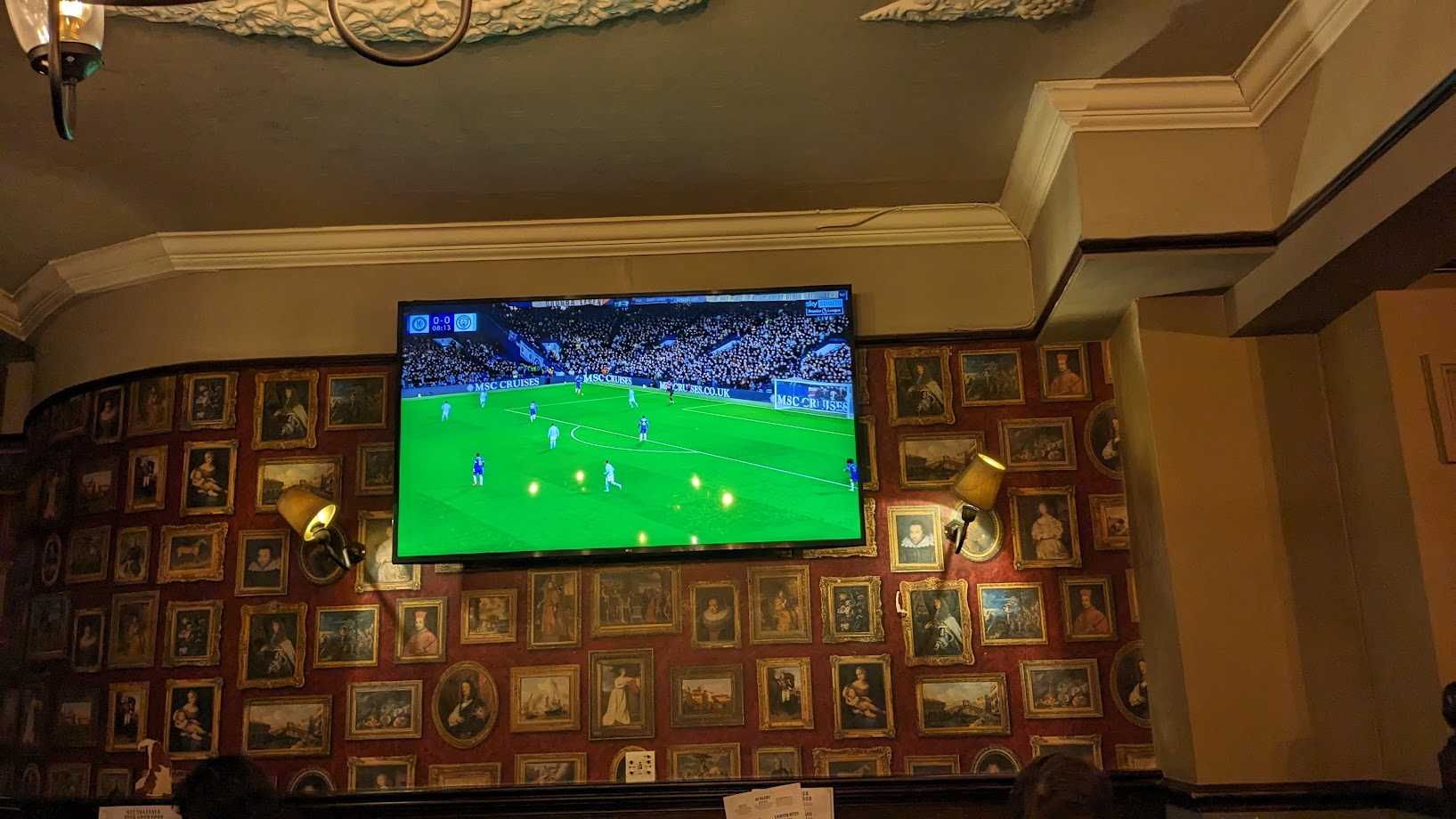
Eventually we fell into a pub on Whitehall, although not before admiring the poppy wreaths at the Cenotaph, and pulling faces in front of the MoD Main Building. Beer and a wee was on the menu, but the footy was on the TV, so we parked ourselves in front of that for a couple of hours. All the pubs down there were heaving with men wearing medals, and they’d done well as most had been there since the morning. The music in the pub was unnecessarily loud, although I may only have felt that because I am now officially an old git. Not a pensioner yet, though, that’s next year.

England ’23 – Heading to That London

Tags

,

My missus is good at logistics, so she did the packing, ready for us to head down the motorway to London first thing. We were more or less on time as we headed out of Holmfirth for the last time.
The car’s navigation system plotted a route for us, but I ignored her and made for the M1 on my favoured route, despite her ever-increasing anxiety as I deviated. It being Saturday, the motorway southbound was busy, but not with trucks, just (mostly) cars. It was slow around Sheffield, but never to the point of stopping, and apart from a natural break at the Watford Gap Services, we had a clear run to our lunch appointment in Northampton.

Rejoining the M1 at about three in the afternoon, the traffic still wasn’t too bad, and we got to the North Circular pretty much without stopping. Then it was London traffic, but you’d expect that.

We arrived in Lower Clapton/Hackney Downs at our rented flat just as the sun was disappearing, had a breather, dropped the bags off, then climbed back into the car to return it to the rental company at Heathrow.

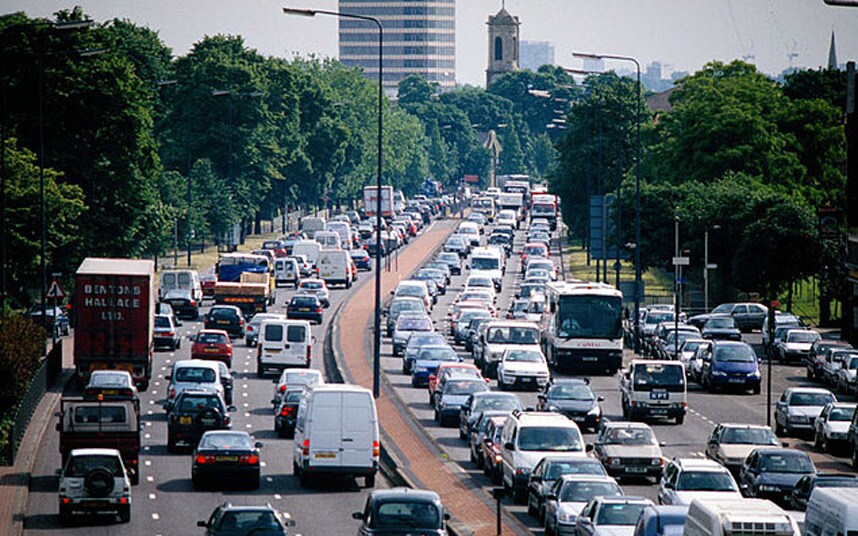
My first mistake was deciding to allow the Navi to guide me. Before I knew what was happening on the dark and busy streets, I was heading south down Old Street and into the London Congestion Zone. I was really trying to avoid getting stiffed for another £15 to enter the zone, but I genuinely didn’t see the signs. The traffic was hideous, and we crawled along the edge of the Square Mile, up into Holborn (and past a lot of places I have worked), then I decided to go my way to airport rather than that decided by the lady in the Navi. A crawl up Southampton Row to Russell Square, then Tavistock Square, and we eventually emerged onto the Euston Road. My plan was to use the A40 up to Hanger Lane, not the most direct route for sure, then run down the North Circular to Chiswick to pick up the A4 and M4. My idea was that I could refuel the car at Chiswick, and that plan actually worked out. But we crawled all the way from Euston to Hangar Lane, bought petrol in Chiswick as planned, and joined the thousands of other slow moving vehicles on the M4. We did eventually get to Heathrow Terminal 5, and after a bit of searching, found the Sofitel and the Sixt car returns. It took us longer to cross London, around 35 miles, than it did to drive all the way down from Holmfirth, which was 188 miles. That’s driving in London for you.

I enjoyed the little Audi A3 we had, but after a fair few thousands of miles, I was happy to park her and get out onto public transport. We had tickets for the Heathrow Express train and were in London’s Paddington station very quickly. From there it was the Tube to Liverpool Street, an overground train to Hackney Downs, and a ten minute walk to get back to the flat. No driving. Wonderful.

As a postscript, I had the invoice from Sixt car rental and I’m happy to report no penalties. I was very happy to rent from them.

I’ll do a separate post about the quite unique place we’re staying in, but I will say that the bed is very, very comfortable.

England ’23 – A Down Day At Last

Tags

,

A down day at last, before we pack up and head to The Smoke, and a chance to have a look at the town we’re staying in.

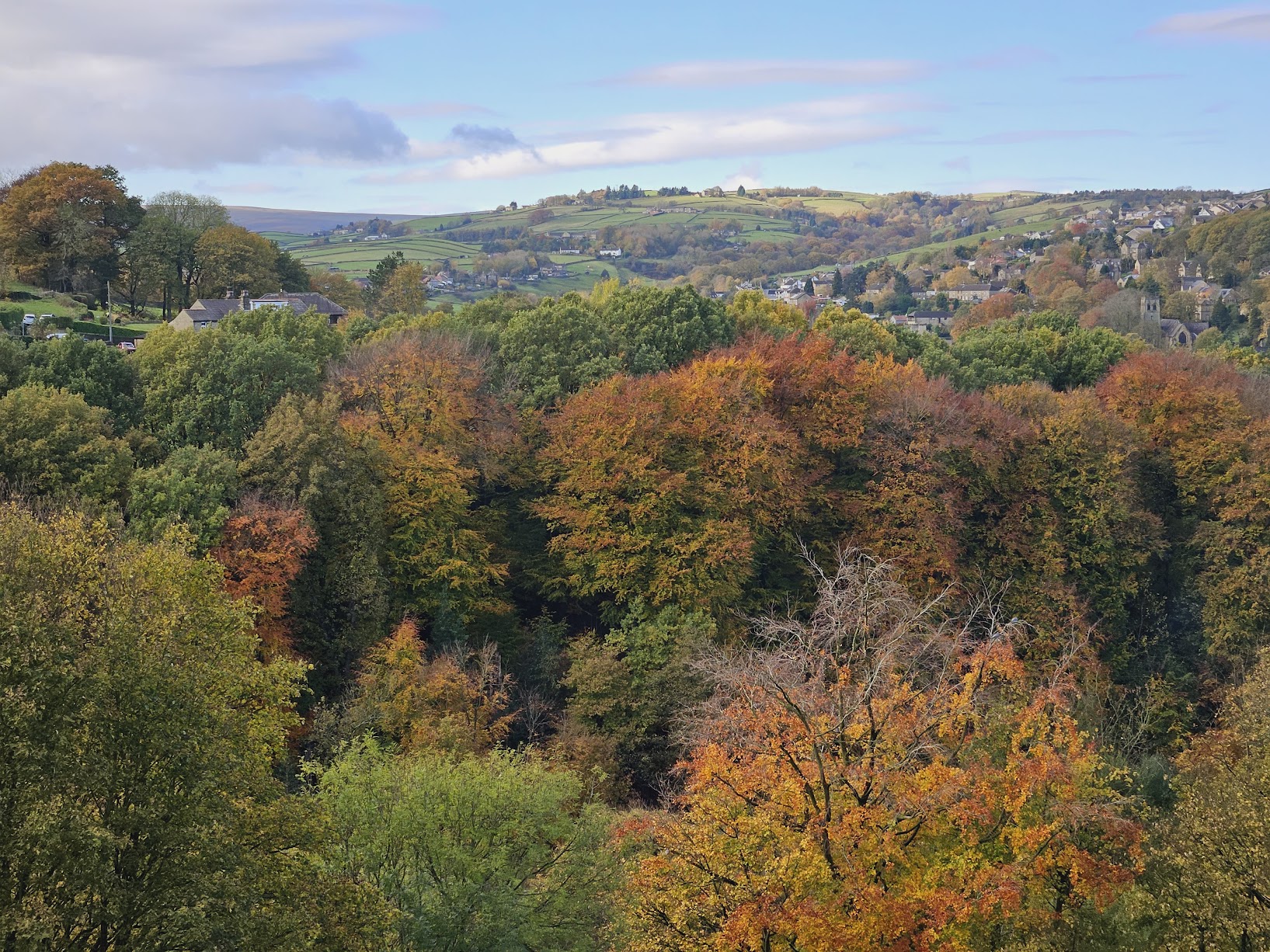
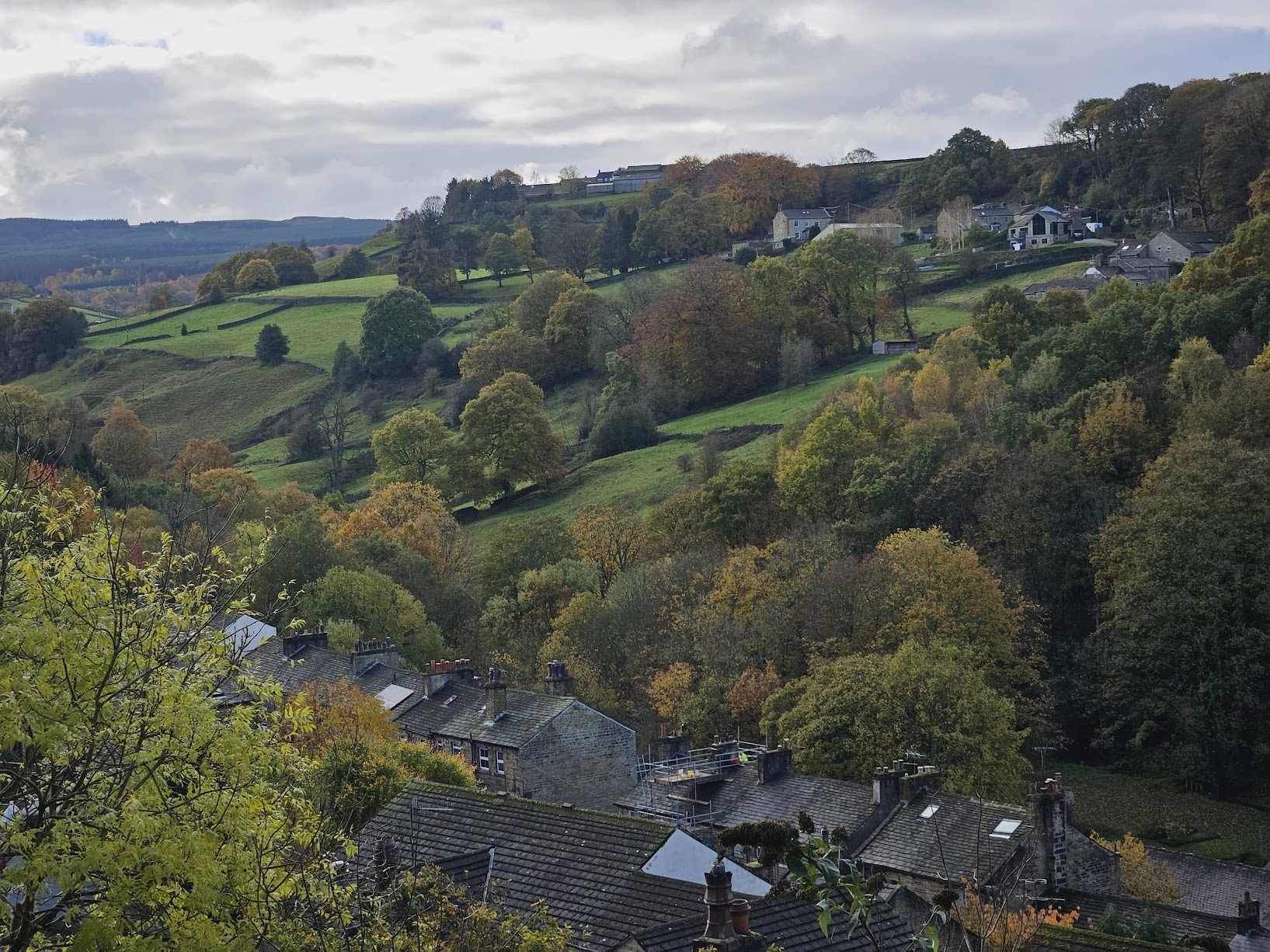
The walk down into Holmfirth was wonderful, along the side of one the steep valleys, in among the old, now blackened, Yorkshire Sandstone cottage. The autumnal views on clear and crisp morning were lovely. It was pleasing to note that some new builds on top of the hill were constructed with the same stone, and the same stone window casements as the much older cottages that surround them.

The final drop into the village was very steep and was the hill we’d driven up on day one. It fair makes your knees ache as you take tiny steps downward. There are some scary slopes in this town.

The town itself was pretty, all old buildings, and all in the blackened sandstone that the houses on the hill were made of. The River Holme was moving a quite a lick, unnaturally narrowed I think to help with the mills that used its water in the nineteenth century. Oddly, there were four bridal shops in this little town, and at least five barbers’ shops. People with neatly trimmed hair get married a lot here, obviously.

We sat a while in a park that overlooked the town and ate lunch. With some watery sunshine warming things up a little, it was a very, very nice place to pause. We also chatted with the owners of a sweet shop, and the vegan ice cream shop, both happy to spend the time talking with odd people like us.

The downside of Holmfirth, and so many other places like it, is the traffic. It’s never ending, and with the shops so close to the road, you feel you’re walking in the road all the time. There are very few places to park all these cars, too, so people tend to find the tiniest and often almost dangerous places to leave their cars. It’s not like there are no buses, either, because we saw plenty. But this is the age of the car, and we in our rented auto had been contributing to the problem all week. This is perhaps one of the reasons we’re not contemplating moving back to our mother country.
Having stepped carefully down the hill in the morning, it was a long slog back up in the afternoon. I’m sure if we lived in the area we’d soon become used to it, but this was hard going.

We have enjoyed our stay in Holmfirth, although this was the only time we actually visited the village. It has been a good base to strike out to Leeds, Manchester and Liverpool, and even further beyond. After a week of negotiating roads barely the width of the car, vertiginous hills and bends well beyond a right angle I will probably be quite happy to ditch the car for a week.