With Remembrance Day just around the corner, it was fitting that I should come across another of my relatives who lost their life in the First World War.
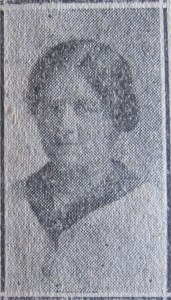
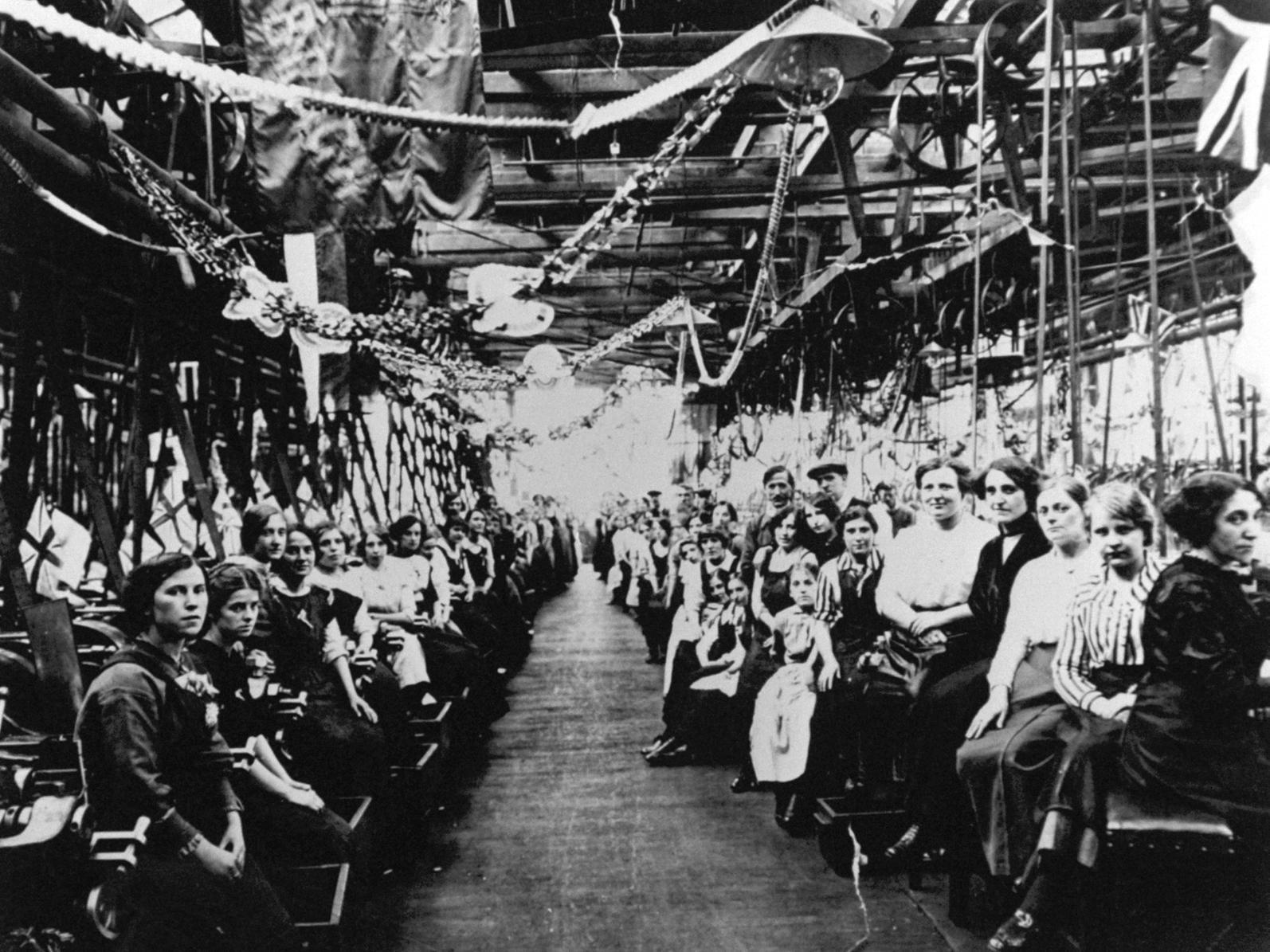
Ann Leonard, a second cousin once removed, was just twenty-four when she succumbed to TNT poisoning while working at the Barnbow munitions factory near Leeds, Yorkshire, England.
Born in October 1891 in Morley, Yorkshire, she was one of ten children to William Leonard, a Coal Miner, and his wife Emma. Her death certificate said she had died from “atrophy of the liver” as a result of working with munitions. She was one of many women killed in the production of weapons and ammunition throughout the Great War; explosion and disease were constant threats in the workplace. While Ann died from liver failure in the July of 1916, on December 5th of the same year, an explosion tore through part of the Barnbow factory and killed 35 women outright, and maiming and injuring dozens more.
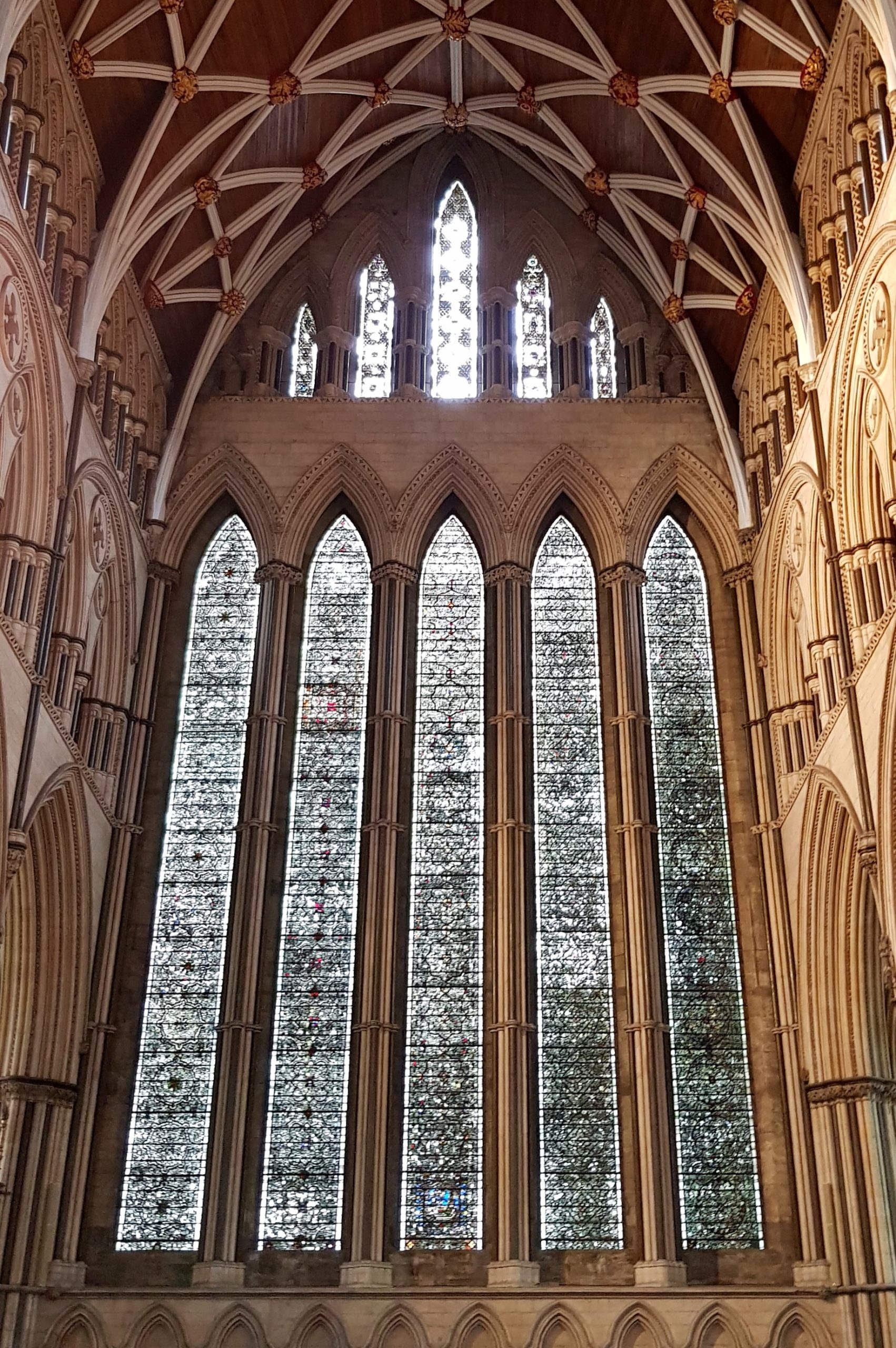
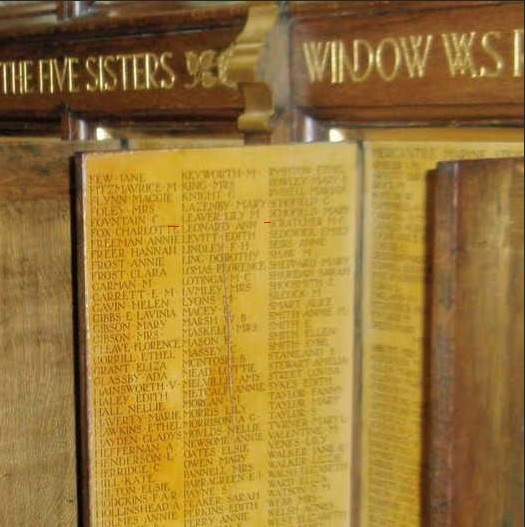
I was surprised to hear that Ann’s name appears on a Roll of Honour in York Minster, underneath the 13th Century series of stained glass windows known as the Five Sisters. The window was renovated between 1923 and 1925, and then dedicated “Sacred to the memory of the women of the Empire who gave their lives in the European war of 1914–1918” as a lasting memorial for all those women who died as part of the conflict.
In a cruel twist of fate, her brother Edward, himself only twenty-two, was posted as “Missing presumed dead” in France, just twenty four hours after Ann died. I can’t begin to imagine what their parents, must have gone through.
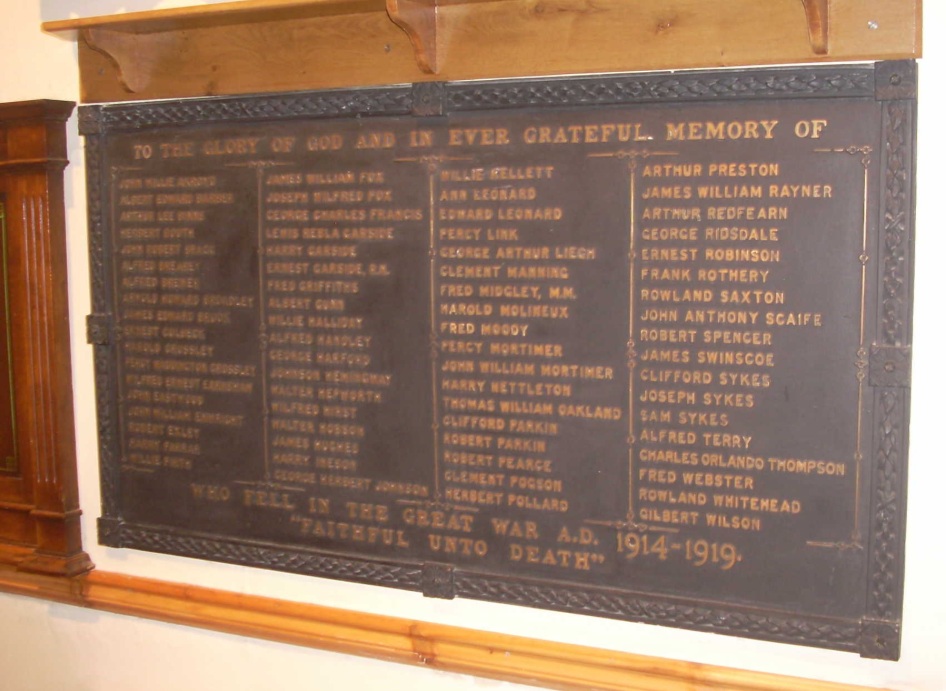
Aside from the Roll of Honour in the Minster, both Ann and Edward are featured in a plaque in the church of St John the Evangelist in Carlinghow, Batley, Yorkshire.
The Imperial War Museum maintains records of the casualties of war, and Ann’s entry can be found here.
I have more than seventy family members recorded in the Commonwealth War Graves Commission records, across the First and Second World Wars. Family war casualties came from the UK, the USA, Canada, and South Africa. This November 11th I will be keeping Ann uppermost in my thoughts as we remember all those who have died in modern wars.
I started looking into my family tree a short while before my father died in 2009, but didn’t get very far. I think Ancestry.com was around then, but I hadn’t signed up, and anyway I was heading off for my new life in Canada.
Finding myself with more time than I’d anticipated, I picked everything up again a few years later, and this time I did sign up with Ancestry, which opened up more doors than I thought possible. I now have a family tree with over fourteen thousand people listed (not all that I’d call very close relatives, to be fair), and many of them are, or were, situated in places that I didn’t know my family had reached.
Two things set the ball rolling in an unstoppable way. One was Mary, a native of Indiana, contacting me out of the blue, and the other was doing the Ancestry-linked DNA test.
I was, I will admit, perplexed that I appeared to have a relative from the United States. My family, my dad’s side at least, was pure Yorkshire, from Leeds, I thought. Goodness, how wrong I was. Mary pointed out that we had a common ancestor, Joshua Mayne (b. 1761), and everything fell into place from there. With Mary’s help, I was able to discover that one of Joshua’s offspring had left Britain in 1822, bound for New York, and from there had built a formidable Mayne dynasty in the New World. Not only that, another of Joshua’s sons had, in 1849, taken his young family to Durban in South Africa and had set up a similar Mayne dynasty there. To top it all, Mary established that Joshua himself, and his wife Elizabeth Collins, were not from Yorkshire at all, but had arrived in Leeds from Cork, Ireland in 1792.
The DNA test came up with equal amounts of potential contacts on my mother’s side of the family, as well as my dad’s, and that was an area I hadn’t addressed up to that point. Building up her side of the tree has shown that we were drawn from agricultural stock in the north of Devon, England, and while many of the family had stayed there and are there to this day, many more had moved away from the land for a new life in Canada and, ultimately, in the United States. Indeed, direct Devon relatives had made it to rural Southern Ontario 150 years before I did.
I haven’t yet found the outer limits of the family tree, either on my dad’s or my mum’s side. I can find very little about my paternal grandmother who’s father arrived in Leeds from Belfast, Ireland, at some point in the early 1880s, although my 24% Irish DNA is in part her legacy to me. Her mother was from Leeds, but her father was from Liverpool, and with a name like Garrett, the chances are that there’s Irish blood from him as well.
On the whole, both sides of my family are from poor stock. Some have done well, though, the South African connection has links to the DeBeers diamond industry. There was some conspicuous DeBeers-related wealth on show in the early twentieth century, with homes in Portman Square and Kensington in London, and even a family burial plot in a Royal Park, the Royal Brompton Cemetery in West London.
My grandfather married into, worked for, and eventually took over, the Pickersgill family business in Leeds in the 1920s. Joe Pickersgill, a very wealthy Turf Accountant, was said to have held the Prince of Wales own betting account in the 1910s and was a millionaire when he died in 1923.
On the American side of the tree, a distant cousin married Mariko Terasaki, the daughter of Hidenari Terasaki and Gwendoline Harold, in 1953. Hidenari was a Japanese diplomat who married Gwen, a Tennessee girl, and worked to avoid Japanese conflict with the USA in the late 1930s. Both were forced to flee to Japan after the Pearl Harbor attack, but Gwen wrote a book about her experiences which was made into the Hollywood movie A Bridge To The Sun. Mariko’s children, those that survive, are prominent peace campaigners, following their grandfather’s lead.
But most of my family tree is comprised of poor people doing poor people’s work, and very much echoing the social structure nineteenth and early twentieth century Britain. Farmers, farm workers, labourers, coal miners, and factory workers, all living in mostly poor conditions but surviving nonetheless. One thing that does jump out is the number of war deaths, at the moment numbering seventy-two. One of the first on my family recorded in the Commonwealth War Graves Commission databases was killed when his ship exploded in the Thames estuary in 1914. One of the latest was a young Canadian naval officer, killed two days after D-Day in 1944 when his ship was sunk in the English Channel.
As I’ve grown the tree, there have been a lot of fascinating stories come out about the individuals in it. In future posts here I’ll try to record some of their stories; not about my family necessarily, but the places they lived and the lives they led, which were in large part, entirely typical.
It’s been an education thus far, and I’d like to document as much of it as I can.
We had occasion to visit the lovely town of Blyth, Ontario, in Huron County. It’s about two and half hour’s slow drive from home, and a lovely place to enjoy a play at the annual Blyth Festival. It’s also close to the place where a large group of my relatives, on my mother’s side, had ended up after emigrating from England in the middle of the nineteenth century.
From my family tree research, I had discovered a few graves of those relatives just twenty minutes from Blyth, and this was too good an opportunity to be missed.
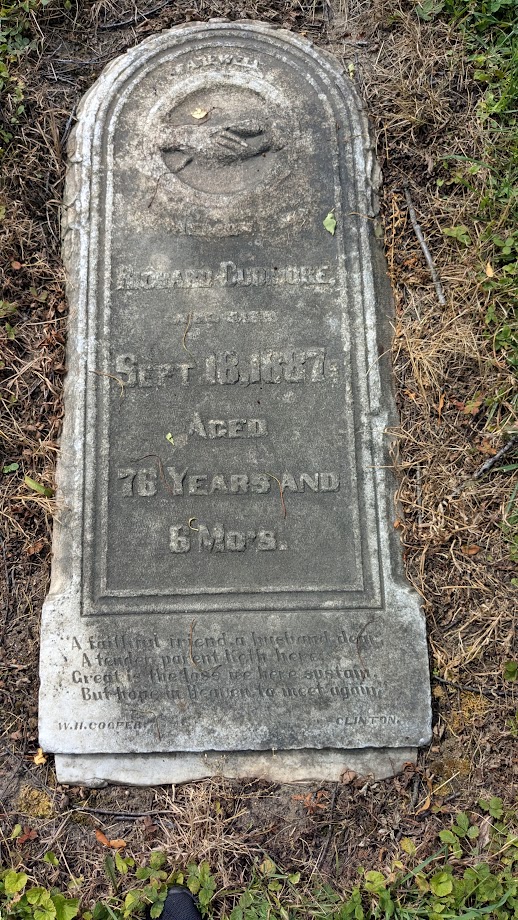
At the top of the list was John Richard Cudmore (1811-1887), my great-great-great-granduncle. His sister, Elizabeth Cudmore (1796 – 1873) was my great-great-great-grandmother, and the mother of William Bater (1829-1894), my great-great-grandfather, whose grave we had visited in the churchyard of St Edmund’s, Dolton, when we were in England last year. John Richard, better known simply as Richard, arrived in Canada at some point between 1841 and 1845, and his first Canadian born son, William Horace Cudmore, entered this world while the family were in Tuckersmith Township, now Clinton Township, in 1845.
In the England and Wales Census of 1841, Richard Cudmore is shown as being an agricultural labourer and living in Dolton, Devon. In the Census of Eastern Canada for 1861, Richard is listed as being a farmer and living with his wife Alice and their six children in a single story, log-built house. I can’t verify whether he was farming his own plot of land or working for someone else, but Tuckersmith, like most other rural townships in North America, had been divided up into small parcels of land and it’s likely that he worked one of these. I’ve seen maps of other areas, notably in Kansas and in North Dakota, with the land parcels’ owners named, but the records of Huron County, at least those I’ve found so far, don’t go into that detail.
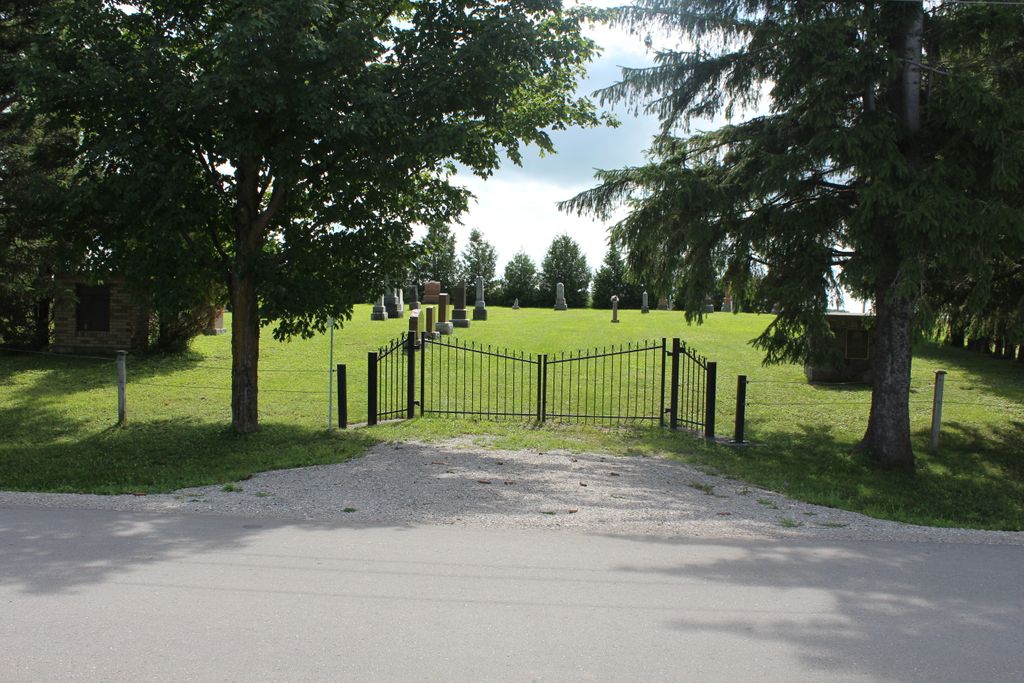
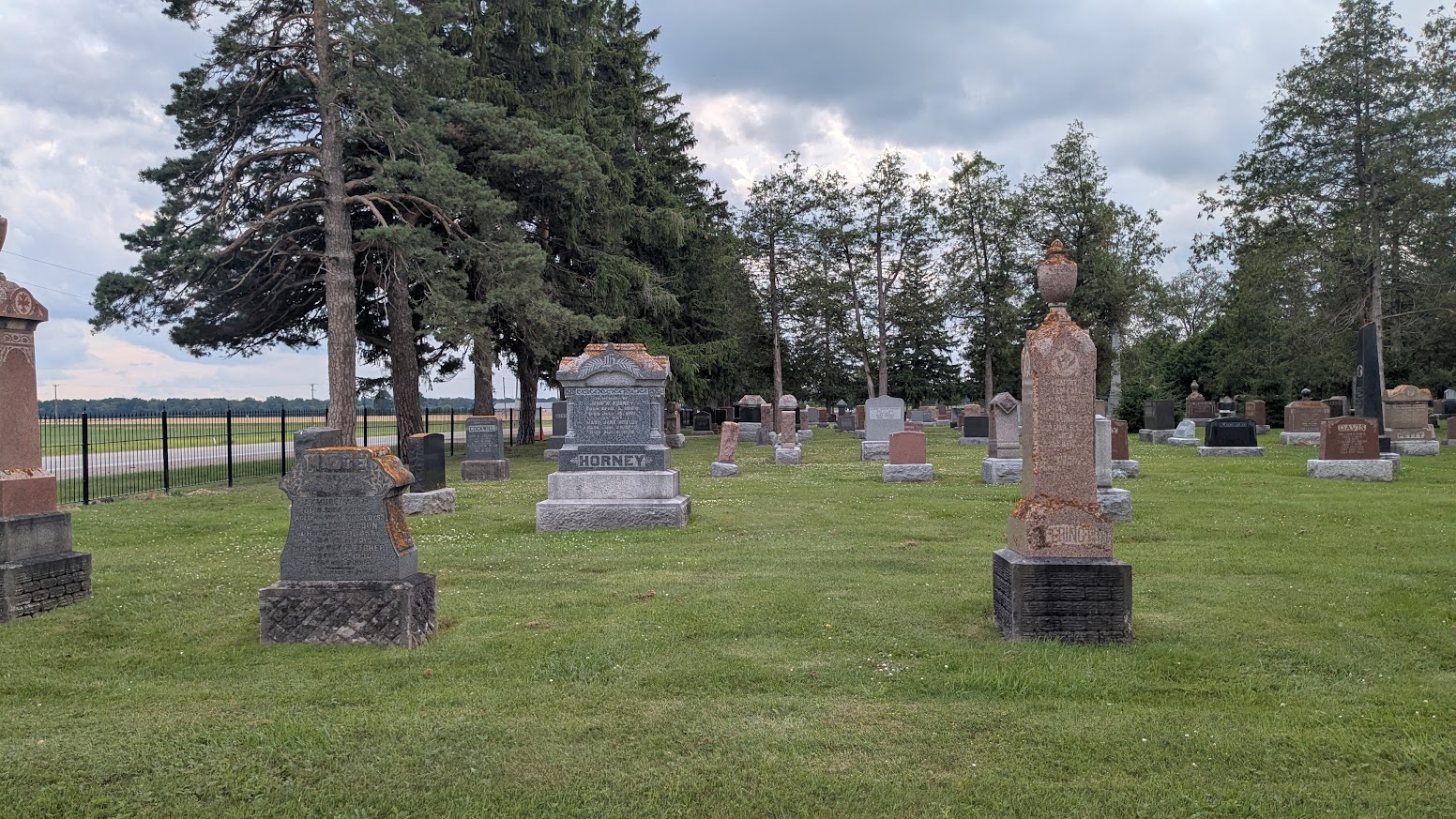
Richard Cudmore stayed in Tuckersmith for the remainder of his life, and died in 1877. He was buried in Turner’s Cemetery, just south of Vanastra, Ontario, between Clinton and Seaforth, and there he remains. It wasn’t hard to located the cemetery, nor the grave, and it was quite the feeling to be close to one of my relatives, but in a country thousands of miles away from our shared homeland. The cemetery is small, but meticulously maintained (by whom I don’t know), and is fittingly surrounded by the rich, arable farmland that Richard had worked.
Talking of land, I must acknowledge that the area around Tuckersmith is native land and was the subject of Treaty 29, The Huron Tract Purchase, signed by the English Crown and certain Anishinaabe peoples on July 10th, 1827. Full details of the treaty can be read here.
Of course, Richard Cudmore wasn’t the only one of my dead relatives in Turner’s Cemetery. His son John and his daughter Elizabeth are there, as is another daughter, Sarah Alice Crich. There are many members of the Crich family in Turner’s cemetery, as there are on the census listings for the time. It was inevitable that a Cudmore would marry a Crich at some point in Tuckersmith, and of all those Crich family members resting alongside Richard Cudmore, I’m certain that there will be family connections. Indeed, subsequent research has shown up many more family graves in Clinton itself, right up to Keith Ward Jenks, a direct descendent of Richard Cudmore, who died in 1944 when he was aboard a Royal Canadian Navy vessel taking part in the D-Day Landings.
While we were out and about in Huron County, we visited a grave in Harpurhey Cemetery near Seaforth, that of another of Richard Cudmore’s sons, Henry, and his wife Ann. Henry died in 1930 and Ann died in 1945, so their gravestone was significantly newer than those we found in Turner’s Cemetery.
On the way home we called in at the Exeter (Ontario) Cemetery looking for a member of the Crich Family. As it’s quite a large cemetery compared to the country burial sites, and I couldn’t work out the plot numbers, I didn’t find the grave. I’ve since discovered that he’s in his wife’s family plot, the Rowcrofts, so if we go again I know what to look for.
I can only speculate what drove agricultural workers from North Devon to get on a ship and travel to the New World. It may have been a lack of work in England, or it may have been the prospect of being able to own (subject to the treaty of course) some land of their own. My family tree is littered with Baters and Cudmores who travelled from Devon to Canada and to the United States, sometimes landing in one country and ending up in the other, but they were nearly all farmers, or in a trade related to farming.
Following up the descendants of these immigrants, I’ve discovered that after they established themselves, some made their way to other homesteading projects both in Canada and in the USA. Crich family members set up in Saskatchewan, while others went to North Dakota, curiously not too far apart geographically, even if they were in different countries. Indeed, after Richard Cudmore’s death in 1877, his wife Alice went to live with their daughter Ann and her husband John Fitzpatrick, in Park River, North Dakota, and never returned to Tuckersmith Township in Canada.
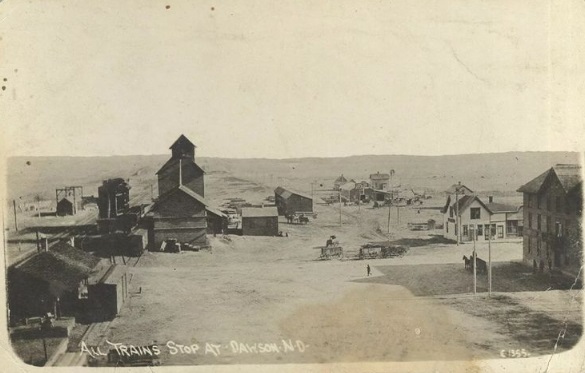
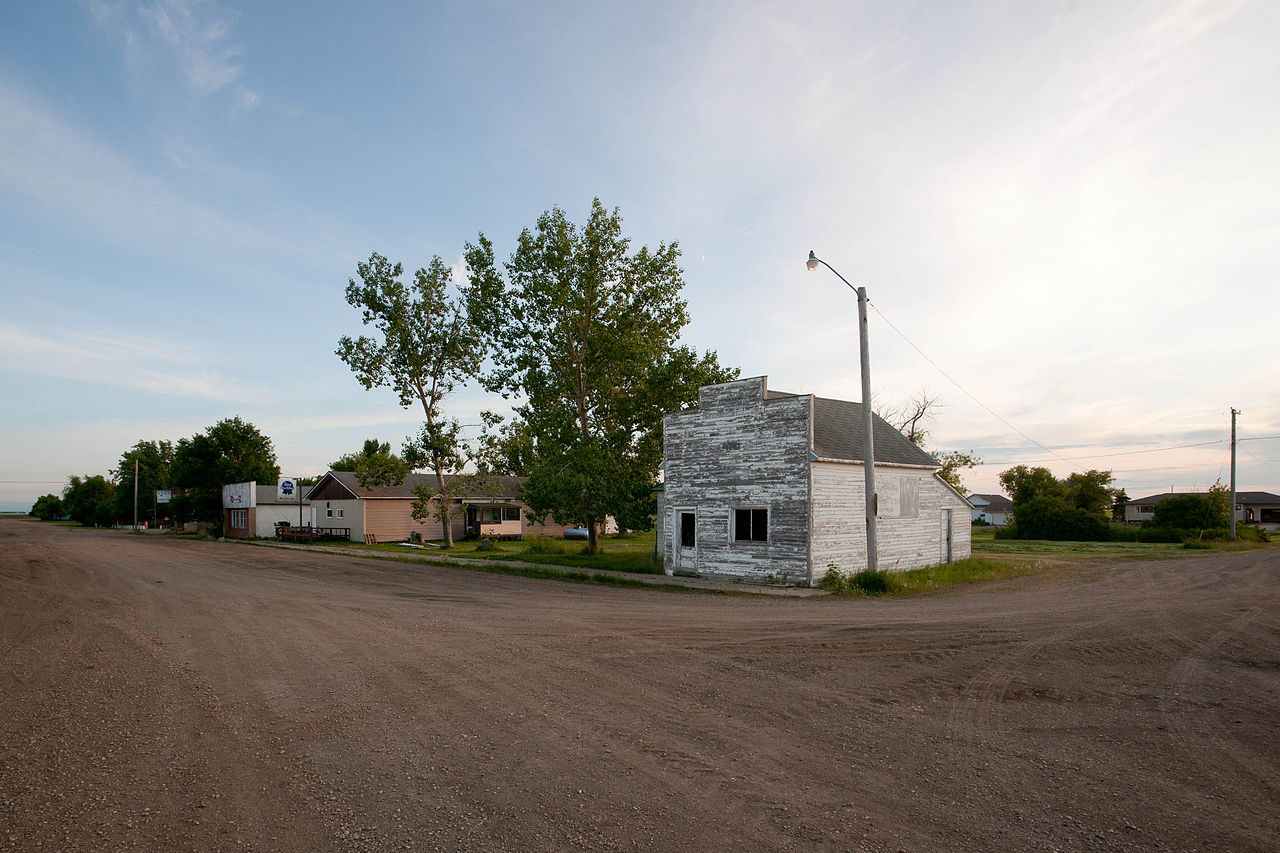
Browsing through Google Maps and Streetview, as I do, I was hugely interested to see the settlements these immigrants made their way to, and what they look like now. One was a town called Wales, North Dakota, which even in it’s heyday was little more than half a dozen grain elevators by the railway track, and Hannah, a little further north, at the end of the railway line, and just a few miles south of the Canadian border. Hannah was very similar to Wales, except that there is a cemetery there and yes, there are some of my family’s graves there. Both Wales and Hannah are little more than ghost towns now, with Wales listed as having a population of ten. However, the land around the towns is still extensively farmed and probably doesn’t look too much different now than it did in the 1920s and 1930s.
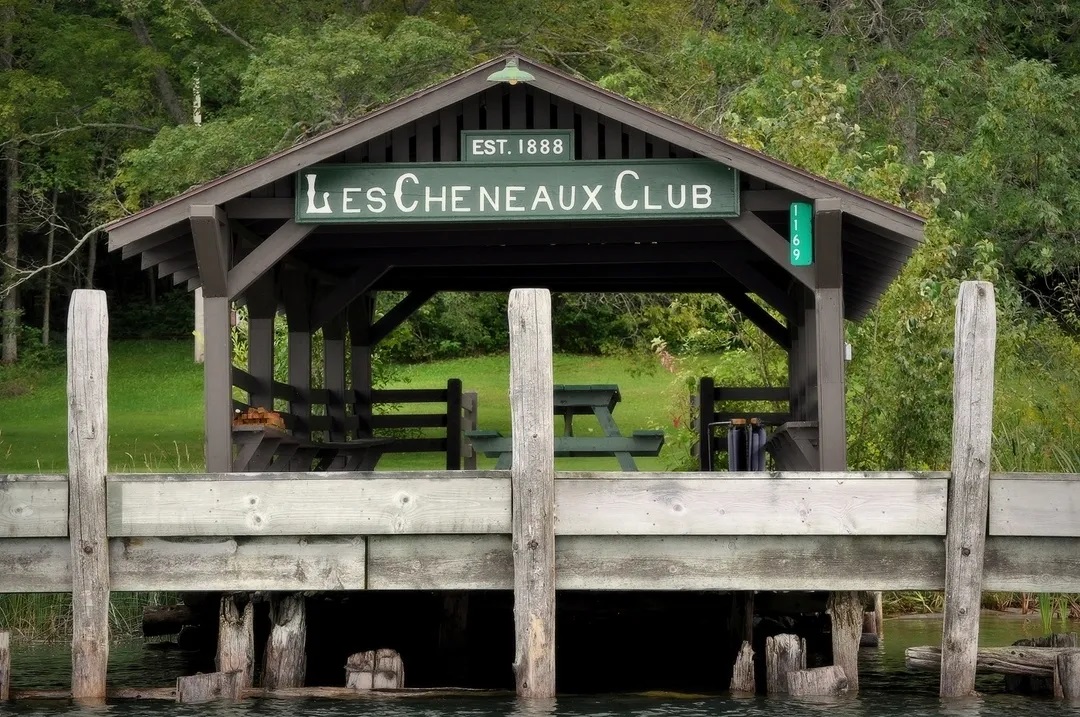
Another branch made their way to Cedarville, Michigan, not too far from Ontario’s Huron County. As some point the family became involved with the Les Cheneaux Club on Marquette Island, which is in the Mackinac Straits and not too far from Mackinac Island. Marquette Island, and specifically the Les Cheneaux Club, was a summer getaway for wealthy Chicagoans when their summers became too hot, and my relatives were caretakers of the Club in summer and winter in the early part of the twentieth century. Indeed, my fourth cousin, once removed, Uldene Ethel LeRoy (nee Rudd), wrote a book called Six on an Island: childhood memories from Lake Huron, which was published in 1956. While searching around for the book, I discovered an undergraduate paper from Grand Valley State University in Grand Rapids, Michigan, written by Uldene’s grandson, Joshua Lycka. It references her book and compares his own memories with hers. The things you find on the Internet!
Both my mother’s and father’s families have extensive connections with emigration to the New World. The Mayne’s led the way, but the Caters and the Cudmores from North Devon, and quite a few of them, followed up a decade or two later, and both branches of the family are now spread far and wide across Canada and the United States. I wonder how much more I will discover as I delve even deeper?




 Stevemayne's Blog