• About

Stevemayne's Blog

~ Spending time on my family tree

Stevemayne's Blog

Tag Archives: Cemeteries

Dead Rellies

16 Wednesday Jul 2025

Posted by Steve Mayne in Opinion, Uncategorized

≈ Leave a comment

Tags

ancestry, Blyth ON, Cemeteries, Clinton ON, Emigration, England, Exeter ON, Family History, Family Tree, genealogy, Hannah ND, History, Huron County, Mackinac Straights, Marquette Island MI, Michigan, North Dakota, Ontario, Pioneer, Seaforth ON, Travel, Tuckersmith Twp, Wales ND

(That’s dead relatives)

We had occasion to visit the lovely town of Blyth, Ontario, in Huron County. It’s about two and half hour’s slow drive from home, and a lovely place to enjoy a play at the annual Blyth Festival. It’s also close to the place where a large group of my relatives, on my mother’s side, had ended up after emigrating from England in the middle of the nineteenth century.

From my family tree research, I had discovered a few graves of those relatives just twenty minutes from Blyth, and this was too good an opportunity to be missed.

At the top of the list was John Richard Cudmore (1811-1887), my great-great-great-granduncle. His sister, Elizabeth Cudmore (1796 – 1873) was my great-great-great-grandmother, and the mother of William Bater (1829-1894), my great-great-grandfather, whose grave we had visited in the churchyard of St Edmund’s, Dolton, when we were in England last year. John Richard, better known simply as Richard, arrived in Canada at some point between 1841 and 1845, and his first Canadian born son, William Horace Cudmore, entered this world while the family were in Tuckersmith Township, now Clinton Township, in 1845.
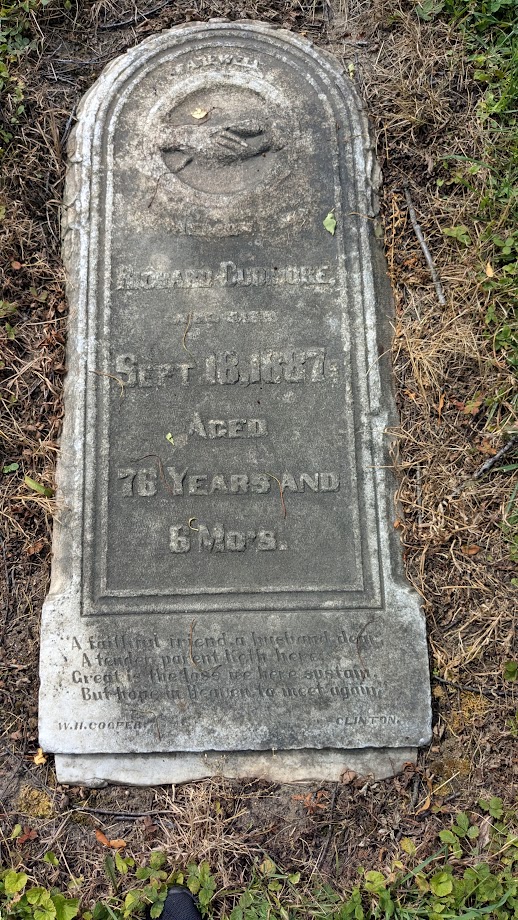
In the England and Wales Census of 1841, Richard Cudmore is shown as being an agricultural labourer and living in Dolton, Devon. In the Census of Eastern Canada for 1861, Richard is listed as being a farmer and living with his wife Alice and their six children in a single story, log-built house. I can’t verify whether he was farming his own plot of land or working for someone else, but Tuckersmith, like most other rural townships in North America, had been divided up into small parcels of land and it’s likely that he worked one of these. I’ve seen maps of other areas, notably in Kansas and in North Dakota, with the land parcels’ owners named, but the records of Huron County, at least those I’ve found so far, don’t go into that detail.
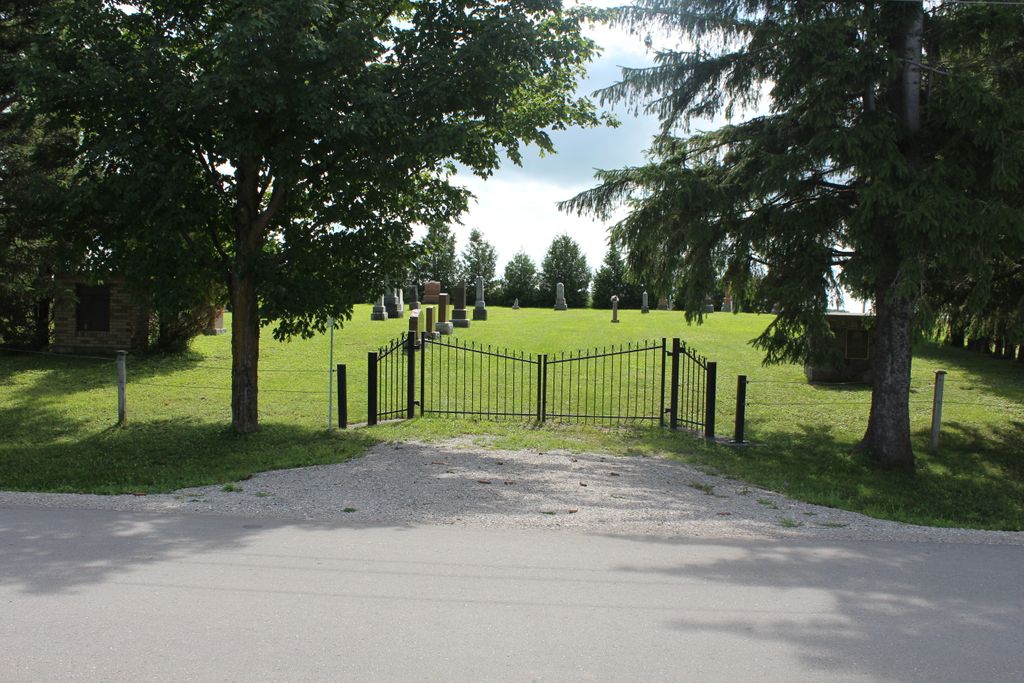
Richard Cudmore stayed in Tuckersmith for the remainder of his life, and died in 1877. He was buried in Turner’s Cemetery, just south of Vanastra, Ontario, between Clinton and Seaforth, and there he remains. It wasn’t hard to located the cemetery, nor the grave, and it was quite the feeling to be close to one of my relatives, but in a country thousands of miles away from our shared homeland. The cemetery is small, but meticulously maintained (by whom I don’t know), and is fittingly surrounded by the rich, arable farmland that Richard had worked.

Talking of land, I must acknowledge that the area around Tuckersmith is native land and was the subject of Treaty 29, The Huron Tract Purchase, signed by the English Crown and certain Anishinaabe peoples on July 10th, 1827. Full details of the treaty can be read here.

Of course, Richard Cudmore wasn’t the only one of my dead relatives in Turner’s Cemetery. His son John and his daughter Elizabeth are there, as is another daughter, Sarah Alice Crich. There are many members of the Crich family in Turner’s cemetery, as there are on the census listings for the time. It was inevitable that a Cudmore would marry a Crich at some point in Tuckersmith, and of all those Crich family members resting alongside Richard Cudmore, I’m certain that there will be family connections. Indeed, subsequent research has shown up many more family graves in Clinton itself, right up to Keith Ward Jenks, a direct descendent of Richard Cudmore, who died in 1944 when he was aboard a Royal Canadian Navy vessel taking part in the D-Day Landings.

While we were out and about in Huron County, we visited a grave in Harpurhey Cemetery near Seaforth, that of another of Richard Cudmore’s sons, Henry, and his wife Ann. Henry died in 1930 and Ann died in 1945, so their gravestone was significantly newer than those we found in Turner’s Cemetery.
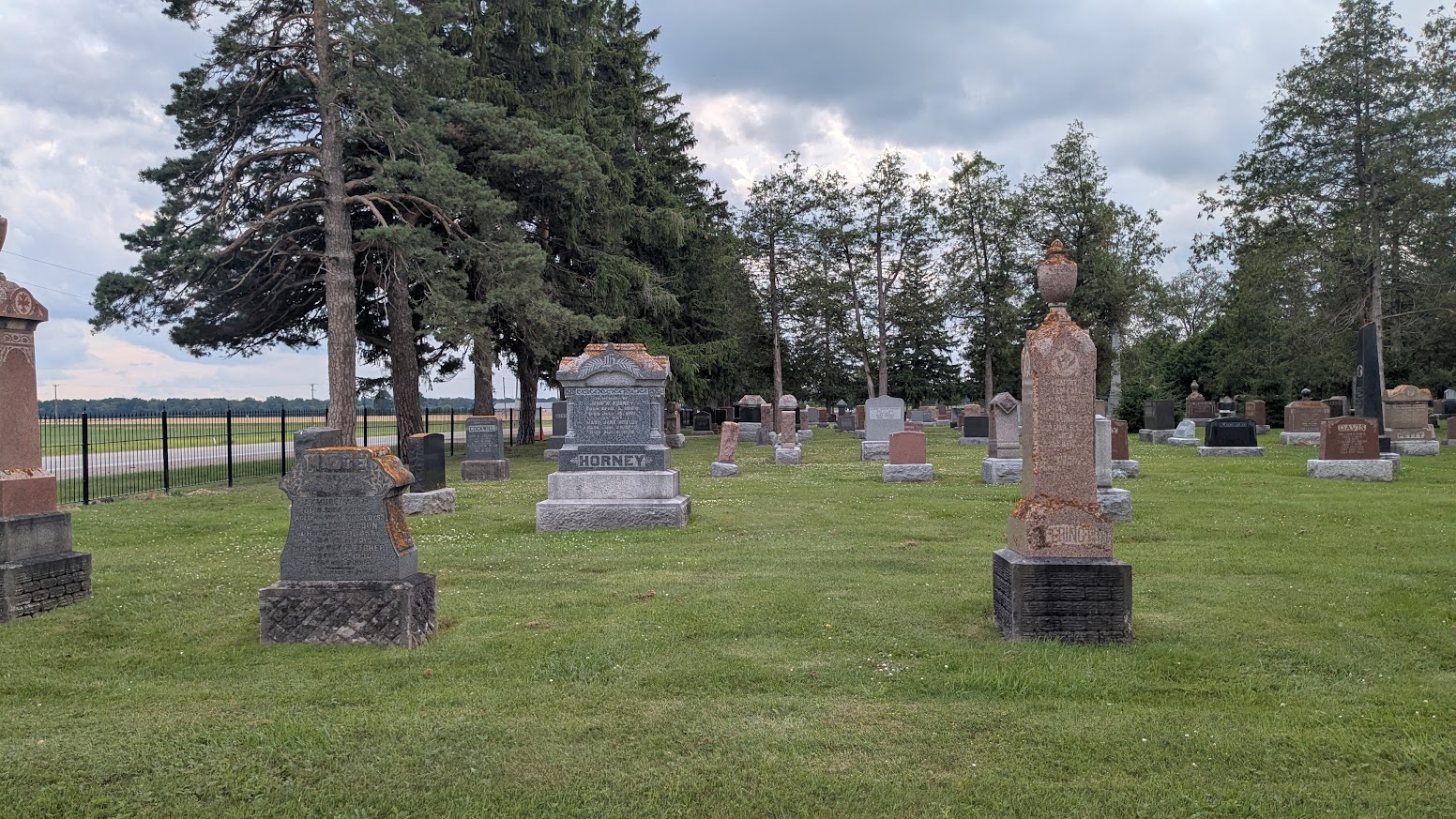
On the way home we called in at the Exeter (Ontario) Cemetery looking for a member of the Crich Family. As it’s quite a large cemetery compared to the country burial sites, and I couldn’t work out the plot numbers, I didn’t find the grave. I’ve since discovered that he’s in his wife’s family plot, the Rowcrofts, so if we go again I know what to look for.

I can only speculate what drove agricultural workers from North Devon to get on a ship and travel to the New World. It may have been a lack of work in England, or it may have been the prospect of being able to own (subject to the treaty of course) some land of their own. My family tree is littered with Baters and Cudmores who travelled from Devon to Canada and to the United States, sometimes landing in one country and ending up in the other, but they were nearly all farmers, or in a trade related to farming.

Following up the descendants of these immigrants, I’ve discovered that after they established themselves, some made their way to other homesteading projects both in Canada and in the USA. Crich family members set up in Saskatchewan, while others went to North Dakota, curiously not too far apart geographically, even if they were in different countries. Indeed, after Richard Cudmore’s death in 1877, his wife Alice went to live with their daughter Ann and her husband John Fitzpatrick, in Park River, North Dakota, and never returned to Tuckersmith Township in Canada.

Browsing through Google Maps and Streetview, as I do, I was hugely interested to see the settlements these immigrants made their way to, and what they look like now. One was a town called Wales, North Dakota, which even in it’s heyday was little more than half a dozen grain elevators by the railway track, and Hannah, a little further north, at the end of the railway line, and just a few miles south of the Canadian border. Hannah was very similar to Wales, except that there is a cemetery there and yes, there are some of my family’s graves there. Both Wales and Hannah are little more than ghost towns now, with Wales listed as having a population of ten. However, the land around the towns is still extensively farmed and probably doesn’t look too much different now than it did in the 1920s and 1930s.
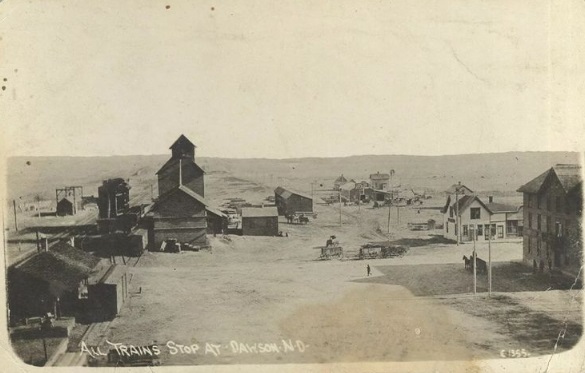
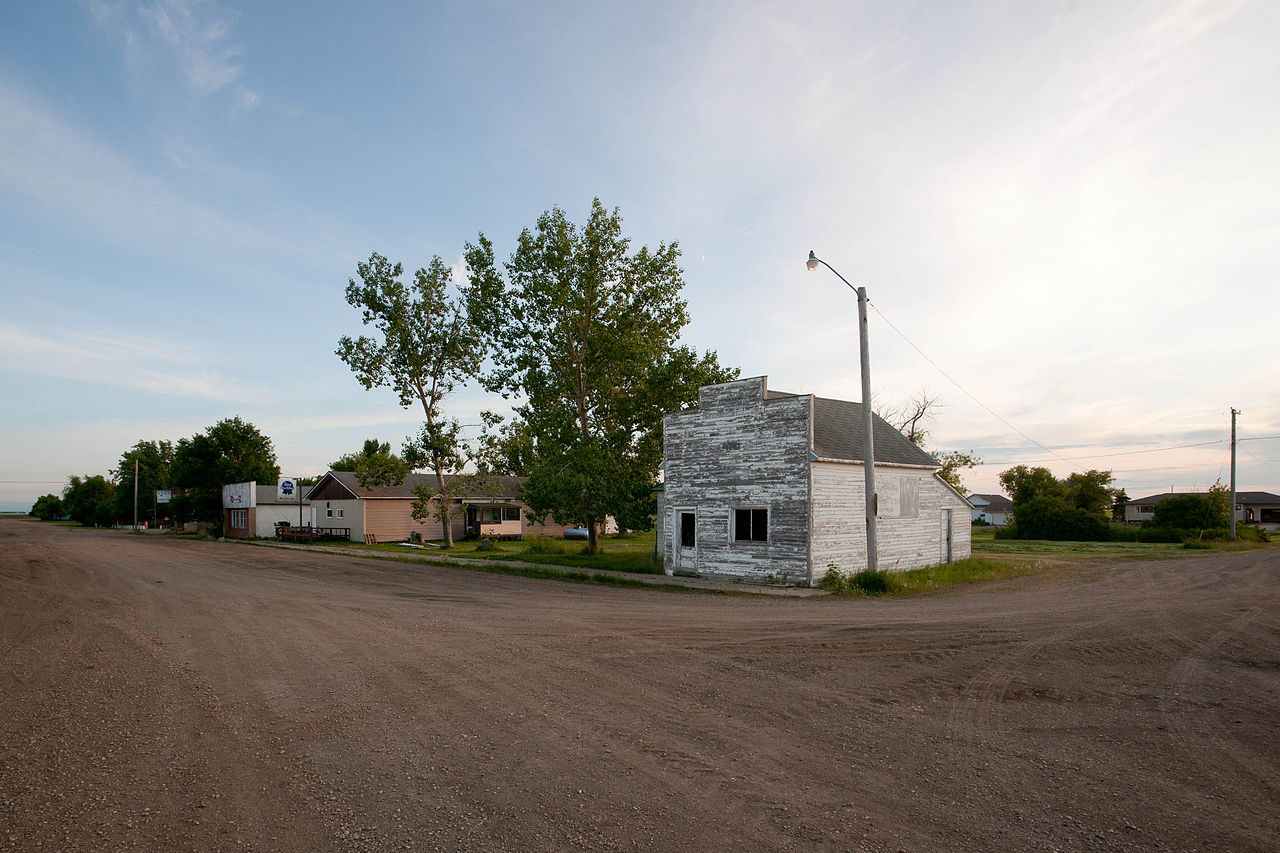
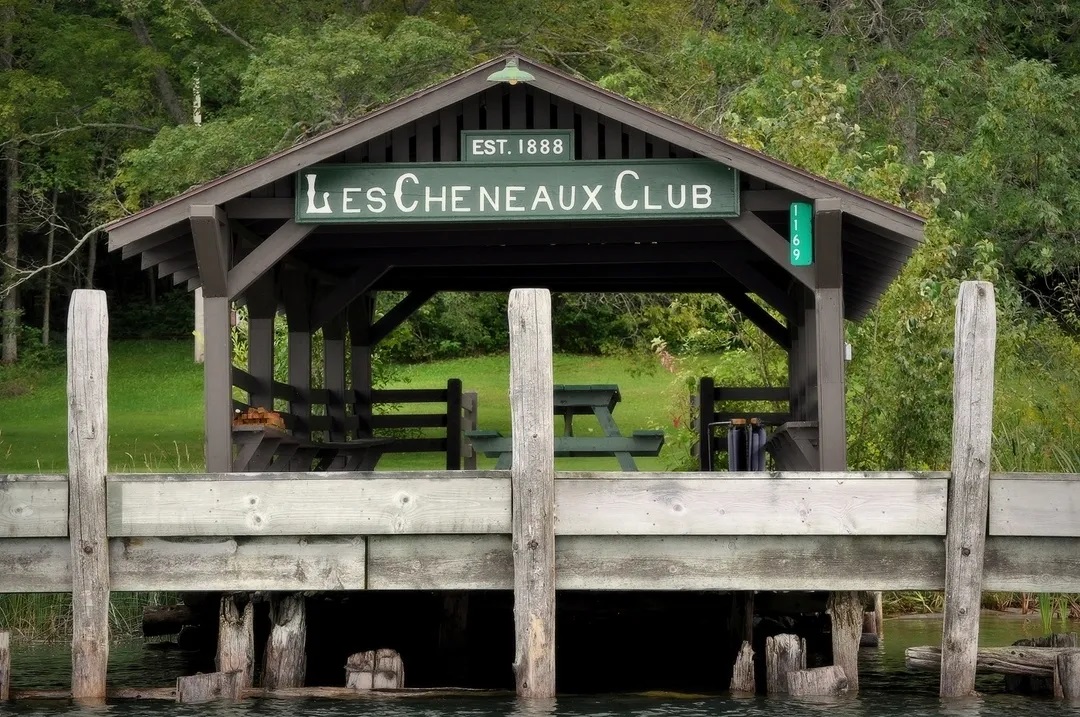
Another branch made their way to Cedarville, Michigan, not too far from Ontario’s Huron County. As some point the family became involved with the Les Cheneaux Club on Marquette Island, which is in the Mackinac Straits and not too far from Mackinac Island. Marquette Island, and specifically the Les Cheneaux Club, was a summer getaway for wealthy Chicagoans when their summers became too hot, and my relatives were caretakers of the Club in summer and winter in the early part of the twentieth century. Indeed, my fourth cousin, once removed, Uldene Ethel LeRoy (nee Rudd), wrote a book called Six on an Island: childhood memories from Lake Huron, which was published in 1956. While searching around for the book, I discovered an undergraduate paper from Grand Valley State University in Grand Rapids, Michigan, written by Uldene’s grandson, Joshua Lycka. It references her book and compares his own memories with hers. The things you find on the Internet!
Both my mother’s and father’s families have extensive connections with emigration to the New World. The Mayne’s led the way, but the Caters and the Cudmores from North Devon, and quite a few of them, followed up a decade or two later, and both branches of the family are now spread far and wide across Canada and the United States. I wonder how much more I will discover as I delve even deeper?
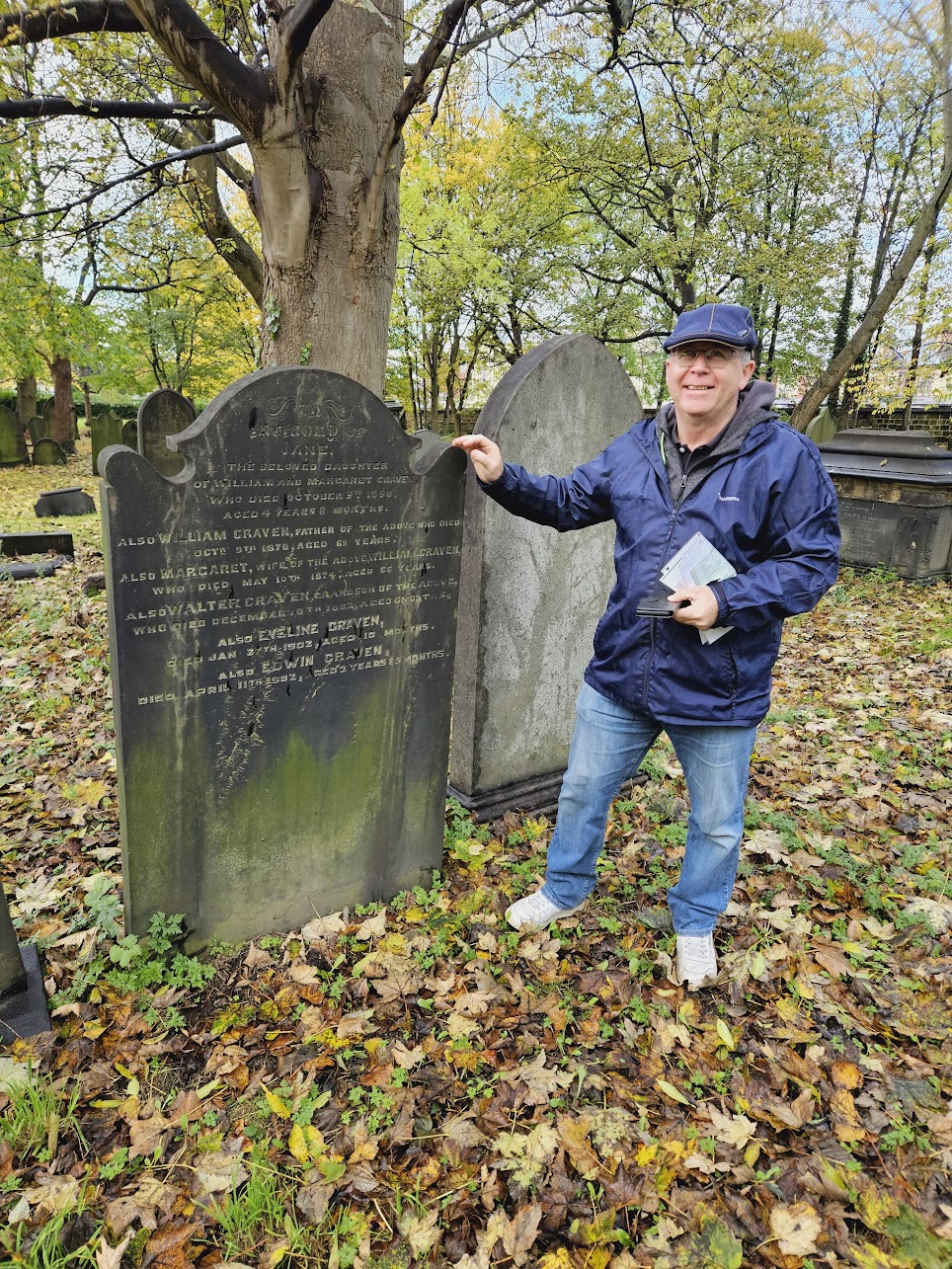
Grave Thoughts

03 Sunday Dec 2023

Posted by Steve Mayne in Opinion

≈ Leave a comment

Tags

Beckett Street, Brompton Cemetery, Cemeteries, Leeds, Leeds General Cemetery

One of our reasons for going back to the UK recently was to look up some Mayne family tree things, chief among them the last resting places of some of my relatives.

We visited three cemeteries in Leeds, all of which held the last mortal remains of a few of my direct ancestors. We started with Lawnswood, still very much a cemetery in use, and found my grandparents’ grave marker, as well as the grave of a Great-Uncle and his family. I didn’t know either of my Grandparents as they both died before I was born, but it was an interesting thing to do anyway.

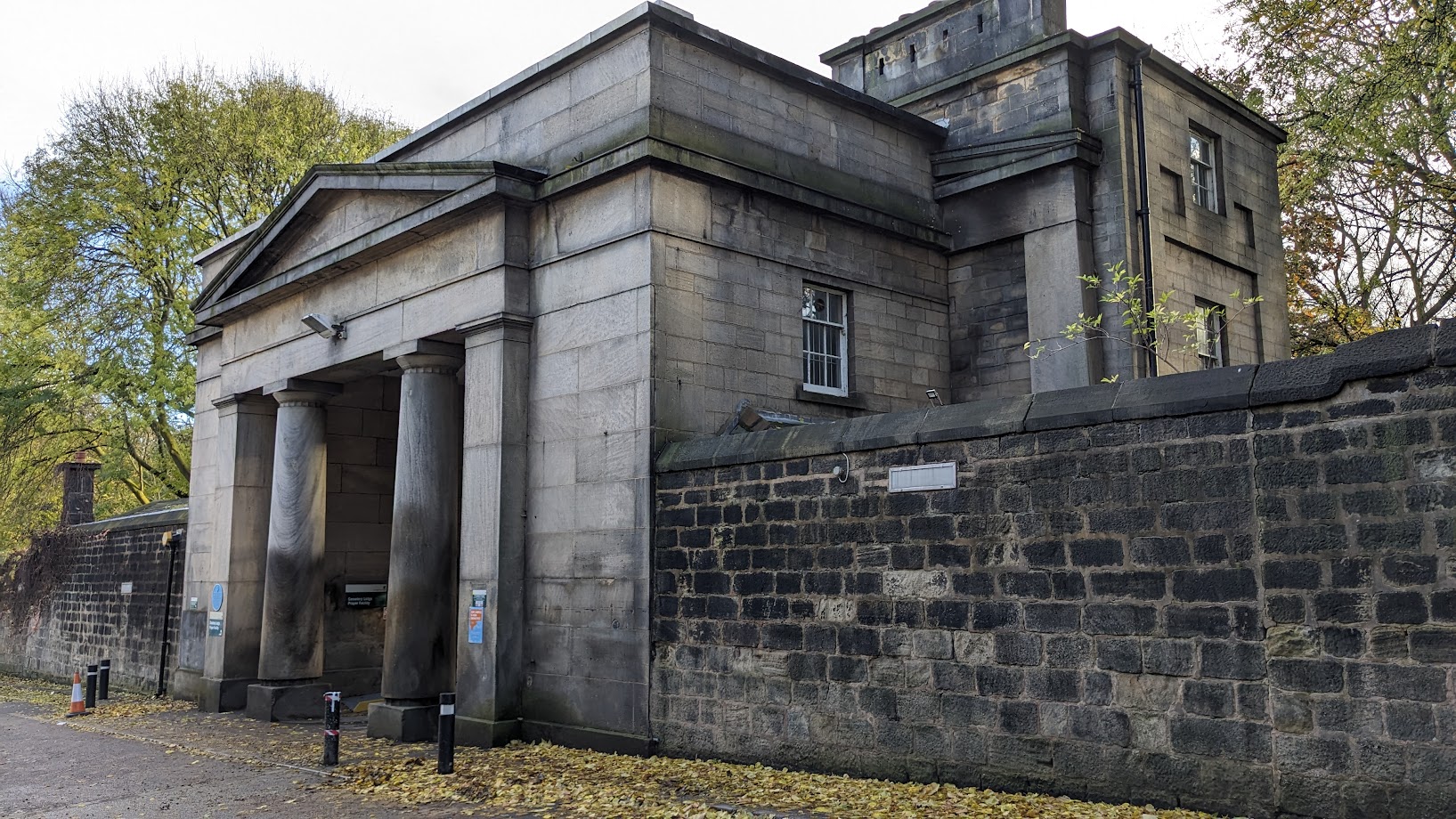
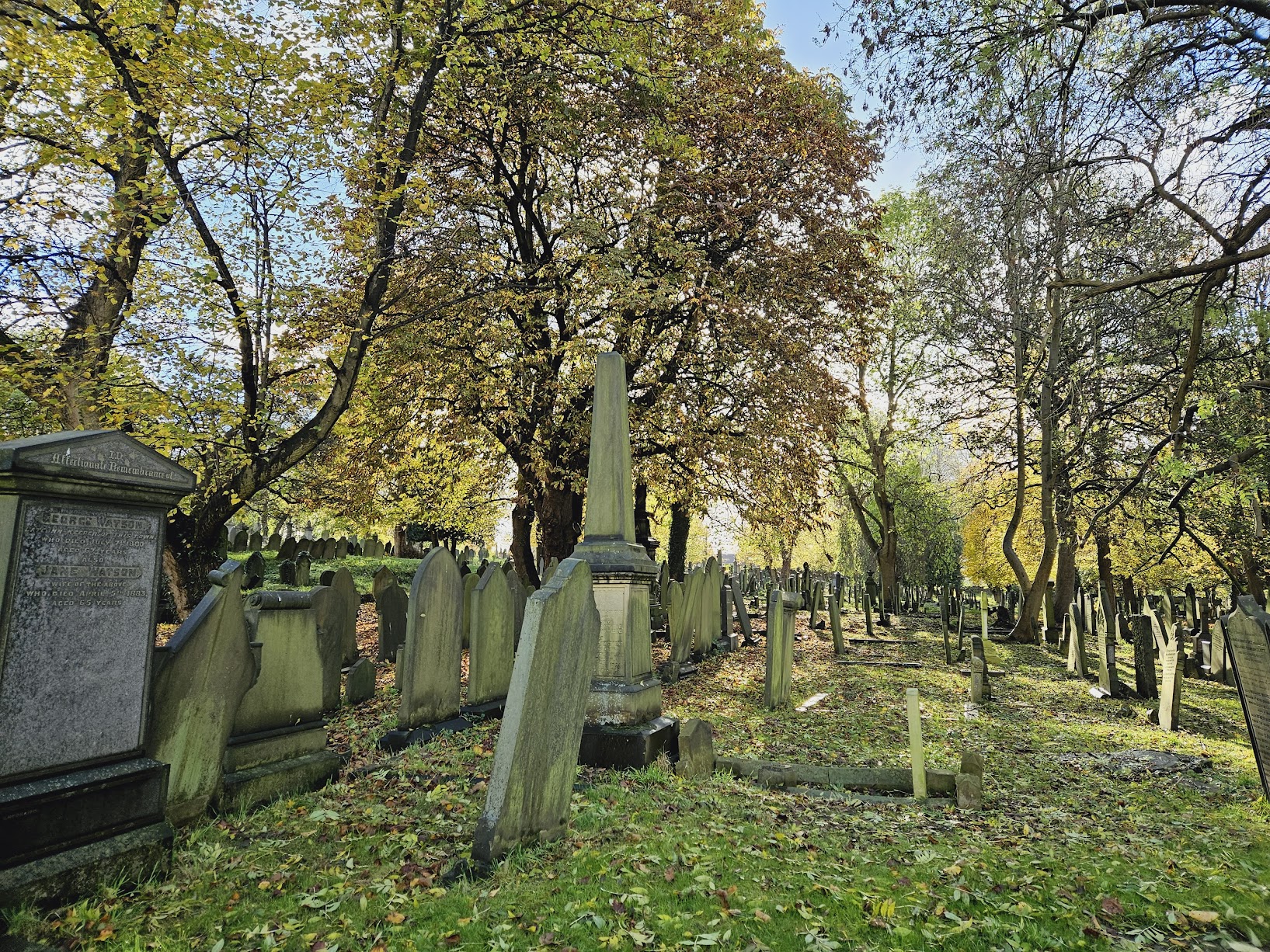
Then we visited Beckett Street Cemetery (formerly known as Burmantofts), opposite the famous St. James’ Infirmary (sometimes known as Jimmy’s). Beckett Street was one of the big public cemeteries built in the nineteenth century to cope with the dead of a rapidly expanding population of Leeds. This cemetery is closed for new burials and is in a bit of an overgrown state, now that Leeds City Council have disowned it. The thing is that it is a wonderful place and absolutely stuffed full of Victorian grave markers and monuments. We didn’t have too long to look around but it would be a fantastic place to spend a day exploring. We found two more grave markers with my ancestors names inscribed upon them, which was excellent.

Beckett Street Cemetery

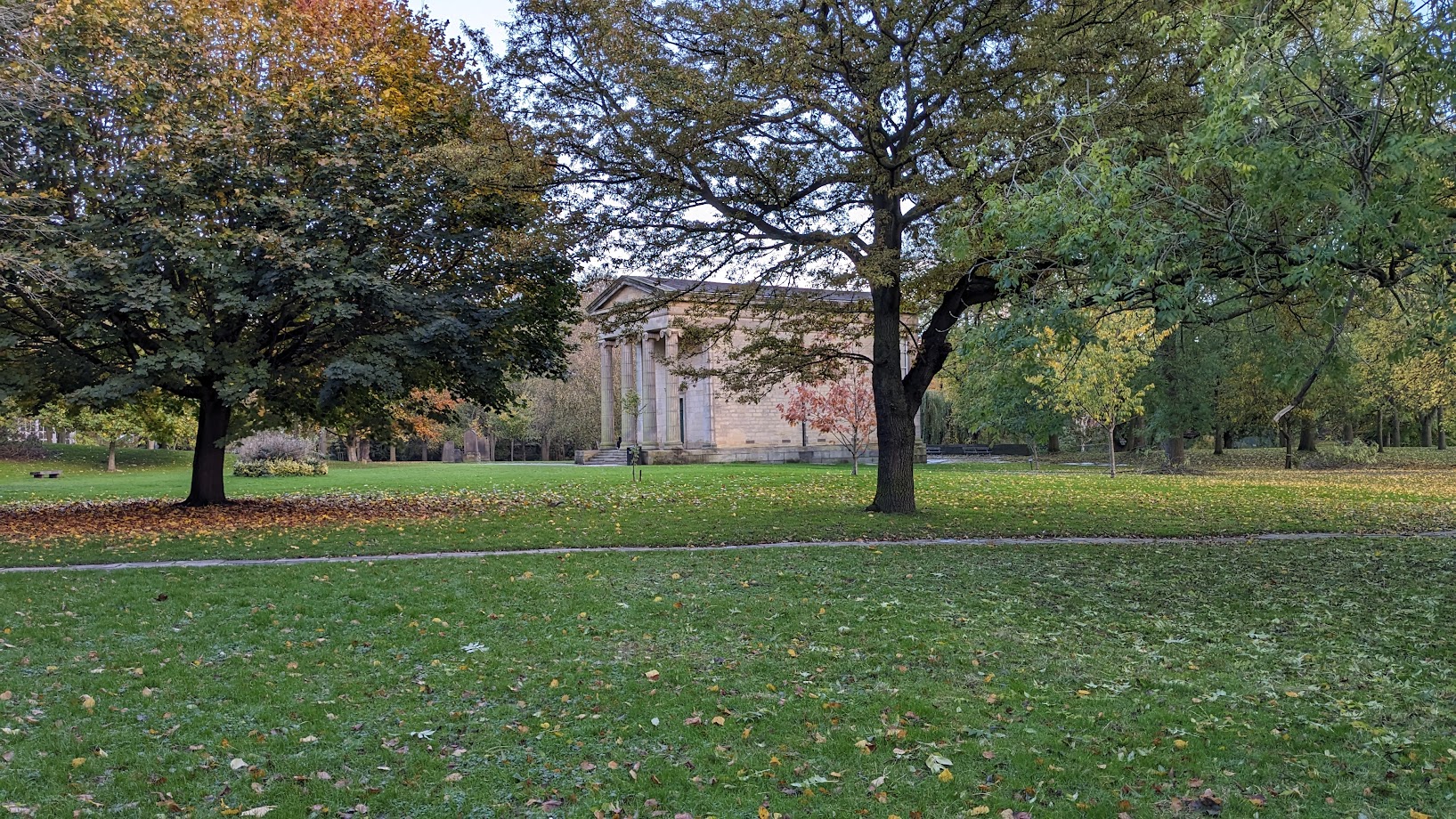
After that we visited the site of the old Leeds General Cemetery, now a park in the grounds of the university. Most of the marker stones have been cleared and the walled space is a wonderfully quiet place to visit. Some of the grave markers have been laid down to act as footpaths, but we didn’t find one with any of my family’s names one them, despite there being at least twenty of my ancestors recorded as having been buried there.

The former Leeds General Cemetery at St. George’s Field

We missed a few churches in Leeds where my ancestors lie, but the cemeteries were certainly worth us visiting.

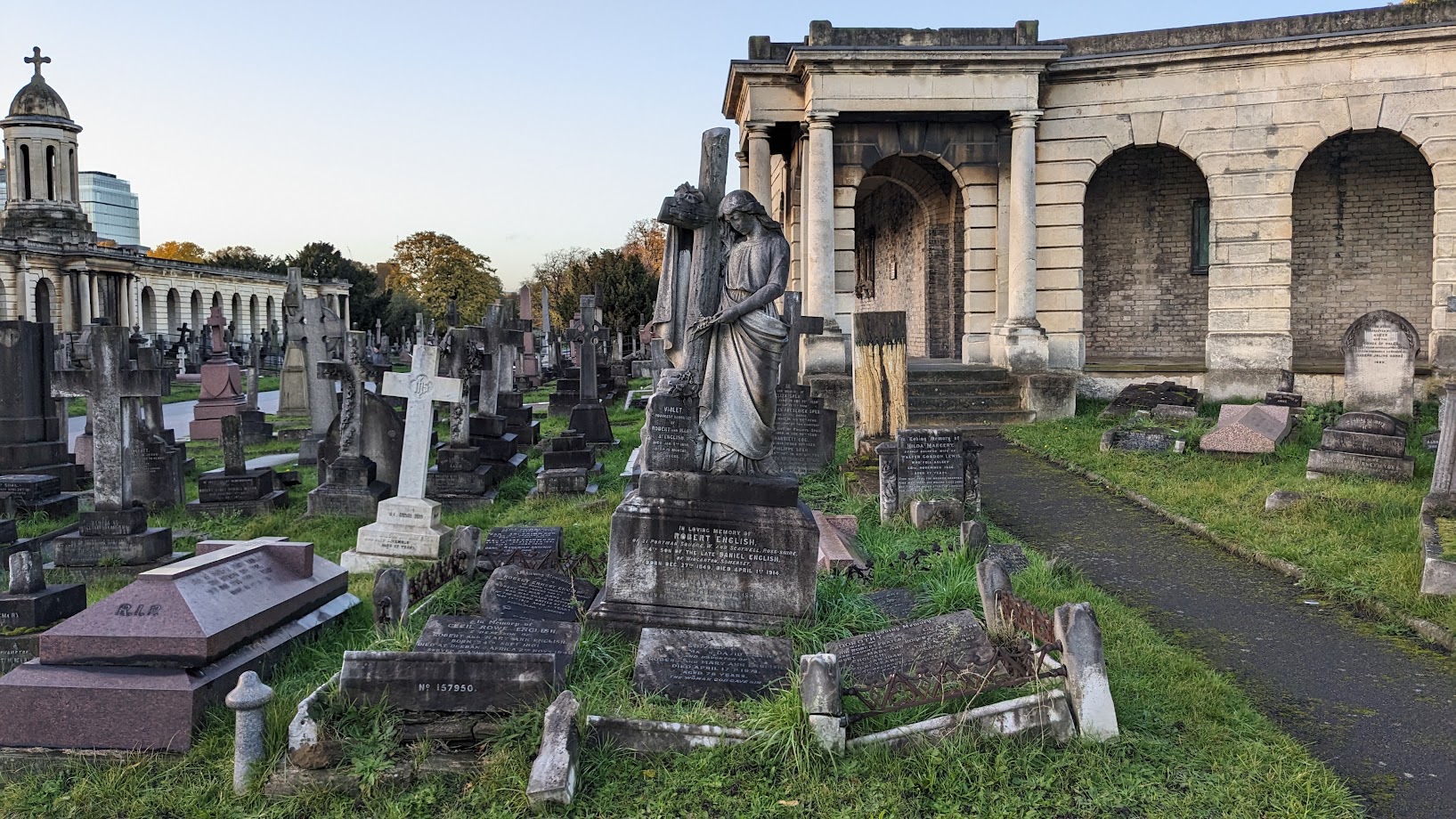
Later on in the trip, we walked through Brompton Cemetery in west London and managed to find the family plot for yet another of my ancestors. Brompton is still in use and is run by the Royal Parks organisation. It’s the final resting place of a fair few famous people, and while the family plot we found was certainly quite grand, I don’t think the people laid to rest there count as famous. I have been past Brompton Cemetery many times, but I never knew of the family connection. I have no doubt that a bit more research would have me discover a few more graves in London, but I’d need months to look around them all.

The plot in Brompton Cemetery, London.

Cemeteries are such fascinating places to mooch around it, and there’s an added interest when you see your family name on the stones.

Next year it will be Huntington, Indiana, and it’s environs, as there are a whole heap of Mayne graves to find there.

Family Tree

08 Sunday Oct 2023

Posted by Steve Mayne in Opinion

≈ Leave a comment

Tags

Cemeteries, Family Tree, History

Or: “How Big Does This Thing Get?”

I’ve been dabbling with my Family Tree, both my dad’s and my mum’s sides, for a while now, but only really took a serious interest when I was contacted by another member of my family doing the same thing. It was an unexpected contact, too, because it came from the United States, and I had always believed that both branches of my family were firmly rooted in the UK. My cousin on my dad’s side (4th, and once removed), for that was who it was, added an extra line atop my findings and all of a sudden I discovered an entire branch of the family in the US, and another in South Africa. Canada features in there as well, although not quite so directly. I had fondly thought that they’d never found their way out of Yorkshire.

I use Ancestry, expensive though it is, as my tool for compiling the tree. The links to various sources are almost instant, and are mostly correct. My relative count this year went from around a hundred to over a thousand, although the direct lines count for far fewer, of course. I’ve traced my dad’s family not only out of Yorkshire, before the bolder relations headed overseas, but to Exeter in Devon (UK), where my mother’s family come from, which is so much of a co-incidence. The oldest birthday for a traced relative is one Thomas Mayne, born around 1650, in Surrey, England. I haven’t been able to go so far back on my mum’s side, but there’s time for more research.

It’s quite exciting to delve into where the family has been. I vaguely remember my dad saying something about a relation coming from Silverton in Devon, but I dismissed it on the assumption that Yorkshire was the family base. He was right, though, and there is indeed a link to Silverton (now part of Exeter). I wish I’d not been so quick to ignore that hint. The bulk of the Maynes were in Victorian Leeds, many in the boot and shoe trade. They were poor and lived in some pretty squalid back to back houses in Leeds, and many died very young. Addresses are listed in census and burial records, but I could never find them on modern maps, especially since Leeds has gone through a few major urban renewals over the past one hundred years. That was until I discovered the National Library of Scotland’s online historic maps, and all of a sudden the streets that had long been swept away, reappeared and could be superimposed on modern maps. Schole’s Yard, Thomas’ Yard, and the rest, suddenly became real.

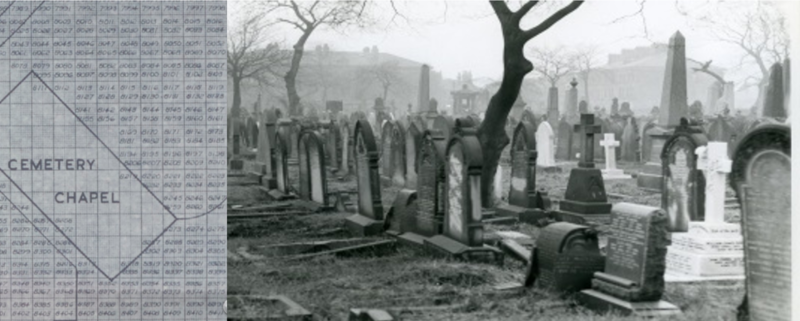
I also discovered the Leeds University project that has digitised the nearly 70,000 burials in the old Burmantofts Cemetery, now part of the University campus. I have found some detailed, and quite sad, records of my family there, like my Grandad’s three very young siblings who didn’t even make it to two years old. They weren’t visible through Ancestry either, probably because their births were not recorded, but the burial records are clear and accurate.

Finding out about the American branch of the family was fun, and I find that the city of Huntington in Indiana is where many of them made a name for themselves, and are buried in various local cemeteries there. There’s even a Mayne street. That’s only a few hour’s drive from me now, so next year I will head over there to explore.

The South African branch was successful, although the original Mayne who landed in Durban in 1849 came back to Leeds and died there after his wife died in South Africa. The bulk of their children stayed, though, and while most were farmers, some became involved with the DeBeer’s diamond mining operation and fairly made their fortunes. Curiously, one who certainly did well married into English money and spent her adult life at various smart addresses in London, including a big house on Portman Square. She died in Kensington, in the shadow of the Palace, and now rests with many of her family in Brompton Cemetery in London. The number of times I have been past that place and have known nothing of her.

Tracing your family can be all consuming, and you really have to keep a lid on things so you don’t fall into too many rabbit holes. I have joined forces with some other family members who are building trees like me, and we’re compiling quite a picture. I’m headed off to Leeds in a few weeks time to do a bit of family tree research, and to find a few of those graves so carefully catalogued over the years. I was born in Leeds, but have never really been back (except to get a cheap breakfast in IKEA), so it’ll be a voyage of discovery I think. I’ll also be in London, so I guess the Portman Square connection should be checked up on as well.

It’s all good fun, but beware if you’re limited on time, those family rabbit holes are everywhere.

Subscribe

  • Entries (RSS)
  • Comments (RSS)

Archives

  • November 2025
  • October 2025
  • September 2025
  • July 2025
  • May 2025
  • April 2025
  • February 2025
  • December 2024
  • November 2024
  • September 2024
  • August 2024
  • July 2024
  • May 2024
  • April 2024
  • March 2024
  • February 2024
  • January 2024
  • December 2023
  • November 2023
  • October 2023
  • September 2023
  • July 2014
  • June 2014

Categories

  • Admin
  • Opinion
  • Uncategorized

Meta

  • Create account
  • Log in

Website Built by WordPress.com.

  • Subscribe Subscribed
    • Stevemayne's Blog
    • Already have a WordPress.com account? Log in now.
    • Stevemayne's Blog
    • Subscribe Subscribed
    • Sign up
    • Log in
    • Report this content
    • View site in Reader
    • Manage subscriptions
    • Collapse this bar
 

Loading Comments...