• About

Stevemayne's Blog

~ Spending time on my family tree

Stevemayne's Blog

Tag Archives: family

The Family Tree

04 Tuesday Nov 2025

Posted by Steve Mayne in Opinion, Uncategorized

≈ Leave a comment

Tags

ancestry, Canada, Devon, family, Family History, Family Tree, genealogy, History, Leeds, South Africa, United Kingdom, USA, Yorkshire
I started looking into my family tree a short while before my father died in 2009, but didn’t get very far. I think Ancestry.com was around then, but I hadn’t signed up, and anyway I was heading off for my new life in Canada.

Finding myself with more time than I’d anticipated, I picked everything up again a few years later, and this time I did sign up with Ancestry, which opened up more doors than I thought possible. I now have a family tree with over fourteen thousand people listed (not all that I’d call very close relatives, to be fair), and many of them are, or were, situated in places that I didn’t know my family had reached.

Two things set the ball rolling in an unstoppable way. One was Mary, a native of Indiana, contacting me out of the blue, and the other was doing the Ancestry-linked DNA test.

I was, I will admit, perplexed that I appeared to have a relative from the United States. My family, my dad’s side at least, was pure Yorkshire, from Leeds, I thought. Goodness, how wrong I was. Mary pointed out that we had a common ancestor, Joshua Mayne (b. 1761), and everything fell into place from there. With Mary’s help, I was able to discover that one of Joshua’s offspring had left Britain in 1822, bound for New York, and from there had built a formidable Mayne dynasty in the New World. Not only that, another of Joshua’s sons had, in 1849, taken his young family to Durban in South Africa and had set up a similar Mayne dynasty there. To top it all, Mary established that Joshua himself, and his wife Elizabeth Collins, were not from Yorkshire at all, but had arrived in Leeds from Cork, Ireland in 1792.

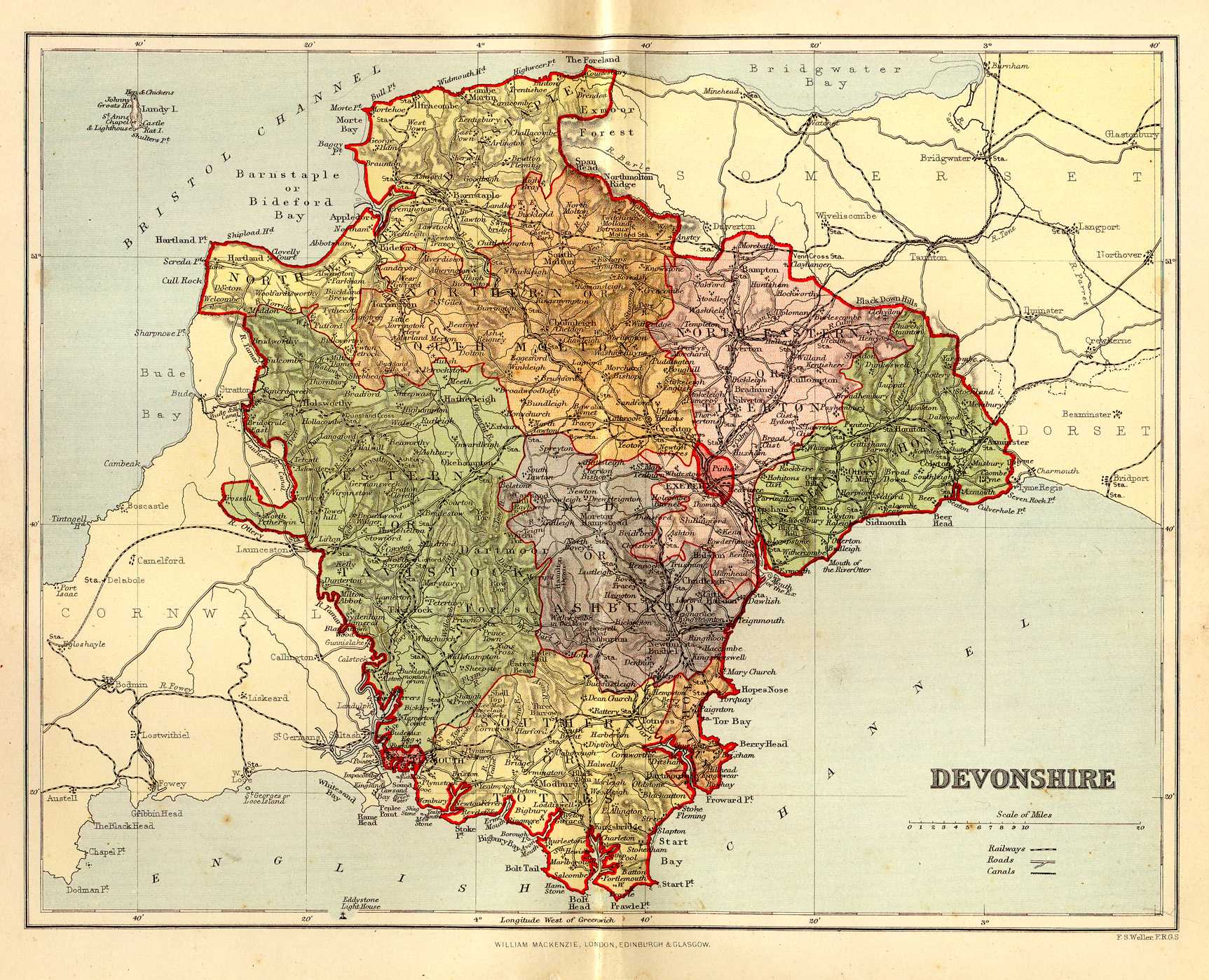
The DNA test came up with equal amounts of potential contacts on my mother’s side of the family, as well as my dad’s, and that was an area I hadn’t addressed up to that point. Building up her side of the tree has shown that we were drawn from agricultural stock in the north of Devon, England, and while many of the family had stayed there and are there to this day, many more had moved away from the land for a new life in Canada and, ultimately, in the United States. Indeed, direct Devon relatives had made it to rural Southern Ontario 150 years before I did.

I haven’t yet found the outer limits of the family tree, either on my dad’s or my mum’s side. I can find very little about my paternal grandmother who’s father arrived in Leeds from Belfast, Ireland, at some point in the early 1880s, although my 24% Irish DNA is in part her legacy to me. Her mother was from Leeds, but her father was from Liverpool, and with a name like Garrett, the chances are that there’s Irish blood from him as well.

On the whole, both sides of my family are from poor stock. Some have done well, though, the South African connection has links to the DeBeers diamond industry. There was some conspicuous DeBeers-related wealth on show in the early twentieth century, with homes in Portman Square and Kensington in London, and even a family burial plot in a Royal Park, the Royal Brompton Cemetery in West London.

My grandfather married into, worked for, and eventually took over, the Pickersgill family business in Leeds in the 1920s. Joe Pickersgill, a very wealthy Turf Accountant, was said to have held the Prince of Wales own betting account in the 1910s and was a millionaire when he died in 1923.

On the American side of the tree, a distant cousin married Mariko Terasaki, the daughter of Hidenari Terasaki and Gwendoline Harold, in 1953. Hidenari was a Japanese diplomat who married Gwen, a Tennessee girl, and worked to avoid Japanese conflict with the USA in the late 1930s. Both were forced to flee to Japan after the Pearl Harbor attack, but Gwen wrote a book about her experiences which was made into the Hollywood movie A Bridge To The Sun. Mariko’s children, those that survive, are prominent peace campaigners, following their grandfather’s lead.

But most of my family tree is comprised of poor people doing poor people’s work, and very much echoing the social structure nineteenth and early twentieth century Britain. Farmers, farm workers, labourers, coal miners, and factory workers, all living in mostly poor conditions but surviving nonetheless. One thing that does jump out is the number of war deaths, at the moment numbering seventy-two. One of the first on my family recorded in the Commonwealth War Graves Commission databases was killed when his ship exploded in the Thames estuary in 1914. One of the latest was a young Canadian naval officer, killed two days after D-Day in 1944 when his ship was sunk in the English Channel.

As I’ve grown the tree, there have been a lot of fascinating stories come out about the individuals in it. In future posts here I’ll try to record some of their stories; not about my family necessarily, but the places they lived and the lives they led, which were in large part, entirely typical.

It’s been an education thus far, and I’d like to document as much of it as I can.

Spirits of the Past

21 Sunday Sep 2025

Posted by Steve Mayne in Opinion

≈ Leave a comment

Tags

Devon, Emigration, family, Family History, Family Tree, genealogy, Graves, History, Immigration, Ontario, Travel

We have just visited a few more graves belonging to relatives I never knew I had, this time in London, Ontario.

When I started up this Ancestry.com thing, I had no idea that any of my ancestors had left England, but that misunderstanding was blown away when a distant cousin from the USA contacted me through Ancestry. She’s from my dad’s side and had been born with the same surname as me, and she opened up a branch of my family tree that I hadn’t found at that point. It turned out that I had an entire dynasty related to me in the USA, and I’m talking hundreds, probably thousands, who all came from one couple arriving in the New York in 1822, from Leeds, in Yorkshire, England.

When I did the Ancestry DNA test, I was matched up with people from my mum’s side of the tree, which I hadn’t really started to research. Curious to see where people fitted, I started to build that side of the family tree and, just like my dad’s side, I found that there were some wanderers.

My mother was born in Torquay, Devon, although I knew that her dad’s side of the family were from Exeter, also in Devon, and her mum’s side were from a small village just outside Torquay called Kingskerswell. My earlier forays into the family tree, when my mother was still alive, hadn’t gone too far and she maintained that the records relating to the Exeter branch of the family were all lost in a fire. When I kicked the family tree thing off again, after her death, I found that she was only partially right about the fire. The whole 1931 Census for England and Wales was lost in a fire, and that included many records relating to my family. But, thankfully, there were many other records that were obtainable, and like my dad’s family tree, the whole thing opened up and hasn’t stopped opening since.

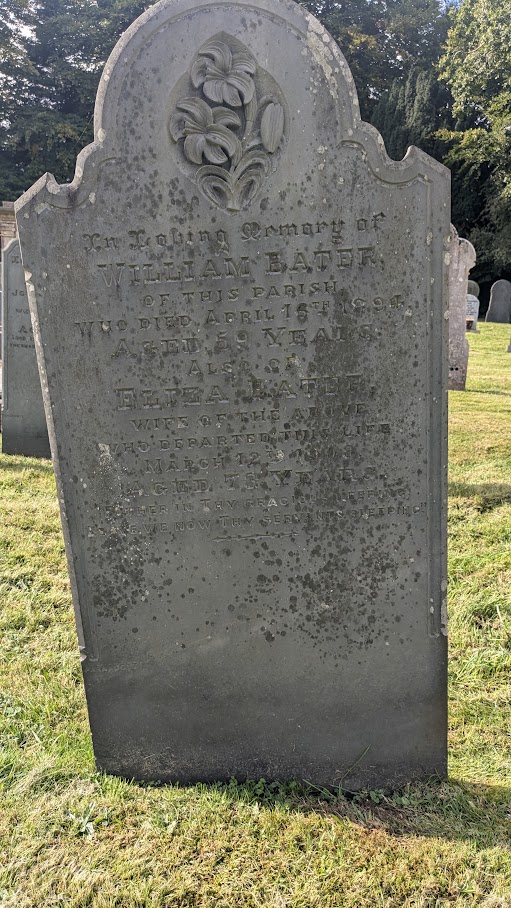
My maternal grandfather was a Stevens, and the Stevens family are solidly Exeter born and bred, despite my grandfather sneaking off to Torquay at some point in the 1920s. My maternal grandmother was a Hill, and the Hills hail from Kingskerswell, and other small places in south Devon. My maternal great-grandfather, though, married into the Bater family, who come from Dolton, in central North Devon. The Baters are, to say the least, a very large family. My maternal great-grandmother, Edith Bater, was one of thirteen children, brought into the world by William and Eliza Bater, and William Bater himself was one of seven children, so you get the idea that there are a lot of Baters related to me in North Devon.

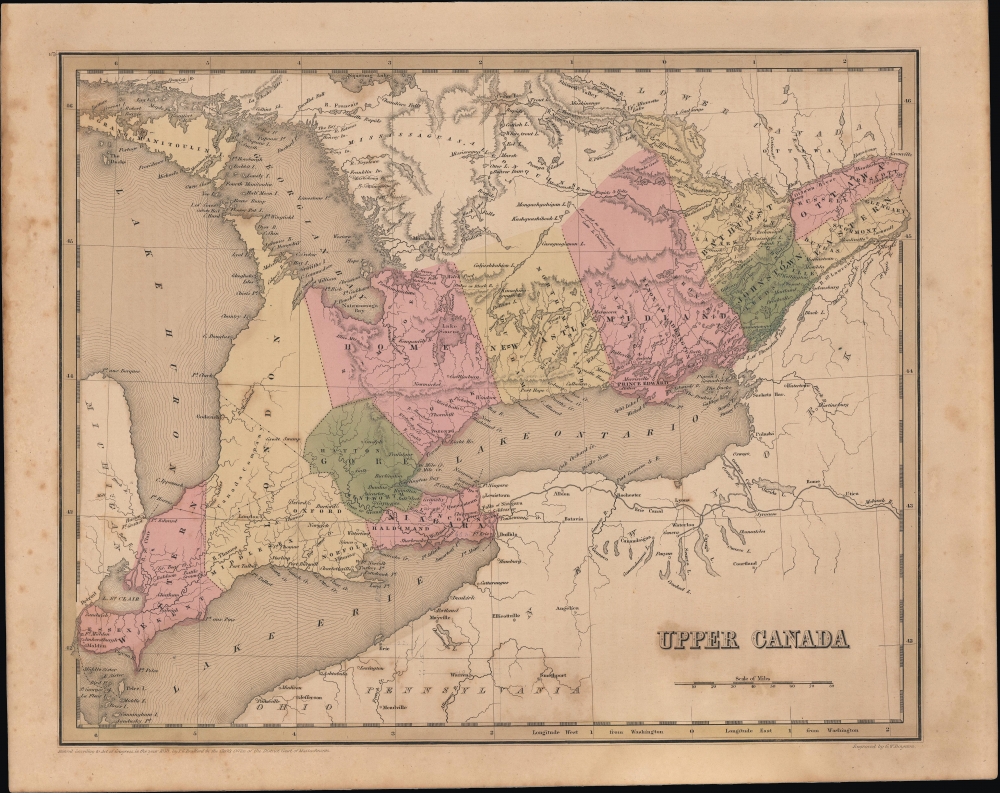
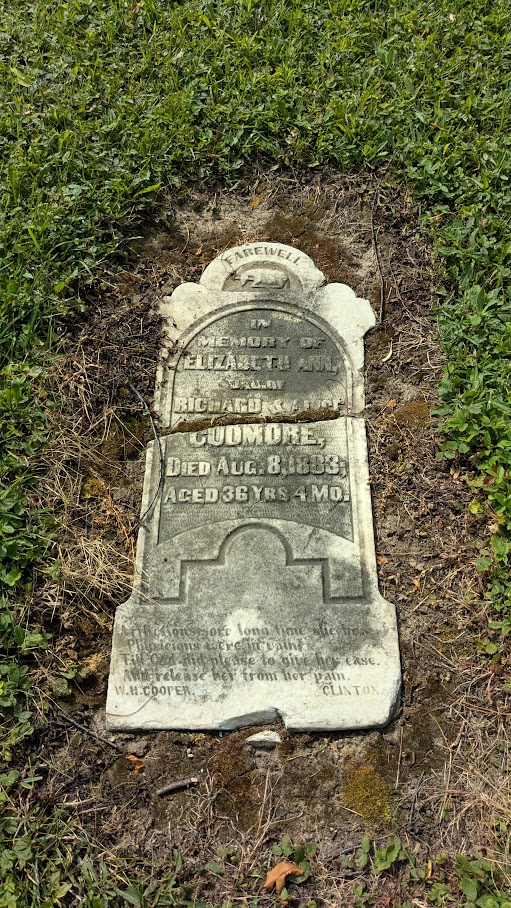
All the Baters, and all of their spouses, were in the business of farming, be that humble labourers or actual landowning farmers, and they all came from an area in north Devon bounded by the Taw and the Torridge rivers. At some point around 1850, one of William Bater’s brothers, George, left Devon and made his way to Toronto, Ontario, Canada. At about the same time, two of William Bater’s uncles, George and Richard Cudmore, also from Dolton, made their way to Toronto, and onward to Clinton Township in Huron County, on the eastern shore of Lake Huron. That seemed to spark a trend because while none of William Bater’s thirteen children moved to Canada, four of his grandchildren did, and they all arrived in the city of Guelph in Ontario, albeit fifty or sixty years after the original Bater and Cudmore incursions into Ontario. George and Richard Cudmore stayed in farming, but George Bater worked in a paper mill in Toronto, and the later arrivals all went into manual labour in the cities of Guelph, Cambridge and London, Ontario.

The Cudmore families expanded and moved on, mostly into the United States. Some pushed westwards into North Dakota to establish farms on the American Prairies, and Alice Cudmore, wife of Richard Cudmore and native of Dolton, eventually made her way to one of her son’s farm in North Dakota after Richard died, and she ended her days there. She’s buried in Hannah ND, quite close to the Canadian Border and the Province of Manitoba, where some of my dad’s family had ended up, homesteading on the Canadian Prairies.

All of that family history is detailed here so that I can link the visits we have made to the graves of some of the people who travelled to the New World from rural North Devon. To start, though, in 2023 we visited the church of St. Edmund in Dolton, Devon, and saw the graves of my 3 x great grandparents William and Eliza Bater, at the time not really understanding just how pivotal they were in the migration to Canada.

In early 2025, we drove up to Huron County*, Ontario, and visited the graves of Richard Cudmore, and his family members, who had stayed there farming the newly reclaimed land. They lived in log cabins, they cleared the trees, and set up the townships that still exist today. It was quite humbling to visit a tiny roadside cemetery in rural Ontario and find the graves of my family, people who’d travelled out from England to establish themselves on that new farmland.

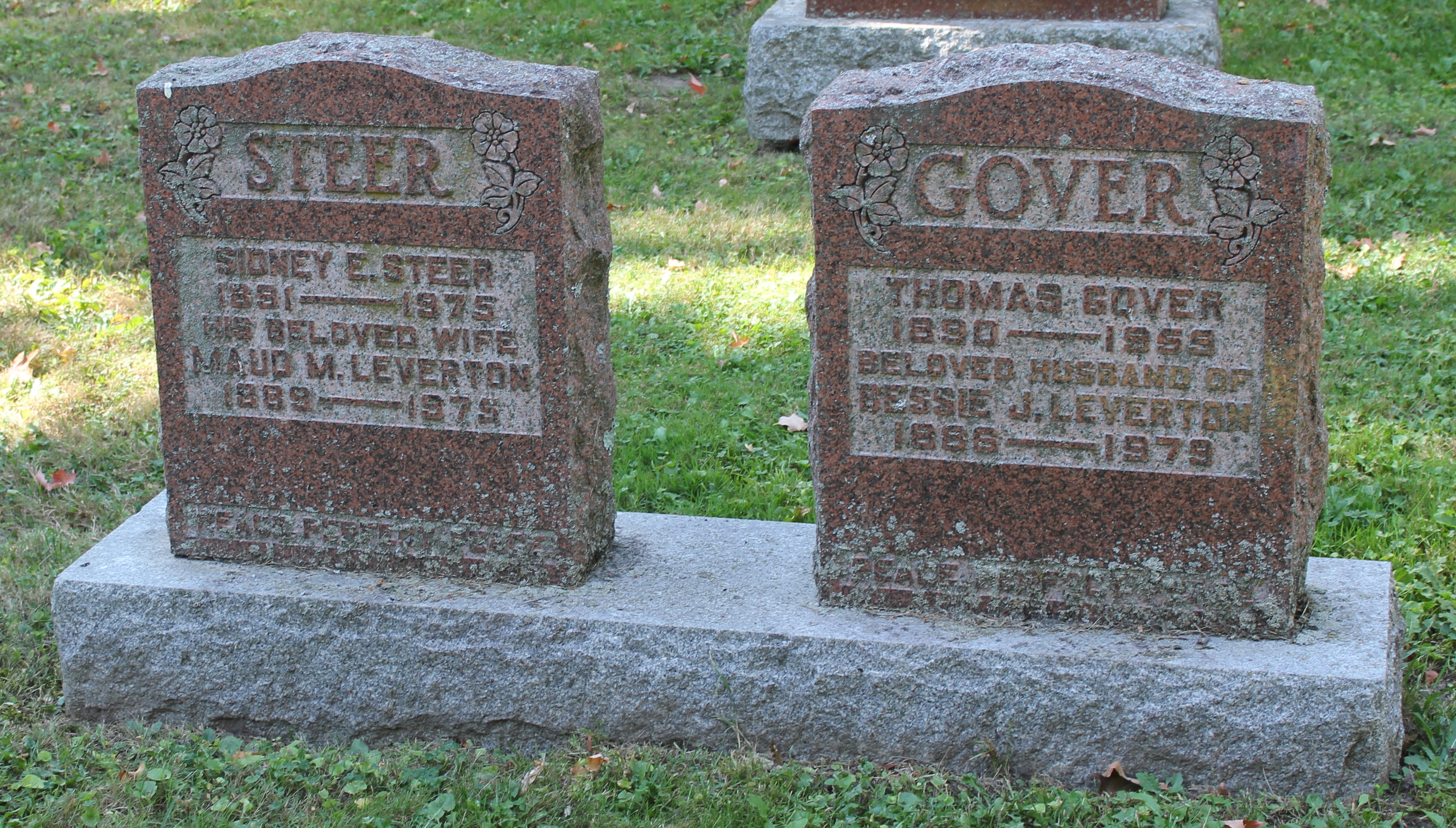
Then just this last week, we went to London, Ontario, to visit some of the graves of the newer immigrants to Canada. The Steer and the Ebsworthy families arrived in Canada from North Devon just before the First World War and established themselves as factory workers, at least initially. Again, it was quite humbling to know that the graves held a little piece of North Devon, and were related, as all the immigrants I’ve mentioned here, to my 3 x great grandfather, William Bater of Dolton.

There were many other arrivals from North Devon into Canada, and not just from the Bater family. The Cater family from Kingskerswell, linked by marriage to my grandmother Lilian Hill, are represented in Newfoundland. John Cater arrived in St. John’s around 1850 and took a job as a shipping agent. He married a local girl, Anne Murphy (most likely with Irish roots, like so many people in Newfoundland), and founded a dynasty of his own that’s centred in Grand Falls. There is an outpost of the Bater family in Winnipeg, Manitoba, and further south in the United States, in Wisconsin, Michigan, Iowa, Illinois, Minnesota, Missouri and beyond, both Baters and Caters have established themselves.

I have no doubt that there are many people like me, discovering the exodus of their families from the UK to Canada and the United States. I’m fortunate to have followed in their footsteps, albeit unwittingly, and have been able to visit not just grave sites but the towns and villages that they lived in.

I have so much more research to do, and so many more people to discover. Who knows where those spirits of the past will take me?

*Huron County Land Acknowledgment (taken from http://www.huroncounty.ca)

We acknowledge that the land we stand upon today is the traditional territories of the Anishinaabe, Haudenosaunee, and Neutral peoples and is connected to the Dish with One Spoon wampum, under which multiple nations agreed to care for the land and its resources by the Great Lakes in peace.

We also acknowledge the Upper Canada Treaties signed in regards to this land, which include Treaty #29 and Treaty #45 ½.

We recognize First Peoples’ continued stewardship of the land and water as well as the historical and ongoing injustices they face in Canada. We accept responsibility as treaty people to renew relationships with First Nation, Métis, and Inuit Peoples through reconciliation, community service, and respect.

Subscribe

  • Entries (RSS)
  • Comments (RSS)

Archives

  • November 2025
  • October 2025
  • September 2025
  • July 2025
  • May 2025
  • April 2025
  • February 2025
  • December 2024
  • November 2024
  • September 2024
  • August 2024
  • July 2024
  • May 2024
  • April 2024
  • March 2024
  • February 2024
  • January 2024
  • December 2023
  • November 2023
  • October 2023
  • September 2023
  • July 2014
  • June 2014

Categories

  • Admin
  • Opinion
  • Uncategorized

Meta

  • Create account
  • Log in

Website Built by WordPress.com.

  • Subscribe Subscribed
    • Stevemayne's Blog
    • Already have a WordPress.com account? Log in now.
    • Stevemayne's Blog
    • Subscribe Subscribed
    • Sign up
    • Log in
    • Report this content
    • View site in Reader
    • Manage subscriptions
    • Collapse this bar
 

Loading Comments...