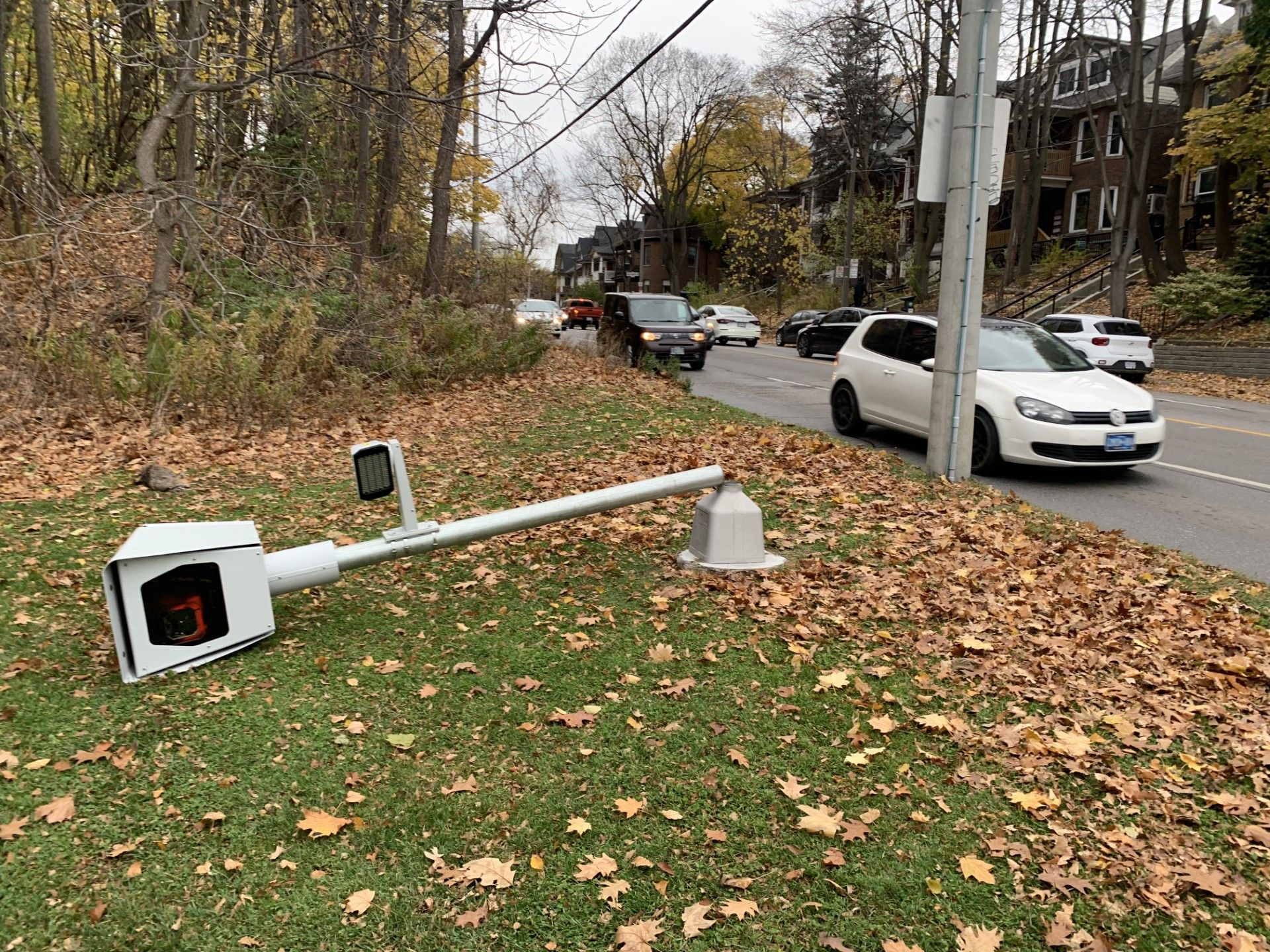
We’re having a little bit of an upset in Ontario at the moment, surrounding that bête noir, speed cameras.
The Province’s Premier, the one in charge, says that speed cameras are nothing but a cash-grab and that he’s going enact legislation to make them unusable. This in a Province where speed limits seem to be merely suggestions and efforts to curb speed (and therefore improve road safety) are at best, minimal.
I learned to drive in a country where speed cameras are used extensively, namely the UK. When I go back, which seems to be quite often these days, I’m immediately aware of the speed discipline that drivers employ; in Ontario the speed limit seems to be the absolute minimum, in the UK they are generally abided by, and plenty of people drive well within the limit. Tellingly, there are twice the number of cars in the UK than there are in Canada, but only half as many injuries and fatalities on the roads. From this we can reasonably deduce that speed cameras are, at least in part, a boon to road safety. So why is Ontario so against something that will aid road safety?
It’s political. That’s about the strength of it. Speeding is a curse in Ontario, and you’ll regularly read about drivers cussing one another out because they were driving at the speed limit and not some speed well north of it. “Hand your license in if you can’t do 20 over” is a common refrain from the speeding fraternity. It seems that posted speed limits impinge on people’s personal freedom to drive at whatever speed they like, and hang the road safety implications because, “Hey, I’m a good driver!”. Our politicians see this expression of personal freedom as a vote winner and are being aggressive in reducing what they see as limitations of drivers in the hope of winning over, or at least retaining, the support of the supposedly put-upon drivers of the Province. People who are killed or injured speeding? Pfffft. It’s eerily reminiscent of the argument for gun ownership in the US, death and injury seems to be an acceptable price for personal freedom.
I’m at a bit of a loss to follow this logic. Drivers can’t be trusted to obey posted limit signs, so why would a responsible government not put in place a cheap and effective method of control? It’s only a cash-grab if you speed, and is so easily avoidable, but it also comes with a free side order of road safety, so what’s not to love?
I guess it will take the death or injury of a politician’s loved one, or a large number of ordinary people, for things to change, which is really a very sad state of affairs for the twenty-first century. In the meantime I will drive to the limits, avoid any cash-grabs (if there are any left), and hope that no one in orbit get hurt by a speeding driver. What a life.
We have just visited a few more graves belonging to relatives I never knew I had, this time in London, Ontario.
When I started up this Ancestry.com thing, I had no idea that any of my ancestors had left England, but that misunderstanding was blown away when a distant cousin from the USA contacted me through Ancestry. She’s from my dad’s side and had been born with the same surname as me, and she opened up a branch of my family tree that I hadn’t found at that point. It turned out that I had an entire dynasty related to me in the USA, and I’m talking hundreds, probably thousands, who all came from one couple arriving in the New York in 1822, from Leeds, in Yorkshire, England.
When I did the Ancestry DNA test, I was matched up with people from my mum’s side of the tree, which I hadn’t really started to research. Curious to see where people fitted, I started to build that side of the family tree and, just like my dad’s side, I found that there were some wanderers.
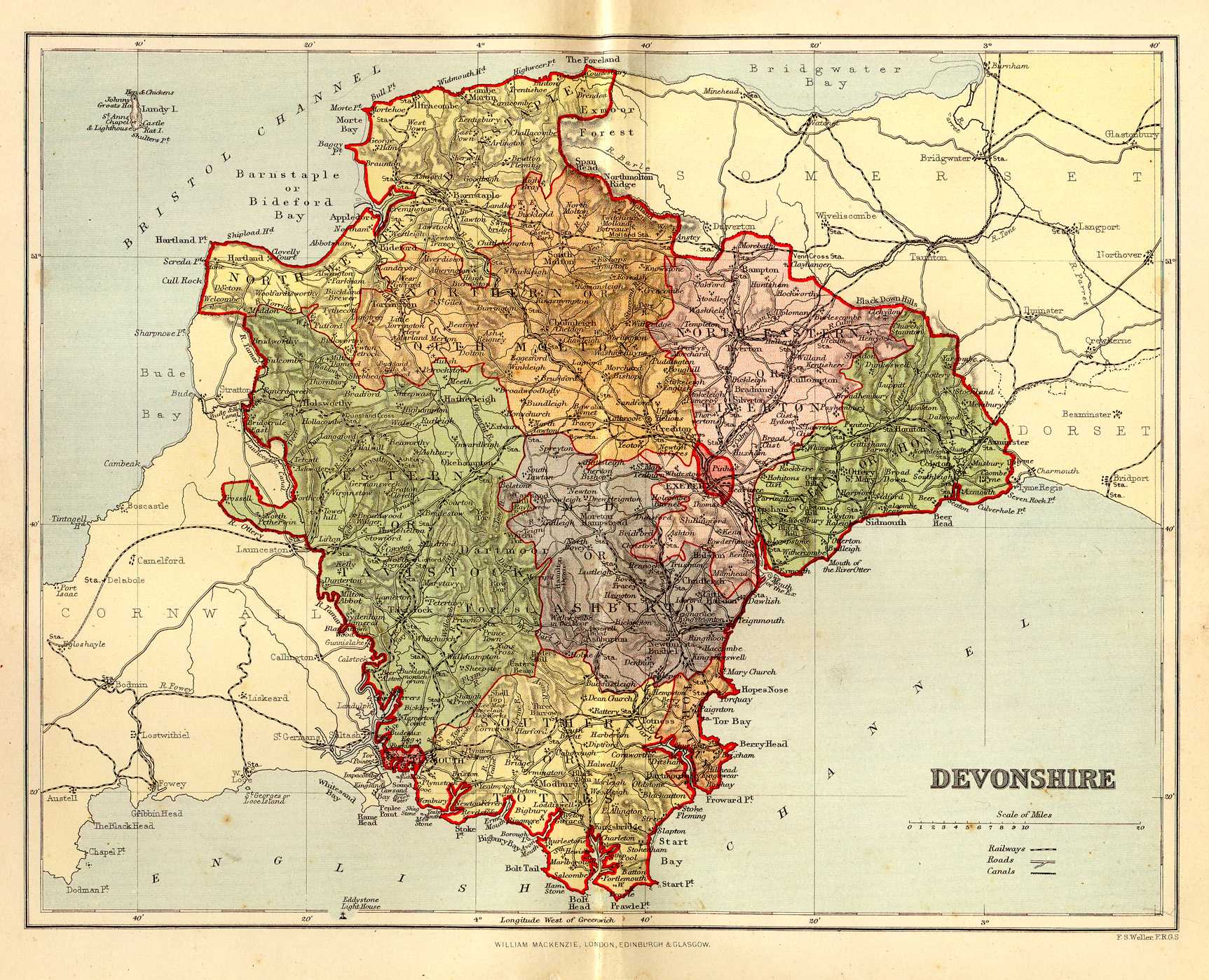
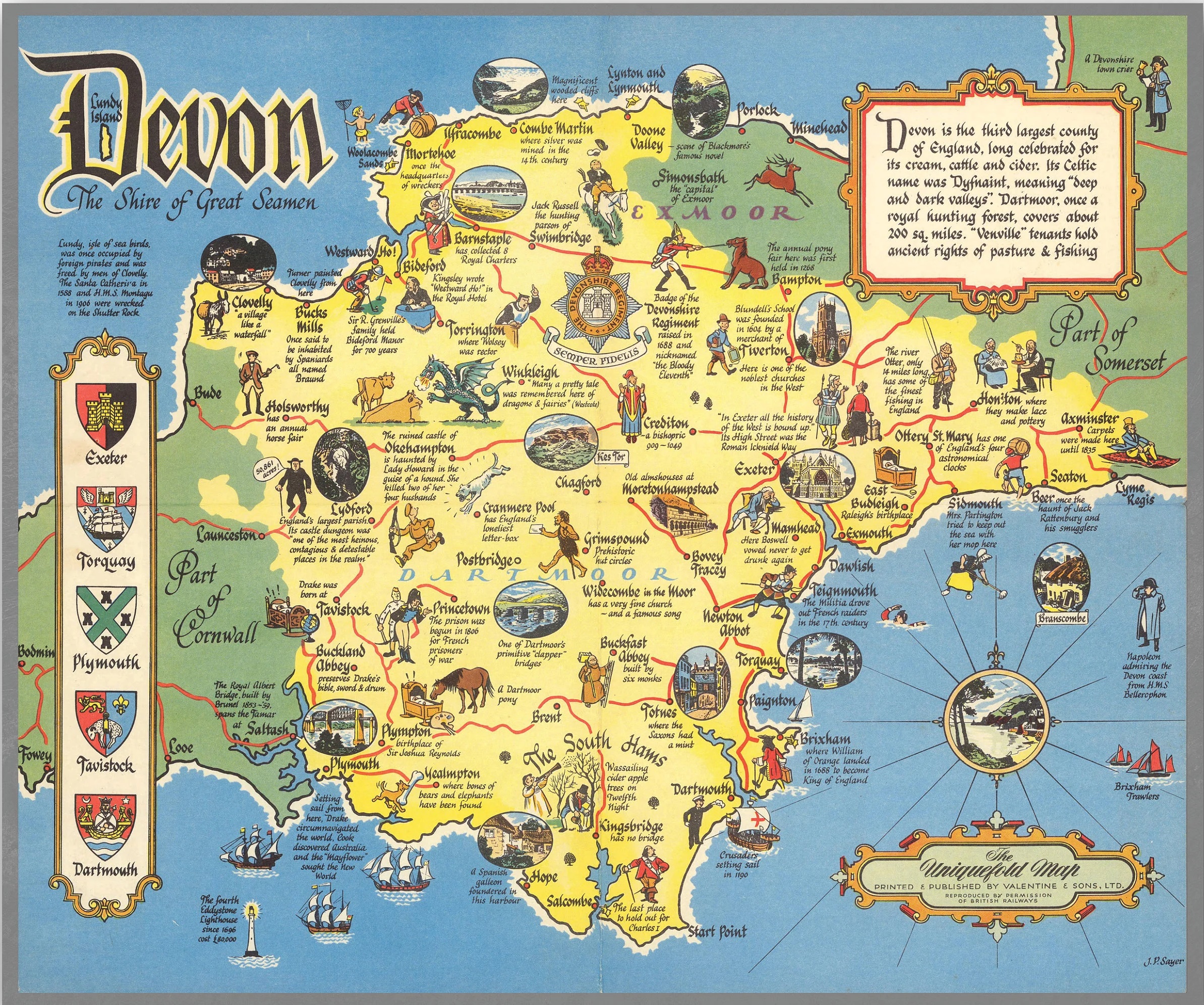
My mother was born in Torquay, Devon, although I knew that her dad’s side of the family were from Exeter, also in Devon, and her mum’s side were from a small village just outside Torquay called Kingskerswell. My earlier forays into the family tree, when my mother was still alive, hadn’t gone too far and she maintained that the records relating to the Exeter branch of the family were all lost in a fire. When I kicked the family tree thing off again, after her death, I found that she was only partially right about the fire. The whole 1931 Census for England and Wales was lost in a fire, and that included many records relating to my family. But, thankfully, there were many other records that were obtainable, and like my dad’s family tree, the whole thing opened up and hasn’t stopped opening since.
My maternal grandfather was a Stevens, and the Stevens family are solidly Exeter born and bred, despite my grandfather sneaking off to Torquay at some point in the 1920s. My maternal grandmother was a Hill, and the Hills hail from Kingskerswell, and other small places in south Devon. My maternal great-grandfather, though, married into the Bater family, who come from Dolton, in central North Devon. The Baters are, to say the least, a very large family. My maternal great-grandmother, Edith Bater, was one of thirteen children, brought into the world by William and Eliza Bater, and William Bater himself was one of seven children, so you get the idea that there are a lot of Baters related to me in North Devon.
All the Baters, and all of their spouses, were in the business of farming, be that humble labourers or actual landowning farmers, and they all came from an area in north Devon bounded by the Taw and the Torridge rivers. At some point around 1850, one of William Bater’s brothers, George, left Devon and made his way to Toronto, Ontario, Canada. At about the same time, two of William Bater’s uncles, George and Richard Cudmore, also from Dolton, made their way to Toronto, and onward to Clinton Township in Huron County, on the eastern shore of Lake Huron. That seemed to spark a trend because while none of William Bater’s thirteen children moved to Canada, four of his grandchildren did, and they all arrived in the city of Guelph in Ontario, albeit fifty or sixty years after the original Bater and Cudmore incursions into Ontario. George and Richard Cudmore stayed in farming, but George Bater worked in a paper mill in Toronto, and the later arrivals all went into manual labour in the cities of Guelph, Cambridge and London, Ontario.
The Cudmore families expanded and moved on, mostly into the United States. Some pushed westwards into North Dakota to establish farms on the American Prairies, and Alice Cudmore, wife of Richard Cudmore and native of Dolton, eventually made her way to one of her son’s farm in North Dakota after Richard died, and she ended her days there. She’s buried in Hannah ND, quite close to the Canadian Border and the Province of Manitoba, where some of my dad’s family had ended up, homesteading on the Canadian Prairies.
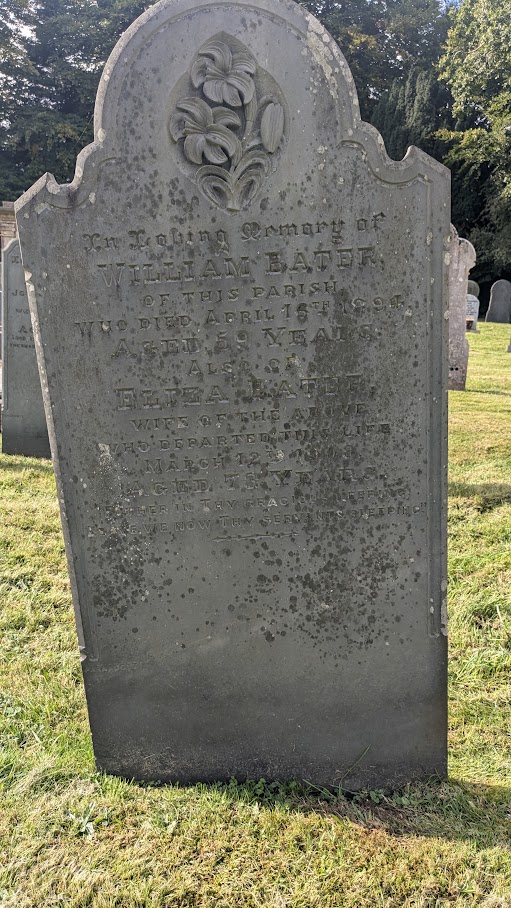
All of that family history is detailed here so that I can link the visits we have made to the graves of some of the people who travelled to the New World from rural North Devon. To start, though, in 2023 we visited the church of St. Edmund in Dolton, Devon, and saw the graves of my 3 x great grandparents William and Eliza Bater, at the time not really understanding just how pivotal they were in the migration to Canada.
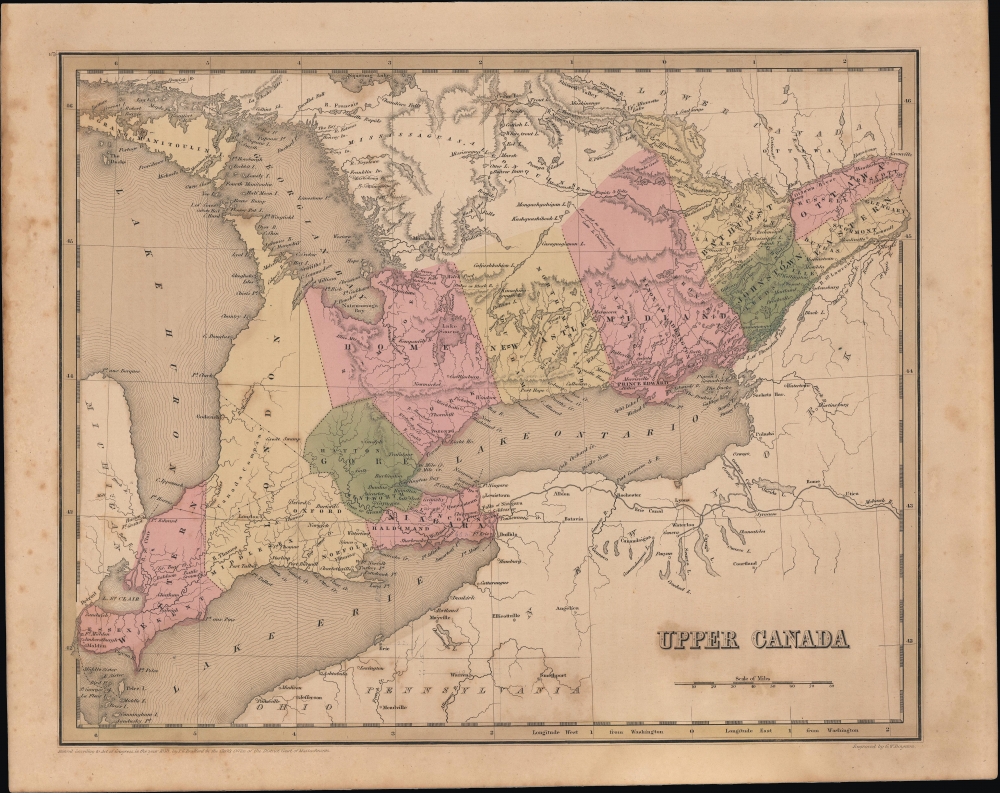
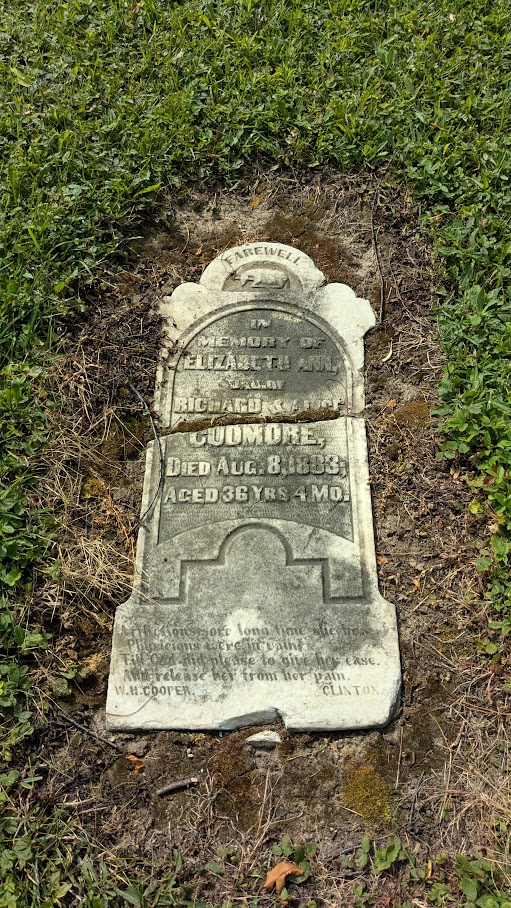
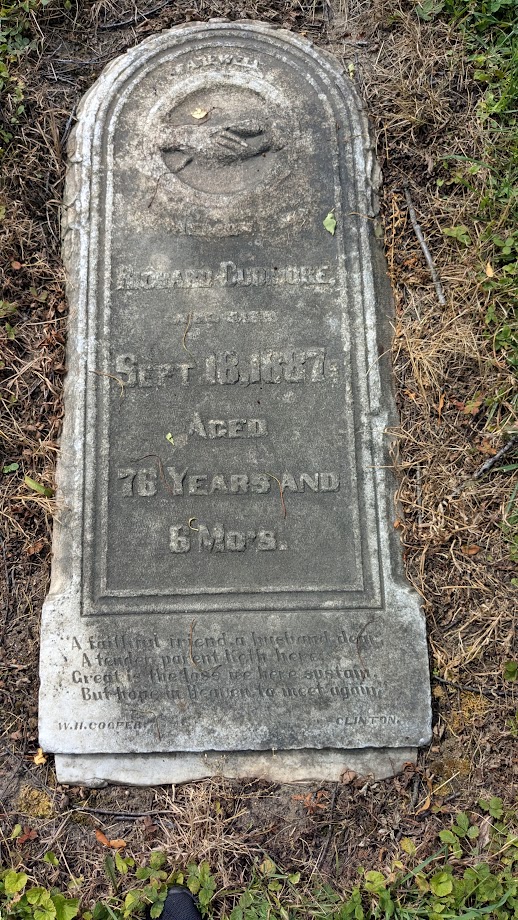
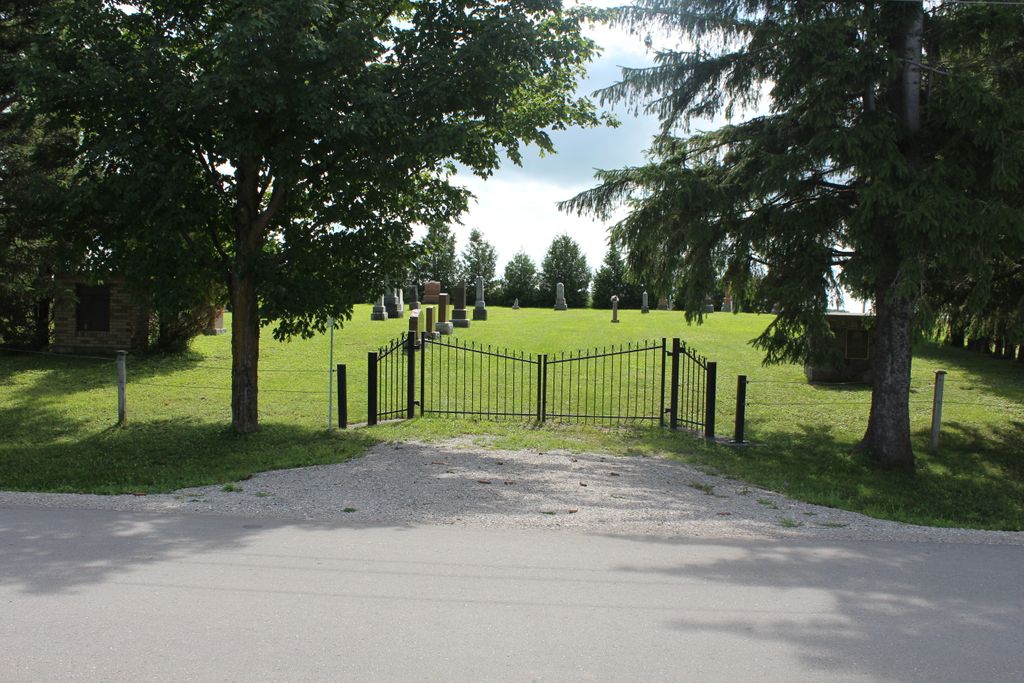
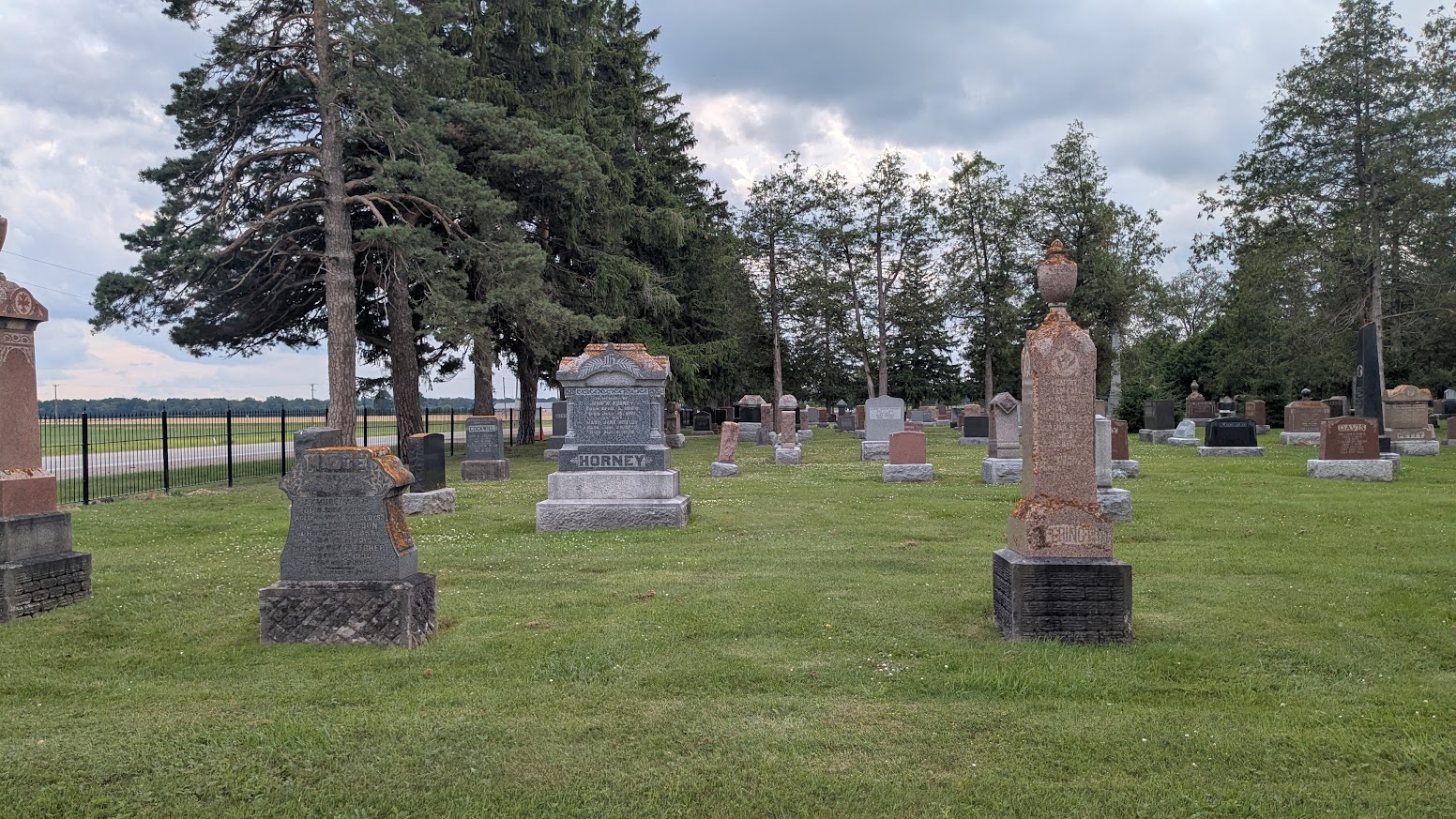
In early 2025, we drove up to Huron County*, Ontario, and visited the graves of Richard Cudmore, and his family members, who had stayed there farming the newly reclaimed land. They lived in log cabins, they cleared the trees, and set up the townships that still exist today. It was quite humbling to visit a tiny roadside cemetery in rural Ontario and find the graves of my family, people who’d travelled out from England to establish themselves on that new farmland.
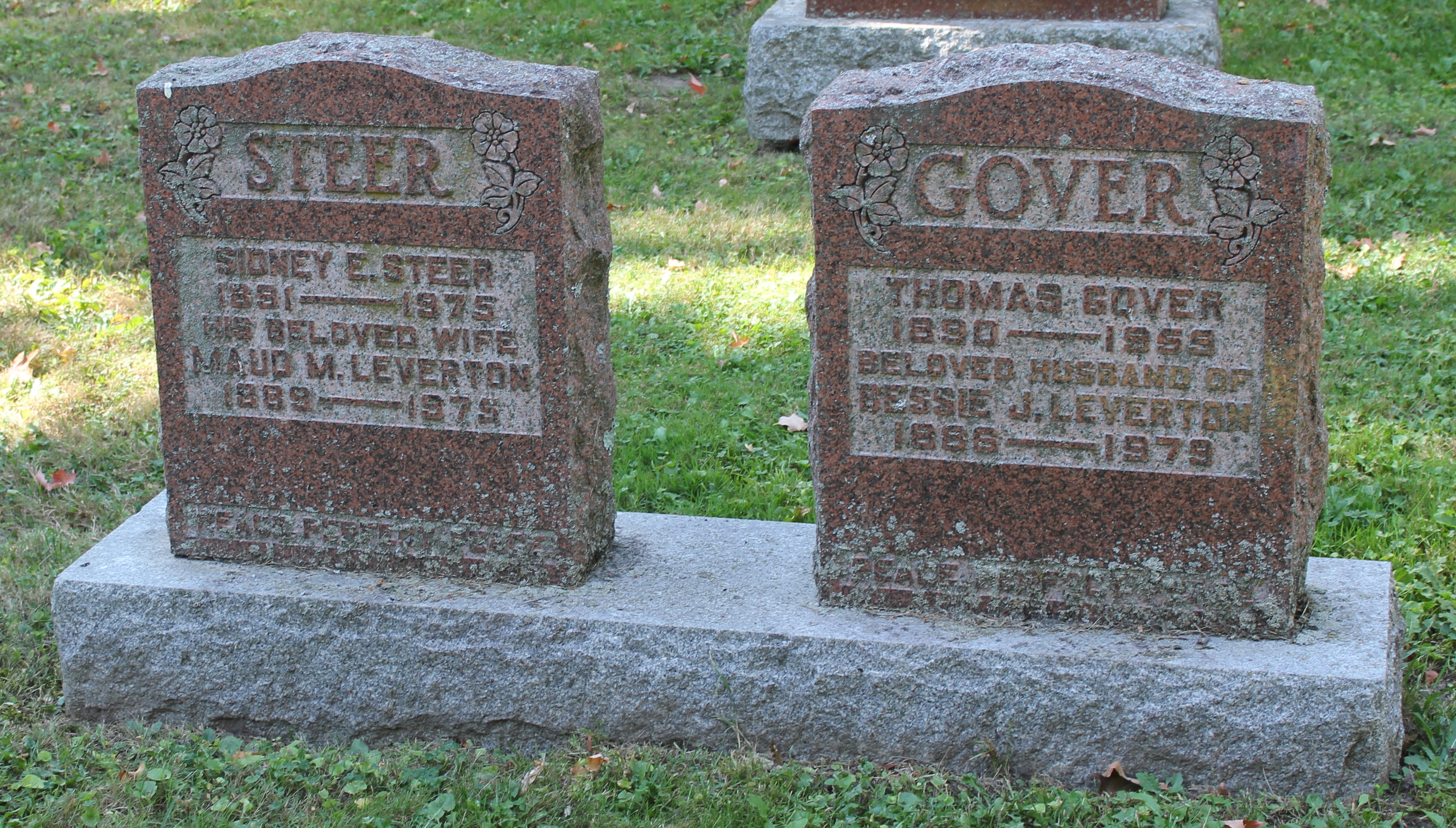
Then just this last week, we went to London, Ontario, to visit some of the graves of the newer immigrants to Canada. The Steer and the Ebsworthy families arrived in Canada from North Devon just before the First World War and established themselves as factory workers, at least initially. Again, it was quite humbling to know that the graves held a little piece of North Devon, and were related, as all the immigrants I’ve mentioned here, to my 3 x great grandfather, William Bater of Dolton.
There were many other arrivals from North Devon into Canada, and not just from the Bater family. The Cater family from Kingskerswell, linked by marriage to my grandmother Lilian Hill, are represented in Newfoundland. John Cater arrived in St. John’s around 1850 and took a job as a shipping agent. He married a local girl, Anne Murphy (most likely with Irish roots, like so many people in Newfoundland), and founded a dynasty of his own that’s centred in Grand Falls. There is an outpost of the Bater family in Winnipeg, Manitoba, and further south in the United States, in Wisconsin, Michigan, Iowa, Illinois, Minnesota, Missouri and beyond, both Baters and Caters have established themselves.
I have no doubt that there are many people like me, discovering the exodus of their families from the UK to Canada and the United States. I’m fortunate to have followed in their footsteps, albeit unwittingly, and have been able to visit not just grave sites but the towns and villages that they lived in.
I have so much more research to do, and so many more people to discover. Who knows where those spirits of the past will take me?
We acknowledge that the land we stand upon today is the traditional territories of the Anishinaabe, Haudenosaunee, and Neutral peoples and is connected to the Dish with One Spoon wampum, under which multiple nations agreed to care for the land and its resources by the Great Lakes in peace.
We also acknowledge the Upper Canada Treaties signed in regards to this land, which include Treaty #29 and Treaty #45 ½.
We recognize First Peoples’ continued stewardship of the land and water as well as the historical and ongoing injustices they face in Canada. We accept responsibility as treaty people to renew relationships with First Nation, Métis, and Inuit Peoples through reconciliation, community service, and respect.
We had occasion to visit the lovely town of Blyth, Ontario, in Huron County. It’s about two and half hour’s slow drive from home, and a lovely place to enjoy a play at the annual Blyth Festival. It’s also close to the place where a large group of my relatives, on my mother’s side, had ended up after emigrating from England in the middle of the nineteenth century.
From my family tree research, I had discovered a few graves of those relatives just twenty minutes from Blyth, and this was too good an opportunity to be missed.
At the top of the list was John Richard Cudmore (1811-1887), my great-great-great-granduncle. His sister, Elizabeth Cudmore (1796 – 1873) was my great-great-great-grandmother, and the mother of William Bater (1829-1894), my great-great-grandfather, whose grave we had visited in the churchyard of St Edmund’s, Dolton, when we were in England last year. John Richard, better known simply as Richard, arrived in Canada at some point between 1841 and 1845, and his first Canadian born son, William Horace Cudmore, entered this world while the family were in Tuckersmith Township, now Clinton Township, in 1845.
In the England and Wales Census of 1841, Richard Cudmore is shown as being an agricultural labourer and living in Dolton, Devon. In the Census of Eastern Canada for 1861, Richard is listed as being a farmer and living with his wife Alice and their six children in a single story, log-built house. I can’t verify whether he was farming his own plot of land or working for someone else, but Tuckersmith, like most other rural townships in North America, had been divided up into small parcels of land and it’s likely that he worked one of these. I’ve seen maps of other areas, notably in Kansas and in North Dakota, with the land parcels’ owners named, but the records of Huron County, at least those I’ve found so far, don’t go into that detail.
Richard Cudmore stayed in Tuckersmith for the remainder of his life, and died in 1877. He was buried in Turner’s Cemetery, just south of Vanastra, Ontario, between Clinton and Seaforth, and there he remains. It wasn’t hard to located the cemetery, nor the grave, and it was quite the feeling to be close to one of my relatives, but in a country thousands of miles away from our shared homeland. The cemetery is small, but meticulously maintained (by whom I don’t know), and is fittingly surrounded by the rich, arable farmland that Richard had worked.
Talking of land, I must acknowledge that the area around Tuckersmith is native land and was the subject of Treaty 29, The Huron Tract Purchase, signed by the English Crown and certain Anishinaabe peoples on July 10th, 1827. Full details of the treaty can be read here.
Of course, Richard Cudmore wasn’t the only one of my dead relatives in Turner’s Cemetery. His son John and his daughter Elizabeth are there, as is another daughter, Sarah Alice Crich. There are many members of the Crich family in Turner’s cemetery, as there are on the census listings for the time. It was inevitable that a Cudmore would marry a Crich at some point in Tuckersmith, and of all those Crich family members resting alongside Richard Cudmore, I’m certain that there will be family connections. Indeed, subsequent research has shown up many more family graves in Clinton itself, right up to Keith Ward Jenks, a direct descendent of Richard Cudmore, who died in 1944 when he was aboard a Royal Canadian Navy vessel taking part in the D-Day Landings.
While we were out and about in Huron County, we visited a grave in Harpurhey Cemetery near Seaforth, that of another of Richard Cudmore’s sons, Henry, and his wife Ann. Henry died in 1930 and Ann died in 1945, so their gravestone was significantly newer than those we found in Turner’s Cemetery.
On the way home we called in at the Exeter (Ontario) Cemetery looking for a member of the Crich Family. As it’s quite a large cemetery compared to the country burial sites, and I couldn’t work out the plot numbers, I didn’t find the grave. I’ve since discovered that he’s in his wife’s family plot, the Rowcrofts, so if we go again I know what to look for.
I can only speculate what drove agricultural workers from North Devon to get on a ship and travel to the New World. It may have been a lack of work in England, or it may have been the prospect of being able to own (subject to the treaty of course) some land of their own. My family tree is littered with Baters and Cudmores who travelled from Devon to Canada and to the United States, sometimes landing in one country and ending up in the other, but they were nearly all farmers, or in a trade related to farming.
Following up the descendants of these immigrants, I’ve discovered that after they established themselves, some made their way to other homesteading projects both in Canada and in the USA. Crich family members set up in Saskatchewan, while others went to North Dakota, curiously not too far apart geographically, even if they were in different countries. Indeed, after Richard Cudmore’s death in 1877, his wife Alice went to live with their daughter Ann and her husband John Fitzpatrick, in Park River, North Dakota, and never returned to Tuckersmith Township in Canada.
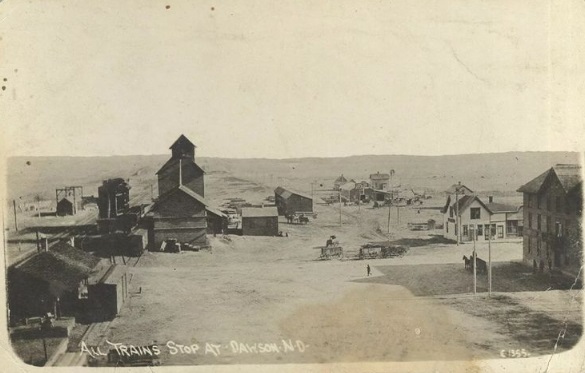
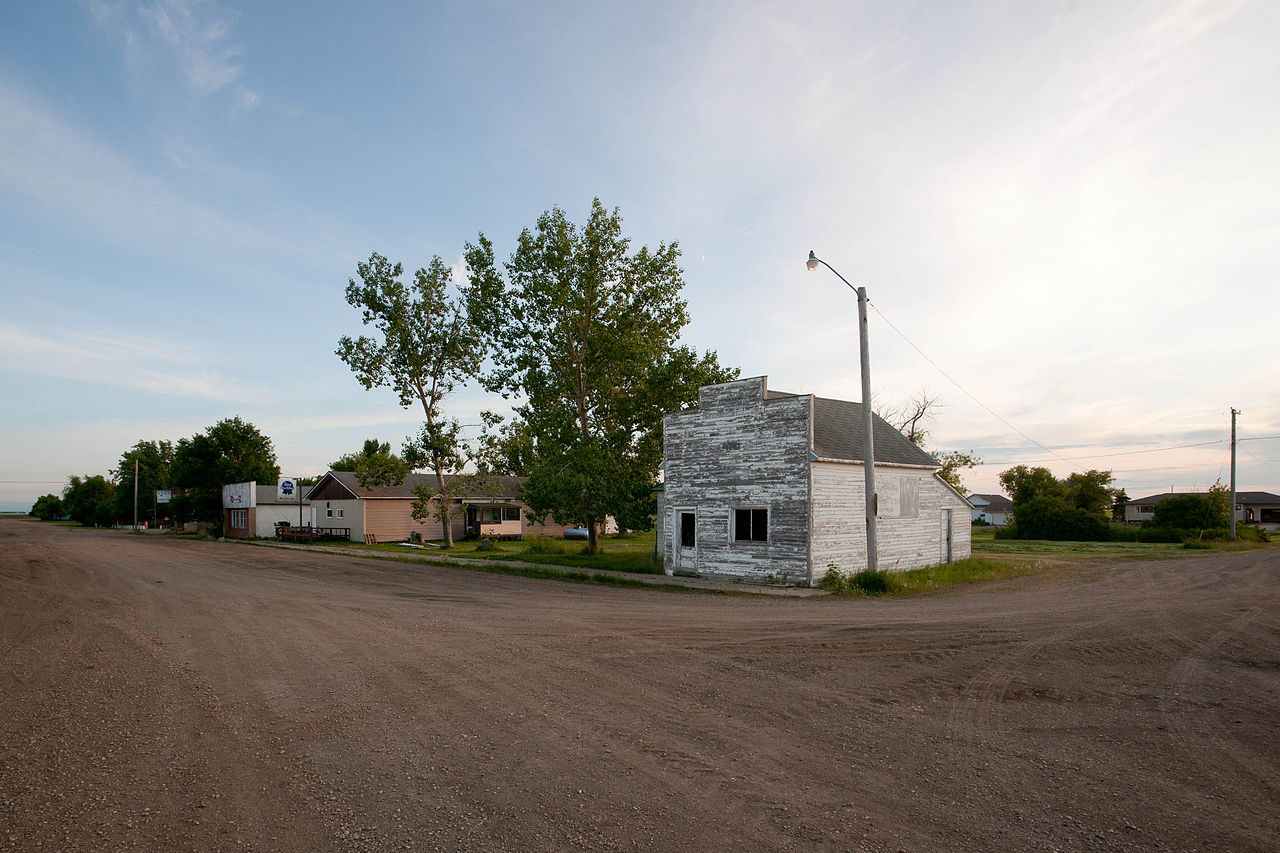
Browsing through Google Maps and Streetview, as I do, I was hugely interested to see the settlements these immigrants made their way to, and what they look like now. One was a town called Wales, North Dakota, which even in it’s heyday was little more than half a dozen grain elevators by the railway track, and Hannah, a little further north, at the end of the railway line, and just a few miles south of the Canadian border. Hannah was very similar to Wales, except that there is a cemetery there and yes, there are some of my family’s graves there. Both Wales and Hannah are little more than ghost towns now, with Wales listed as having a population of ten. However, the land around the towns is still extensively farmed and probably doesn’t look too much different now than it did in the 1920s and 1930s.
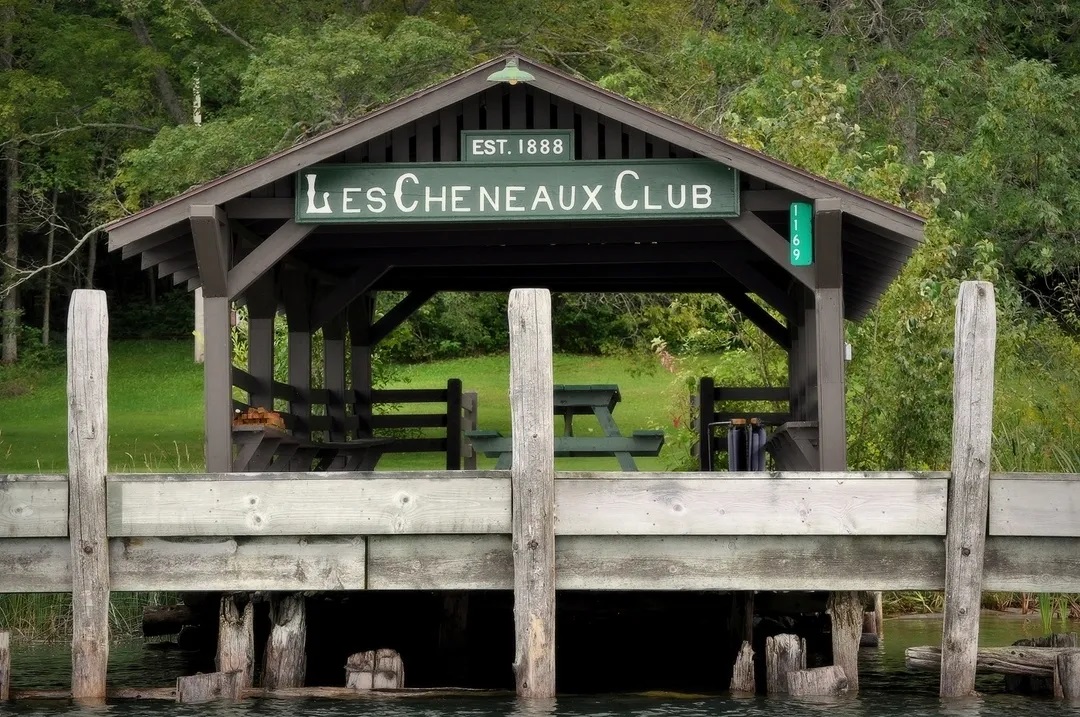
Another branch made their way to Cedarville, Michigan, not too far from Ontario’s Huron County. As some point the family became involved with the Les Cheneaux Club on Marquette Island, which is in the Mackinac Straits and not too far from Mackinac Island. Marquette Island, and specifically the Les Cheneaux Club, was a summer getaway for wealthy Chicagoans when their summers became too hot, and my relatives were caretakers of the Club in summer and winter in the early part of the twentieth century. Indeed, my fourth cousin, once removed, Uldene Ethel LeRoy (nee Rudd), wrote a book called Six on an Island: childhood memories from Lake Huron, which was published in 1956. While searching around for the book, I discovered an undergraduate paper from Grand Valley State University in Grand Rapids, Michigan, written by Uldene’s grandson, Joshua Lycka. It references her book and compares his own memories with hers. The things you find on the Internet!
Both my mother’s and father’s families have extensive connections with emigration to the New World. The Mayne’s led the way, but the Caters and the Cudmores from North Devon, and quite a few of them, followed up a decade or two later, and both branches of the family are now spread far and wide across Canada and the United States. I wonder how much more I will discover as I delve even deeper?
Having spent the first fifty years of my life in the UK (except for three years in Belgium and Germany), I was a temperate man. That is temperatures lower than -4C and higher that +20C were somewhat of a novelty for me. I also had that English resistance to the damp, especially having spent fifteen years in the village of Blewbury, Oxfordshire, which was a mass of natural springs and chalk streams, and permanently moist. Then I moved from the coastal climes to Canada’s Great Lakes, and the continental weather systems that lurk there.
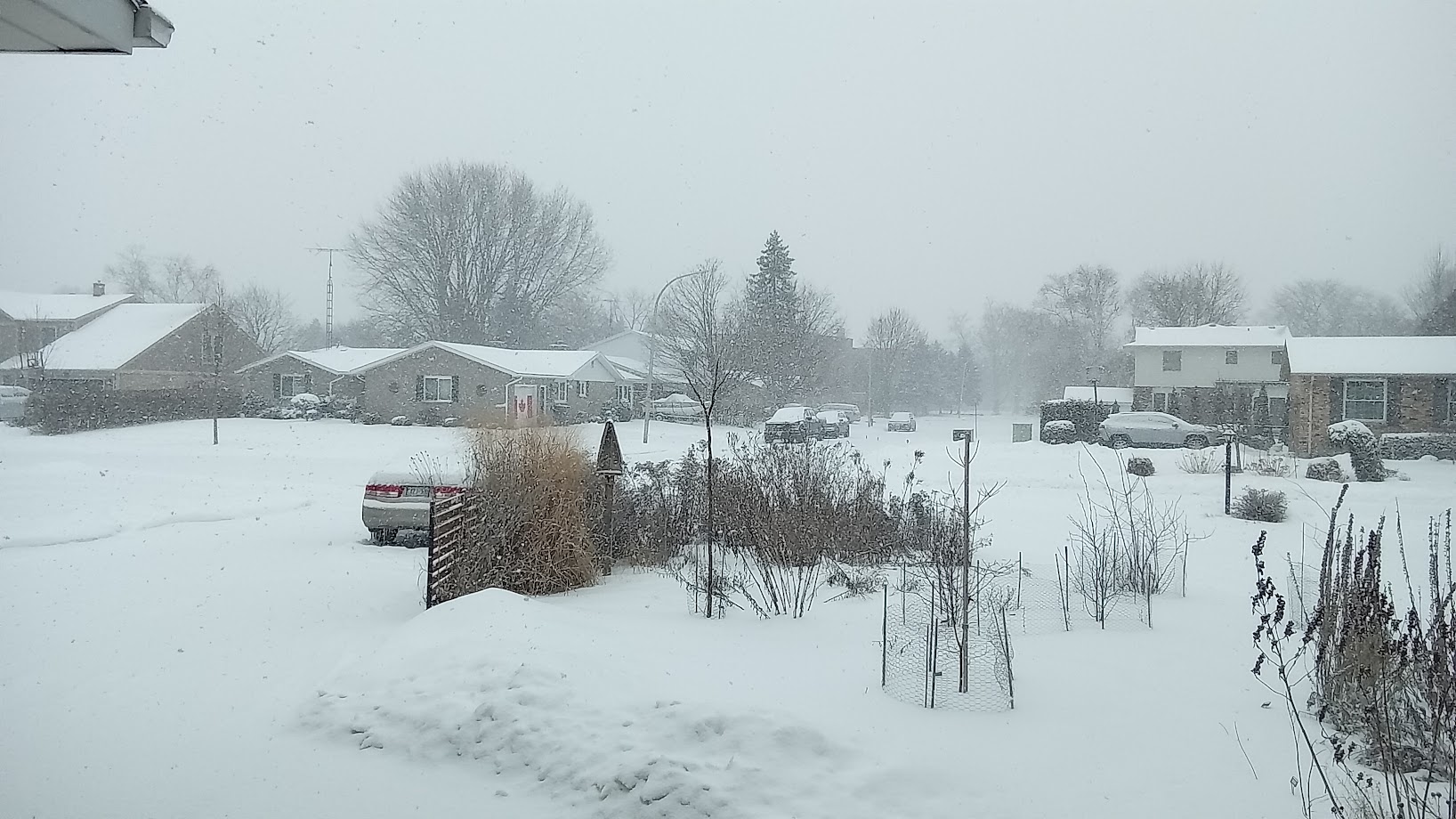
We’re sat here today, February 16th, watching the snow fall and having been experiencing sub-zero temperatures for weeks, probably six so far, I wasn’t counting. While this part of Southern Ontario doesn’t get hit with really cold weather, it did bring to mind a trip I made to Canada in 2008, when I was still living in England.
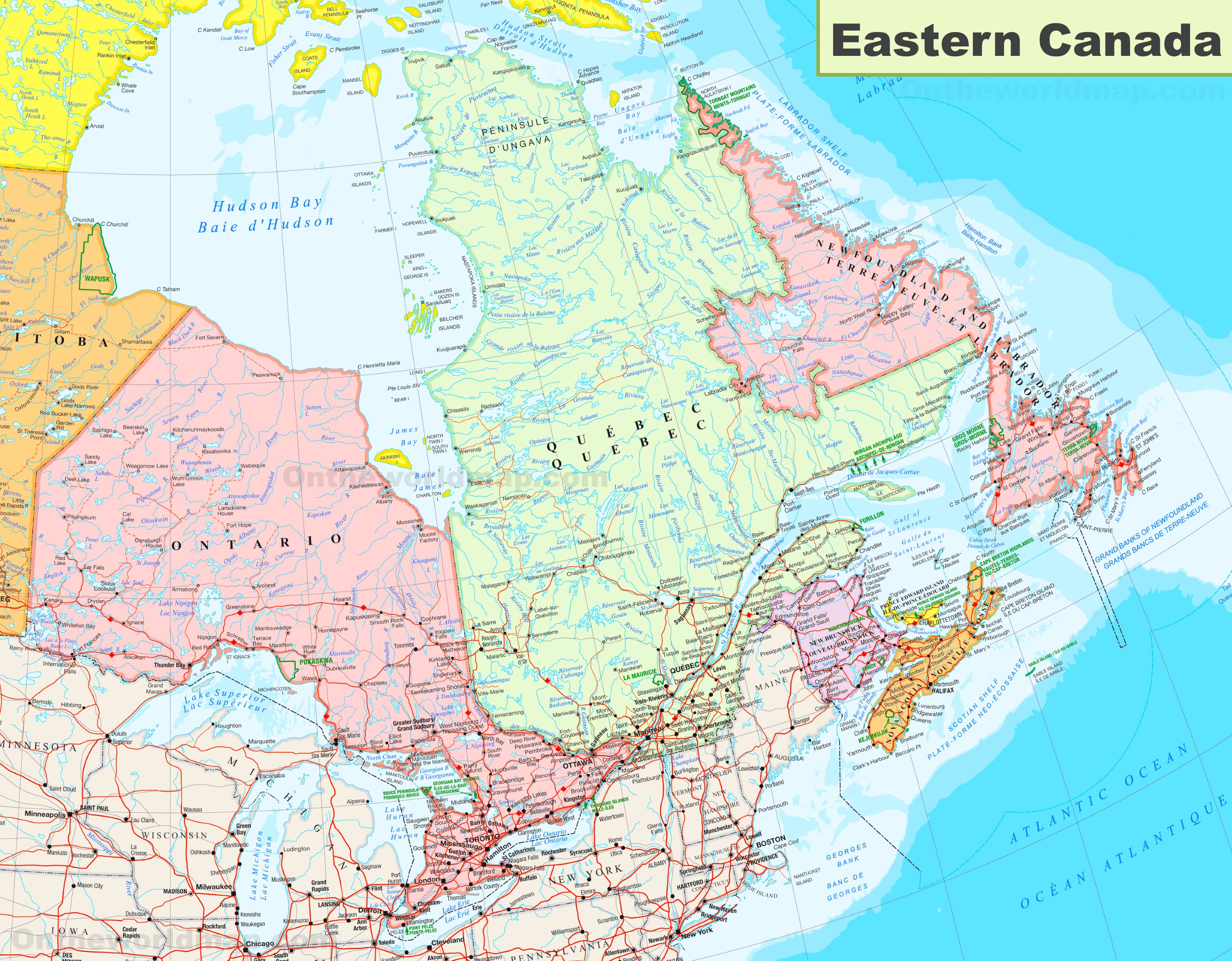
My intended had said, “Hey, come over for March Break”, for she was a school teacher, “We’ll rent an RV and have a drive around Quebec”. Now I may not be the sharpest knife in the box, but I looked at the calendar, and I looked at the prevailing weather in that fine Province, and realised that we were not going to experience fine, balmy, RV-friendly weather in March. We scotched the RV idea (a wise move as it turned out), and booked hotels in Montreal and in Quebec City instead. All very exciting.
But when my intended picked me up at Lester Pearson Airport in Toronto, with me just having flown over the frozen wastes of Quebec, the snow started to fall. My intended was driving, not her favourite pastime to be sure, and the weather started to get worse and worse. We were expecting to stay in downtown Montreal that night, but to be honest, we really should have stopped off on the way, but we didn’t. The run up the Ontario Highway 401, and the Autoroute du Souvenir, was 550 Km and should have taken about five and half hours. In the event, it took us nine hours, and we didn’t get into Montreal until at 1:30am. My driver was done in. Still, we did get there.
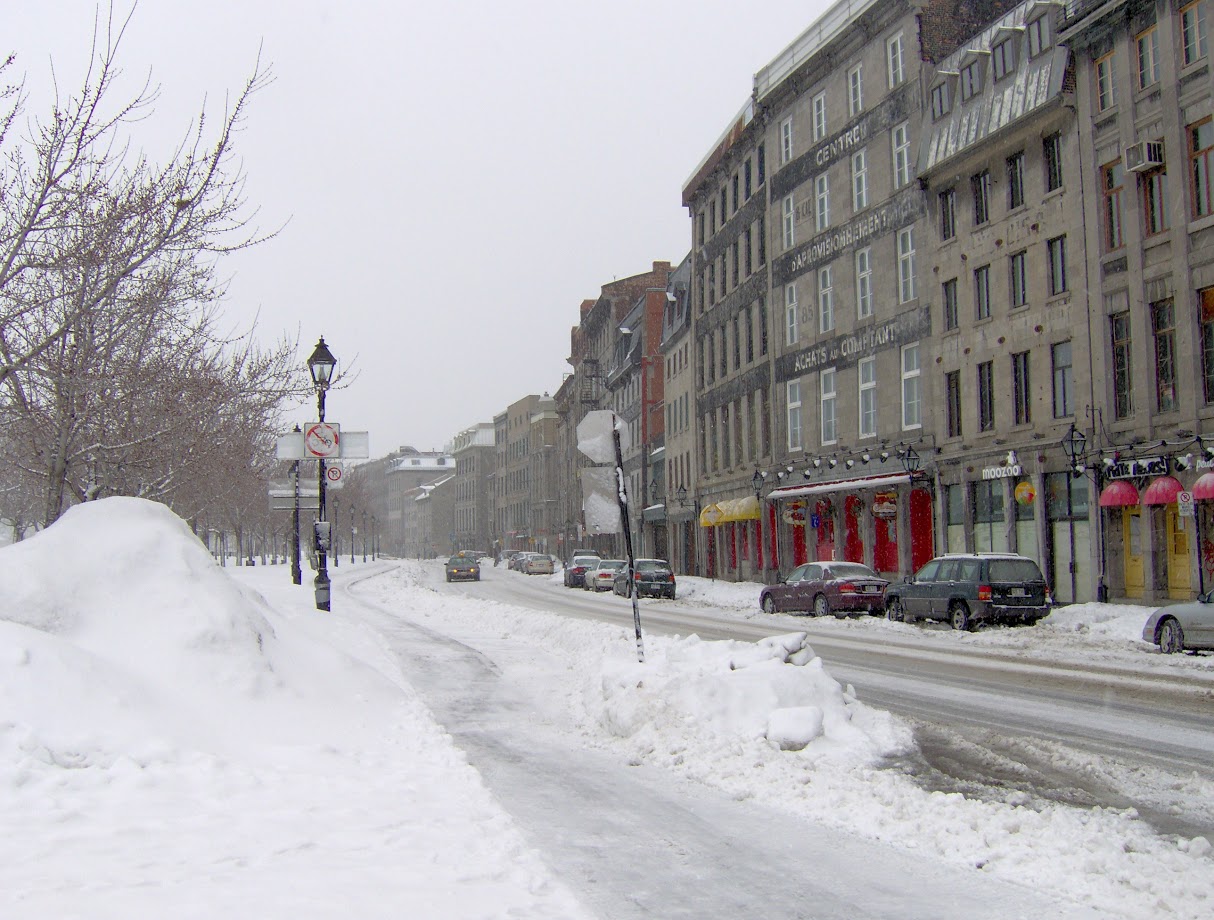
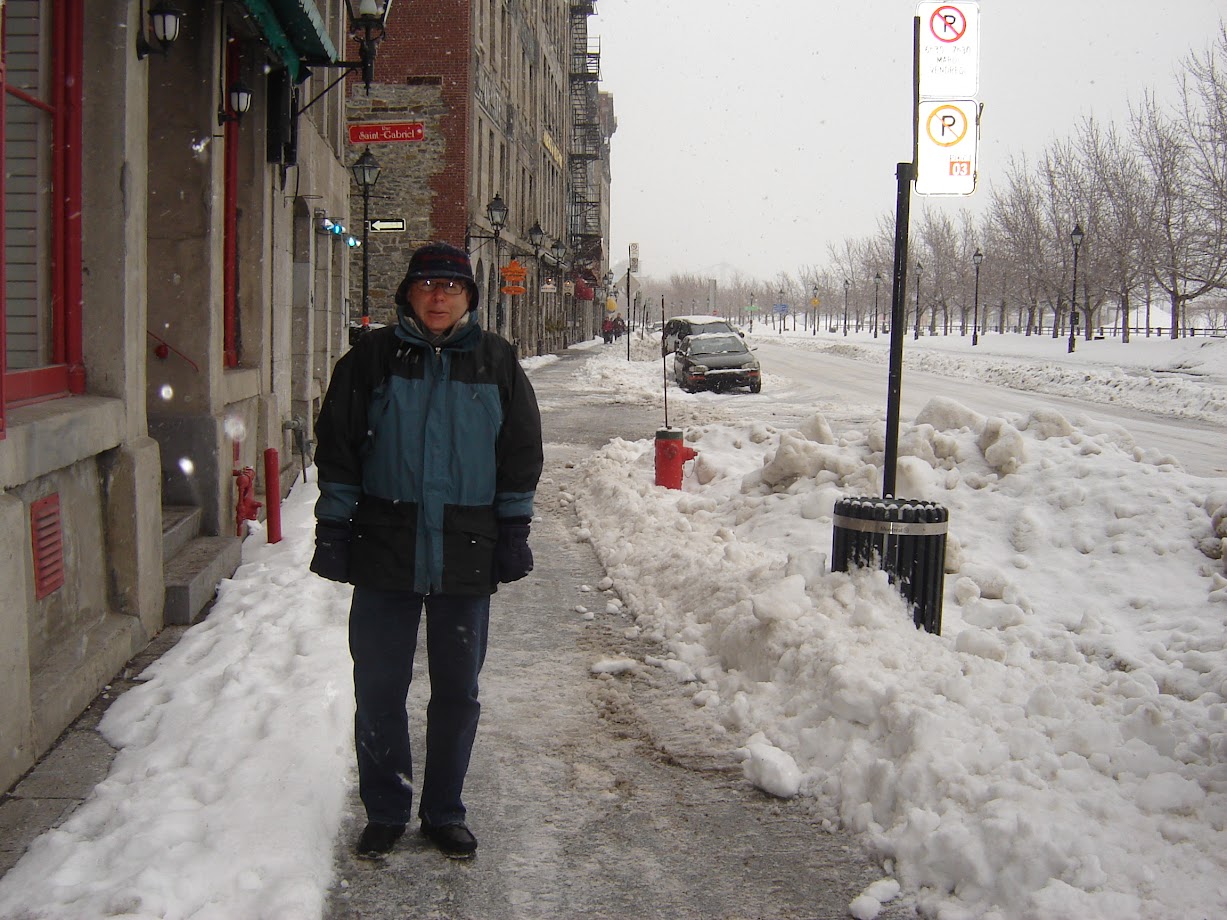
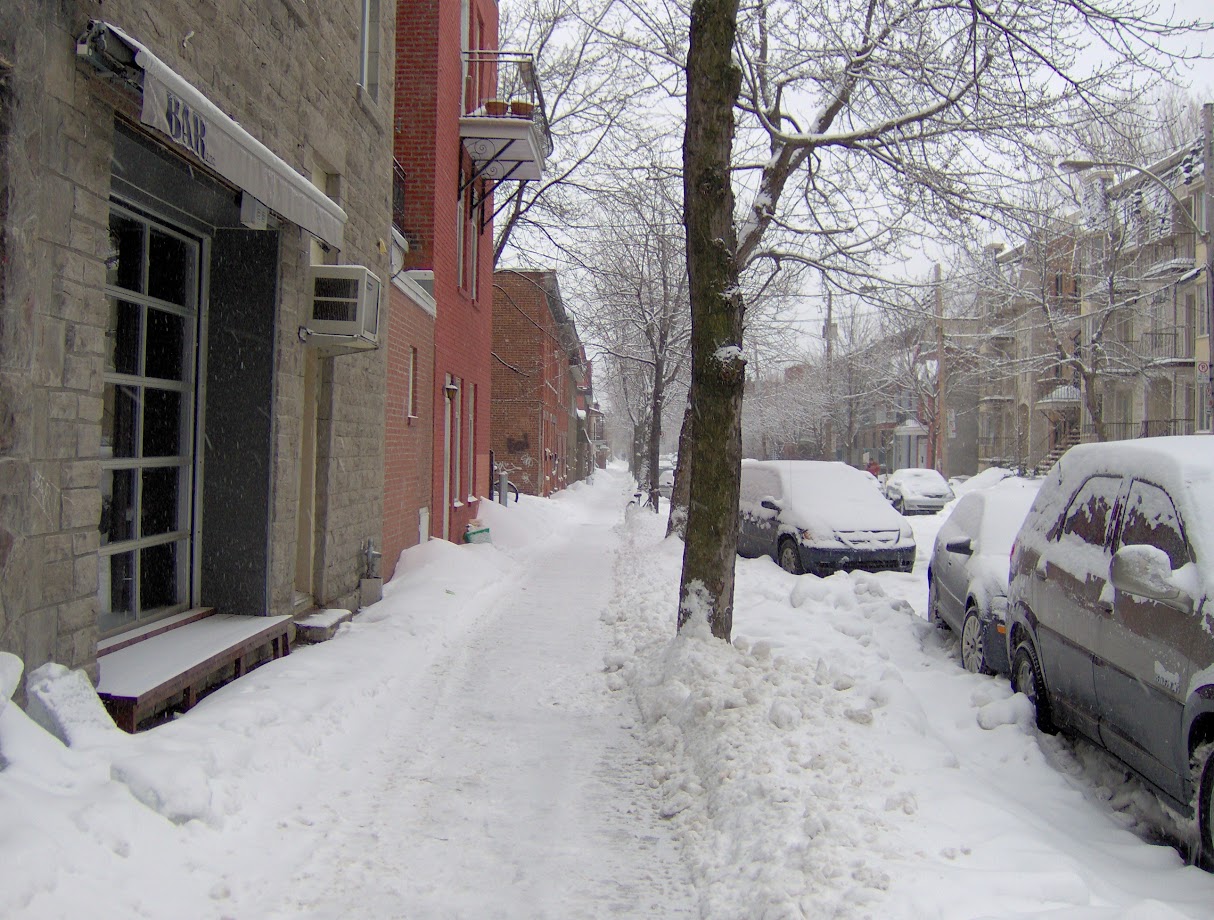
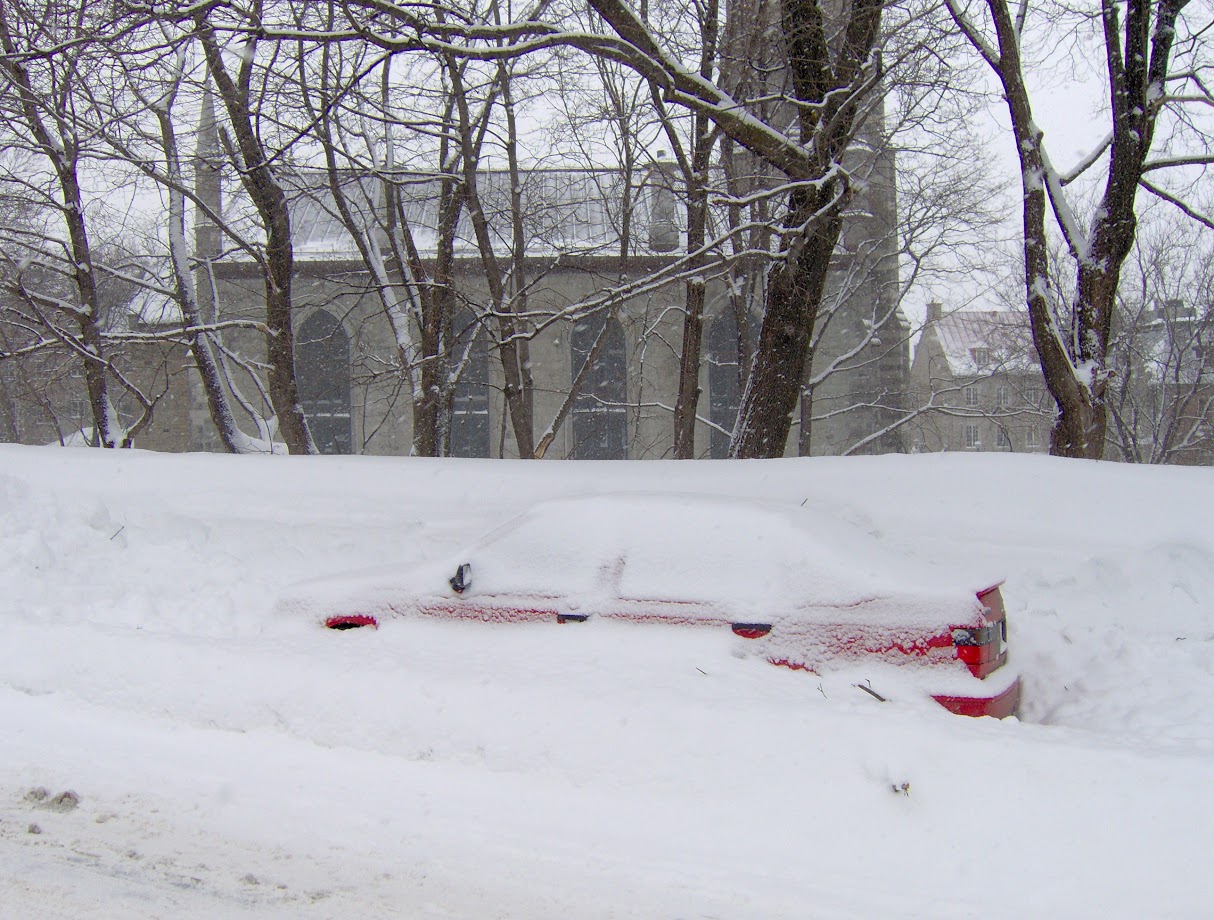
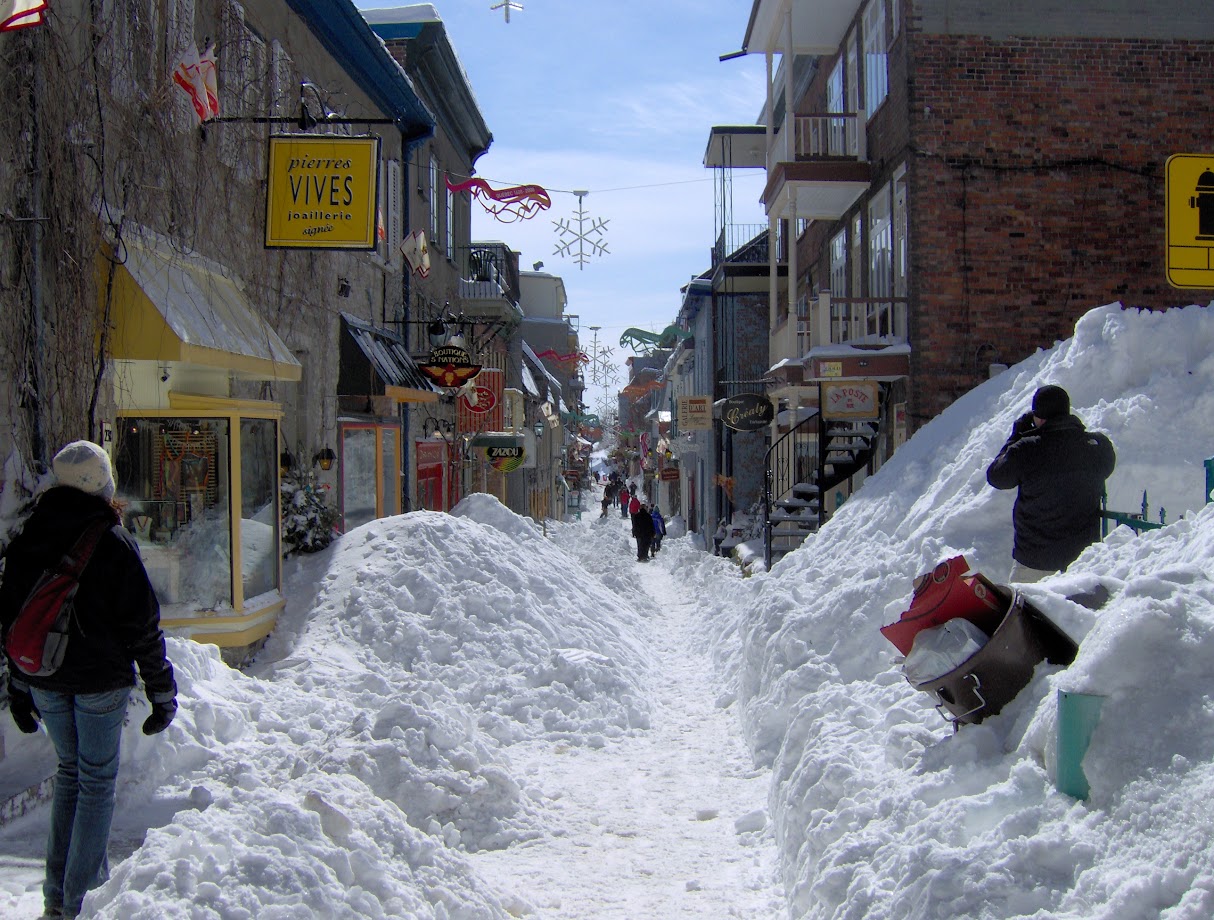
The following morning we ventured outside. I’d left London and it had been +12C, now in Montreal’s Old Town, it was -20C, and I could feel every one of those degrees below zero. The snow looked nice, and watching the skaters on the outdoor rink was lovely, but I wasn’t really prepared for that level of cold, especially given that the wind was wicked. While we had slept, the snow came in some more, and dumped on the city, making it look wonderful, but there was only so much snow I could take when feeling so, so cold. More snow fell, but we went out to a little restaurant that evening, walking between the shoulder-high mounds of snow, and I marvelled that the city seemed to be functioning well despite the white stuff, but then I realised that this was pretty normal for Montreal in winter. I made a mental note to never return to the city between the months of October and April!
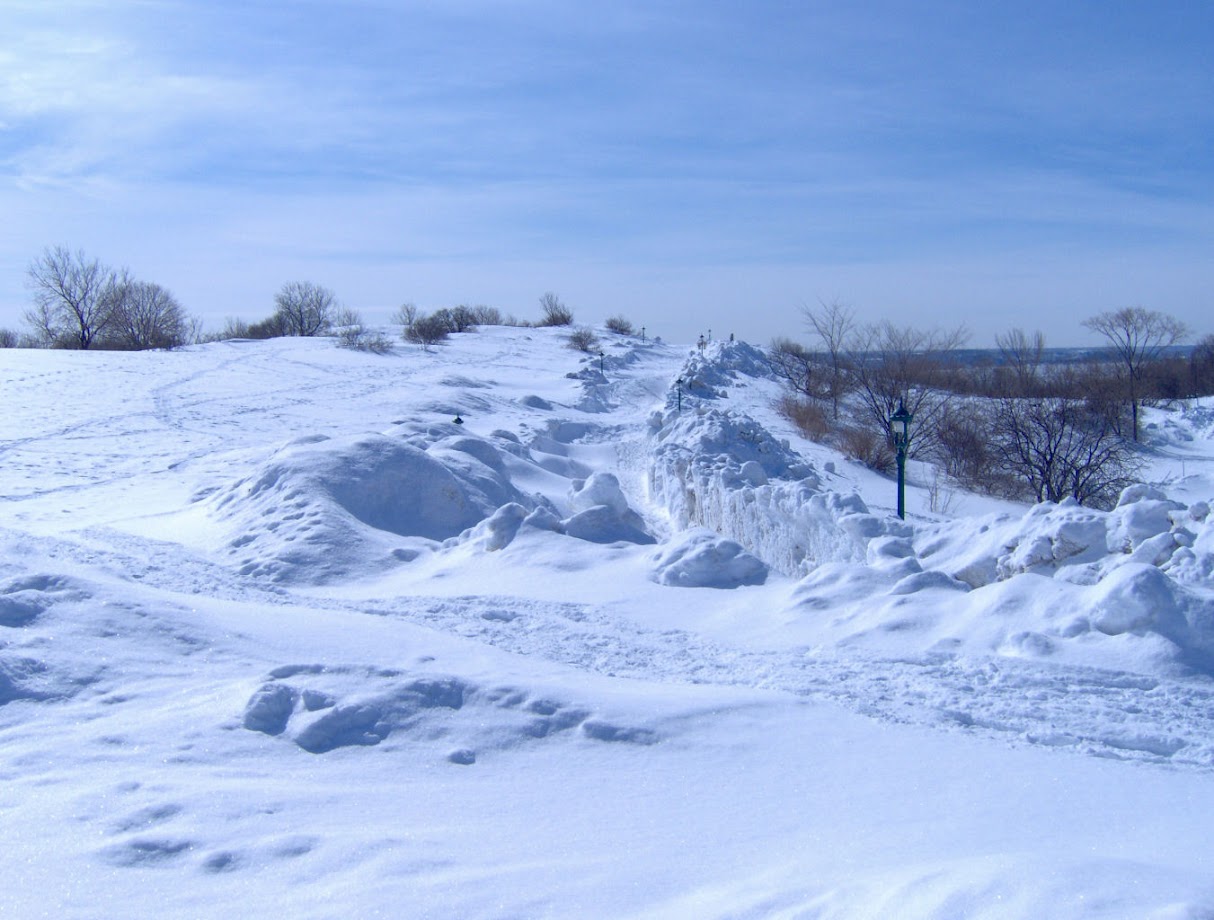
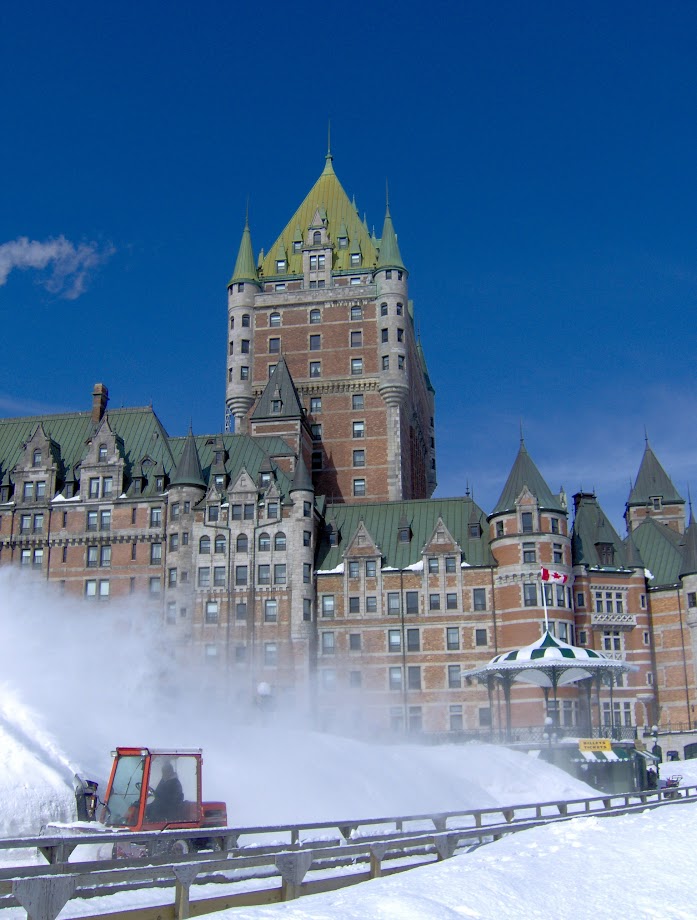
The following day we drove along the St Lawrence River to Quebec City. Yet more snow had fallen and it was waist deep in parts of the old town. It was still seriously below zero as well, but I was starting to acclimatise. Quebec City, though, was a revelation. When we arrived the snow was deep, although paths had been cleared. But, by the following morning, the snow on the roads and sidewalks had gone, almost completely. No, we hadn’t experienced a sudden thaw, but the City Fathers had brought moving equipment in and trucked all the excess snow away. I asked the English speaking co-owner of the hotel what had happened, and he explained that the snow is carted off and dumped in a field on the edge of town. It can still be there in May, he said.
The run back to Southern Ontario was actually trouble free. We did it without an overnight, while sharing the driving, all 1075Kms. The weather had improved, and it was even a wee bit warmer, so my English bones were beginning to feel a bit happier. I learned a lot on that trip, not least that Quebec can be a very cold place in winter. I also learned that a short period of acclimatisation is a good idea if you’re coming straight from a temperate climate.
Fifteen years of living in Canada and I have become accustomed to the sharp winters, and the compensating warm summers of course. Indeed, trips back to the Old Country have had me making that most Canadian of observations about England, “Goodness, everything feels damp”. I reckon I have acclimatised now.
I was born and raised in England, and didn’t immigrate into Canada until I was fifty. As I have discovered, though, I’m not the first of my family to come here, not by a long shot.
On my dad’s side, originally from County Cork in Ireland, we had been generations Leeds, the centre of the industrial heartland of Yorkshire’s West Riding. In the early nineteenth century, a few of the Maynes had left England, one couple to the USA, and two couples to South Africa, but most remained in Leeds. A few generations later there was a small emigration to Alberta, Canada, of more than one couple, and into the twentieth century, Toronto, Ontario, was the destination for a Mayne or two.
But this movement pales into insignificance when compared to my mum’s side of the family, with the Baters and the Caters. Both families are from Devon, in the south west of England. The Caters were from south Devon, south of Dartmoor, and gravitated to the village of Kingskerswell, which lies between Newton Abbot and Torquay. The Caters married into the Hill Family, and the Hills married into the Bater family, but more of that later.
John Cater, born in Kingskerswell, took himself off at some point in the mid 1850s and settled in St John’s, the capital of Newfoundland. He married a local girl, Anne Murphy in 1857, and that started a most extensive dynasty of Caters around that great island. Successive generations lived and died as “Newfies”, but also migrated out into Ontario and into the USA. I’ve recently been in contact with a modern day member of the original John Cater clan, still living in Ontario.
Then there was the Bater family. The Baters come from North Devon, in and around the River Torridge area. To a man, they were all farm workers; some farm owners, some farm workers, but farming was their only profession. In the late nineteenth century there appears to have been a paucity of work for farm labourers, and quite a few of the young men, some with their wives and children, upped sticks and sailed from Appledore in North Devon, to Quebec City in the French-speaking province of Quebec. From there they made their way on the newly laid train network, to Guelph, a community to the west of Toronto. This wasn’t one or two people, it was many, and the period they emigrated stretched from 1870 to 1910. They all seemed to have headed for Guelph, but from there spread out to the farms of Bruce and Middlesex counties, and the industry of Galt, Cambridge and London (Ontario).
Using the number of deaths recorded for family members as a constant for those arriving but never leaving, and that is Caters and Baters, I have 197 in Ontario and 128 in Newfoundland. Of course many have moved on, largely to the USA, but also to other Canadian Provinces. There are many still alive, naturally, and populating modern Canada, but they’re harder to track down.
There was another emigration route from the fields of North Devon, and that was to Peoria in Illinois, USA. It looks like having crossed the Atlantic and arrived at Quebec City, these settlers have embarked on a second vessel (possibly from Toronto, avoiding the St Lawrence River and its shallows), and made the trip through the Great Lakes, Ontario, Huron and Michigan, to Chicago. Then they made their way up the Illinois River to Peoria, and the rich farmlands that were opening up there. Further migration took them down into Kansas and Missouri.
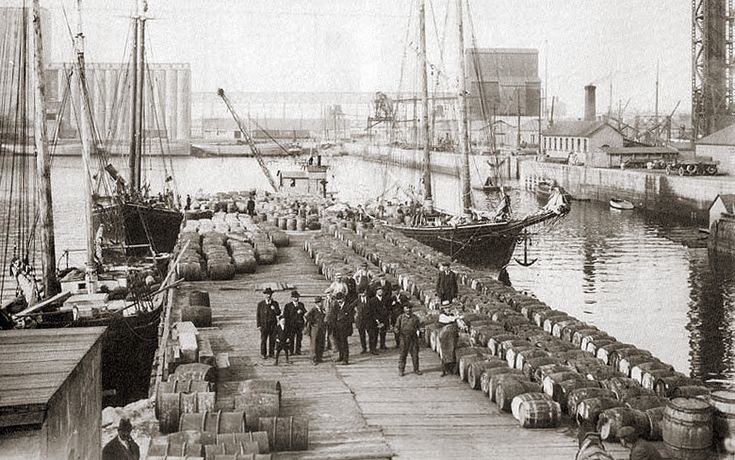
Quebec City Harbour at the end of the nineteenth century
All of this goes to show that I really am a latecomer to the Canadian party. The ease of my move, in a few hours by air, contrasts starkly with the sea voyage undertaken by my ancestors, many of who never made the trip back to England during their lives. These were brave people, setting our for a new life, and pretty much making a success of things, given that I can’t find a Cater or Bater who ever gave up and went back to Devon. I may be a latecomer, but I am in very good company.
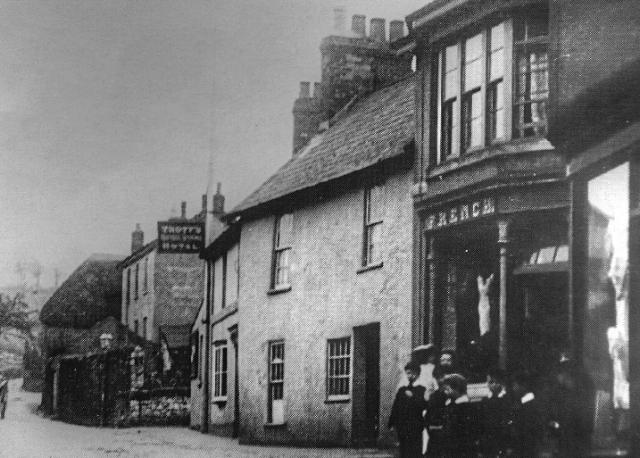
The Seven Stars Inn in Kingskerswell
To finish, the link between the Caters and the Baters was facilitated by the Hill family of Kingskerswell. My maternal grandmother was a Hill, descended from the Caters of Kingskerswell. Her father married a Bater from Dolton, North Devon, and there the link was made. Families, all over the world.
I started to trace my dad’s family tree using Ancestry.com, and discovered far flung dynasties, originating from one Irish descendent and his wife leaving Cork in 1801 for the industrial clangour of Leeds, in England’s county of Yorkshire. Joshua Mayne flourished in that city, but his sons were restless. One emigrated with his wife to the United States in 1822, and another in 1849 taking his young family to South Africa. Both of these emigrees sparked vast, and I mean vast, dynasties of Maynes in two different continents. Other family members moved away from Leeds to Canada and Australia to establish other branches of the family.
Looking at my mum’s family, it seemed very much like they were firmly rooted in England’s county of Devon, concentrated around a couple of villages close to Okehampton, and in Kingskerswell in the south of the county. But I discovered the Canadian connection. In the latter half of the nineteenth century there was a steady flow of my mum’s relatives heading to Guelph in Ontario, then fanning out across that Province. None started a big dynasty like the Maynes did in the USA and South Africa, but their descendants live on in Ontario. Then I found John Cater, a Great-Great-Great Uncle, who moved to Newfoundland at around 1855-56, and married a local girl in St. John’s. He sparked another dynasty, one that centred itself in Grand Falls/Windsor, but had connections around the island. I’m certain that I have many, many living relatives who are “Newfies”, and that makes me immensely pleased.
I’m very happy that I have followed the footsteps of all those descendants of mine who crossed the ocean to start new lives. For me it was immeasurably simpler to leave England, but for those nineteenth century Britons branching out around the world, it must have been daunting and exciting in equal measure. Ironically, when I set out for Canada I had absolutely no idea that I was following others in my family, nor that I was joining many, living, members of my family in the New World.
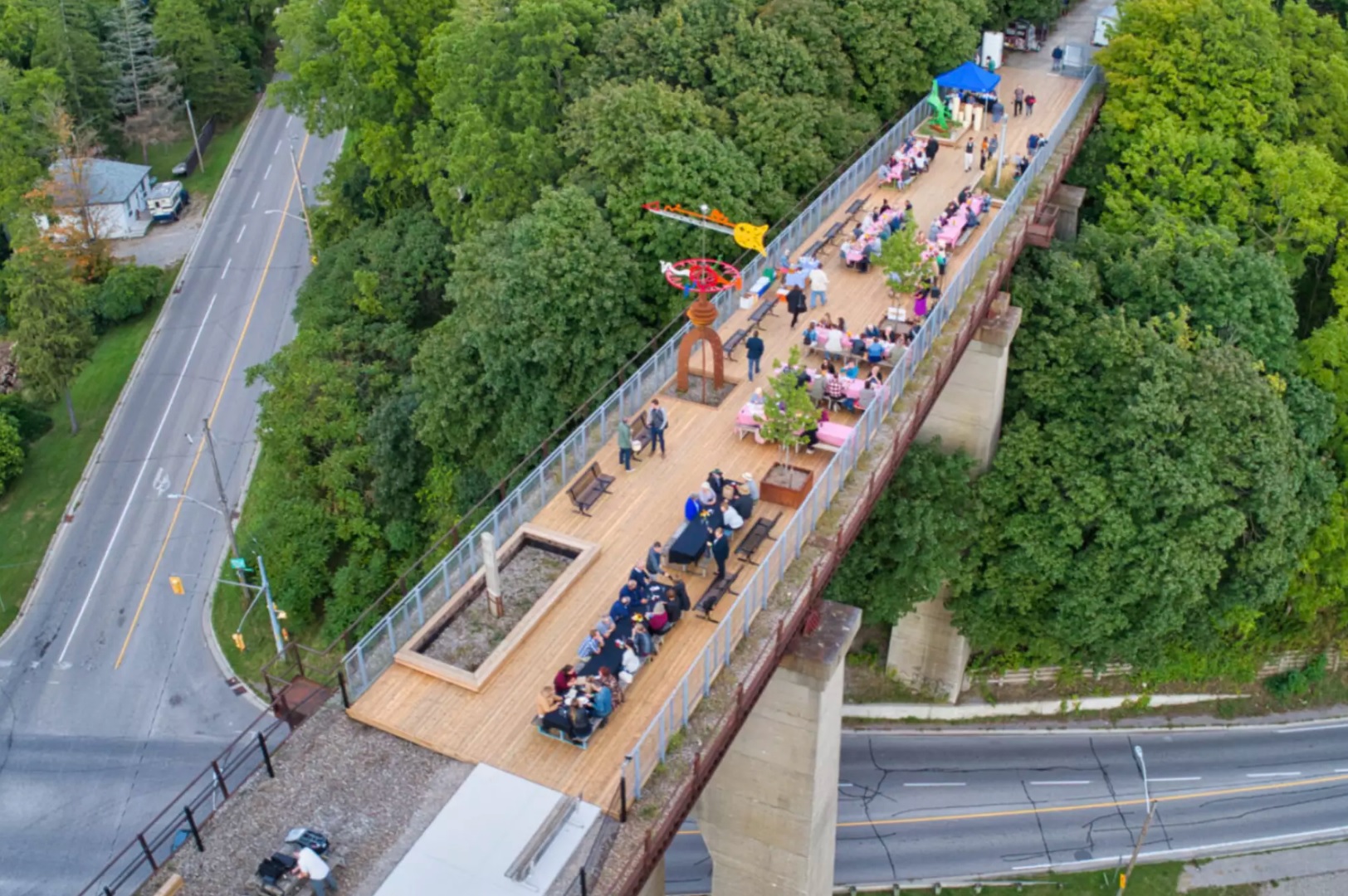
Last week we visited the St. Thomas Elevated Park, in St Thomas, Ontario. Essentially it’s an old railway bridge that has not only been refurbished as a pathway, but it’s also an outdoor art gallery. What a great thing to do with a massive bit of railway infrastructure that’s no longer needed for it’s original purpose.
Of course it’s been done before, with New York’s High Line snaking through that metropolis, but this little bit of modern reuse is much smaller and much more intimate, and a touch easier to get to for us!
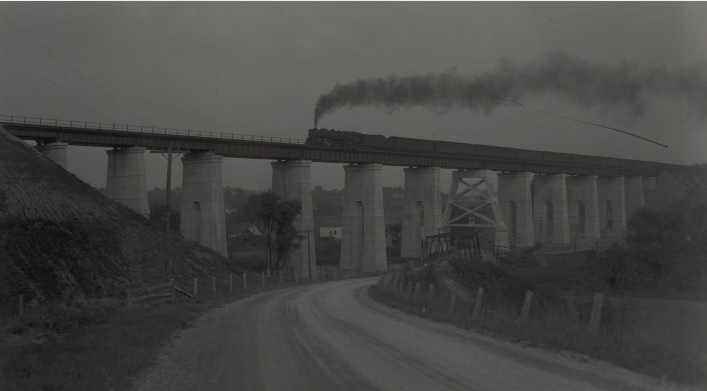
The Elevated Park is a walk along the bed of part of the old Michigan Central Railroad that ran between Buffalo, N.Y., and Detroit, Michigan, through southern Ontario. St Thomas, the Railway City, was about the midway point of the line and served as a major centre for the railroad. The walk stretches a couple of kilometres, east-west, out to the western side of the city, but the key part is the bridge that spans Kettle Creek. The bridge that stands today dates to 1929, was a double tracked structure and stands ninety feet above the river below. It’s been paved, and equipped with unobtrusive modern safety fencing, which doesn’t alter the look of the bridge, and among the benches placed there is artwork by local artists. The whole pathway has been created with public donations and private sponsorship, and is free for anyone to use. I note from the Park’s website that they will take donations any time, so I’ll be sending then a few dollars, I think.
The view from the bridge is spectacular, and dizzying if you look down, albeit that you do look right into the yards of a few houses in the valley. Looking down to the top of the tree canopy is always a joy, and you can do that from ninety feet up. It was very warm when we visited, and while the lead up to the bridge is shady, out on the structure it was a wee bit too exposed to linger without getting sunburned. Not great at the time, for sure, but it does mean that we’ll head back in the cooler weather, and maybe walk a couple of kilometres of the track bed beyond the bridge.
This, of course, ties in with the Grandson’s current obsession with trains. He wasn’t with us on the visit, but I’m not sure we’d have been there at all had we’d not taken him a couple of months ago to visit the Elgin County Railway Museum in the centre of the city, from where trains would have departed to cross the bridge we were enjoying as a park.
Anyway, if you’re ever in the area, I can recommend a visit.
As we experience the first cold weather of the winter here in south west Ontario, I’m reminded of just how far south we are within the North American continent, and even with a national expectation of Canadian weather, we actually get pretty mild winters.
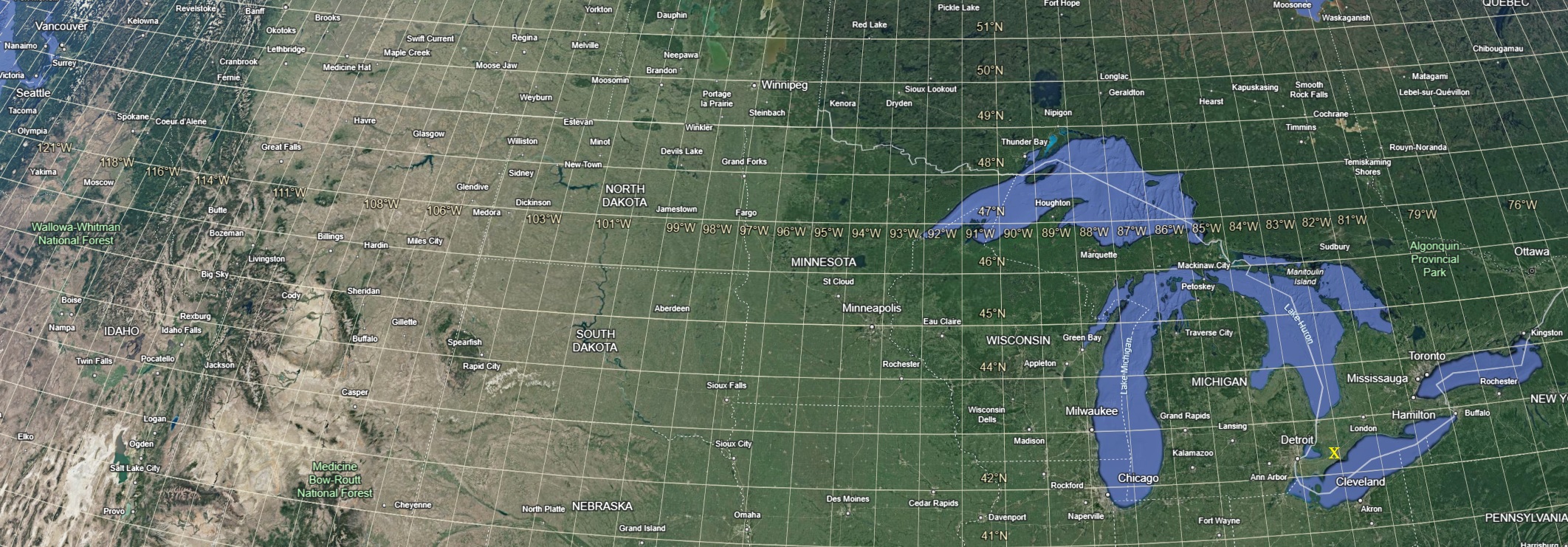
I’m not sure that the graphic is of much help, but here goes. We’re in Chatham, Ontario, marked with the yellow X in the bottom right-hand corner. We lie between the 42nd and 43rd Parallel, marginally further north than Chicago, but not much. The bulk of the US and Canadian border follows the 49th Parallel, which is way above Lake Superior. That means that about one third of the land mass of the United States is further north than we are.
When people hear Canada, they automatically think that the whole country is north of the US, and is therefore colder (and less hospitable) than the US, which of course simply isn’t true.
Not only are we not very far north, but we’re also at the north western end of the Mississippi River, and warm weather is often funnelled up from the Gulf of Mexico, which gives us a surprising warm climate, at least when the wind is blowing in that direction. We often get stuck south of the Jet Stream, too, which is why places like Montreal and Quebec City can be buried in snow in the winter as those cities tend to be north of the Jet Stream most of the time, and we’re languishing in the rain.
While the climate is quite different in the Mediterranean, it’s interesting to note that we are also on much the same latitude as Rome (Slightly north of Rome really). We don’t get their summers, or winters, but we do get similar amounts of daylight, meaning slightly shorter days in summer, but slightly longer in winter.
So next time you hear me say that I live in Canada, remember that we’re not all living on the Tundra.
On our recent trip to England, we enjoyed some British Pub Life.
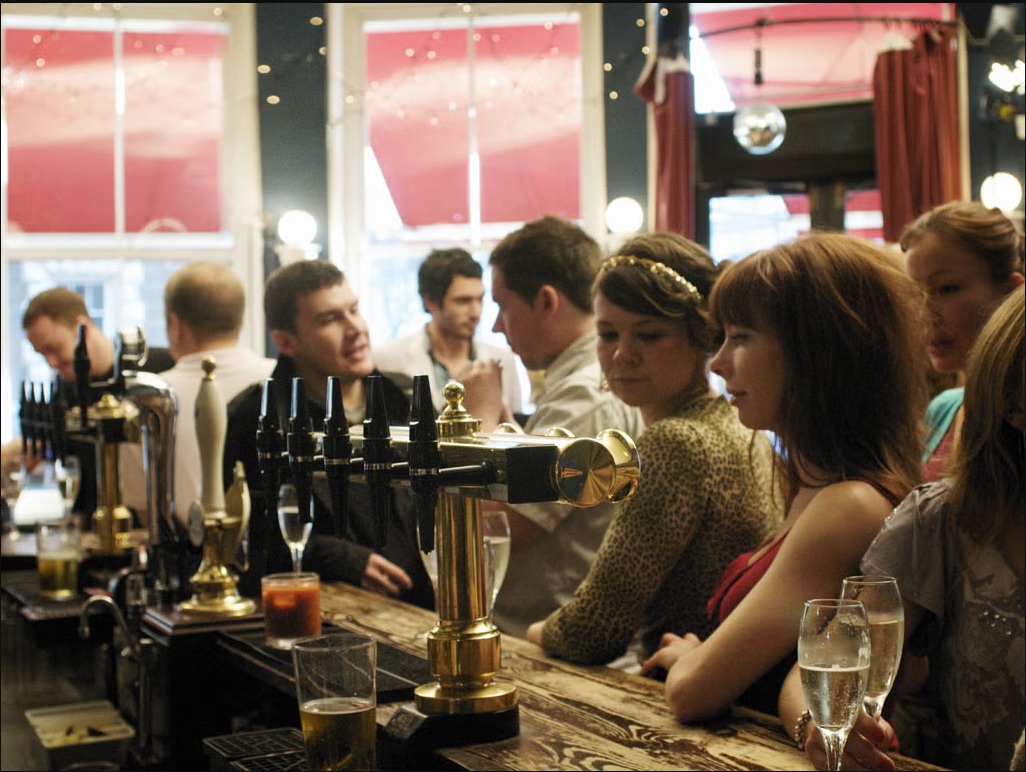
Pubs in the UK are primarily places to socialise. Yes you can get drunk if you want, and yes you can often sit down to a meal, but you don’t have to do either, because you can simply go to a pub to enjoy a drink and spend time with friends. You don’t even have to sit down, you can remain on your feet and be socially mobile, free of the strictures of sitting in one place.
Pub Life
This kind of pub life doesn’t really exist in Ontario. There are plenty of places that are called pubs, even places that claim to be authentically British, but they do not contain pub life, at least not as I know it.
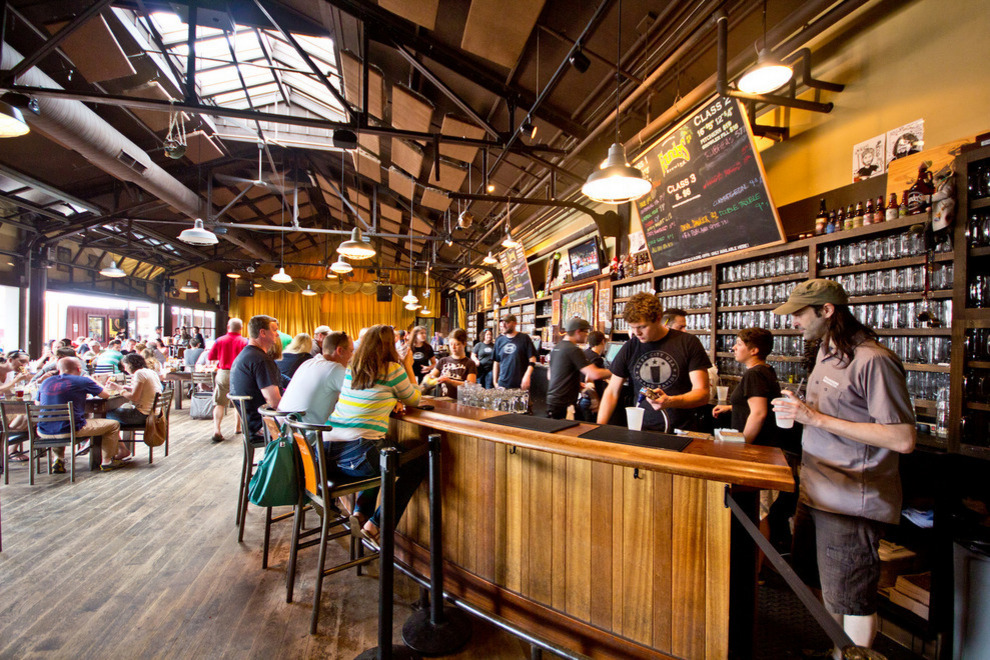
The first thing an Ontario pub will make you do is sit down. The vast majority are table service, and the clue is in the name, there. Yes, you can go to the bar to order, but you’ll end up sitting on a stool there because in most Ontarian pubs, you don’t pay until it’s time to leave, and they do like to keep track of you until then.
Then you’ll find that most people in an Ontarian pub will be there to eat. Again sitting, obviously, but it’s more restaurant than pub at that point, only the presence of alcoholic drinks will give the game away. Of course there’s nothing wrong in going to a pub to eat, but it doesn’t do much for the socialising aspects of pub life.
There are also the people who go to Ontarian pubs to get drunk. Usually loners, propping up the bar and being a long way from any social situation. There is something called Safe Serve in Ontario, where bar staff are trained, and certified, in dealing with people who drink too much. Safe Serve came about after an individual successfully sued a bar for selling them too much alcohol, after that individual has caused mayhem elsewhere while under the influence of the booze. Most bar staff where we live don’t worry too much about the heavy drinkers, but a place in Waterloo we visited had notices up to say that no one would be served more than two drinks. Again, hardly conducive to a social setting.
Sitting! A pub in Michigan.
There are clubs, with music and dancing, that are far more pub-like that actual Ontarian pubs. But they have a different vibe altogether, and you lose the social aspect when you have to shout to get even the most basic conversation heard. Not pub life, in my view.
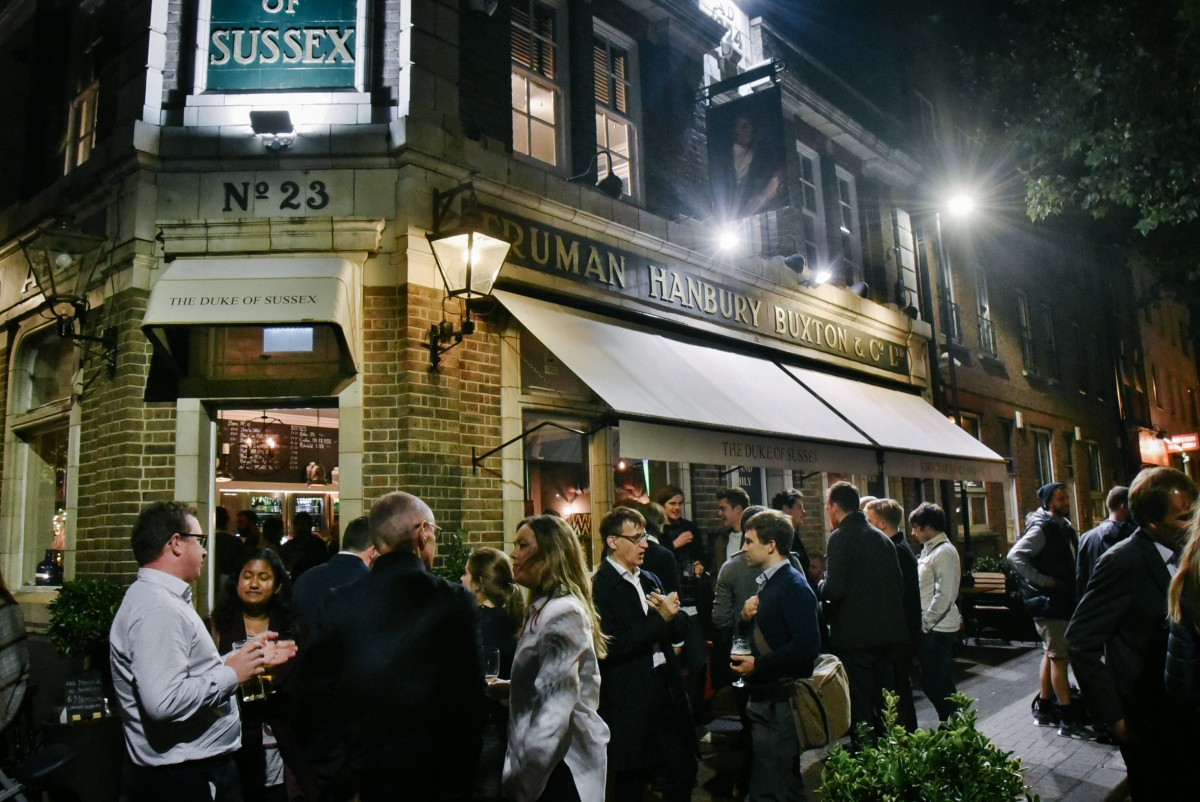
We were in a pub in Whitehall, London, on the day of the Cenotaph Remembrance Parade, and it was packed with people who’d been parading. So many were standing in groups, clutching drinks, and enjoying just talking with one another. Drinks were bought and paid for at the bar, and taken to the standing huddle, so that the socialising could continue. Now that’s pub life.
We also visited a pub in Wapping, where most customers were sitting to eat, but there was a group of friends at the bar, standing and drinking, and getting really quite noisy. That, though, was pub life too; people enjoying themselves and their group laughter was infectious. No one was drunk, for sure, but they were all enjoying that social freedom that you can achieve with a couple of drinks – although of course alcohol isn’t necessary if you don’t want it to be.
The Duke of Sussex in Waterloo, one of our pub life stops
I’m never going to find pub life in Ontario because the culture is different, despite claims to the contrary by people who run pubs here. I’m certainly not going to give up my easy North American lifestyle just for a bit of pub life, but when we go back across the Pond, the pub is one of our first ports of call.
We’re back from our jaunt to our ancestral homeland, and ancestral home in fact. I have returned with a handful of draft blog entries which I will clean up, add photos, and publish, probably in chronological order, although it’s not important if they’re not in time order.
Firstly, though, I wanted to say a word or two about the drivers in Ontario. I drove for ten days in England, and while the traffic is dreadful there, the drivers are generally not. They drive in a co-operative manner, never putting people in danger to maintain a right of way, largely sticking to the speed limit, understanding that the limit is not the minimum, and being aware of what’s going on around them. Of course, in that little country there are far more cars than the whole of Canada, which will make for attentive drivers, but those wide open spaces on this side of the pond make for some pretty awful drivers.
Coming back along the 401 today, we witnessed everyone, and I mean everyone, speeding. The 100kph limit is entirely ignored and 110 seems to be the absolute minimum. US plated cars seemed to be among the worst offenders, too.
Then there are the tailgaters. Seriously, a Hyundai SUV was doing around 120-130, about a car length behind a pick-up truck. The SUV driver couldn’t possibly see anything except the rear of the truck, and if the truck driver had slowed for any reason, the SUV driver wouldn’t have time to even reach the brake pedal before hitting the truck, let alone use it. That scene was played out by countless other vehicles just this morning, on a relatively quiet Sunday.
There were also the lane weavers, attempting to make up some ground, weaving from lane to lane, always at speeds well in excess of the limit. Again, one slight mistake from another driver and they simply would have nowhere to go. It’s craziness.






 Stevemayne's Blog