With Remembrance Day just around the corner, it was fitting that I should come across another of my relatives who lost their life in the First World War.
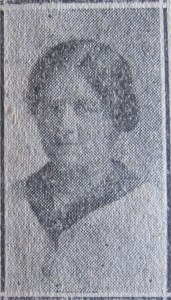
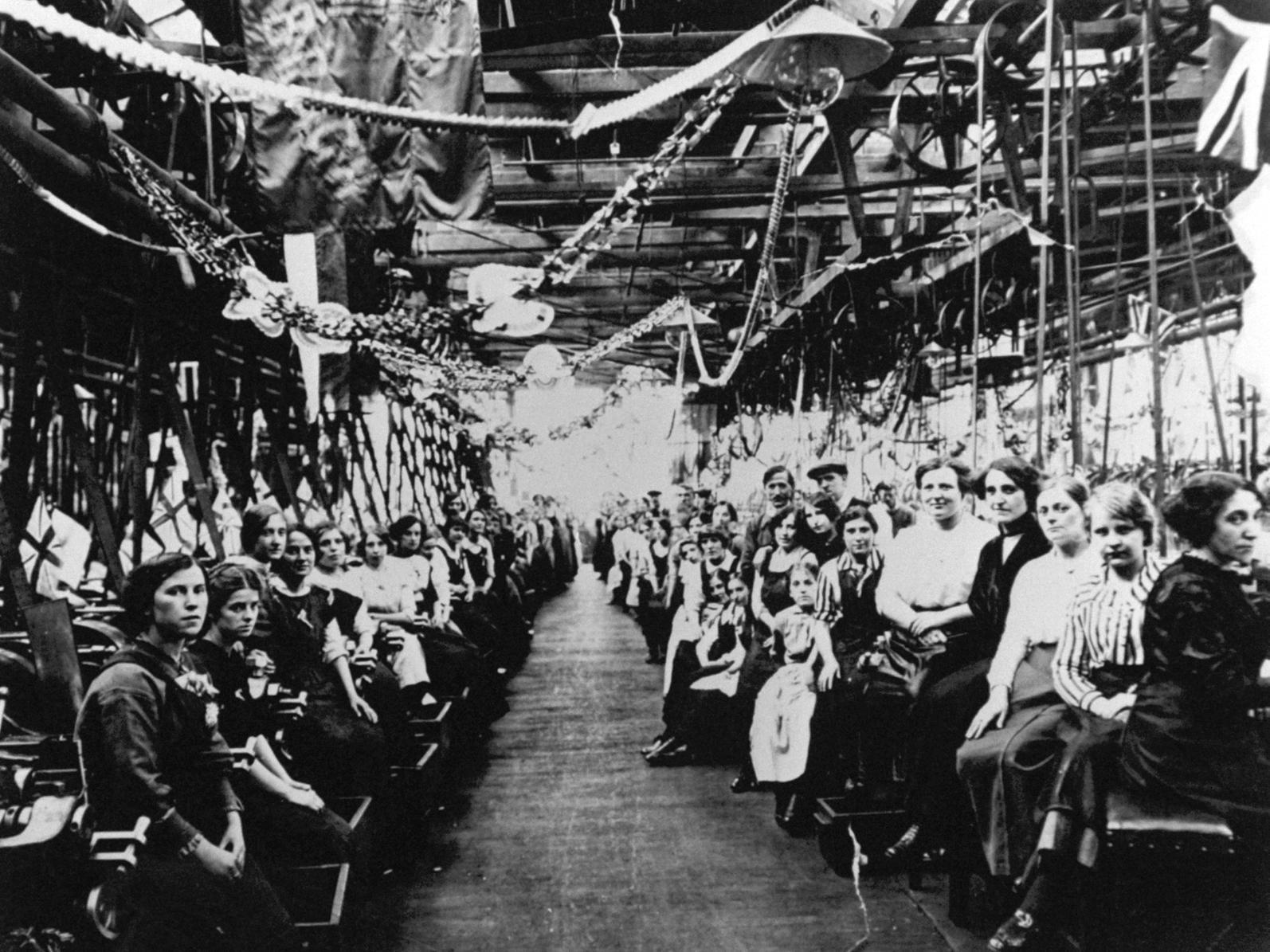
Ann Leonard, a second cousin once removed, was just twenty-four when she succumbed to TNT poisoning while working at the Barnbow munitions factory near Leeds, Yorkshire, England.
Born in October 1891 in Morley, Yorkshire, she was one of ten children to William Leonard, a Coal Miner, and his wife Emma. Her death certificate said she had died from “atrophy of the liver” as a result of working with munitions. She was one of many women killed in the production of weapons and ammunition throughout the Great War; explosion and disease were constant threats in the workplace. While Ann died from liver failure in the July of 1916, on December 5th of the same year, an explosion tore through part of the Barnbow factory and killed 35 women outright, and maiming and injuring dozens more.
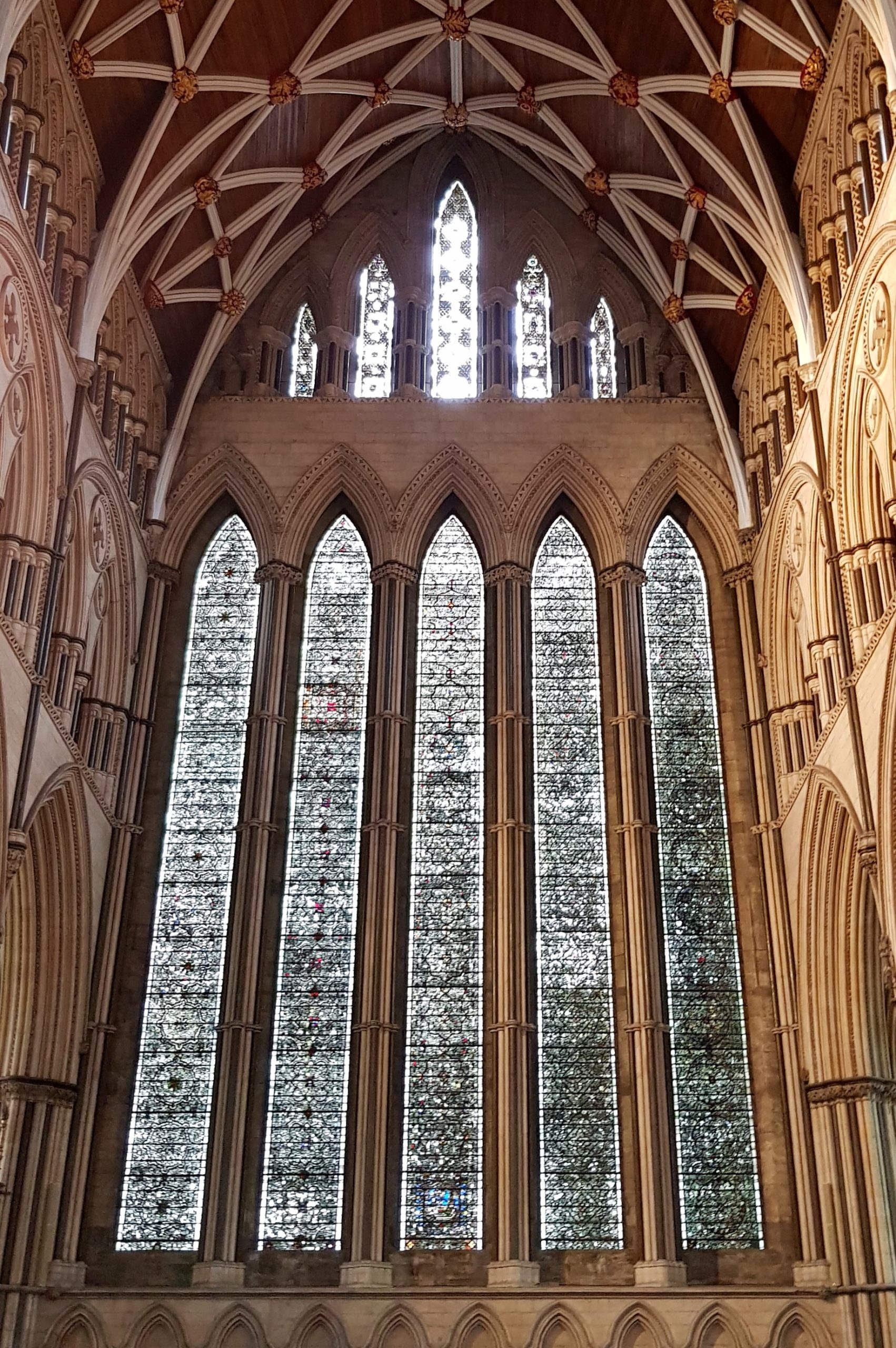
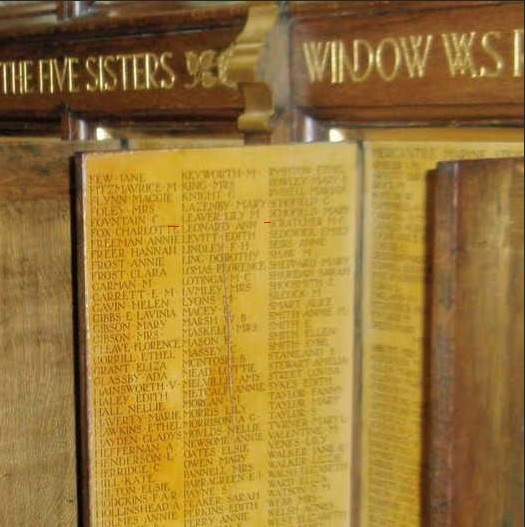
I was surprised to hear that Ann’s name appears on a Roll of Honour in York Minster, underneath the 13th Century series of stained glass windows known as the Five Sisters. The window was renovated between 1923 and 1925, and then dedicated “Sacred to the memory of the women of the Empire who gave their lives in the European war of 1914–1918” as a lasting memorial for all those women who died as part of the conflict.
In a cruel twist of fate, her brother Edward, himself only twenty-two, was posted as “Missing presumed dead” in France, just twenty four hours after Ann died. I can’t begin to imagine what their parents, must have gone through.
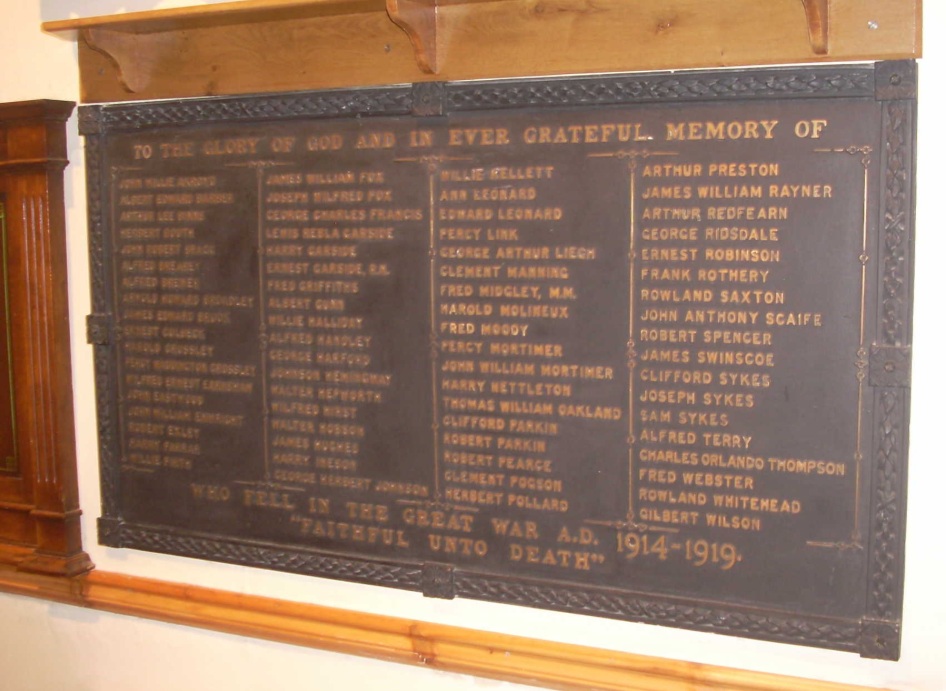
Aside from the Roll of Honour in the Minster, both Ann and Edward are featured in a plaque in the church of St John the Evangelist in Carlinghow, Batley, Yorkshire.
The Imperial War Museum maintains records of the casualties of war, and Ann’s entry can be found here.
I have more than seventy family members recorded in the Commonwealth War Graves Commission records, across the First and Second World Wars. Family war casualties came from the UK, the USA, Canada, and South Africa. This November 11th I will be keeping Ann uppermost in my thoughts as we remember all those who have died in modern wars.
I started looking into my family tree a short while before my father died in 2009, but didn’t get very far. I think Ancestry.com was around then, but I hadn’t signed up, and anyway I was heading off for my new life in Canada.
Finding myself with more time than I’d anticipated, I picked everything up again a few years later, and this time I did sign up with Ancestry, which opened up more doors than I thought possible. I now have a family tree with over fourteen thousand people listed (not all that I’d call very close relatives, to be fair), and many of them are, or were, situated in places that I didn’t know my family had reached.
Two things set the ball rolling in an unstoppable way. One was Mary, a native of Indiana, contacting me out of the blue, and the other was doing the Ancestry-linked DNA test.
I was, I will admit, perplexed that I appeared to have a relative from the United States. My family, my dad’s side at least, was pure Yorkshire, from Leeds, I thought. Goodness, how wrong I was. Mary pointed out that we had a common ancestor, Joshua Mayne (b. 1761), and everything fell into place from there. With Mary’s help, I was able to discover that one of Joshua’s offspring had left Britain in 1822, bound for New York, and from there had built a formidable Mayne dynasty in the New World. Not only that, another of Joshua’s sons had, in 1849, taken his young family to Durban in South Africa and had set up a similar Mayne dynasty there. To top it all, Mary established that Joshua himself, and his wife Elizabeth Collins, were not from Yorkshire at all, but had arrived in Leeds from Cork, Ireland in 1792.
The DNA test came up with equal amounts of potential contacts on my mother’s side of the family, as well as my dad’s, and that was an area I hadn’t addressed up to that point. Building up her side of the tree has shown that we were drawn from agricultural stock in the north of Devon, England, and while many of the family had stayed there and are there to this day, many more had moved away from the land for a new life in Canada and, ultimately, in the United States. Indeed, direct Devon relatives had made it to rural Southern Ontario 150 years before I did.
I haven’t yet found the outer limits of the family tree, either on my dad’s or my mum’s side. I can find very little about my paternal grandmother who’s father arrived in Leeds from Belfast, Ireland, at some point in the early 1880s, although my 24% Irish DNA is in part her legacy to me. Her mother was from Leeds, but her father was from Liverpool, and with a name like Garrett, the chances are that there’s Irish blood from him as well.
On the whole, both sides of my family are from poor stock. Some have done well, though, the South African connection has links to the DeBeers diamond industry. There was some conspicuous DeBeers-related wealth on show in the early twentieth century, with homes in Portman Square and Kensington in London, and even a family burial plot in a Royal Park, the Royal Brompton Cemetery in West London.
My grandfather married into, worked for, and eventually took over, the Pickersgill family business in Leeds in the 1920s. Joe Pickersgill, a very wealthy Turf Accountant, was said to have held the Prince of Wales own betting account in the 1910s and was a millionaire when he died in 1923.
On the American side of the tree, a distant cousin married Mariko Terasaki, the daughter of Hidenari Terasaki and Gwendoline Harold, in 1953. Hidenari was a Japanese diplomat who married Gwen, a Tennessee girl, and worked to avoid Japanese conflict with the USA in the late 1930s. Both were forced to flee to Japan after the Pearl Harbor attack, but Gwen wrote a book about her experiences which was made into the Hollywood movie A Bridge To The Sun. Mariko’s children, those that survive, are prominent peace campaigners, following their grandfather’s lead.
But most of my family tree is comprised of poor people doing poor people’s work, and very much echoing the social structure nineteenth and early twentieth century Britain. Farmers, farm workers, labourers, coal miners, and factory workers, all living in mostly poor conditions but surviving nonetheless. One thing that does jump out is the number of war deaths, at the moment numbering seventy-two. One of the first on my family recorded in the Commonwealth War Graves Commission databases was killed when his ship exploded in the Thames estuary in 1914. One of the latest was a young Canadian naval officer, killed two days after D-Day in 1944 when his ship was sunk in the English Channel.
As I’ve grown the tree, there have been a lot of fascinating stories come out about the individuals in it. In future posts here I’ll try to record some of their stories; not about my family necessarily, but the places they lived and the lives they led, which were in large part, entirely typical.
It’s been an education thus far, and I’d like to document as much of it as I can.
A couple of good choices helped us have a really good time in England this year.
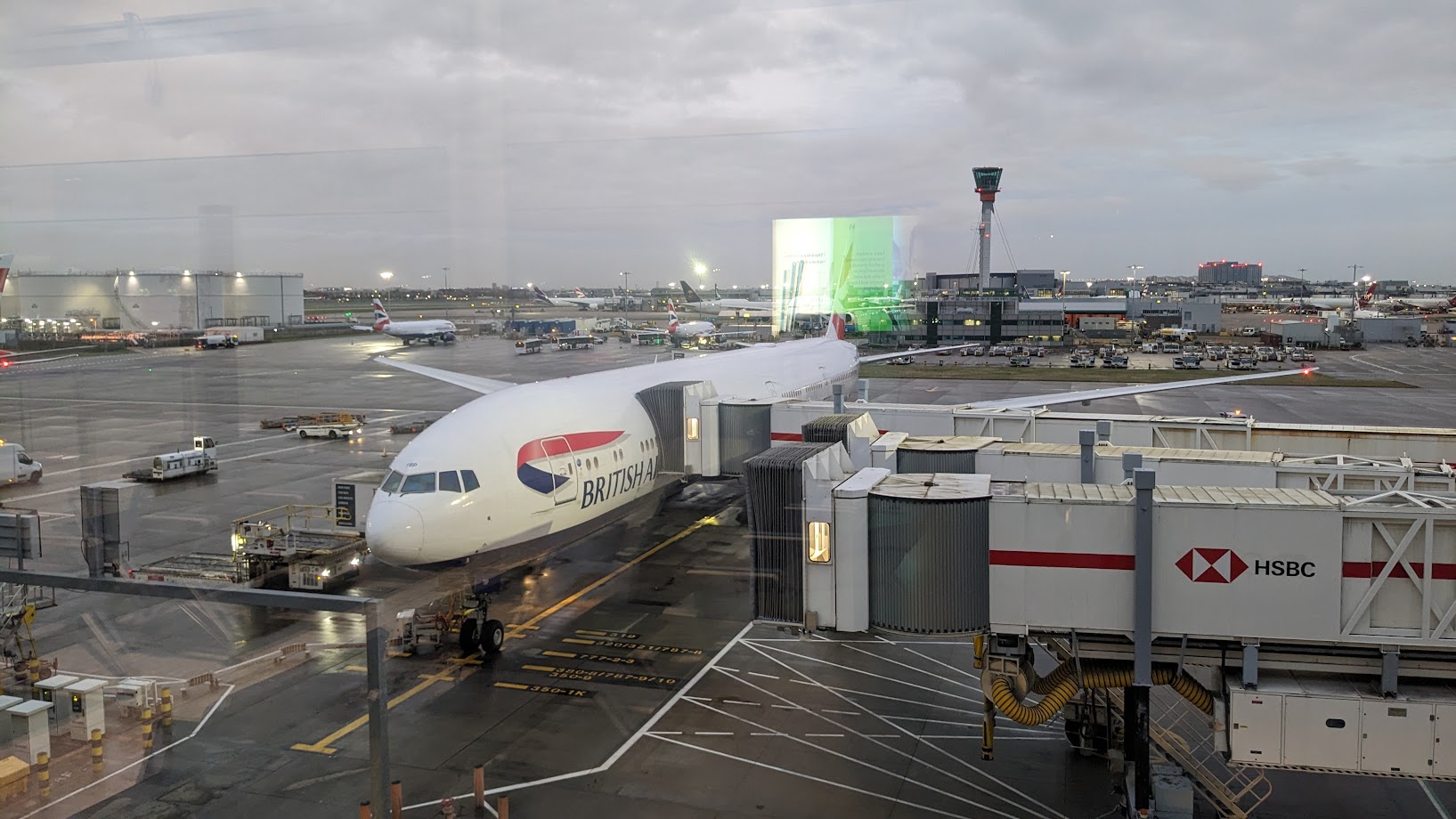
First was choosing British Airways for the flights. They were cheaper than Air Canada and offered a better seat. They use the far superior Terminal 5 at Heathrow, which aided transit significantly. Oh, and they gave us a free, and un-requested, upgrade on our seats for the flight home. Well done BA!
Then it was choosing Sixt car rental. They’re physically located in Terminal 5, which is a massive plus, meaning no bus trips off site. Their price was all inclusive, no extras unless I asked for them. Yes, I was upsold a better car, which pushed the rental price up by quite a lot, but the car, an automatic Audi A3, was the mutt’s nuts, very comfortable and very easy on the juice.
Our next success was the choice of cottage in Yorkshire. It was an outstanding rental and suited us a couple perfectly. Being November, it was also very reasonably priced. I had my doubts about its location, but as it turned out we were ideally placed to do the city trips, Liverpool, Manchester and Leeds, and keep the mileage to a minimum.
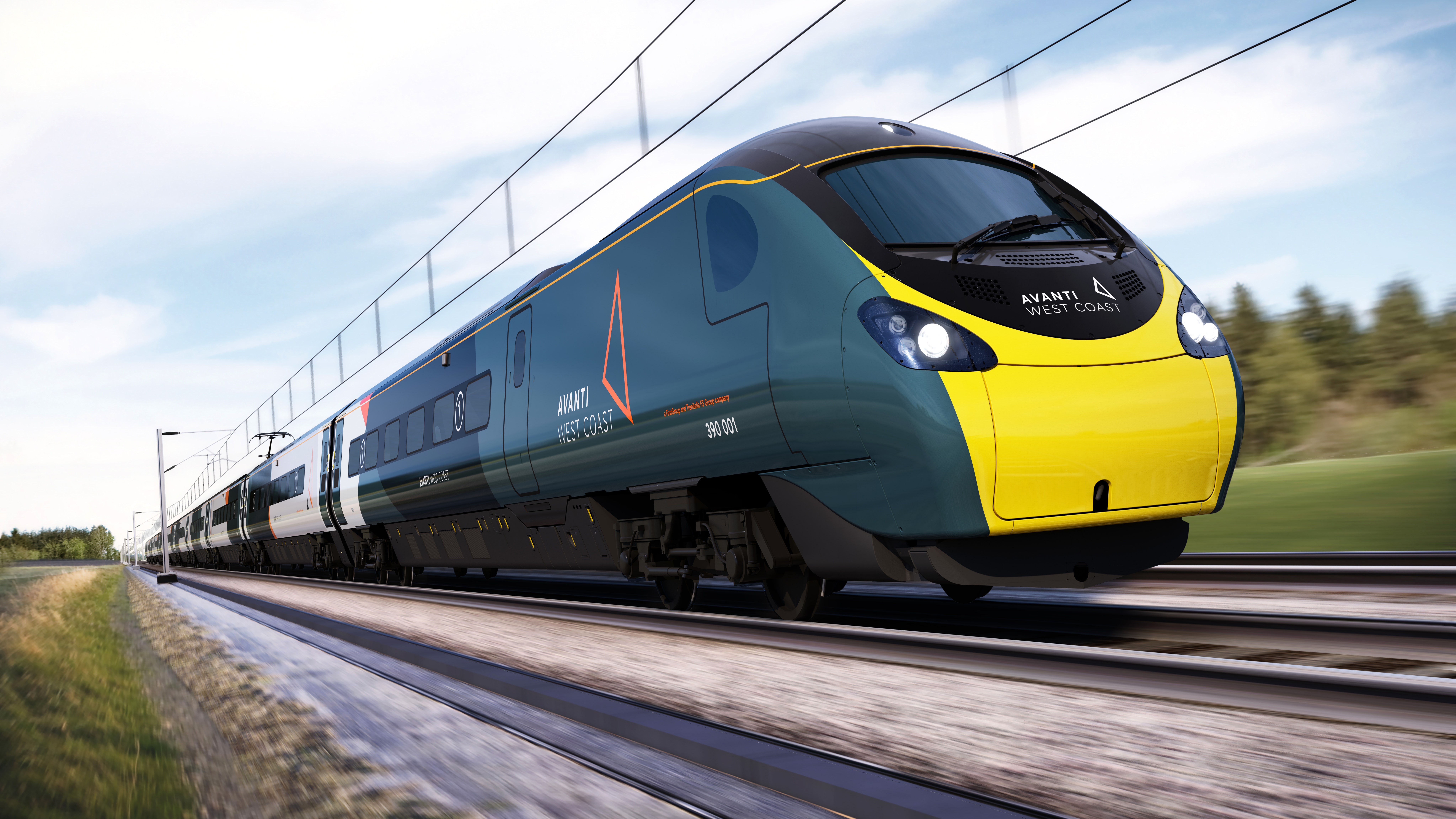
Booking public transit ahead of time was good. We’d ordered Tourist Oyster cards (pre-paid travel cards) for London, which was essential, but we also booked trips to Liverpool and to Birmingham on mainline trains, and the Heathrow Express in London, getting good deals along with the discount travelcard (£30 for a Two Together card, giving 33% off most train fares) that we’d also ordered ahead of time. We didn’t get to do the Liverpool trip by train, but because I’d booked online, the train company emailed the night before travel to say that trains had been cancelled, and offered a refund. That gave us time to rejig our plans, and I did get the fares back.
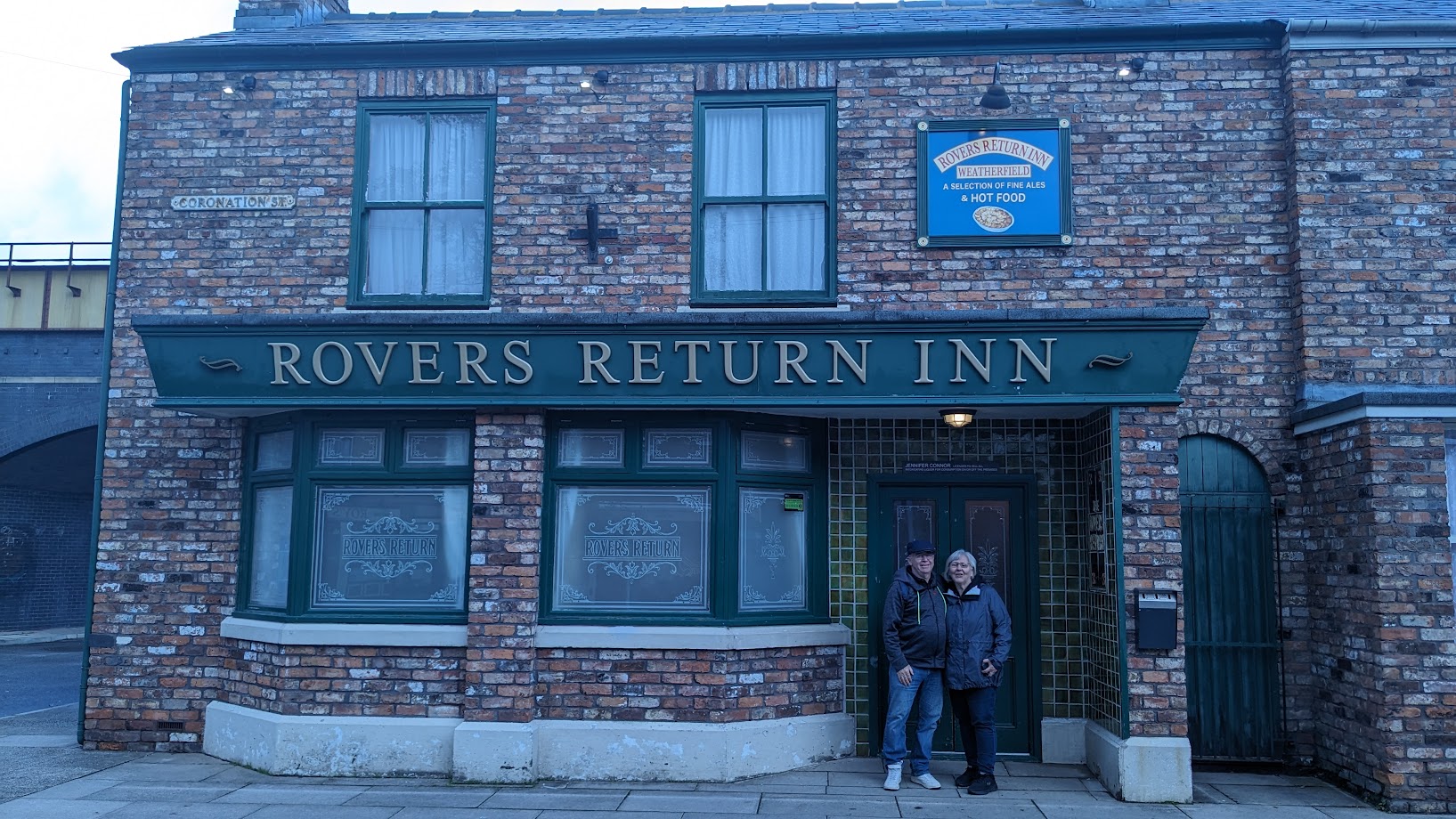
We’d kept looking to see if ITV’s Coronation Street Experience in Manchester would be available while we were in England, and just a week or two before we set off, they opened up a few days and we were able to book a couple of places on that. It was a seriously mad experience, but really worth doing.
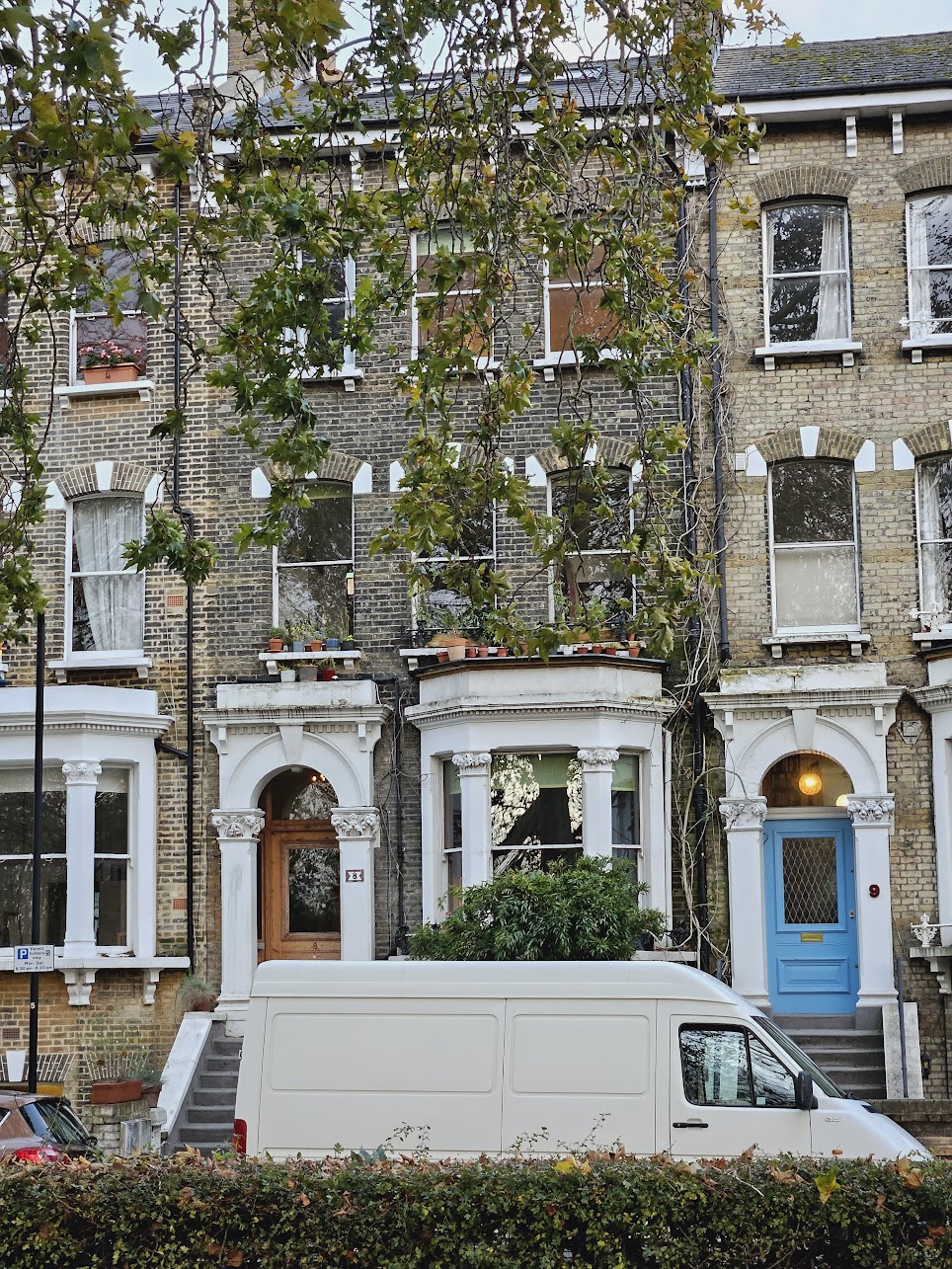
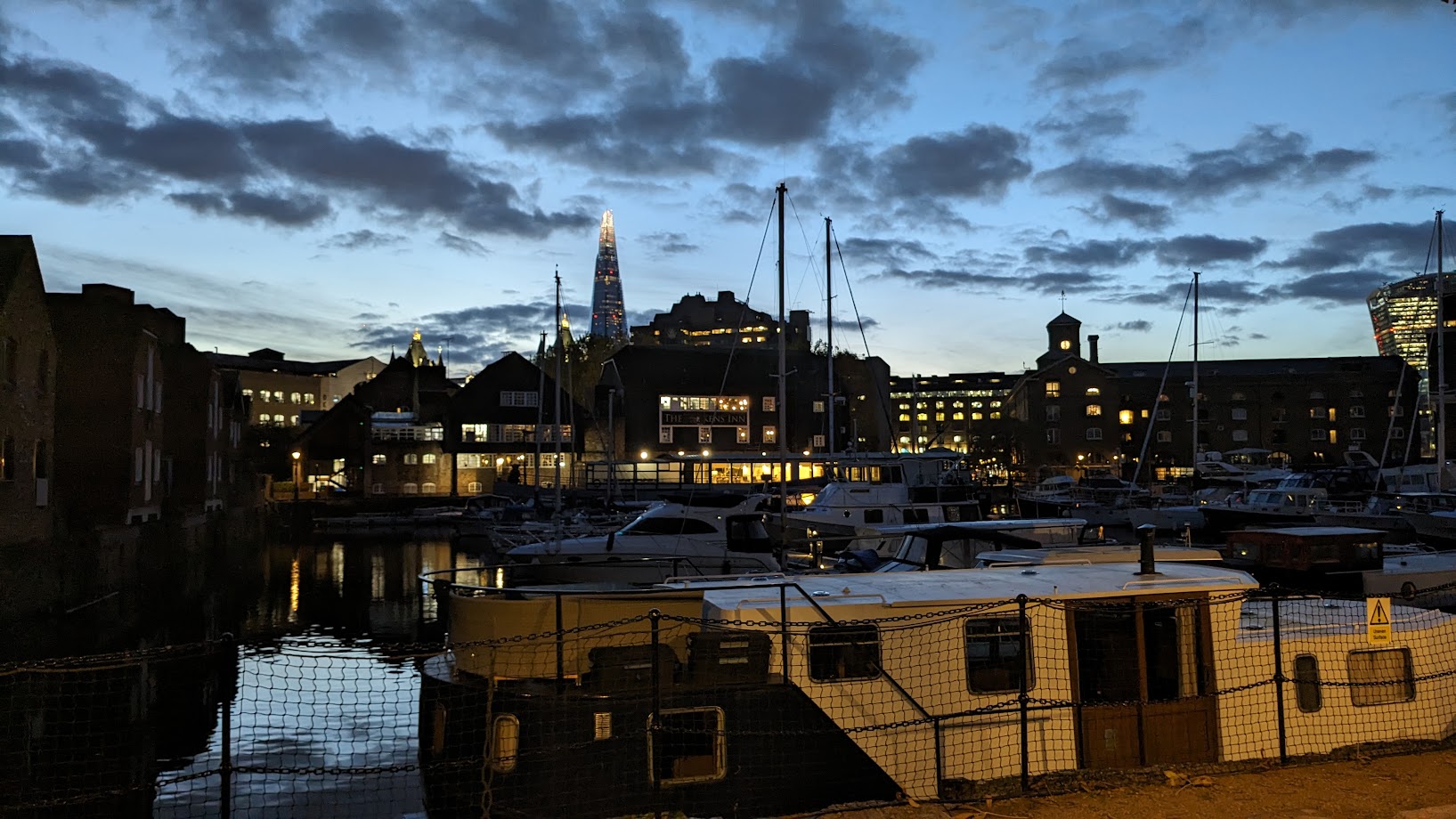
The London accommodation was a good pick, too, although there is a lot of choice and I’m sure there were many other good places we could have chosen. We were wise to stay a little out of Central London and use the excellent and inexpensive transit systems to travel in each day, not just from a cost point of view. Travelling home on the bus at night was a joy to behold, to see the (other) city that never sleeps.
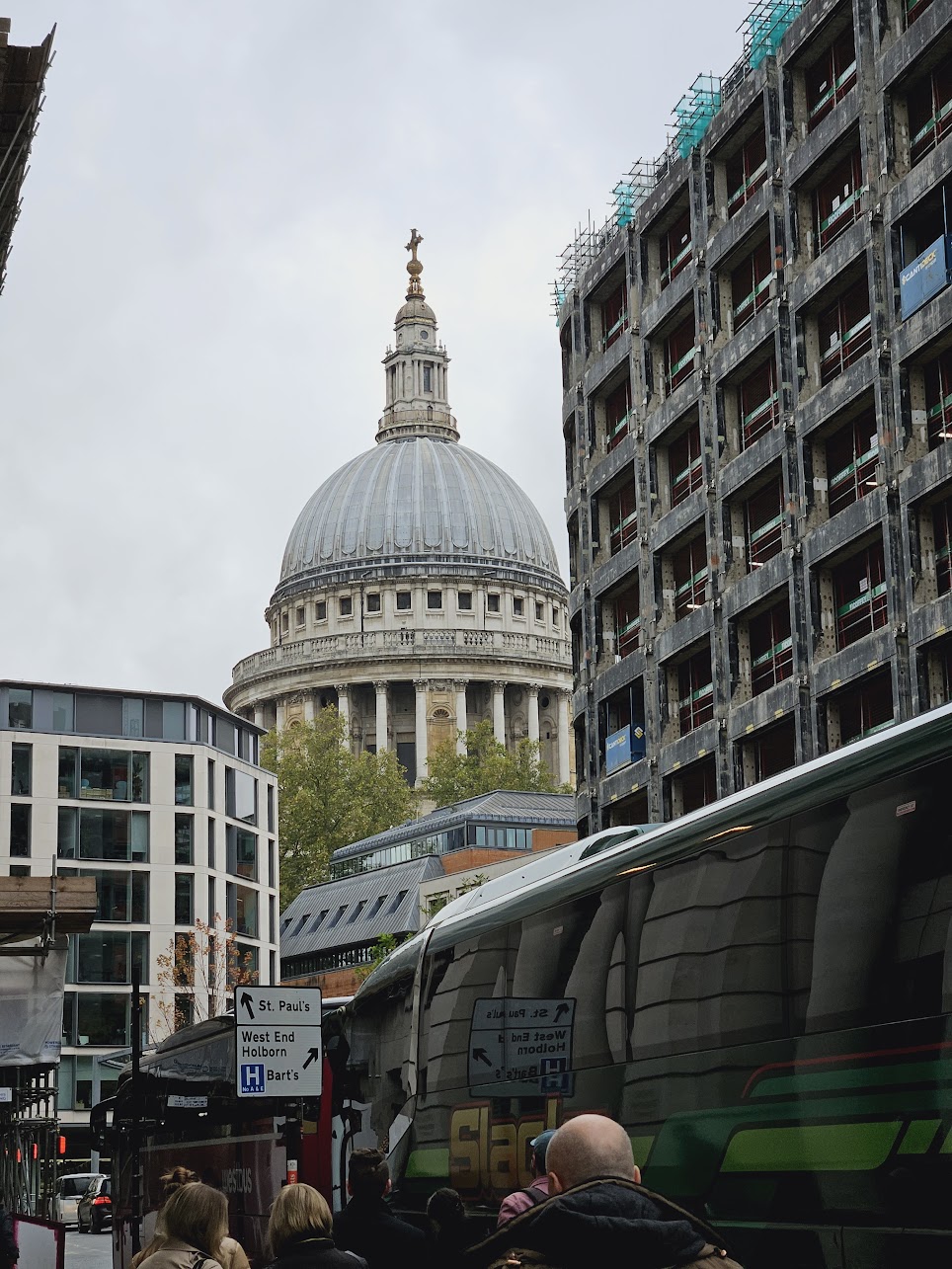
We did a fair bit of walking, in London at least, and while tiring, it was wonderful to see so much in such a small area. Public transit is OK, but Shanks’ Pony worked well for us on a couple of occasions.
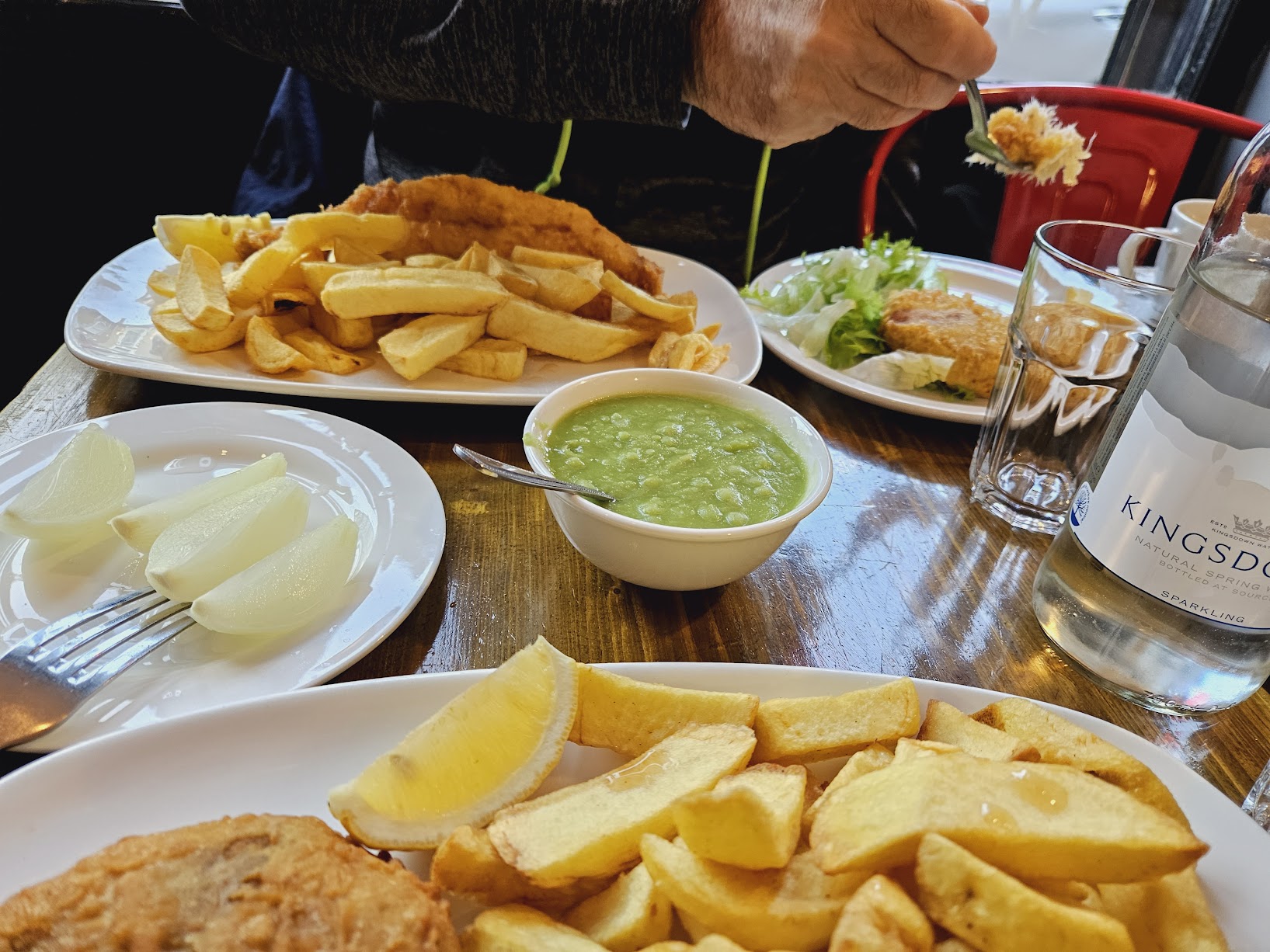
I think England, and London particularly, is a great place to eat and drink. Yes, we searched out those foods that are familiar to us, but dropping into pubs for pints of beer, gins, and football, is a great way to spend a rainy afternoon. The vegan choices on pretty much all London menus kept SWMBO very happy indeed, and it wouldn’t be an exaggeration to say that we gorged ourselves the whole time.
If there was one negative thing, it was being in England in November. The weather we knew, but I’d clean forgotten just how early it gets dark there, being considerably closer to the North Pole than our little home in Canada (we live on the same latitude as Milan). In London it wasn’t so important as everything stays open late there anyway, but any outdoor activity has to be completed by 4pm at the latest. Still, you live and learn.
It’s a shame, but I don’t think we’ll be heading back to the UK for a while now, unless family matters arise. We need to start saving again!
A down day at last, before we pack up and head to The Smoke, and a chance to have a look at the town we’re staying in.
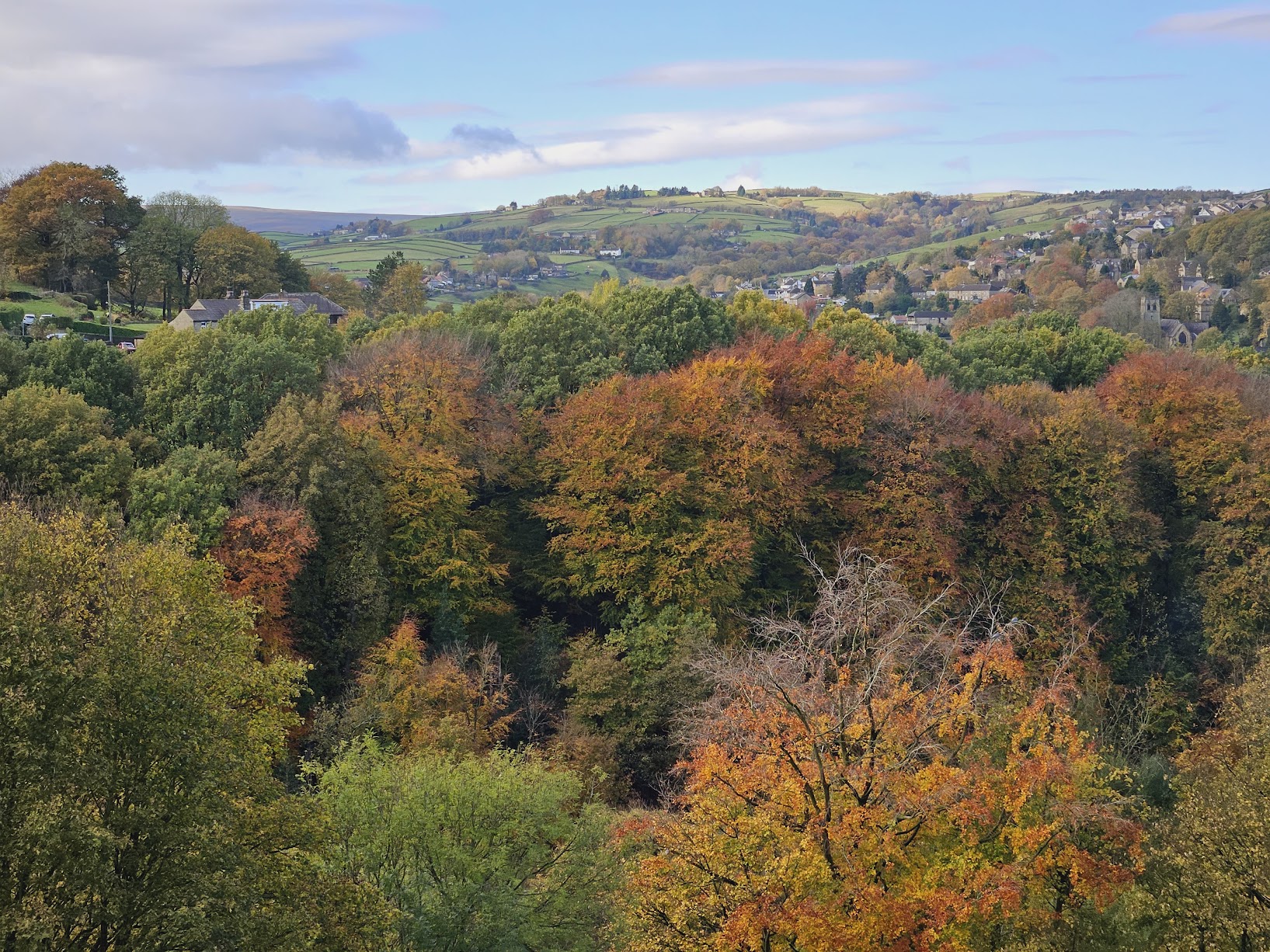
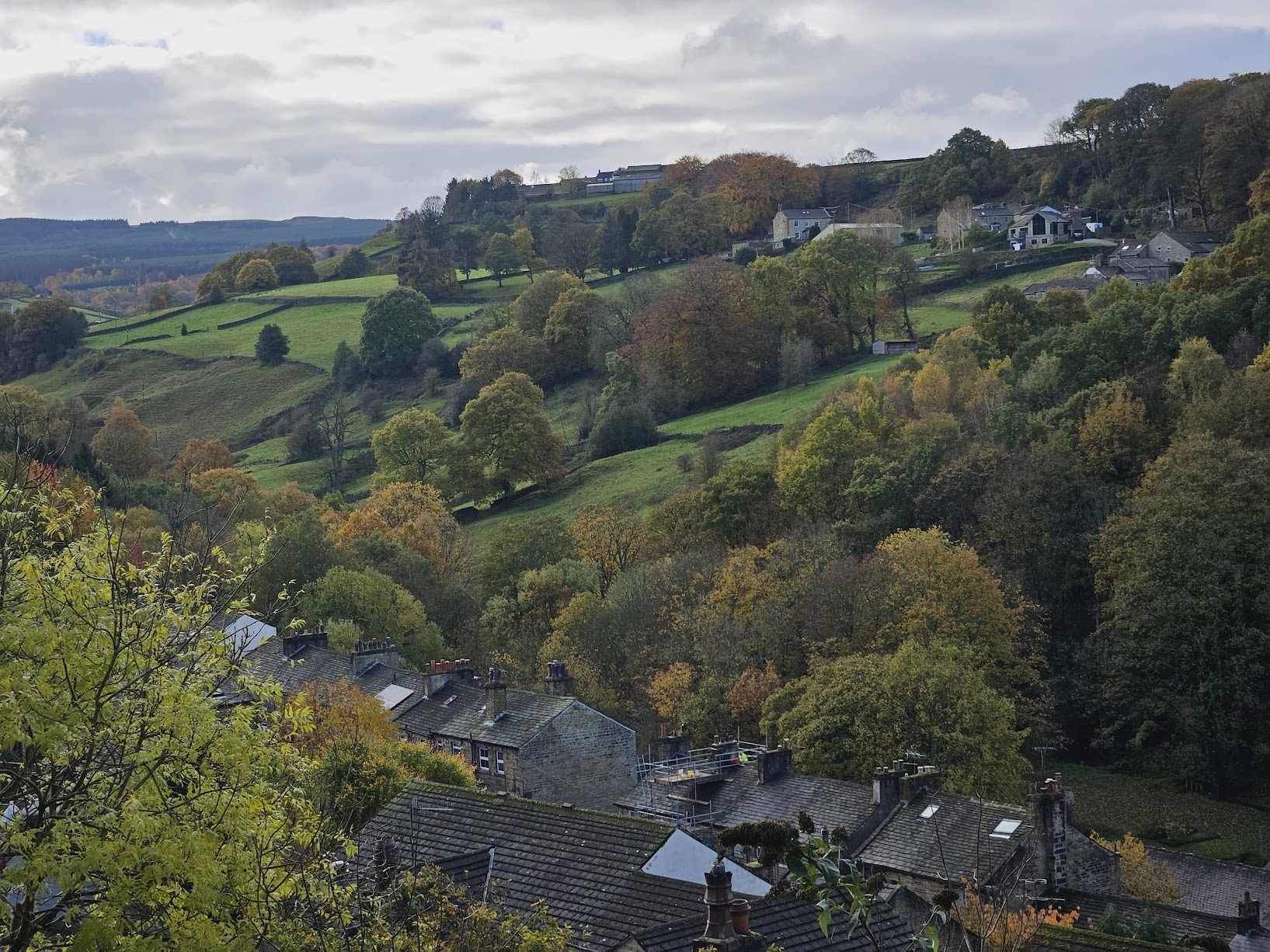
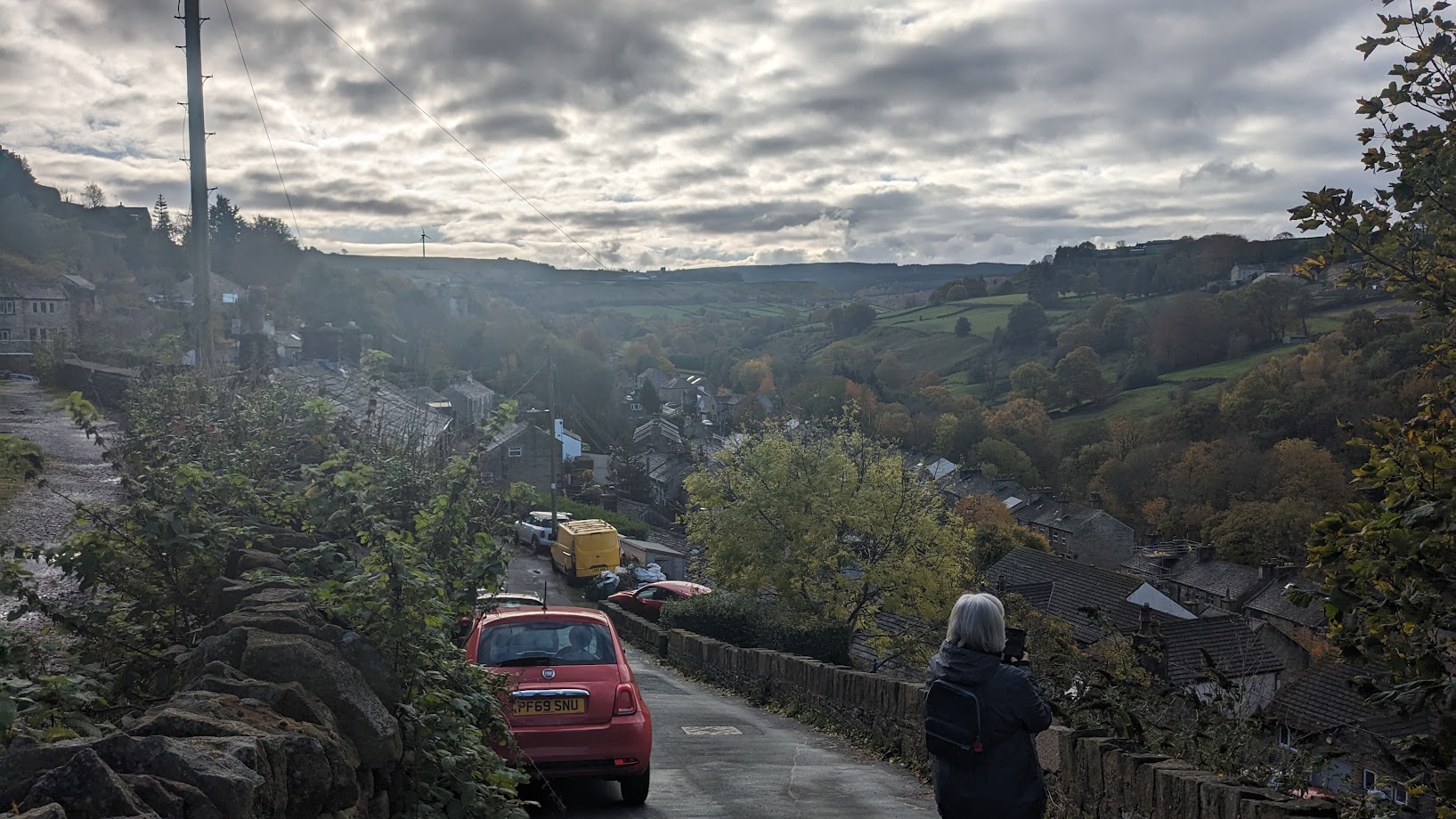
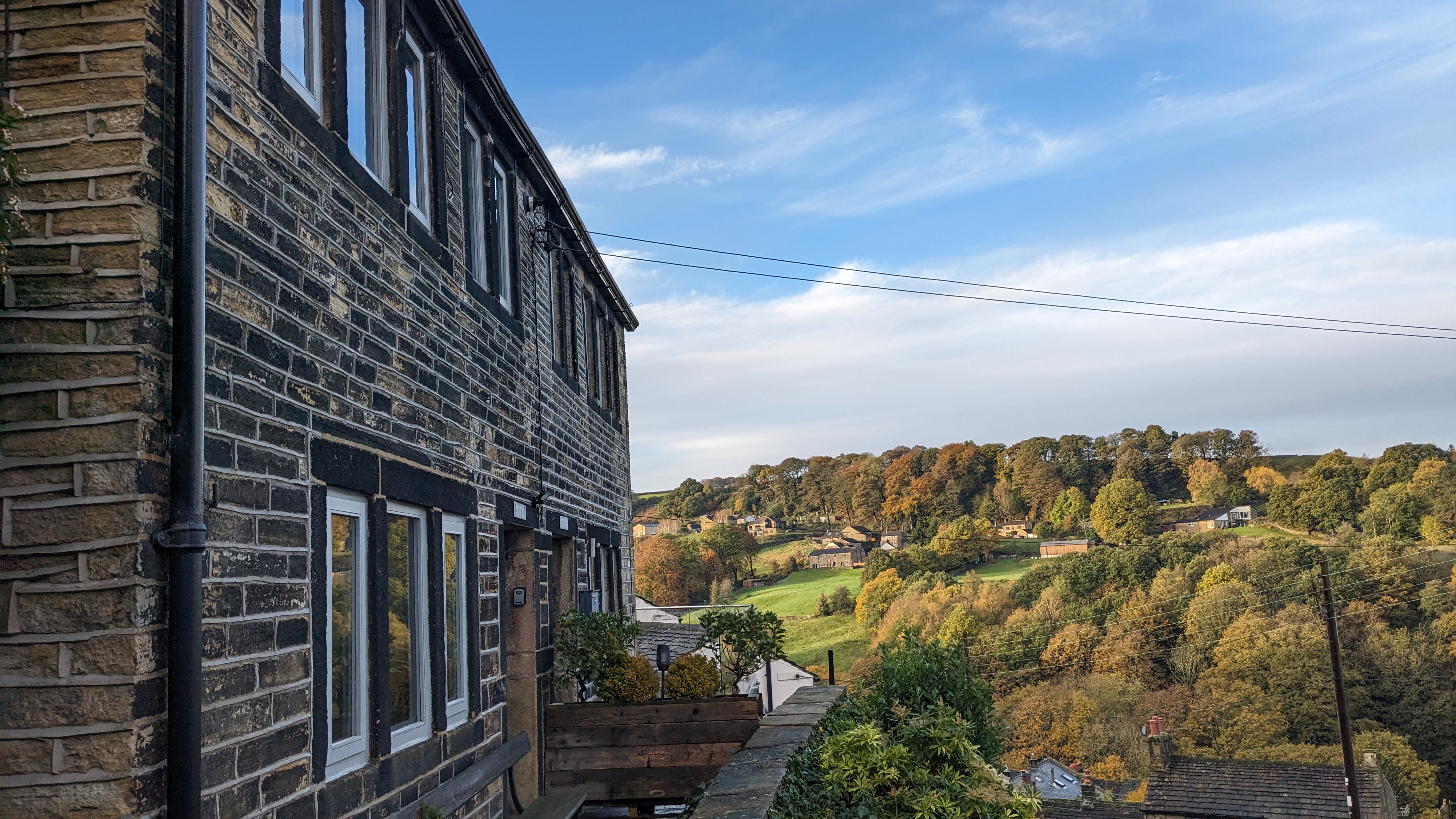
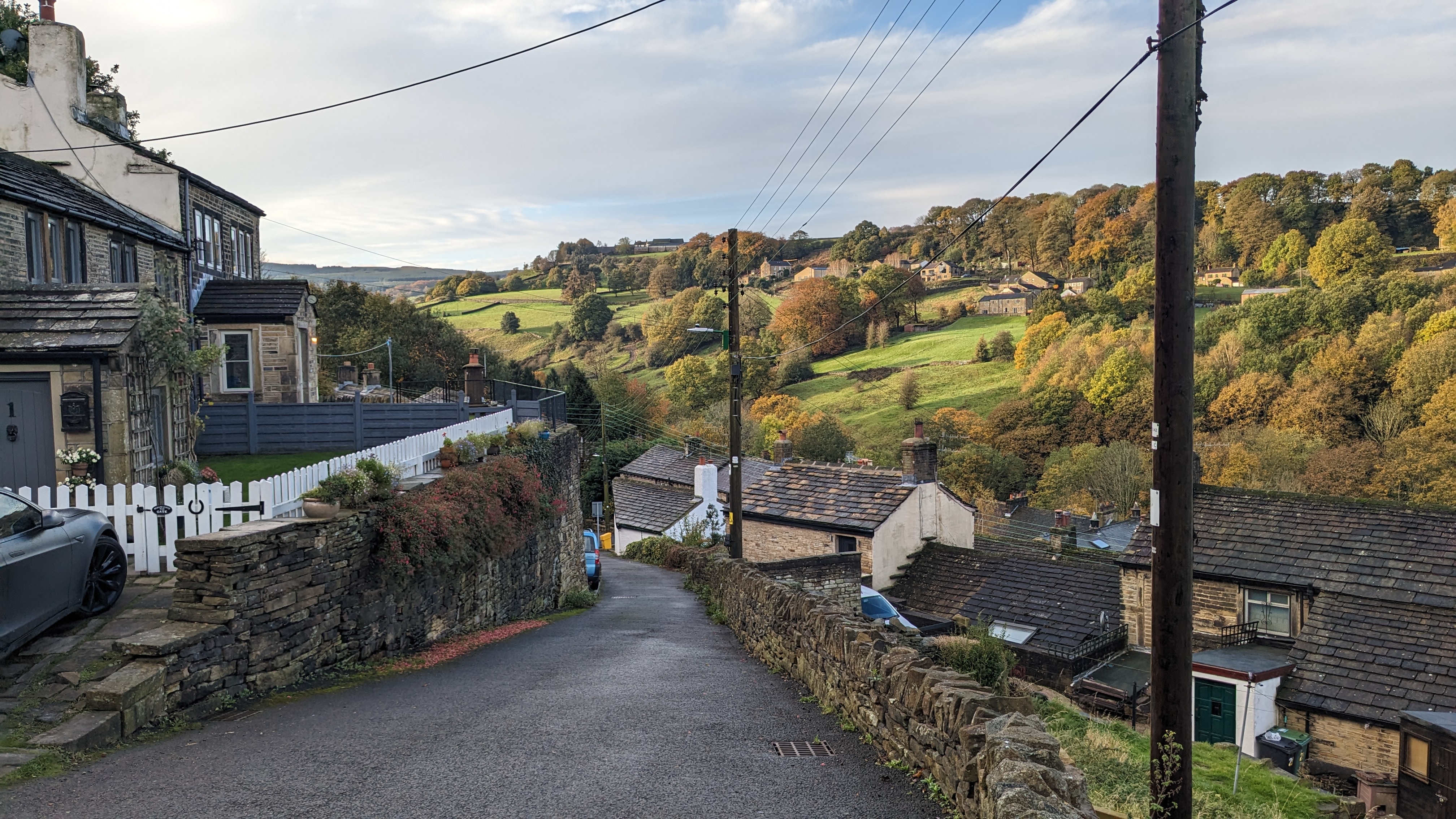
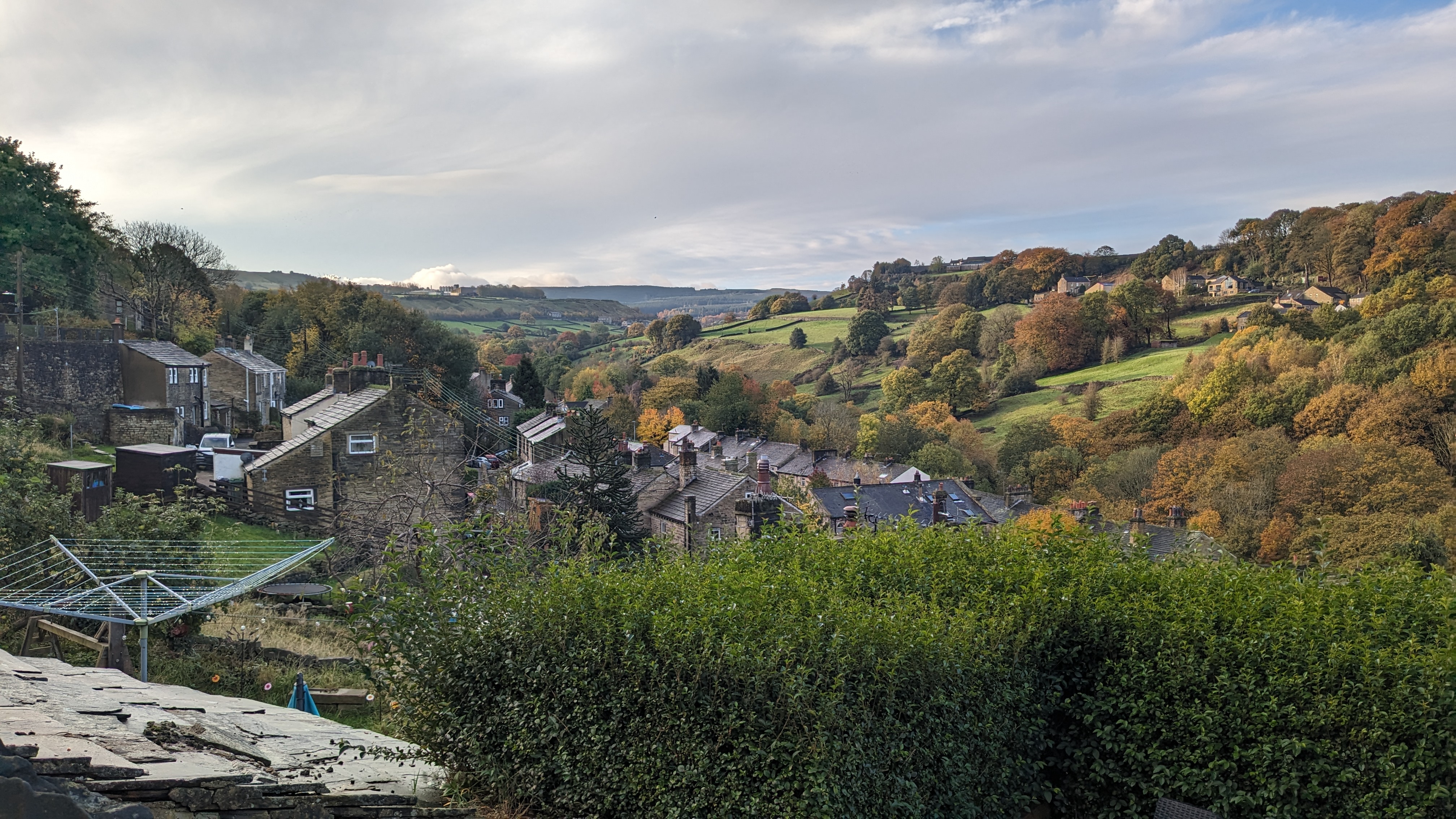
The walk down into Holmfirth was wonderful, along the side of one the steep valleys, in among the old, now blackened, Yorkshire Sandstone cottage. The autumnal views on clear and crisp morning were lovely. It was pleasing to note that some new builds on top of the hill were constructed with the same stone, and the same stone window casements as the much older cottages that surround them.
The final drop into the village was very steep and was the hill we’d driven up on day one. It fair makes your knees ache as you take tiny steps downward. There are some scary slopes in this town.
The town itself was pretty, all old buildings, and all in the blackened sandstone that the houses on the hill were made of. The River Holme was moving a quite a lick, unnaturally narrowed I think to help with the mills that used its water in the nineteenth century. Oddly, there were four bridal shops in this little town, and at least five barbers’ shops. People with neatly trimmed hair get married a lot here, obviously.
We sat a while in a park that overlooked the town and ate lunch. With some watery sunshine warming things up a little, it was a very, very nice place to pause. We also chatted with the owners of a sweet shop, and the vegan ice cream shop, both happy to spend the time talking with odd people like us.
The downside of Holmfirth, and so many other places like it, is the traffic. It’s never ending, and with the shops so close to the road, you feel you’re walking in the road all the time. There are very few places to park all these cars, too, so people tend to find the tiniest and often almost dangerous places to leave their cars. It’s not like there are no buses, either, because we saw plenty. But this is the age of the car, and we in our rented auto had been contributing to the problem all week. This is perhaps one of the reasons we’re not contemplating moving back to our mother country.
Having stepped carefully down the hill in the morning, it was a long slog back up in the afternoon. I’m sure if we lived in the area we’d soon become used to it, but this was hard going.
We have enjoyed our stay in Holmfirth, although this was the only time we actually visited the village. It has been a good base to strike out to Leeds, Manchester and Liverpool, and even further beyond. After a week of negotiating roads barely the width of the car, vertiginous hills and bends well beyond a right angle I will probably be quite happy to ditch the car for a week.
A day in the car was the plan, and so it turned out to be.
We set off across the hills towards Barnsley, joined the motorway to head north to York, then left the motorway and drove gently through the Wolds to one of Yorkshire’s most easterly points, Flamborough Head.
The traffic was reasonable the whole way, the weather was better than it could have been, and the driving seemed quite easy, even with the truck traffic on the motorways. We had seen, or rather passed, Barnsley, Wakefield, Leeds, Tadcaster and York, running through the delightfully named village of Wetwang, onto Bridlington and finally Flamborough Head.
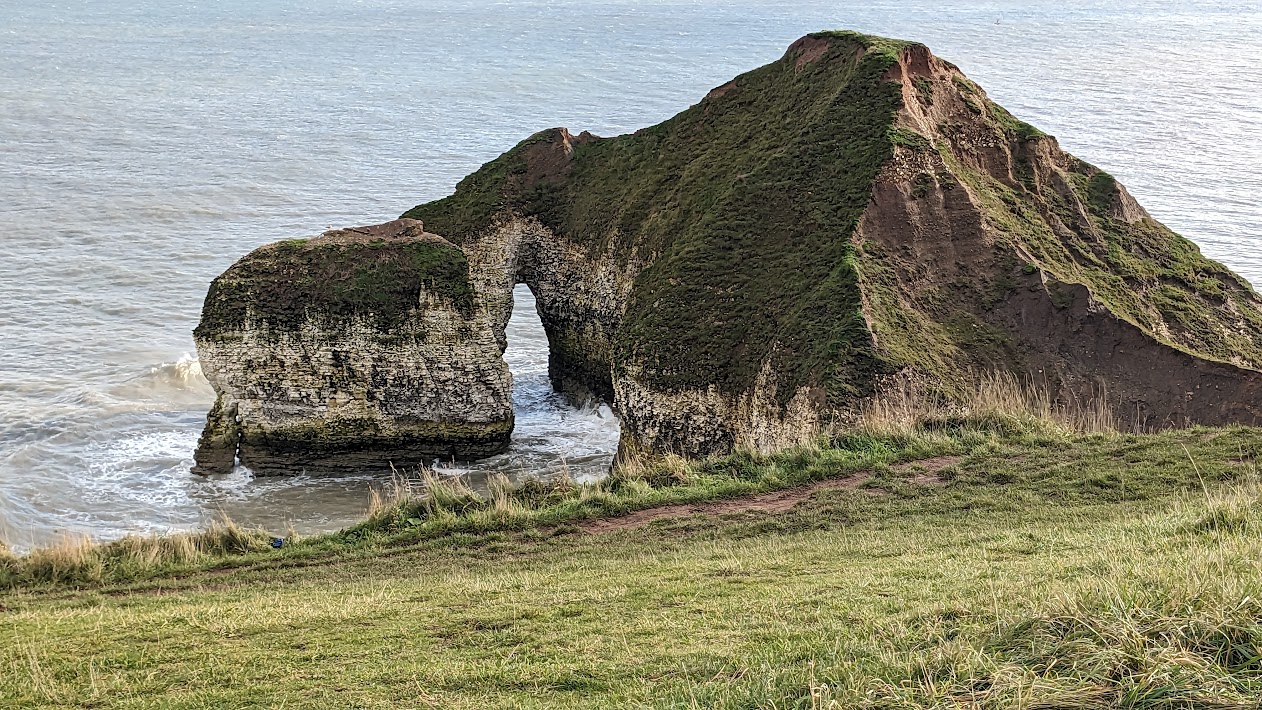
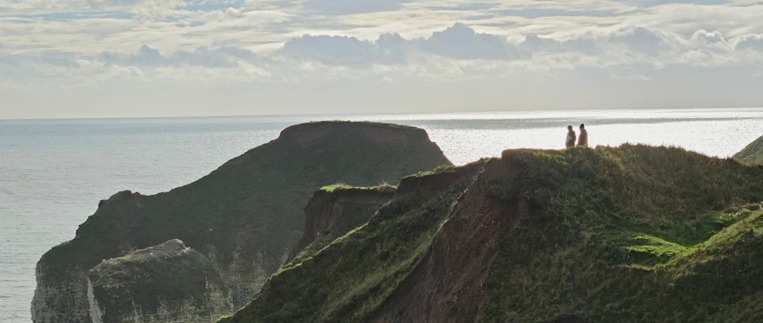
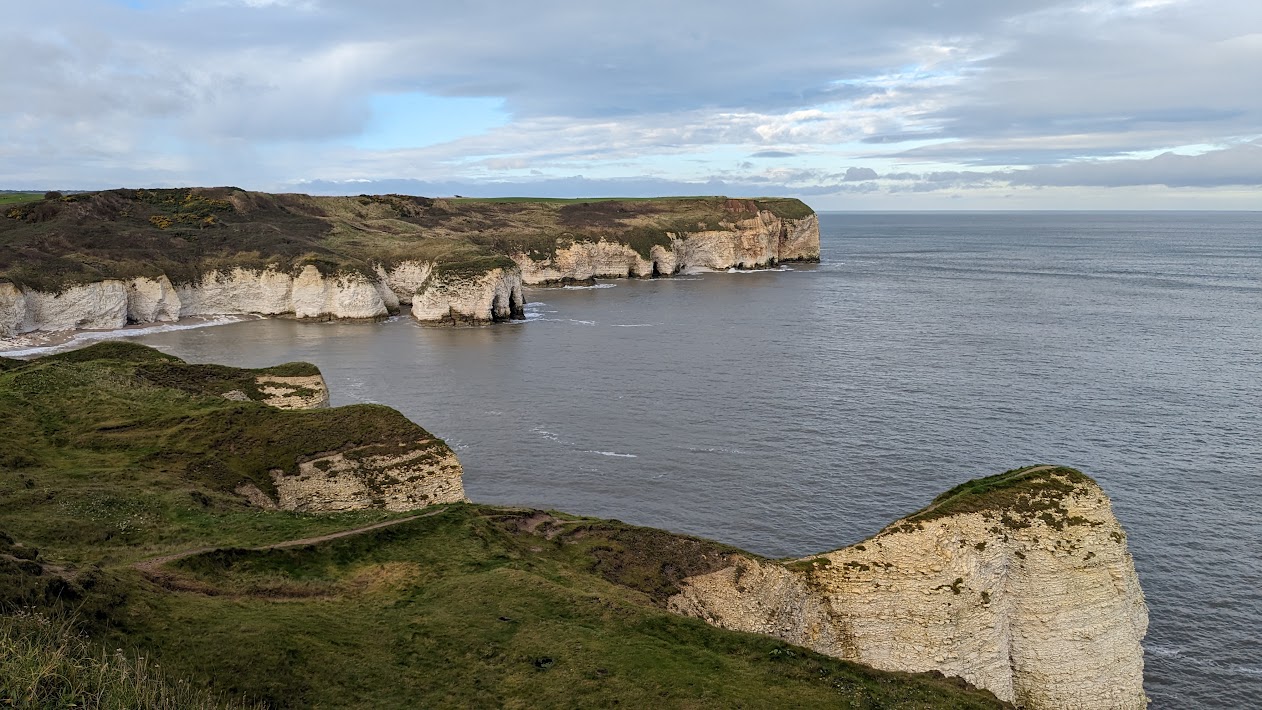
Flamborough Head is a chalky outcrop that juts out into the North Sea, about halfway up Yorkshire’s East Coast. There is a working Trinity House Lighthouse up there, plus some other navigational equipment used by today’s ships. High up on the cliff top, the white(ish) cliffs looked marvellous standing in the fairly calm sea, and the view up and down the coastline was excellent, especially as it wasn’t raining and there was good visibility.
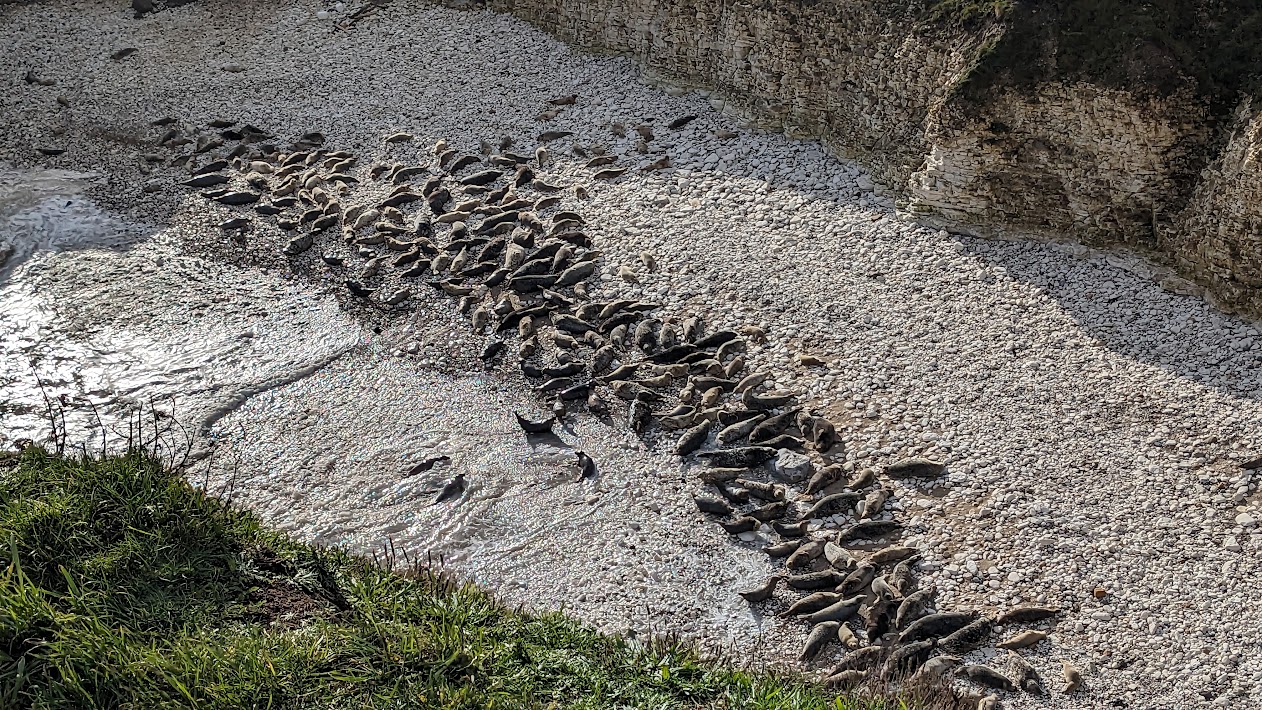
Flamborough Head is known as a haven for migratory birds, and while it was the wrong time of year for the Puffins, there were Shearwaters, Cormorants and many types of gulls to be seen. The stars of the visit, though, and in abundance, were the Seals. We saw them in the water first, heads up like a load of grey buoys, but diving below the surface to reappear a few yards away. Moving around to look down on another beach, we saw the Seals laying on the shingle and sand, easily a of hundred of them, big and small, laying still or fighting with each other. I had never seen so many Seals like that, except on TV, so that was quite the sight, even if we had to stand perilously close to the edge of the hundred foot cliff to see them.
We dawdled for quite a while there, watched the boats, big and small, fishing the local waters, and while couldn’t quite see The Netherlands from our vantage point, we could see an oil rig out on the horizon. It was very wet underfoot, though, and the surprisingly large number of visitors there, given that it was a grey Monday in November, were churning up the grass and making all the pathways into rivers of mud. Winter sightseeing, eh?
From Flamborough we took the coast road to Robin Hood’s Bay, a little fishing village nestled at the top and bottom of a cliff, where the North York Moors meet the North Sea. On the family tree front, I have a a picture of my mum, my dad and my uncle at Robin Hood’s Bay, taken in the very early 1950s. I wasn’t out to recreate the photograph, but it was nice to know that my mum and dad had been here together.
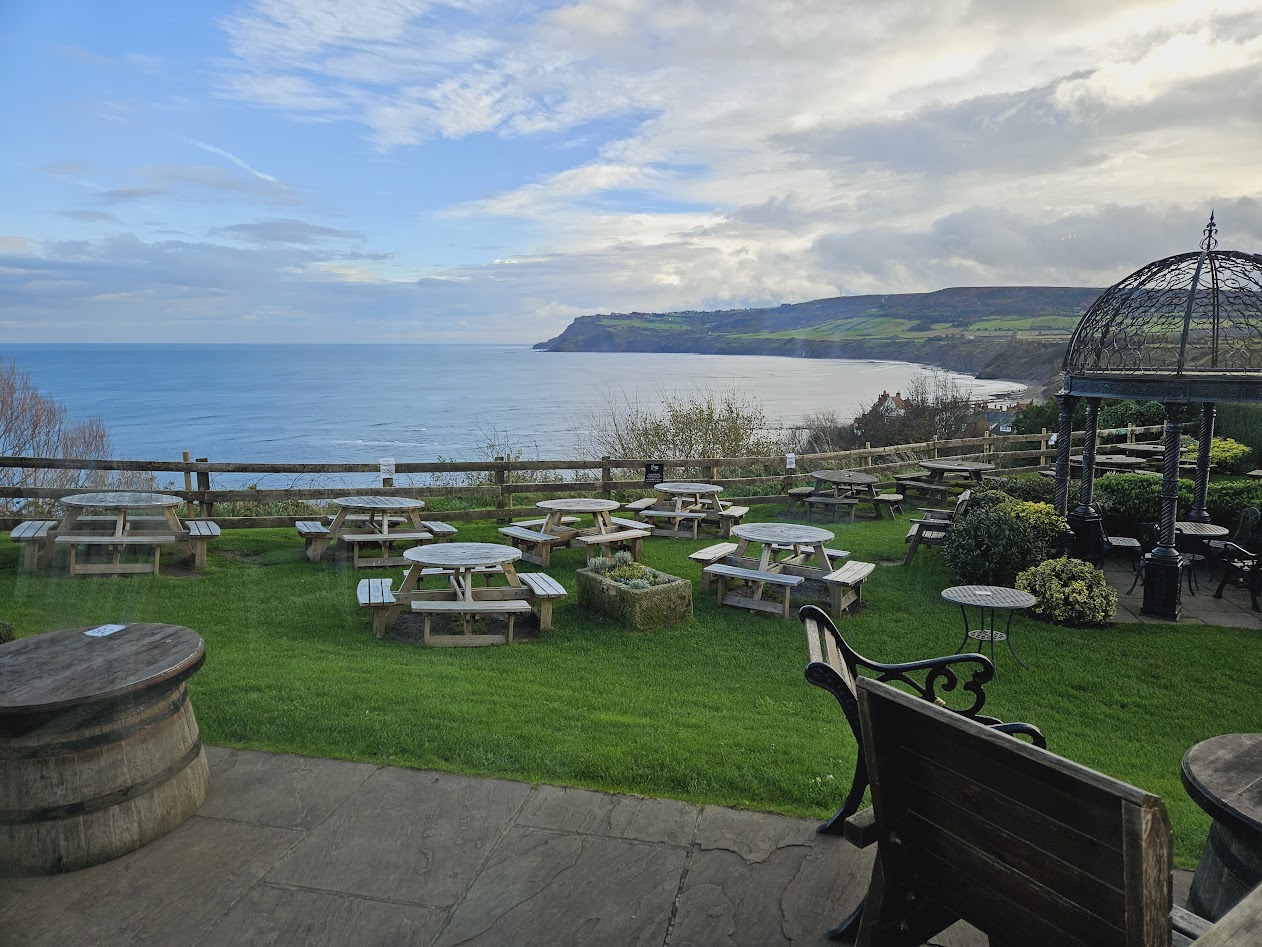
Private cars are not allowed to drive down to the lower level of the village, as there’s no room to park at the bottom, and very few spaces to turn around, so everyone must park at the top and walk down. Top marks to the Council for closing all the Pay and Display parking machines for the winter, as I do love a bit of free parking. Before we started our descent, though, we availed ourselves of a very nice two-course lunch (it would have been three but there was too much to eat), at the Victoria Hotel. The food was good, much on the vegan menu for the good Mrs. M., and the view across the bay was second to none.
The walk down into the old village was steep, but the little houses built up high into the valley sides, were gorgeous. It’s very touristy, as you’d expect, and most things were still open despite the lateness of the year, for which I applaud the local business owners. Mind you, there was no shortage of people down there, and on the beach, so I guess there was money to be made. It’s quite the place, with the stone built rows of cottages clinging to the cliff. I can see why it’s such a popular destination.
The walk back up to the car was also steep, just in the wrong direction. We took it easy, though, as befits old people, and attained the car park without a medical emergency.
From Robin Hood’s Bay we went still further north, to Whitby. We might have had a look around there only it was virtually dark by the time we emerged from the Sainsbury’s store. Well, there are always things you need, aren’t there?
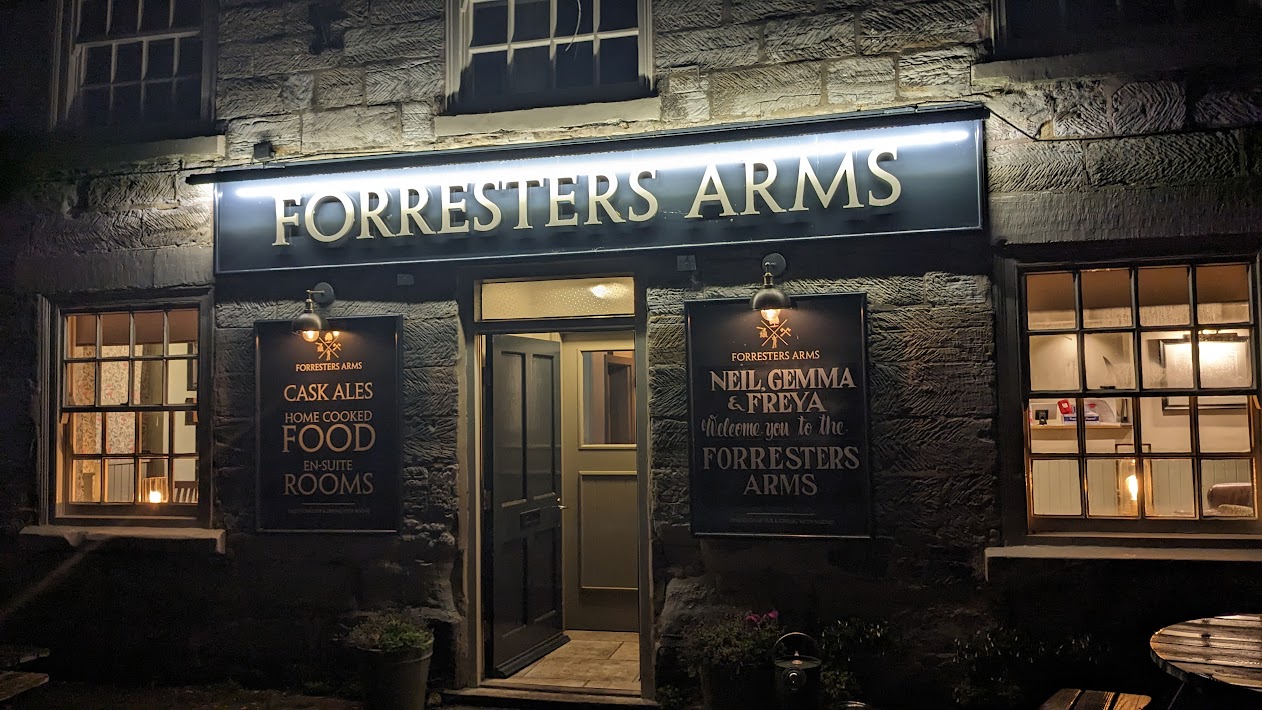
We were a long way from Holmfirth at this point, much closer to Teesside than York, so we knew we’d be in for a long drive back. We elected though, in the spirit of more family tree work, to visit the Forrester’s Arms, a pub in the North Yorkshire village of Kilburn. My uncle had run the pub in the sixties, and we visited in 1968 and stayed there a week. This was my first trip back since then. The drive from Whitby took us over the moors, which are not very interesting in the dark, and through Pickering and Helmsley. When we needed to drop down off the moor and into the Vale of York, we took the back road down Sutton Bank, a steep run down a big escarpment. It would have been fun in the daylight, but it was dark and raining, so the single-track road with it’s hairpin bends and precipitous drops, was even more fun. The odd thing was that once down the hill, we were in the flattest of flat farmland, and quickly coming to a halt in the village square, right in front of the pub.
The place had been spruced up somewhat but was essentially as I remembered. I enjoyed a good pint of Theakston’s Bitter and listened to the other customers with their broad Yorkshire accents. It was lovely. It would have been nice to stay longer, and eat from the extensive menu, but it had been a long day.
The run back south allowed us to hit trunk roads for much of the journey, running from Thirsk to Barnsley on motorways alone. The run back from Barnsley to Holmfirth wasn’t so much fun, pitch dark on wet roads, but we made it safely.
The day had turned out as anticipated, a long drive but some great sightseeing and a wonderful grown ups lunch. An excellent day’s vacation.
We booked a week in the Yorkshire town of Holmfirth, just on the northern edge of the Peak District and just a few miles east of the border with Lancashire. The area is known as the location for the (very long lived, maybe overly-long lived) TV series, The Last of the Summer Wine and is undoubtedly a beautiful part of the country.
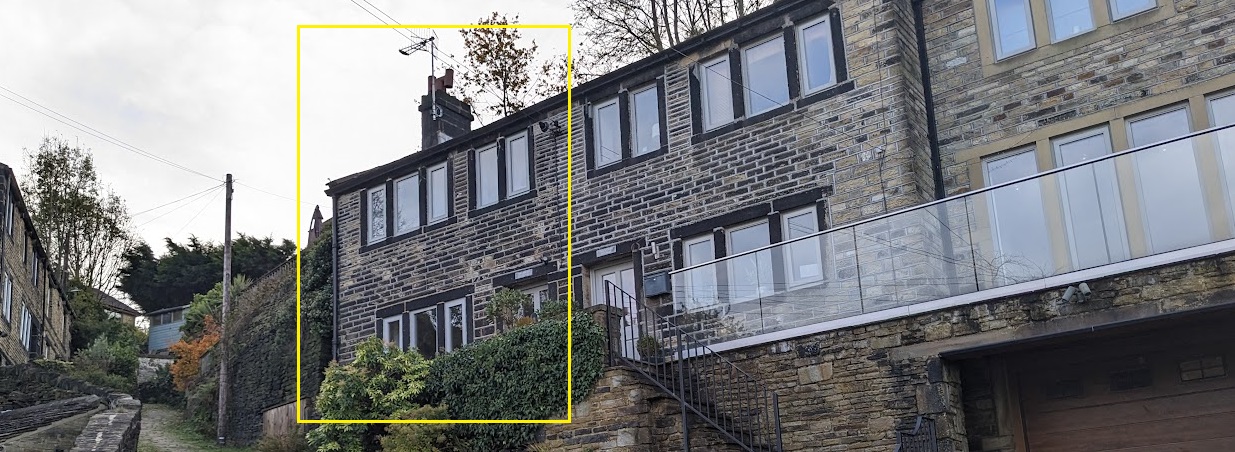
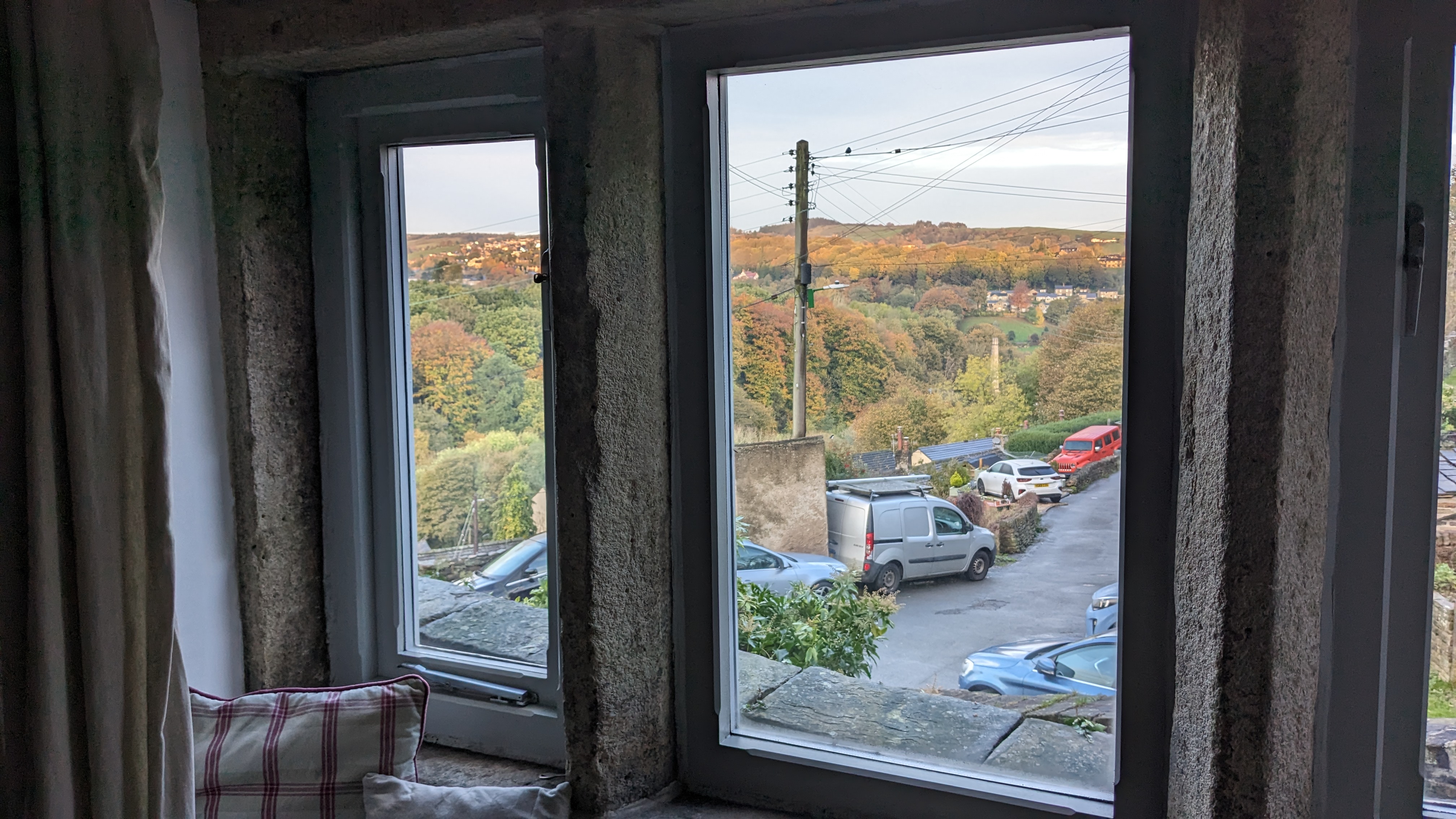
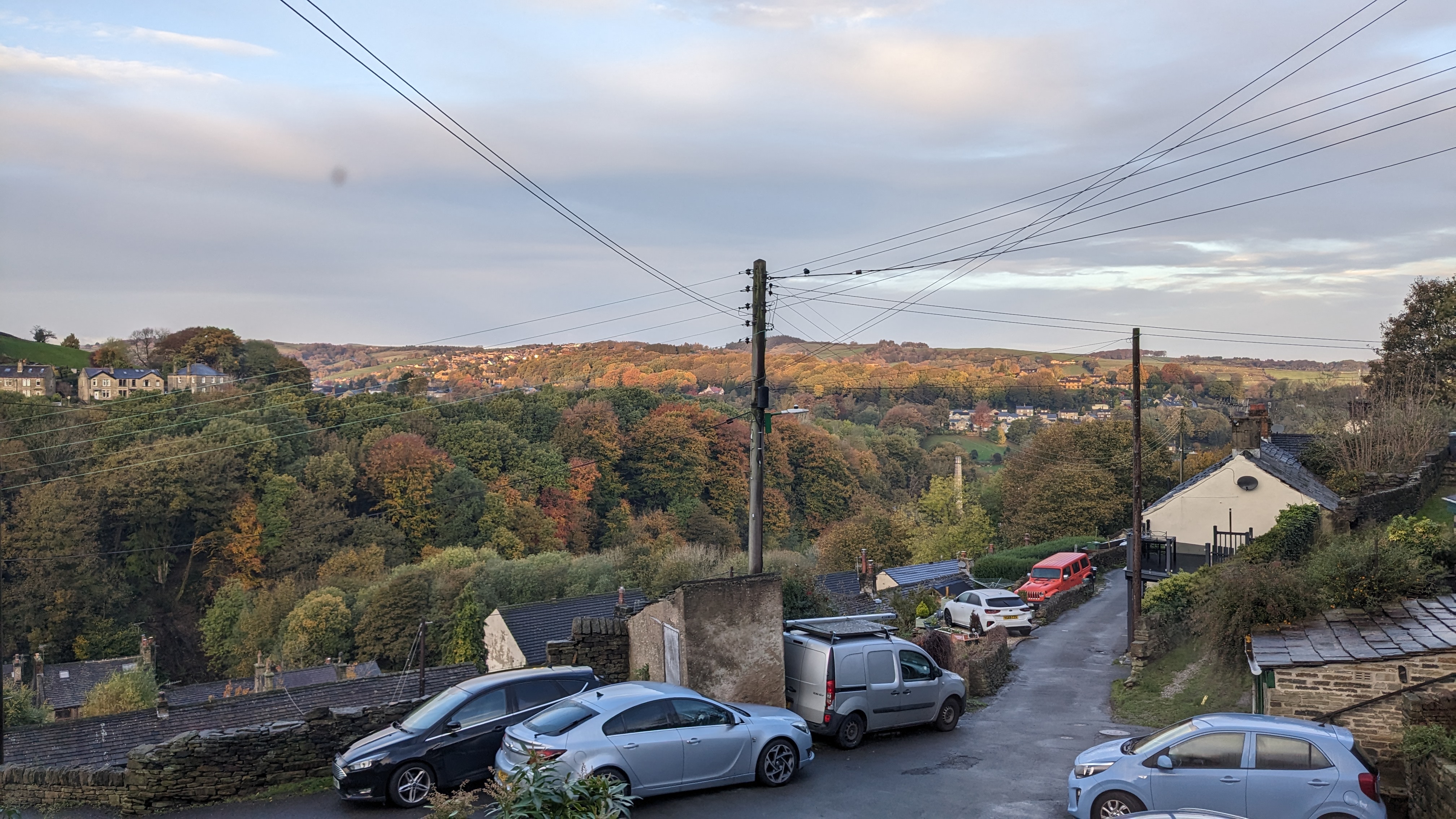
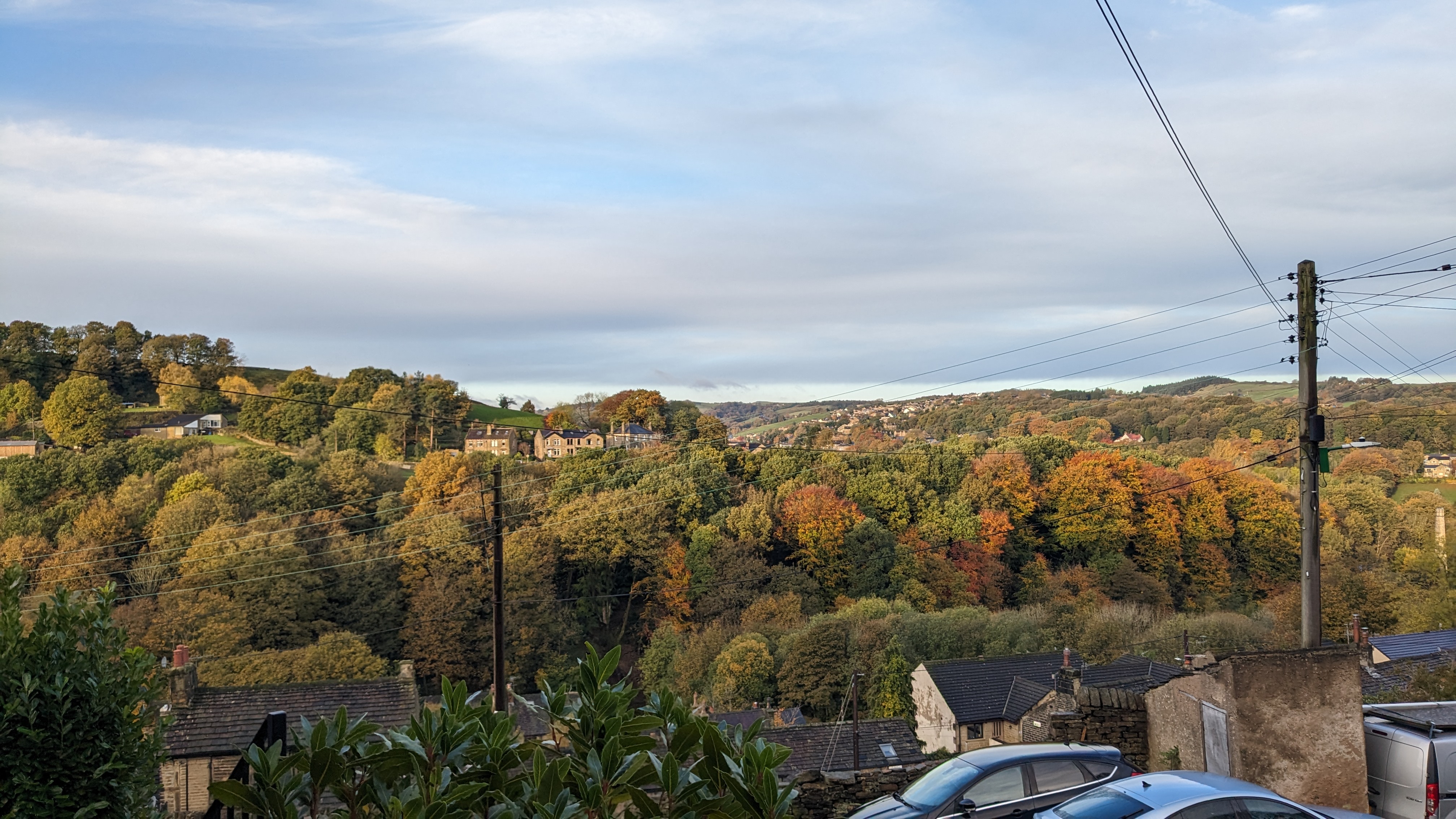
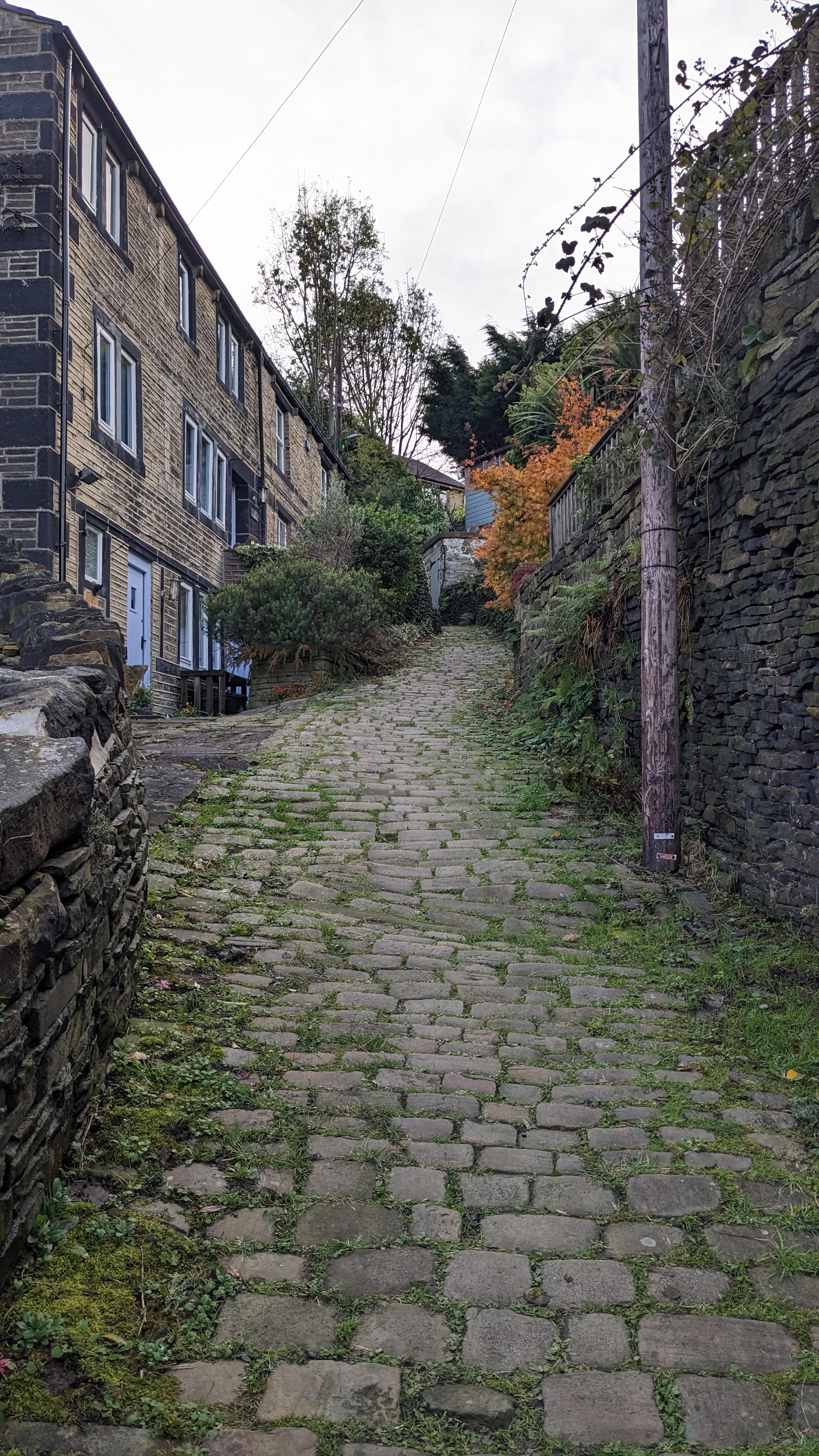
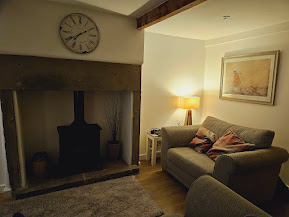
Bramble Cottage is a nineteenth century workers’ cottage, perched on the steep valley sides, and overlooking the centre of the village. The cottage itself has been wonderfully refurbished by the owners, who live next door, and it’s a very comfortable one bedroom holiday let, with every modern convenience. The original cottage would have been just one room downstairs and one room upstairs, but the owners have dug into the hillside at the back to create space for a modern, if narrow, kitchen downstairs, and a bathroom upstairs. It was warm inside, even though it was stone built and prone to a little condensation, and to be honest, we couldn’t fault it.
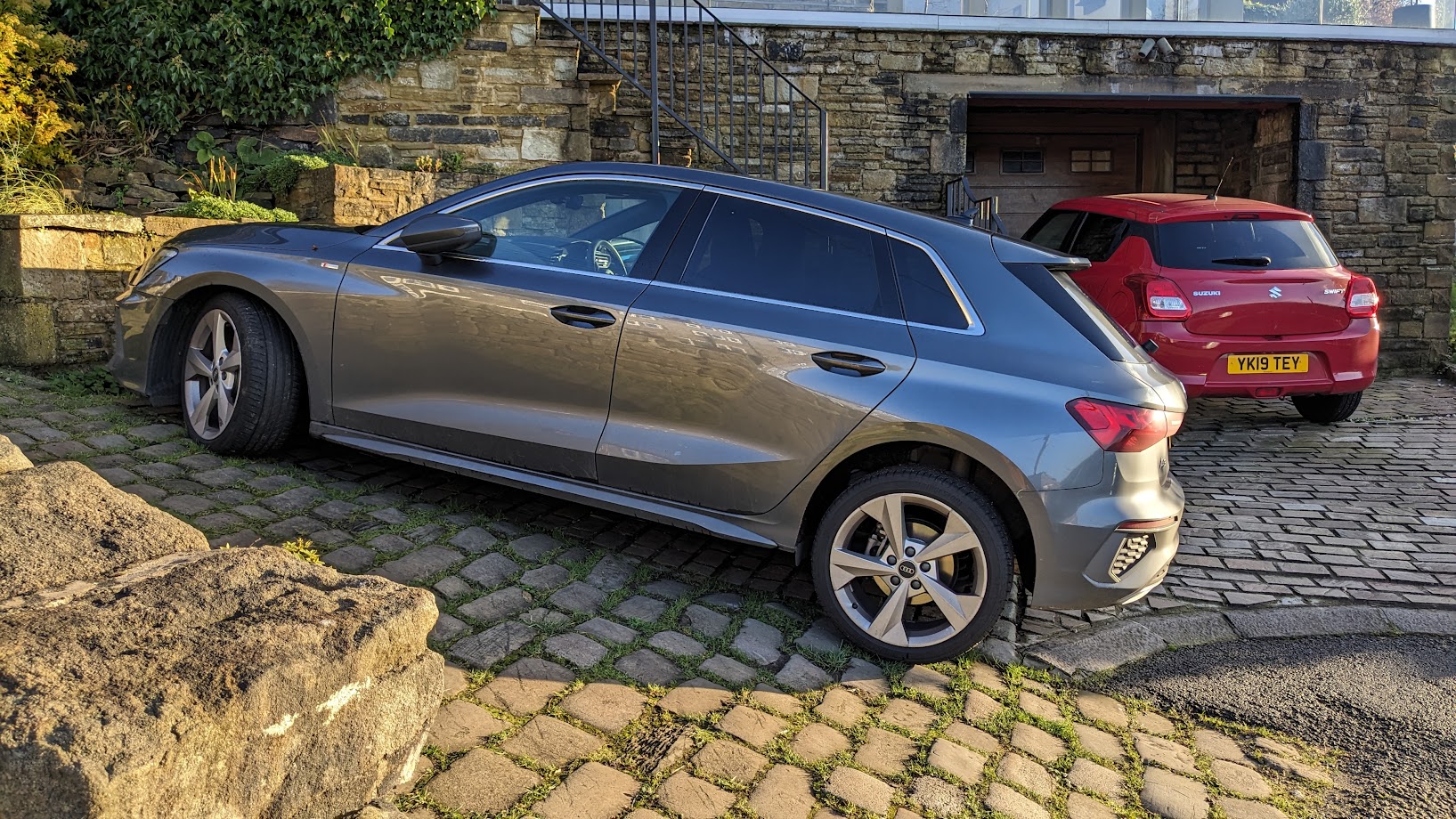
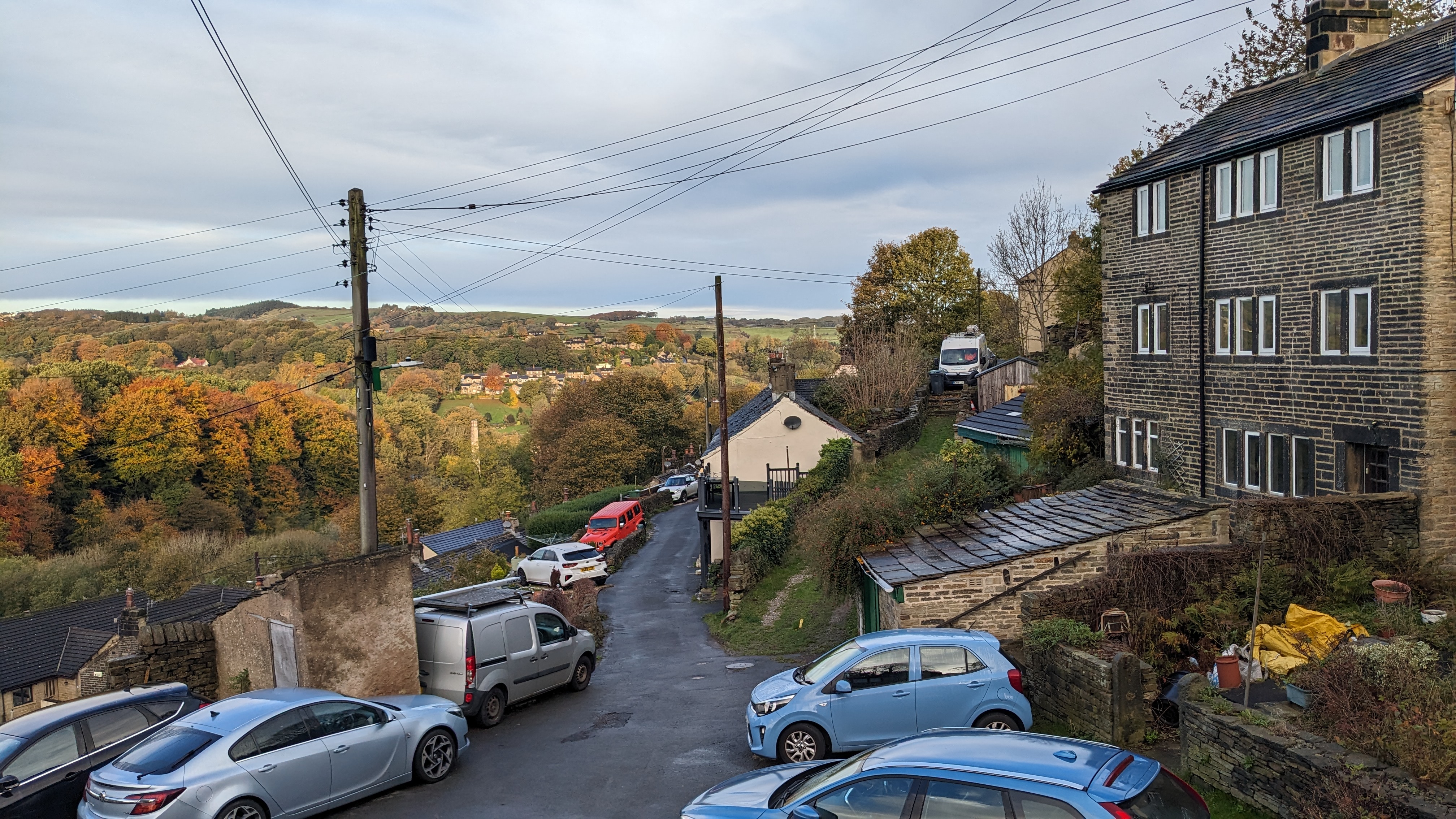
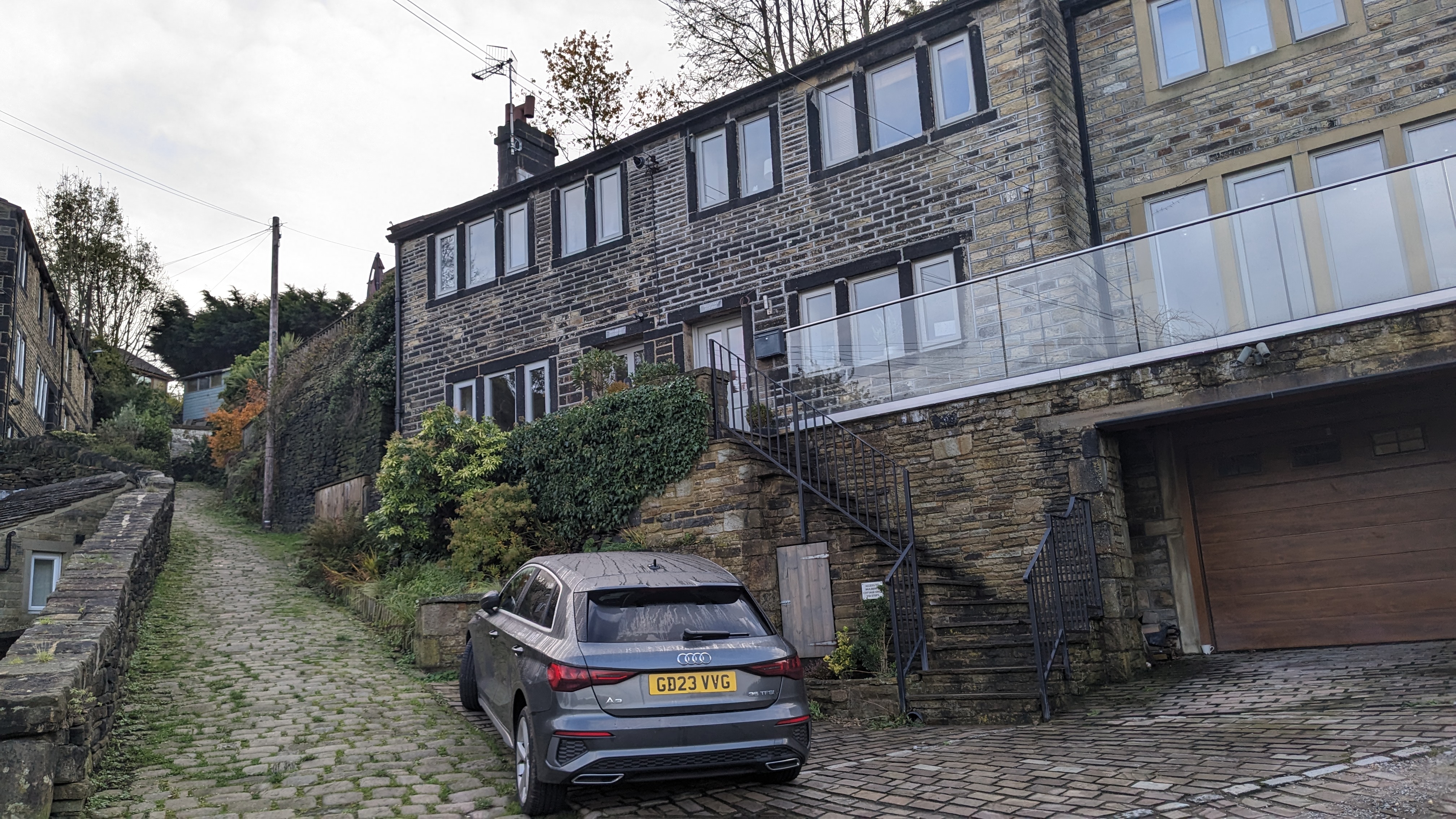
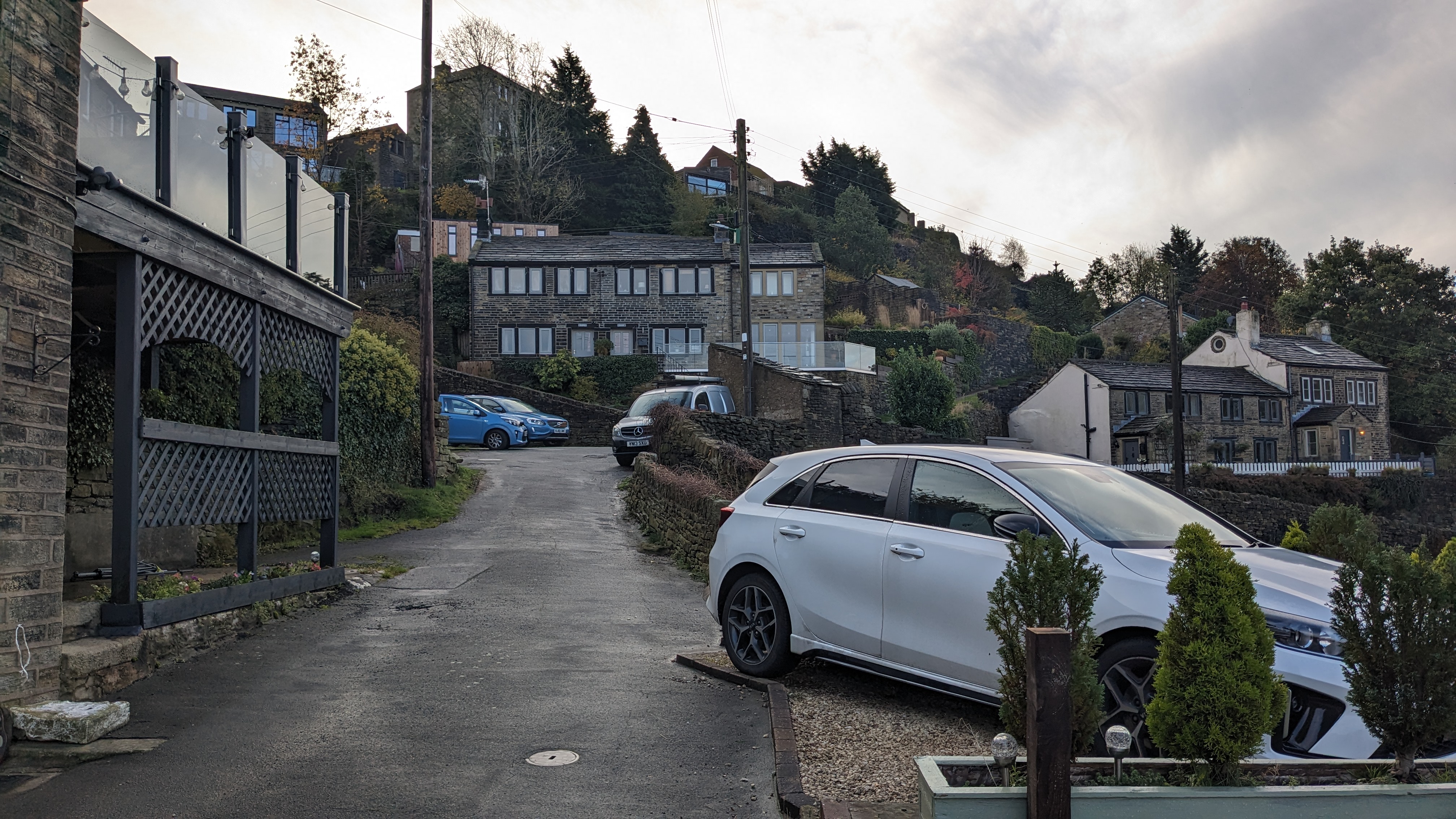
It’s not a great place if you’re not too steady on your pins, though, as all the slopes are very steep, and it’s quite a climb up from the town below. We’d been warned that the parking space was small, which it was, but the hill it was on was really quite steep. You had to take a run at it in the car, avoiding the low walls and parked cars, because once on the cobbled surface, there was no grip at all. If you didn’t get into the space first time then you had to roll back to the asphalted road to start again. you’re also going to have to have total confidence in your handbrake. I’m making it sound worse than it was, because after a couple of days I had it mastered. There was alternative parking, but it would need a walk up a steep cobbled path to reach it.
The cottage’s location worked very well for us as we visited Manchester, Leeds and Liverpool, all without going much beyond an hour’s drive away. The roads in the town, or at least in the valleys, were scarily narrow and steep, and had parked cars everywhere. I know parked cars act as speed limiters, but when you’re not used to hill starts, blind bends and gaps just big enough to take a car, it’s challenging. We had a very nice Audi A3 as a rental, with an automatic gearbox and handbrake, and they were both put to the severest tests.
My only complaint about Holmfirth, and it applies equally across Yorkshire and probably beyond, was the constant traffic. On the two main streets it was never ending, even in early November. It’s not like there is no public transit, either, because there were plenty of buses. But we have all become accustomed to being able to drive anywhere we like, and that’s what the problem is. I am of course extremely aware that in our rental car, we were part of the problem, and I fully accept that.
Would I go back to Bramble Cottage? Yes, I would. That is the best recommendation of all.








 Stevemayne's Blog