
Tags
aviation, Bomber Command, Commonwealth War Graves Commission, History, Lancaster Bomber, Royal Air Force, Royal Canadian Air Force
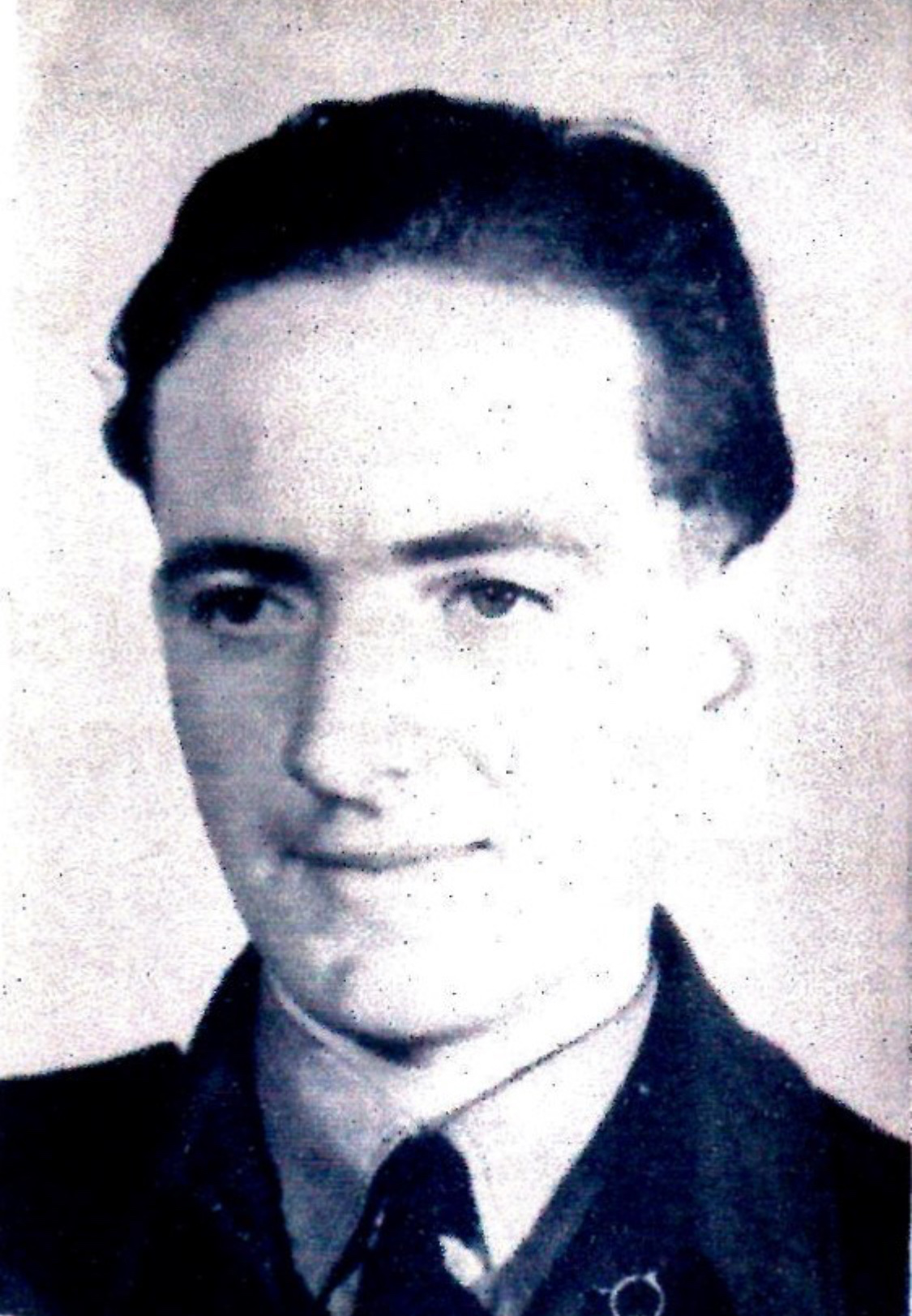
I have many people in my family tree who were lost to war, and those lost to the First and Second World Wars are largely well documented by Britain’s Commonwealth War Graves Commission. (www.cwgc.org). Most were young men serving in the armies of Britain, Canada, Australia, and South Africa, but one jumped out recently because the Royal Air Force is greatly under-represented in my family; his name was Sergeant Archie Pascoe RAF VR, a flight engineer on Lancaster bombers, lost over Germany on the night of 4th December 1944.
Archie was born in April 1922, in Buckland-in-the-Moor, Devon, to Francis Pascoe and his wife Helena Maud Caunter. In my family tree, Archie is shown as my third cousin, twice removed, related to my mother’s side of the family.
There are precious few documents relating to Archie until his marriage in 1944. He missed the 1921 Census, the 1931 Census was lost to fire, and I can’t find him in the 1939 National Register, but from information gleaned from the Widecombe-in-the-Moor website (www.widecombe-in-the-moor.com), it looks like Archie joined the Royal Air Force in 1940 when he was eighteen. Curiously, he joined first as a bandsman, but quickly transferred to aircrew.
Archie Married Constance Rowena Evans in Neath, Glamorgan, Wales in July 1944 when they were both posted to the same RAF Station.

On the afternoon of 4th December 1944, Archie boarded 619 (B) Squadron Lancaster MkIII, ND932, at RAF Strubby in Lincolnshire. The aircraft was captained by Flying Officer Stanley Victor of the Royal Canadian Air Force (RCAF)*, and headed for a bombing sortie to Heilbronn in Southern Germany. Before reaching the target, Lancaster ND932 was hit by fire from a German night fighter, and crashed sixty miles short of Heilbronn. The only crew member to survive was one of the air gunners, Flight Sergeant Gordon Goudy RCAF.
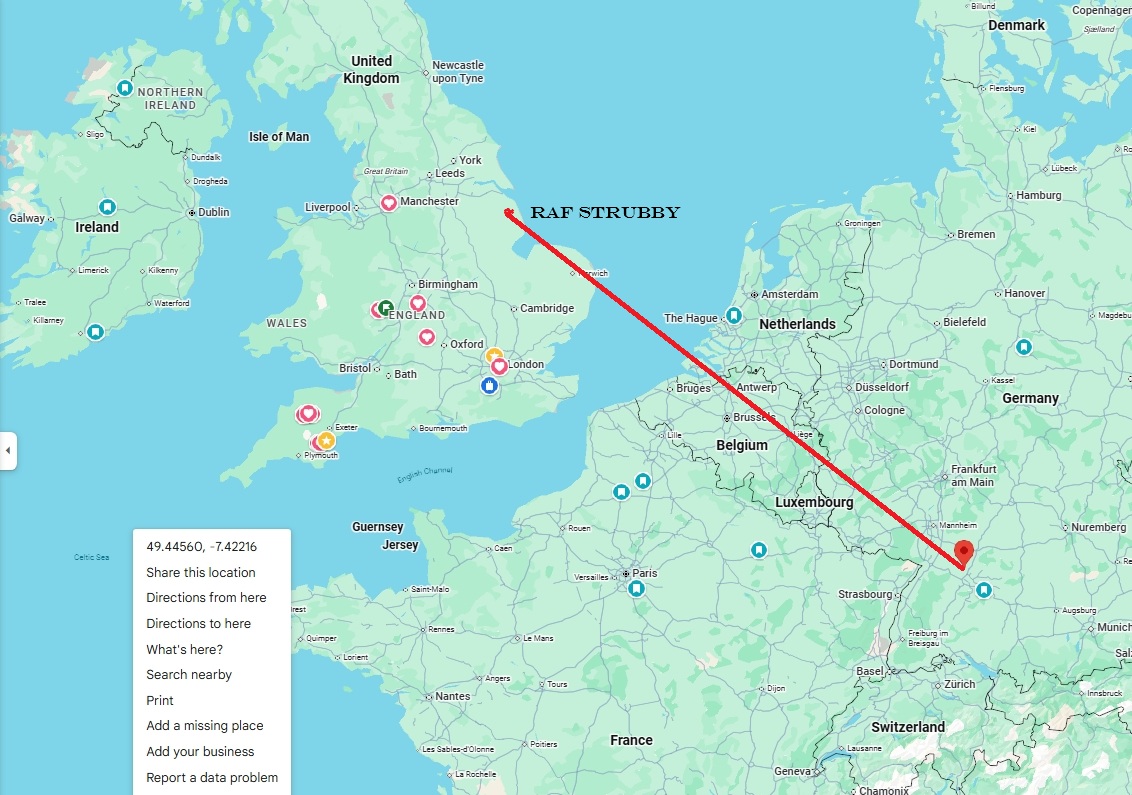
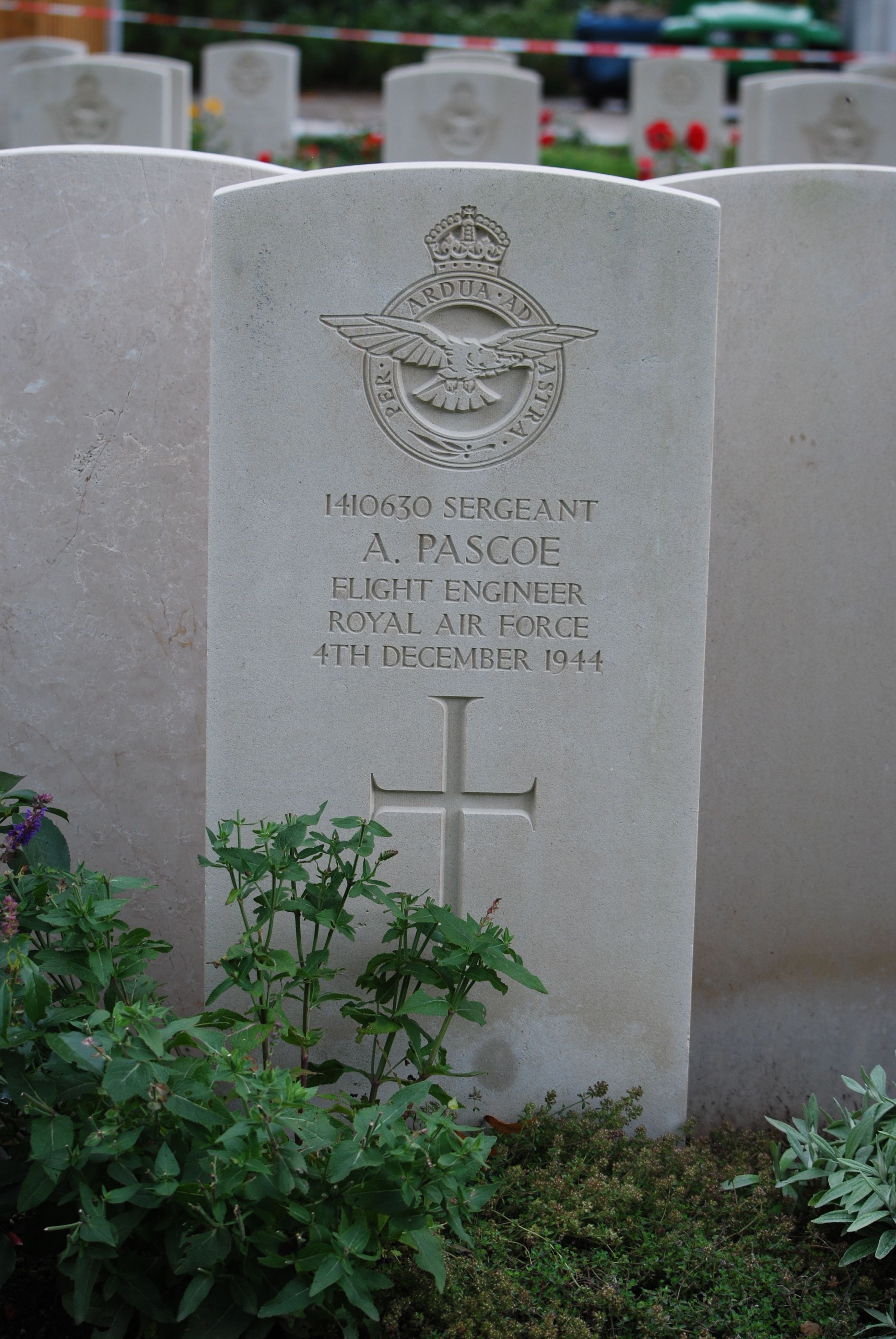
The bodies of the crew were initially interred at Unterriexingen cemetery, near Heilbronn, but later reinterred at the Durnbach War Cemetery south of Munich. As with all British and Commonwealth servicemen killed overseas, their graves are maintained by the Commonwealth War Graves Commission.
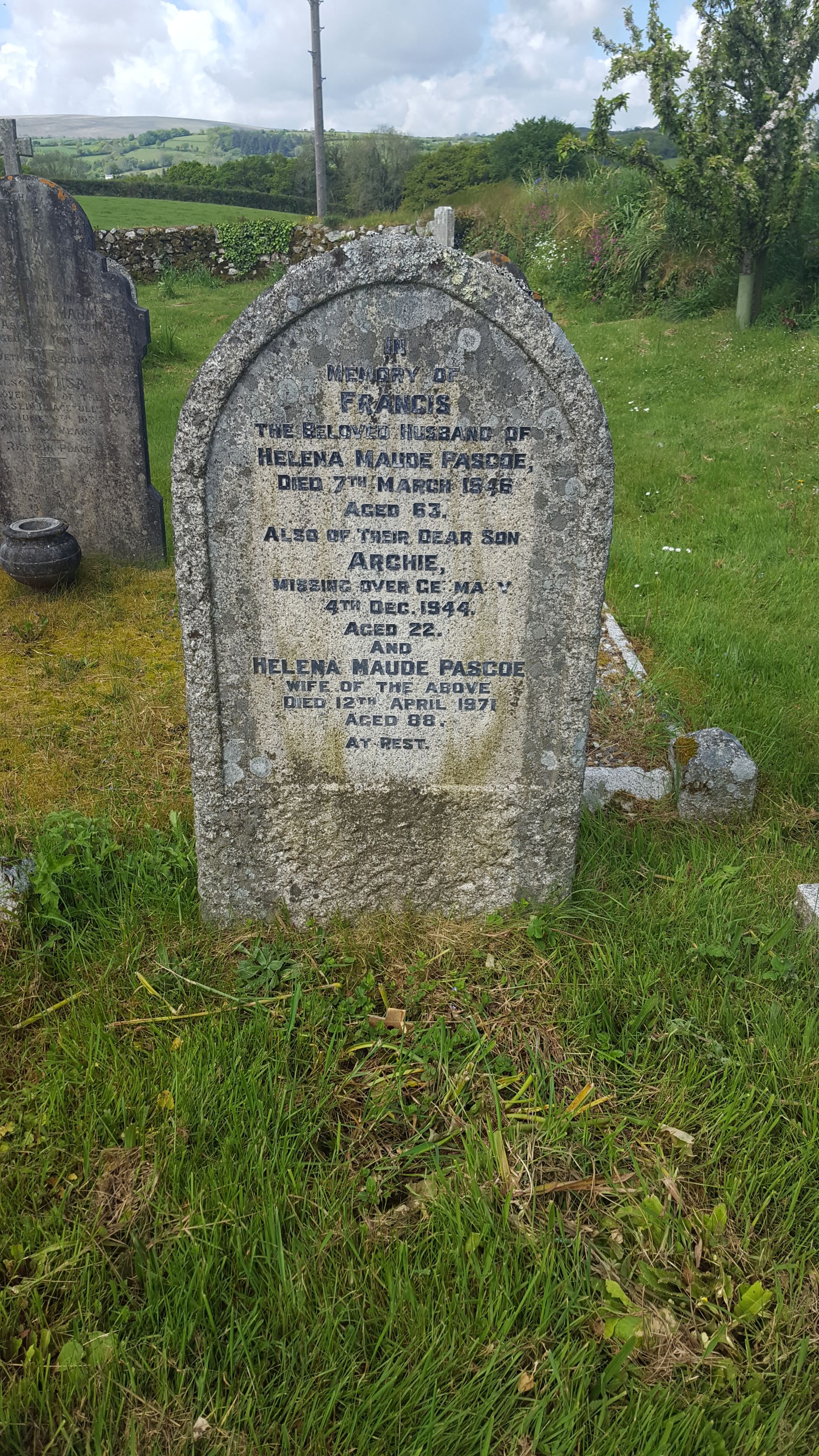
Although the youngest of eight Pascoe children, their parents were hit hard. Francis Pascoe, Archie’s father, died in 1946 and was buried in the churchyard at Buckland-in-the-Moor, and his gravestone was annotated with Archie’s name and date of passing. His mother, Helena, was interred in the same grave when she died in 1971.
I was surprised at the amount of information that’s available about WWII aircrew, particularly Bomber Command aircrew, on the Internet. Aside from the military aspects, the Widecombe-in-the-Moor village website has a page dedicated to Archie, as it does for all the local men lost in the two World Wars. I have no doubt that there is other information out there, but the Widecombe page is nice, informal round up for a local lad.
Of course, I marvel, as I always do, at the young age of the wartime combatants. I cannot imagine flying across Germany in a Lancaster bomber at the age of 22, and I grieve for the parents of all these young men; how devastating their loss must have been. Lest we forget.

* Three other crew members were RCAF, and I’m grateful to the Canadian Aircraft Serial Personnel Information Resource (CASPIR) website, part of the Canadian Warplane Heritage Museum at Hamilton, Ontario, for the information relating to the aircraft and its crew (www.caspir.warplane.com)

