England ’23 – A Note About Driving

Tags

, , , ,

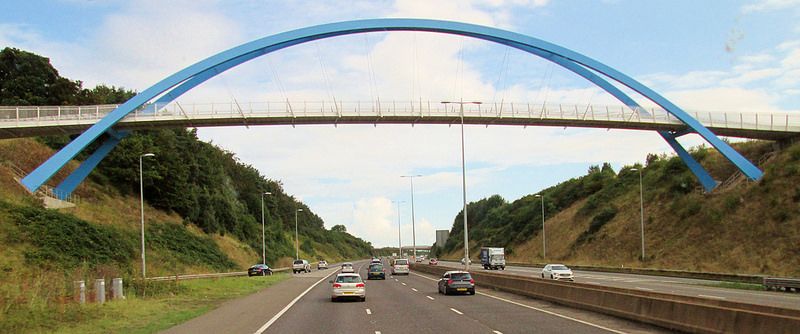
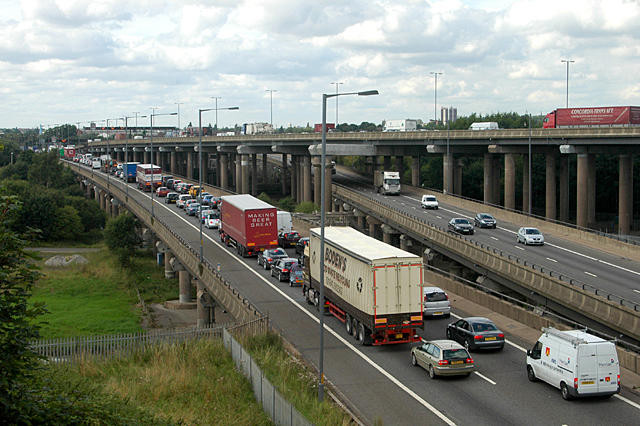
Driving in England is certainly quite different than driving in Canada, or indeed North America. It’s not about driving on the left in the UK, although if you’ve never done it that could faze you, it’s more about the sheer quantity of cars and trucks on the roads, and how people drive in a way to keep things moving.

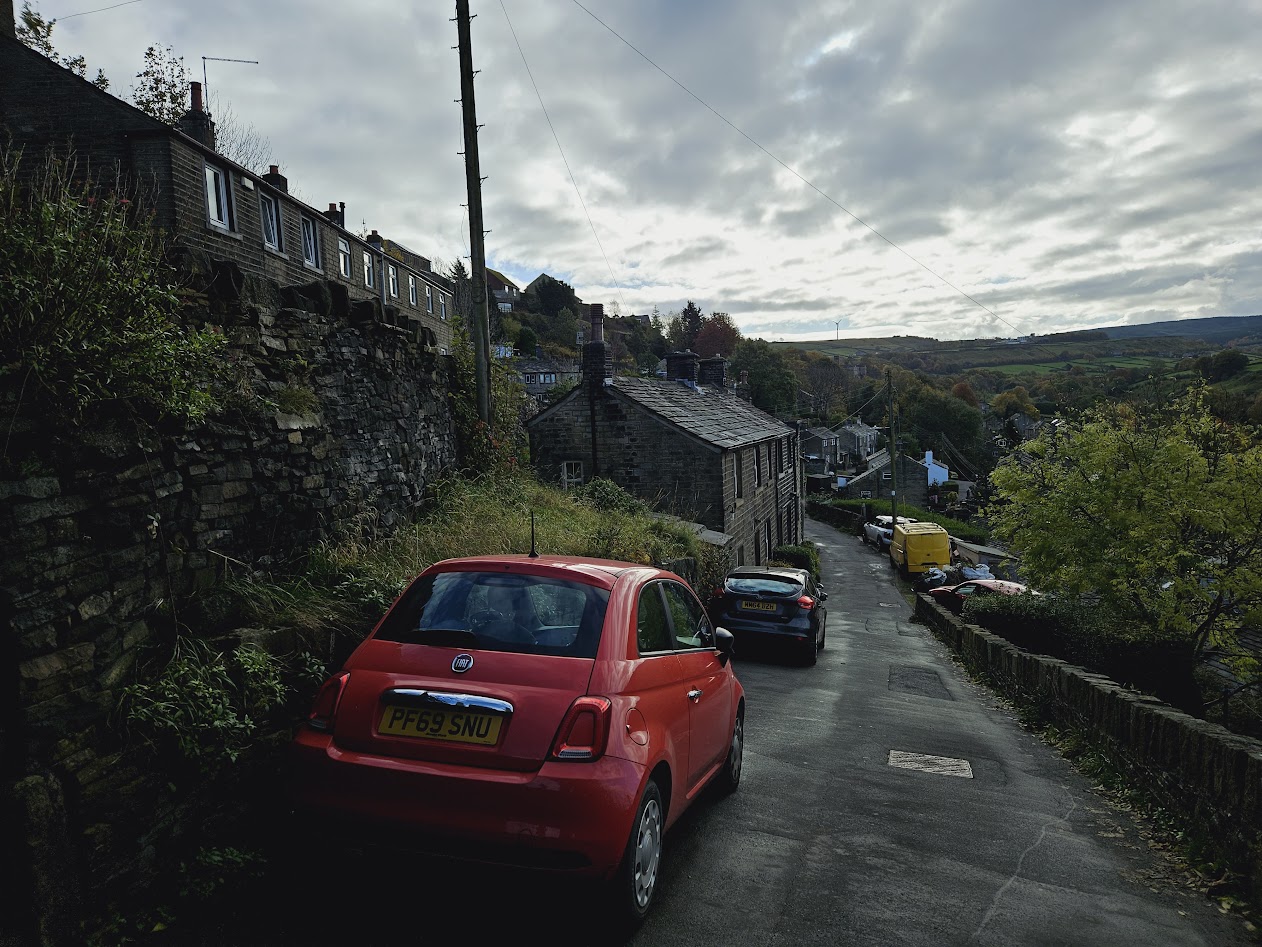
UK roads are rarely straight and rarely wide, so the new arrival to the country needs to think about the car they want to hire. Big cars are a disadvantage in so many ways, not least in petrol (gas) costs (gas is so much more expensive in the UK), the general width of the roads, and the parking. Oh, the parking!
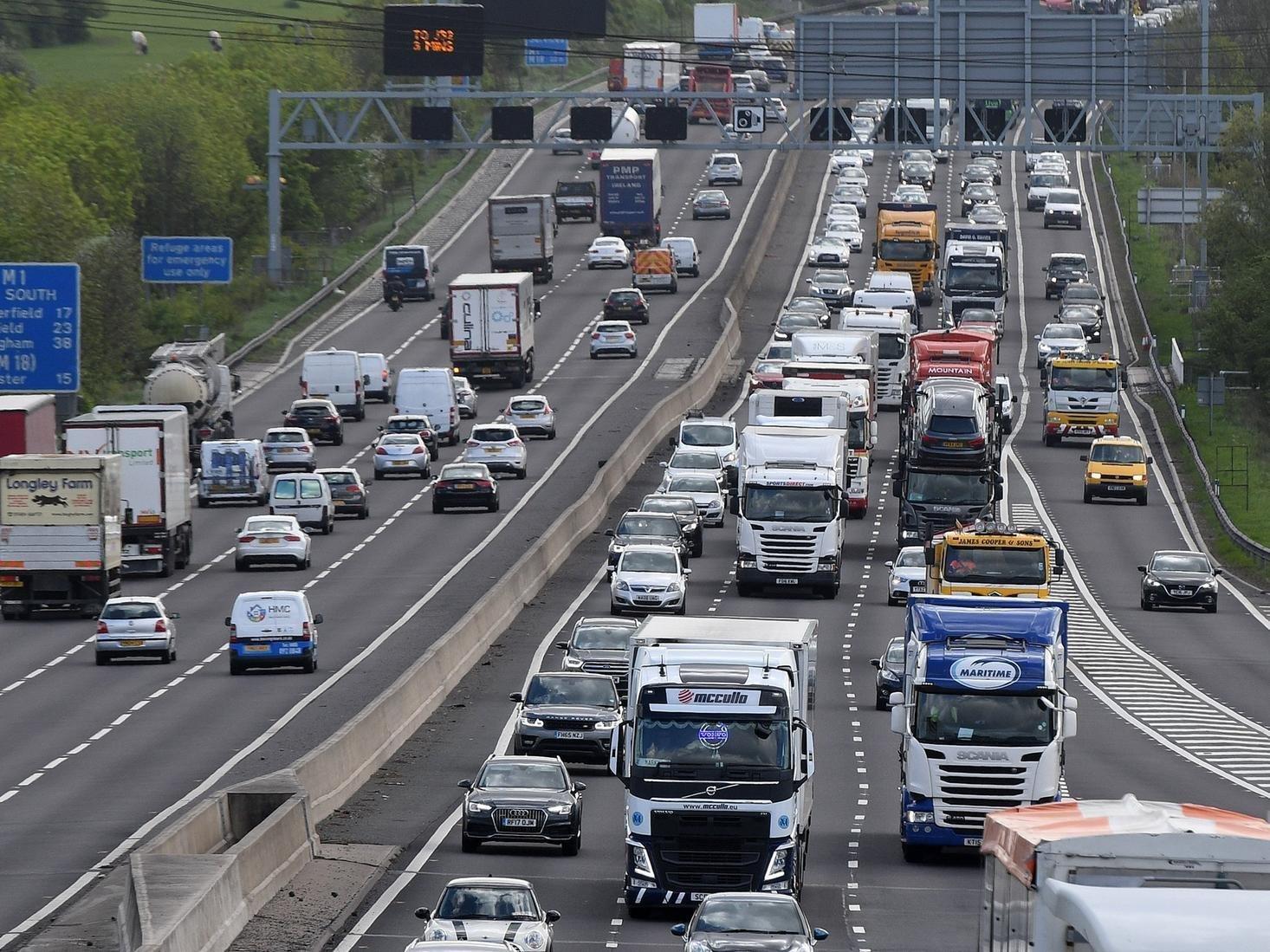
The speed limit on the motorway is 70mph, unless signed otherwise. But trucks are limited to 60mph, as are any vehicles towing trailers, so that left driving lane gets pretty full. There are also many people who do not drive at the limit, keeping it somewhere between 55 and 70. That will sound odd to Canadian And US drivers, but the traffic everywhere is so heavy that it’s very often not safe to drive any faster. Lane discipline is fairly good, people don’t hog the right lane (of three), although slower drivers do get caught in the centre lane sometimes, but that’s down to the heavy traffic. To keep moving at a sensible speed, you have to be very aware of the big picture, know what’s ahead and what’s behind so that you can anticipate lane changes well ahead. But here’s the thing, everyone’s doing the same thing and most are going to be very co-operative. If you signal a lane change then others will move to allow you out, or adjust their speed. It really is driving with co-operation.

In the same vein, when someone passes you, they’ll pull back in front of you so closely that it looks dangerous. But, as I’ve found on this trip, they’re just doing the lane discipline thing and move on to build the gap between themselves and you as quickly as they can. There’s no slowing, or braking, they just get going.

The co-operative driving goes further on regular roads. People driving along will often slow slightly to allow someone else to join the traffic from a side road. There seems to be an understanding and the person in the side road pulls out and everyone just gets on their way, there’s little in the way of insisting on rights, it’s just being co-operative. The driver who lets someone join the traffic will be the driver in the side road next time, so everyone gets it. I’m talking generally, of course, because there are some idiots out there, but generally it all works quite well. I haven’t come across the “established right of way” during this trip. That’s where someone pulls out across the road and waits (to turn right, typically), essentially blocking the traffic in one lane. That’s allowed in the UK when the road is clear to start with and you’re considered to have established a right of way in so doing. I tried that in Canada once and I swear the buggers would have driven straight into me if they could have. Once again, this is an example of co-operative driving.
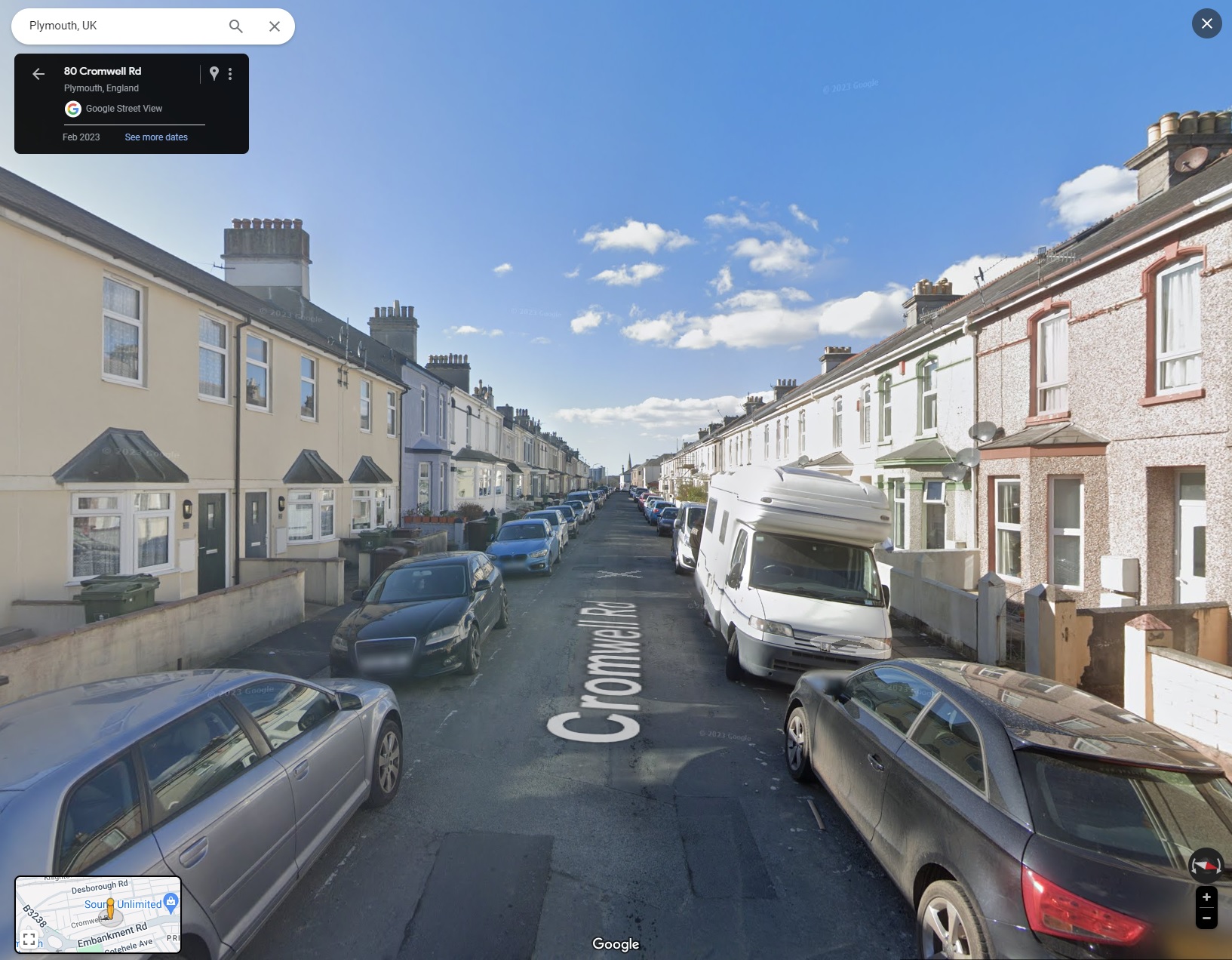
In a lot of the bigger cities, London particularly, the speed limit has been reduced to 20mph. That will sound crazy to North Americans, but on tight, congested roads it actually works. Slower speeds keep the traffic moving, and when someone does pull out across your lane, you have plenty of thinking and stopping time. Add to that the fact that the limits are quite rigidly enforced, with speed cameras everywhere, and you get people driving to the rules. It’s a breath of fresh air, I can tell you.

There are also lots of roundabouts and Give Way (Yield) intersections, which I think keep the traffic moving as well. Roundabouts are often very small and just painted on the road, but if you just yield to the traffic on the right, they’re easy to use. In Canada I get quite irritated at the need to keep stopping at Stop signs and stop lights, so Yields and roundabouts keep me happy.
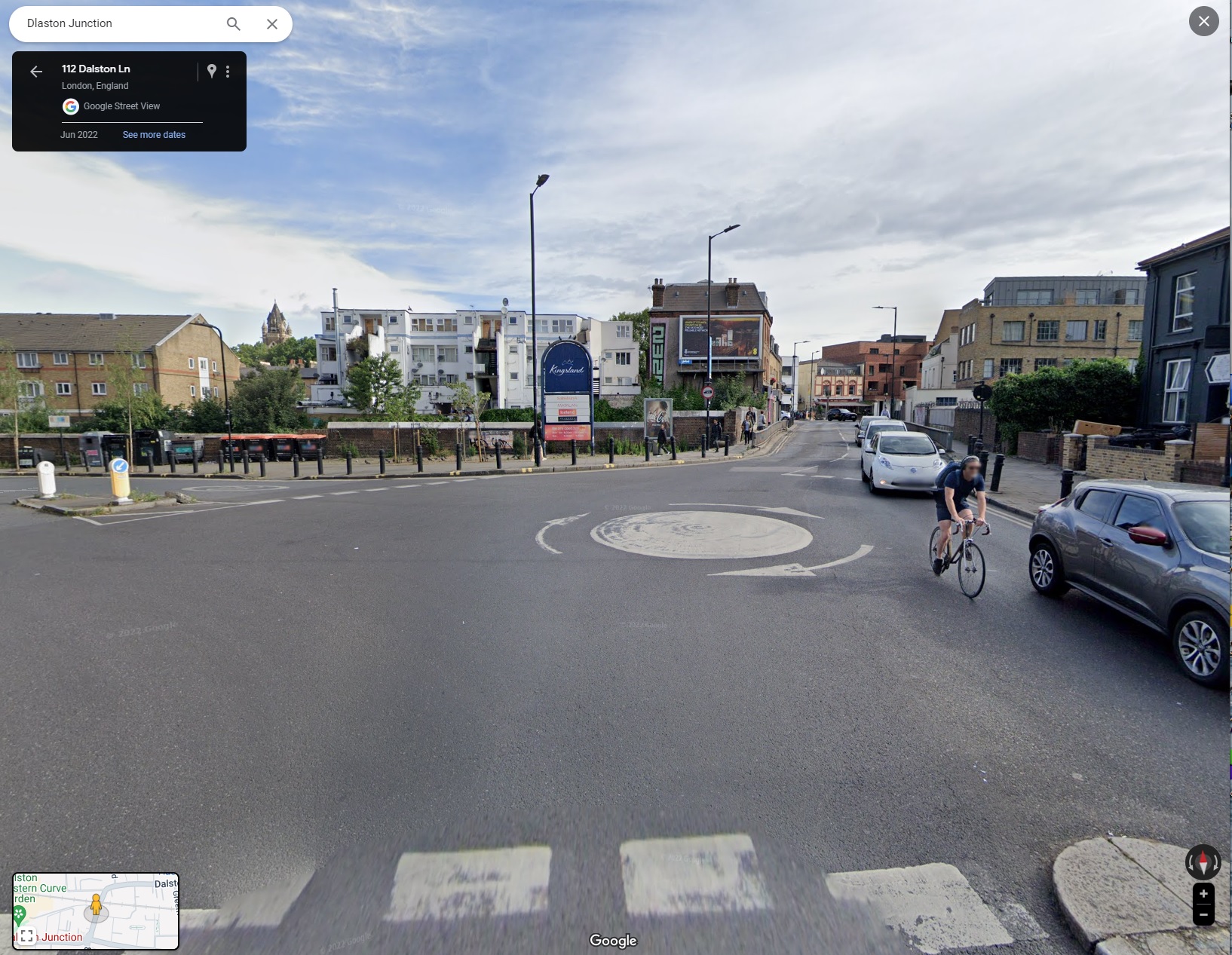
On the negative side, though, the UK can be a tough place to drive. Narrow roads, steep hills and very heavy traffic all combine to make driving a real chore sometimes. Petrol costs are about 30% higher, and parking is almost always paid, and very often really difficult to find. Bus lanes are everywhere, and you really can’t use them in the car, unless you want a hefty fine. With the weight of traffic generally, congestion can be a serious problem, and journey times can often double because of it. For the visitor, if you’re staying in London or another big city, ditch the car and rely on public transit. It’s cheap and plentiful, and believe me, it’s a lot less stressful.
England ’23 – Saltaire

Tags

, ,

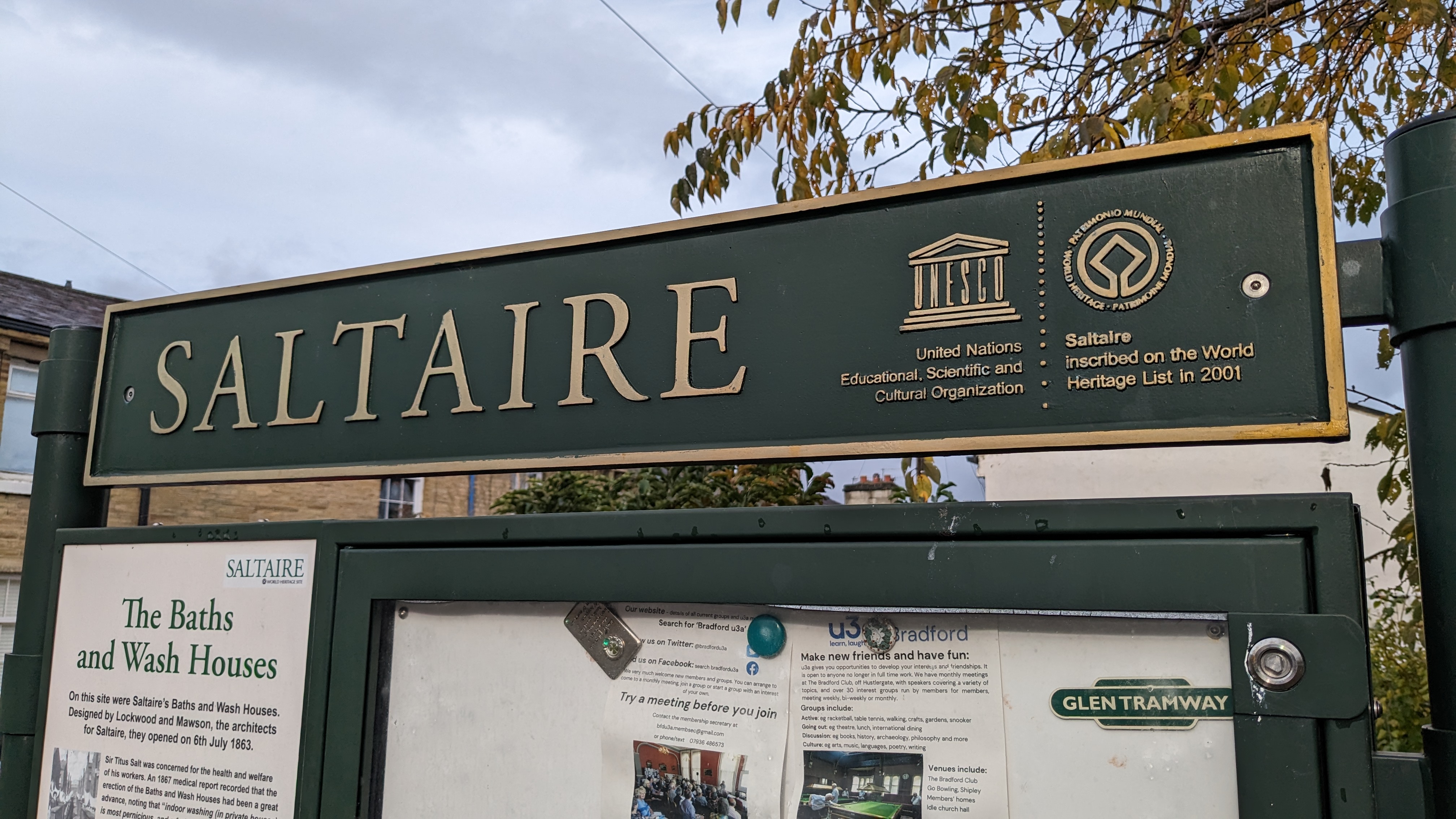
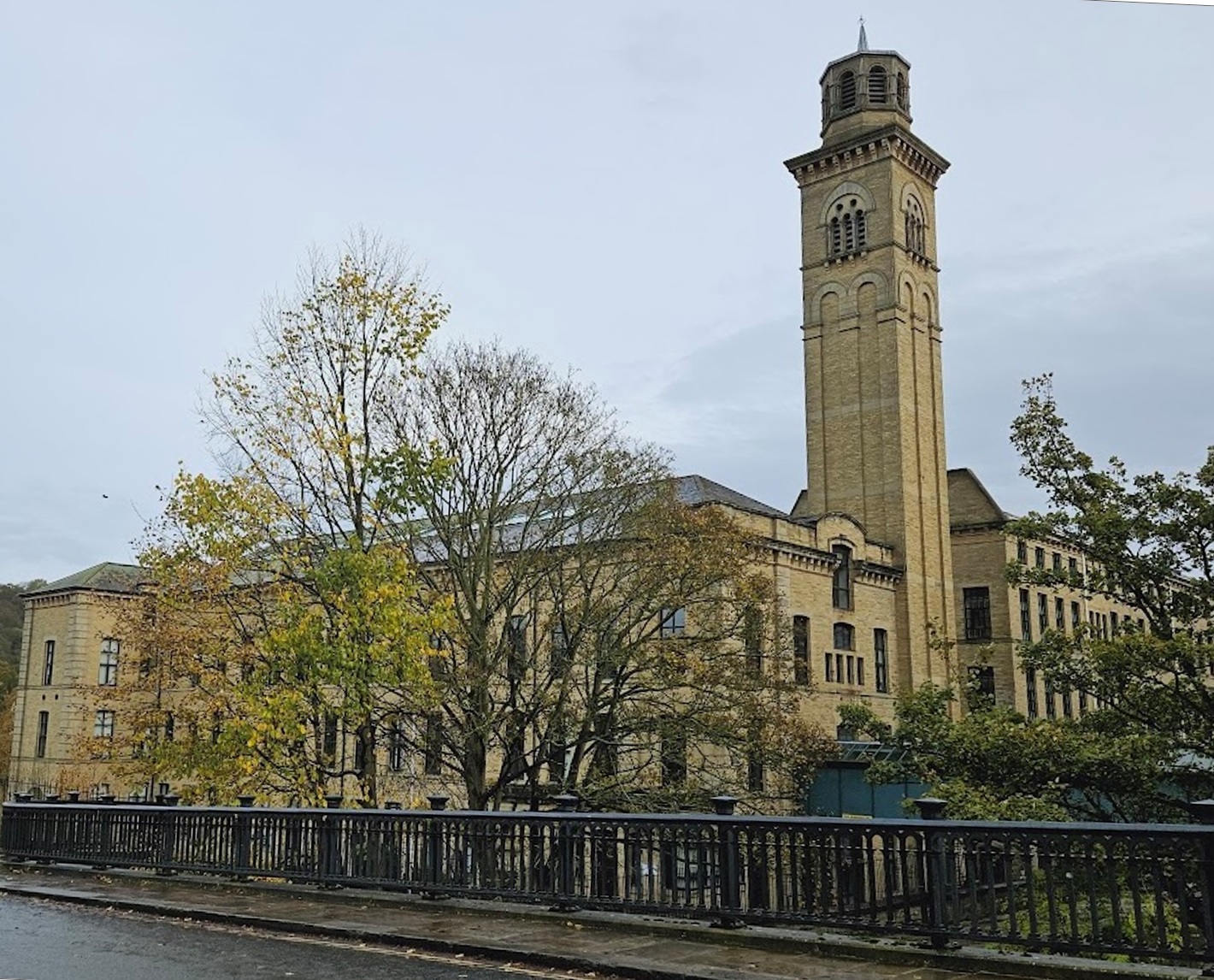
If you know your nineteenth century social and economic history, you’ll know all about Sit Titus Salt and his model town and mill, built on the banks of the river Aire, just three miles north-west of Bradford. So significant is/was Saltaire is that it now enjoys UNESCO World Heritage Site status.

I don’t intend to write out the history of the place, but here is a link to its Wikipedia entry, should you feel the need to read into things a little.

Saltaire

We decided on run out there because we’re both interested in social history, and of it course it offers some insight into the lives of my ancestors who lived in that part of the world at the time Salt’s mill was running. I was feeling very happy that we were able visit, actually.

The drive took us through Bradford, sister city to Leeds, and historically the centre of the British woolen industry. Like Leeds, it’s going through some major regeneration, but some of the old soot-blackened buildings remain, hopefully to be repurposed rather than pulled down. I’d never been to Bradford, so that was a tick in the box for me.

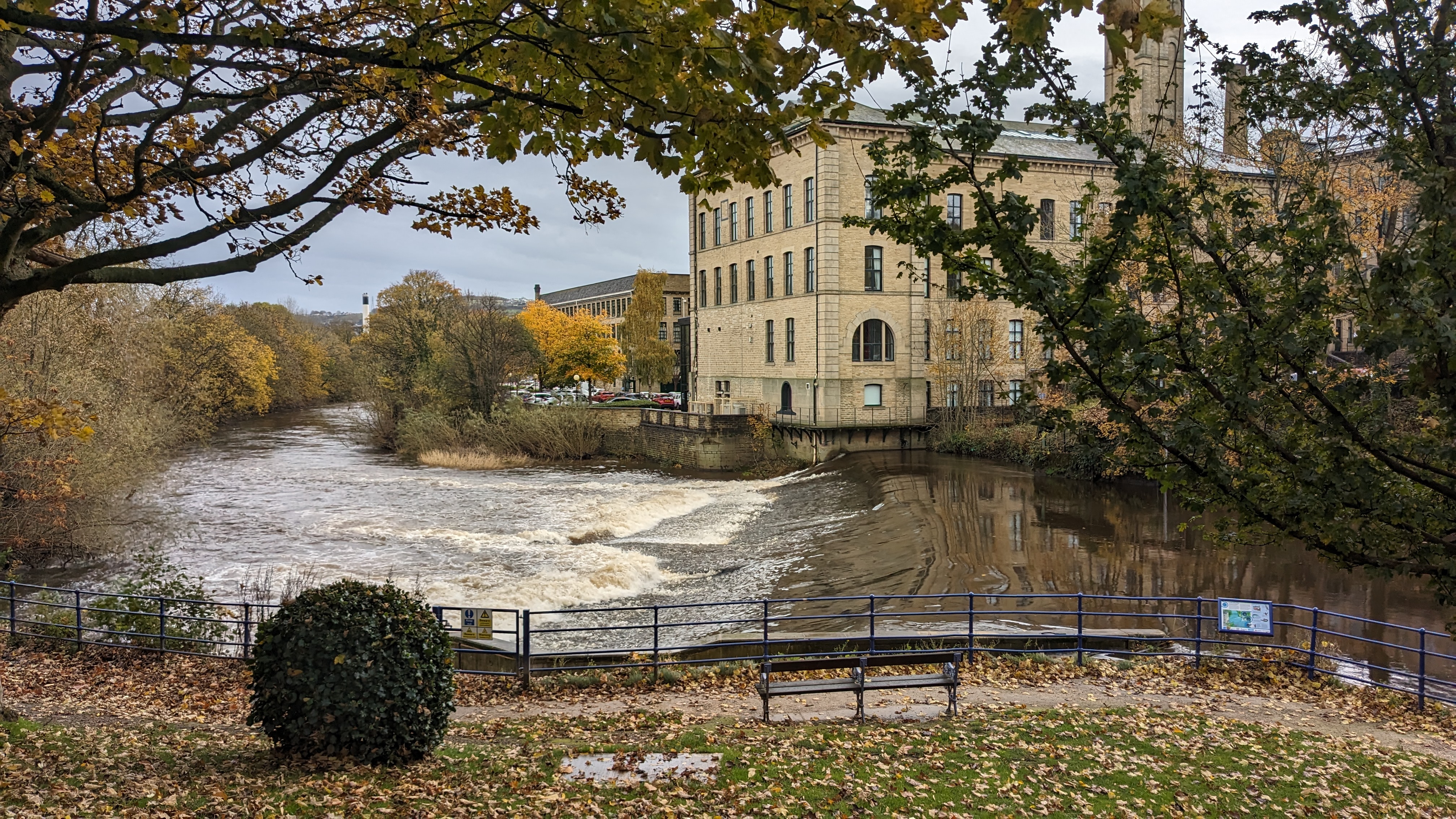
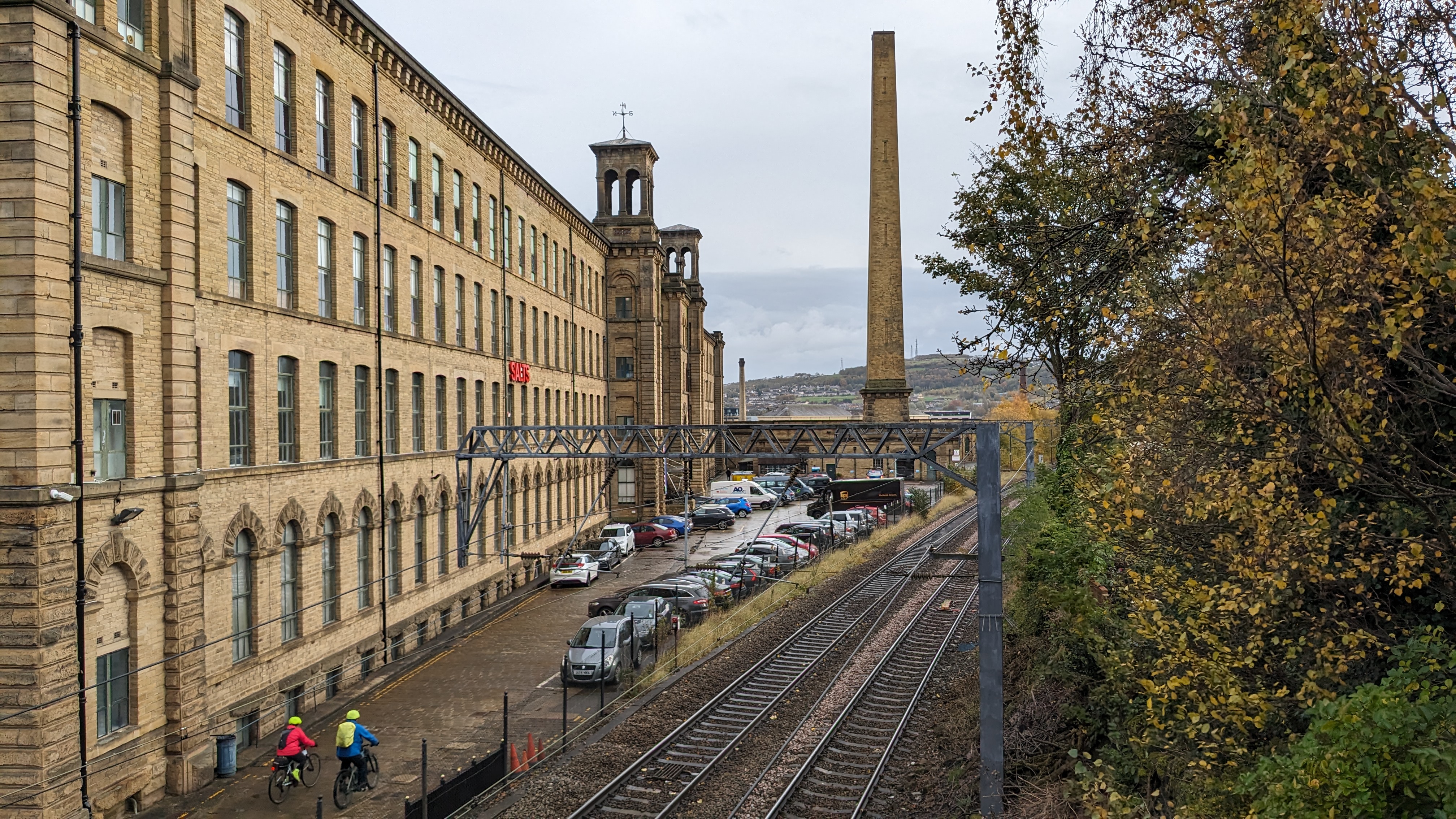
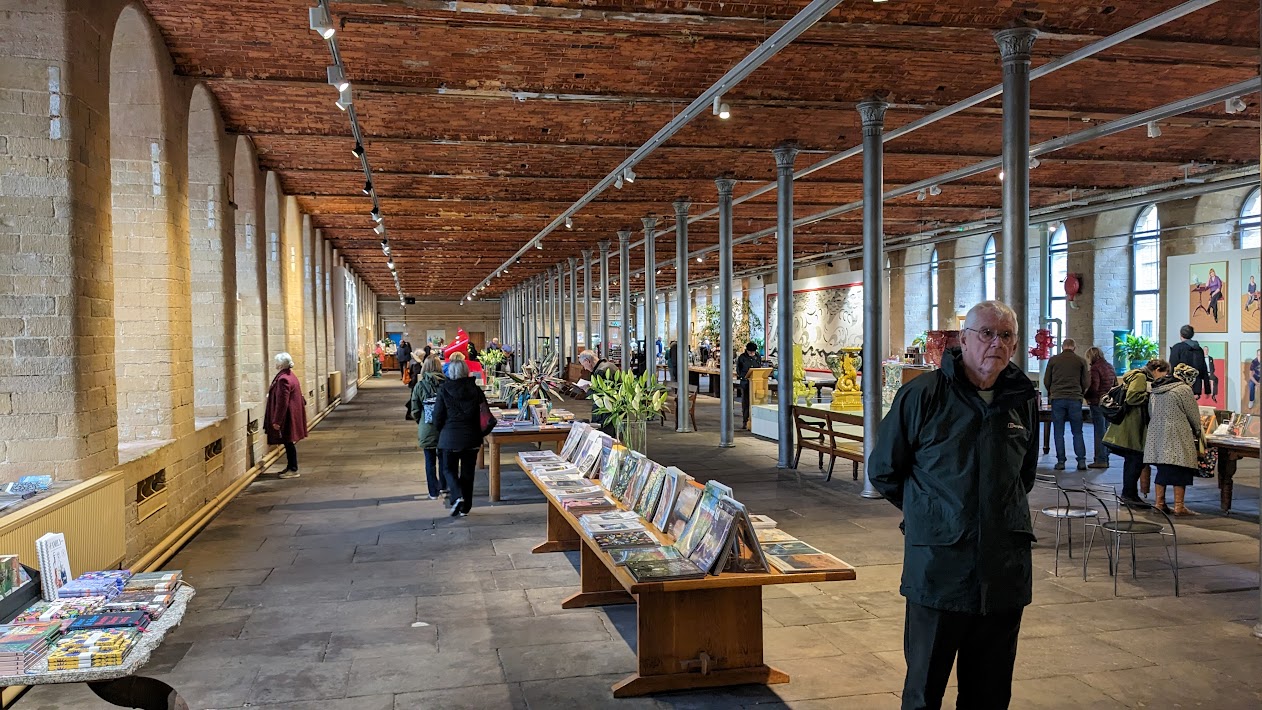
The mill at Saltaire has been repurposed, or at least parts of it have. It’s absolutely enormous, being the first mill to bring all the manufacturing aspects of cloth production under one roof, so there’s a lot of space to fill. I had imagined that it would be shops and offices, and indeed there are retail outlets and offices, but there are also exhibition and performance spaces, as well as very popular restaurant. All these things are required to keep the mill from falling into disrepair, and it was the life’s work of Leeds businessman Jonathon Silver to bring the place back to life. We’ve a lot to thank the (sadly now departed) Mr. Silver for, not least in his friendship with the artist David Hockney, because the mill now contains the largest collection of Hockney works in a single place. I may be a bit of a Philistine when it comes to art, but I appreciate seeing the real thing when I can.
The big machine halls are impressive spaces, and I always try to imagine what they might have been with the machinery installed and running. I think noisy might be one descriptor. It’s easy to dismiss the modern uses the mill is being put to, especially given that it was the world’s centre for the production of quality Worsted cloth, but without the modern use, the mill might not exist any more. We had a browse around, tried to picture the thousands of people working there, and generally appreciated the mill for its significance, past and present. We also watched a very slick video about how the mill was built, and how its been brought back to life, which was worth our sitting down to watch.

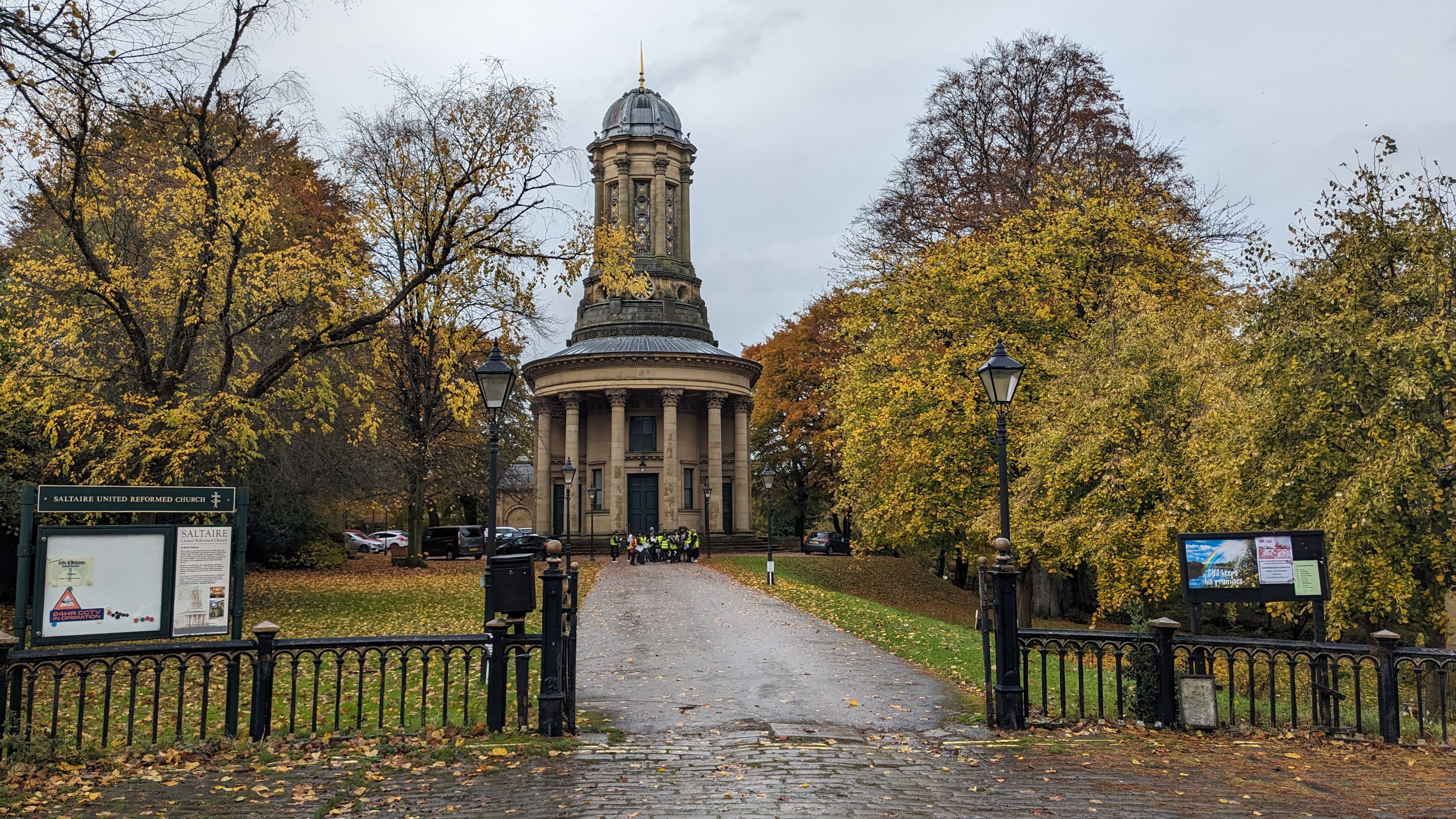
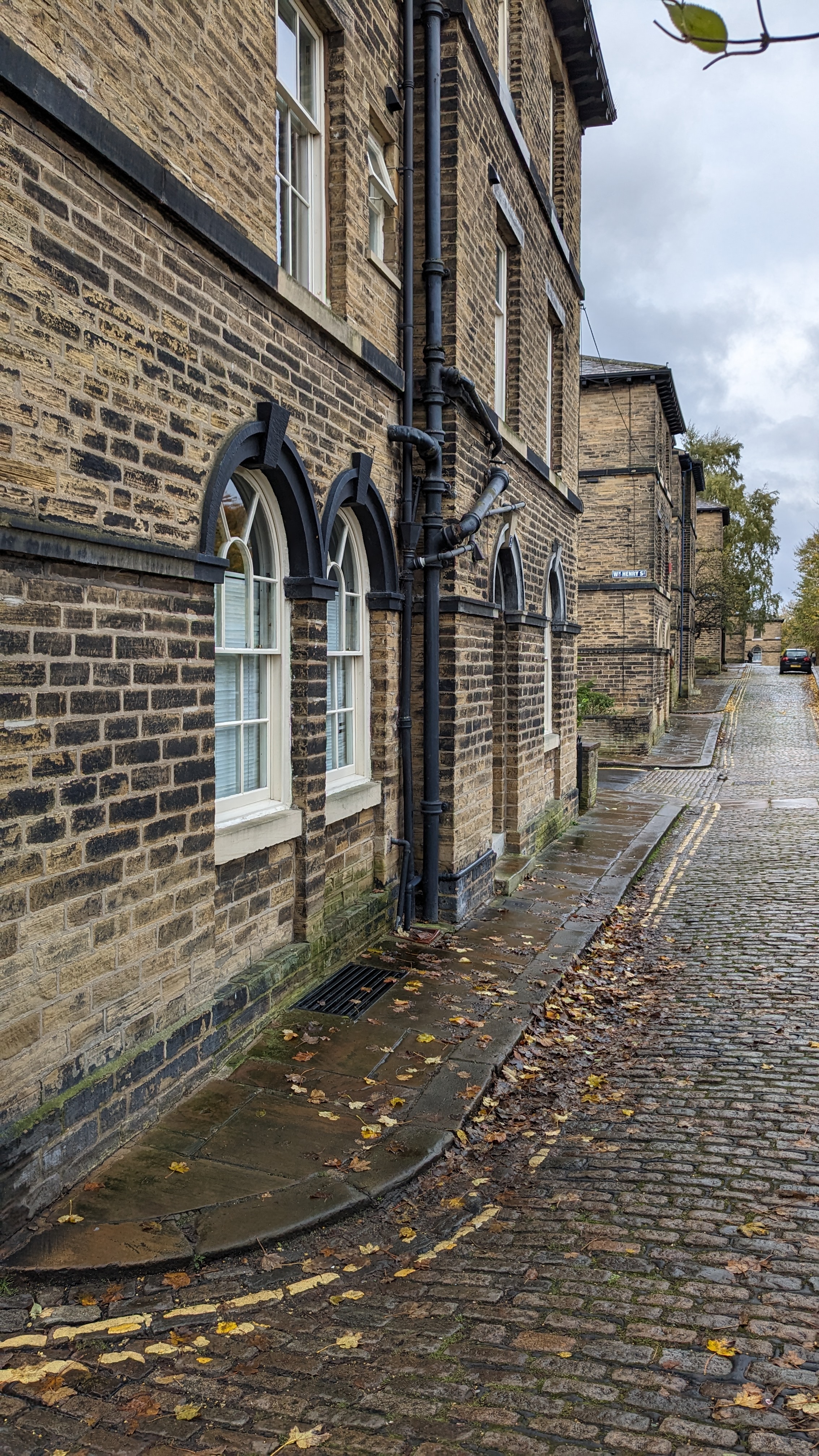
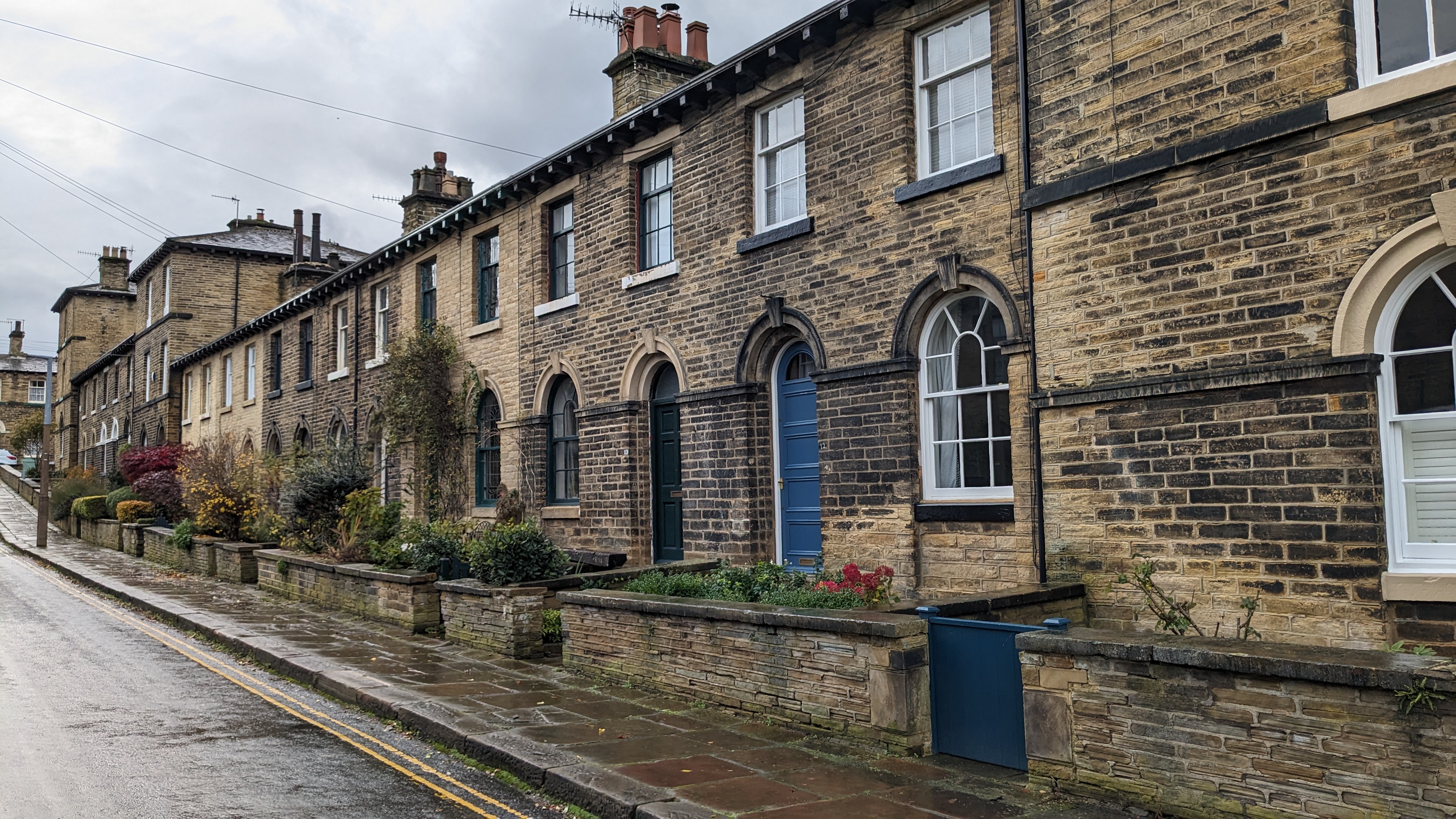
The other side of Saltaire is the model town. The jury is out on whether Salt was a true philanthropist, but he certainly understood the plight of tens of thousands of workers in Bradford who lived in absolutely squalid conditions in the nineteenth century. Initially he brought workers to the mill from Bradford on the train each day, but ultimately he constructed an entire town of modern (for the time) housing for his workers, complete with gardens, sewers and running water. There were shops built, a communal bath and laundry house, a grand church, a town hall, a couple of schools, a hospital, and all manner of recreational facilities, including a park and boating and swimming area in the river. All of this was a world away from the squalor of Bradford and Leeds, of course, and broke the mould when it came to workers’ welfare.

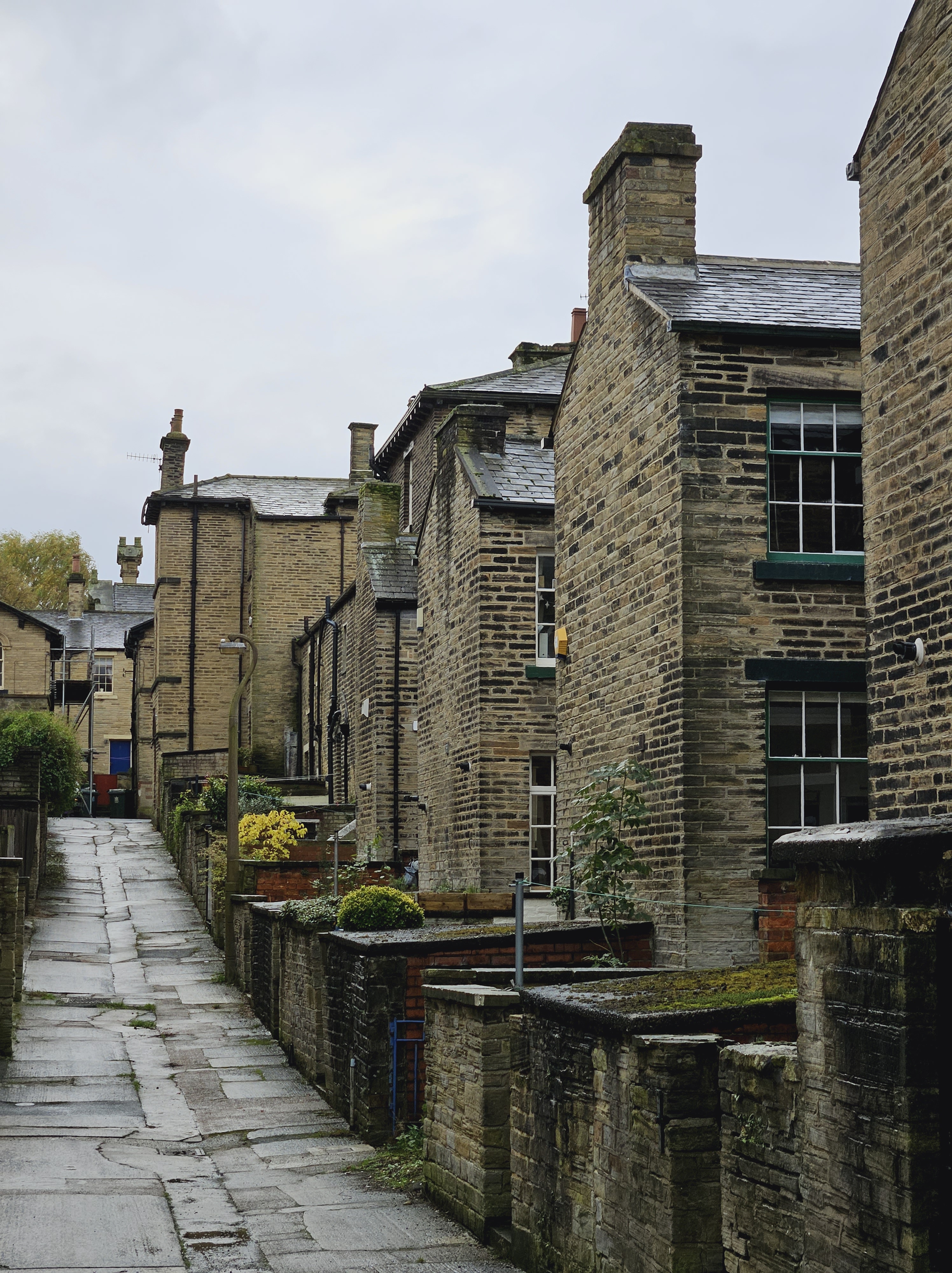
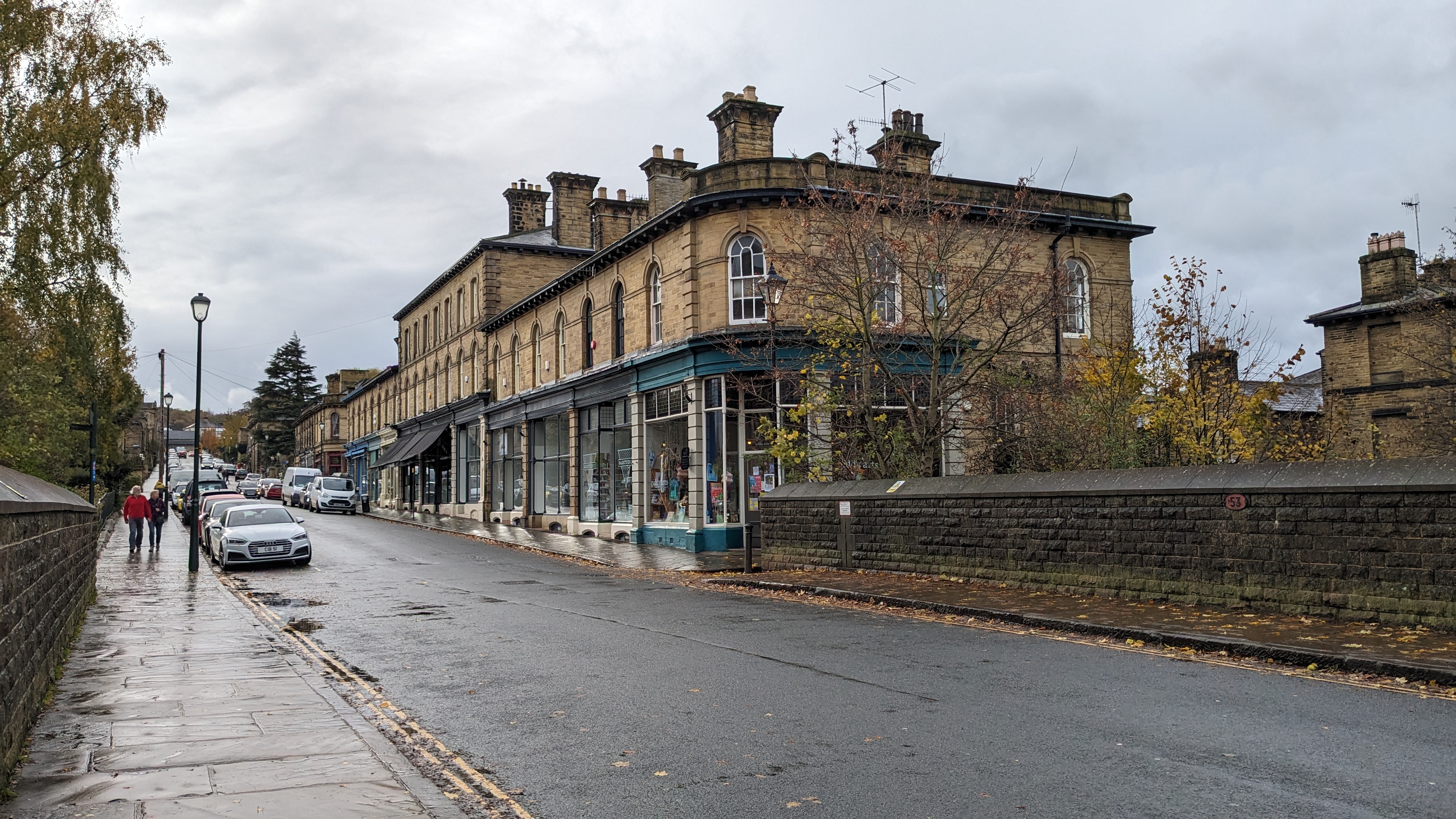
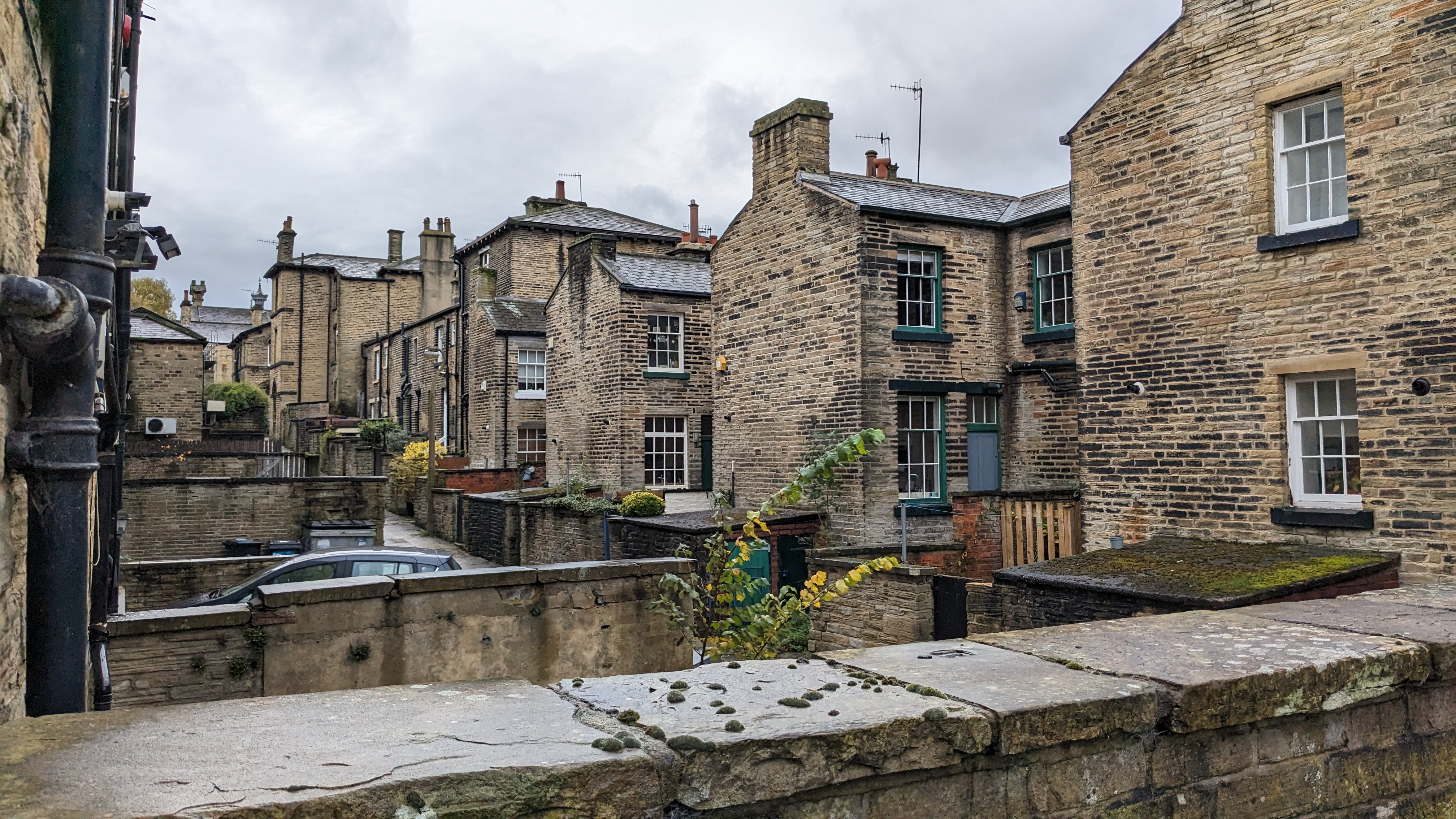
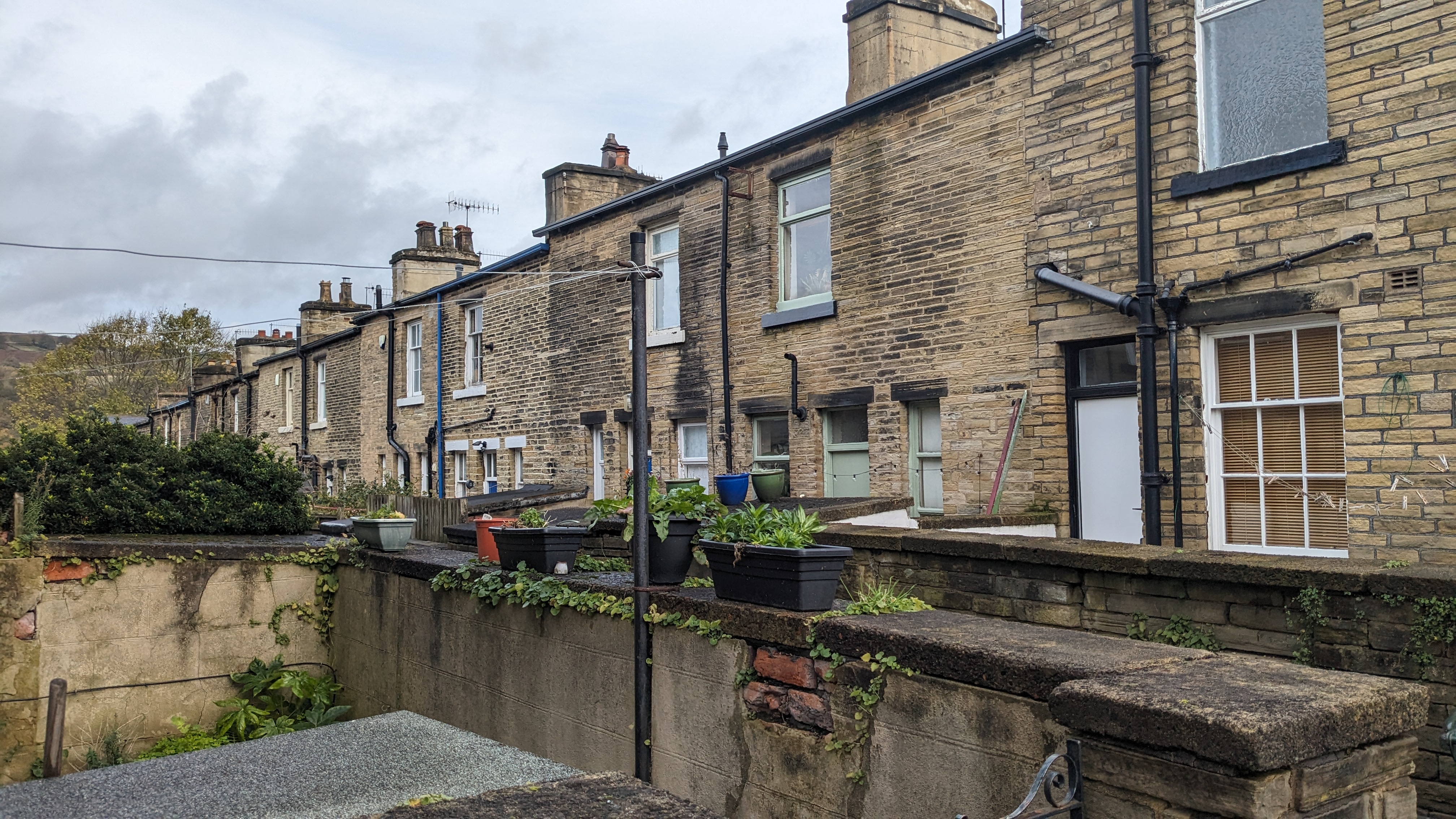
While Salt had owned the whole town, renting the houses to his workers, all of the houses are now in private hands and are Grade II listed to ensure that they remain as part of Salt’s legacy. We spent quite a while wandering the streets, all named for Salt’s children and grandchildren, admiring the sturdy houses (although sometimes wincing at some of the modern “improvements”), and generally feeling very lucky to have had the opportunity to visit. Indeed, we went as far as to find out how much a house might cost to buy today, and the prices were quite reasonable. They’re small, though, and the Grade II listing will limit the price, but what a wonderful place it would be to live.

I almost forgot to mention that the main school that Salt constructed for the children of his workers is still being used as a Sixth Form College today. Indeed, the streets were flooded with students when it was lunchtime, which made the place seem far more than simply a World Heritage Site.

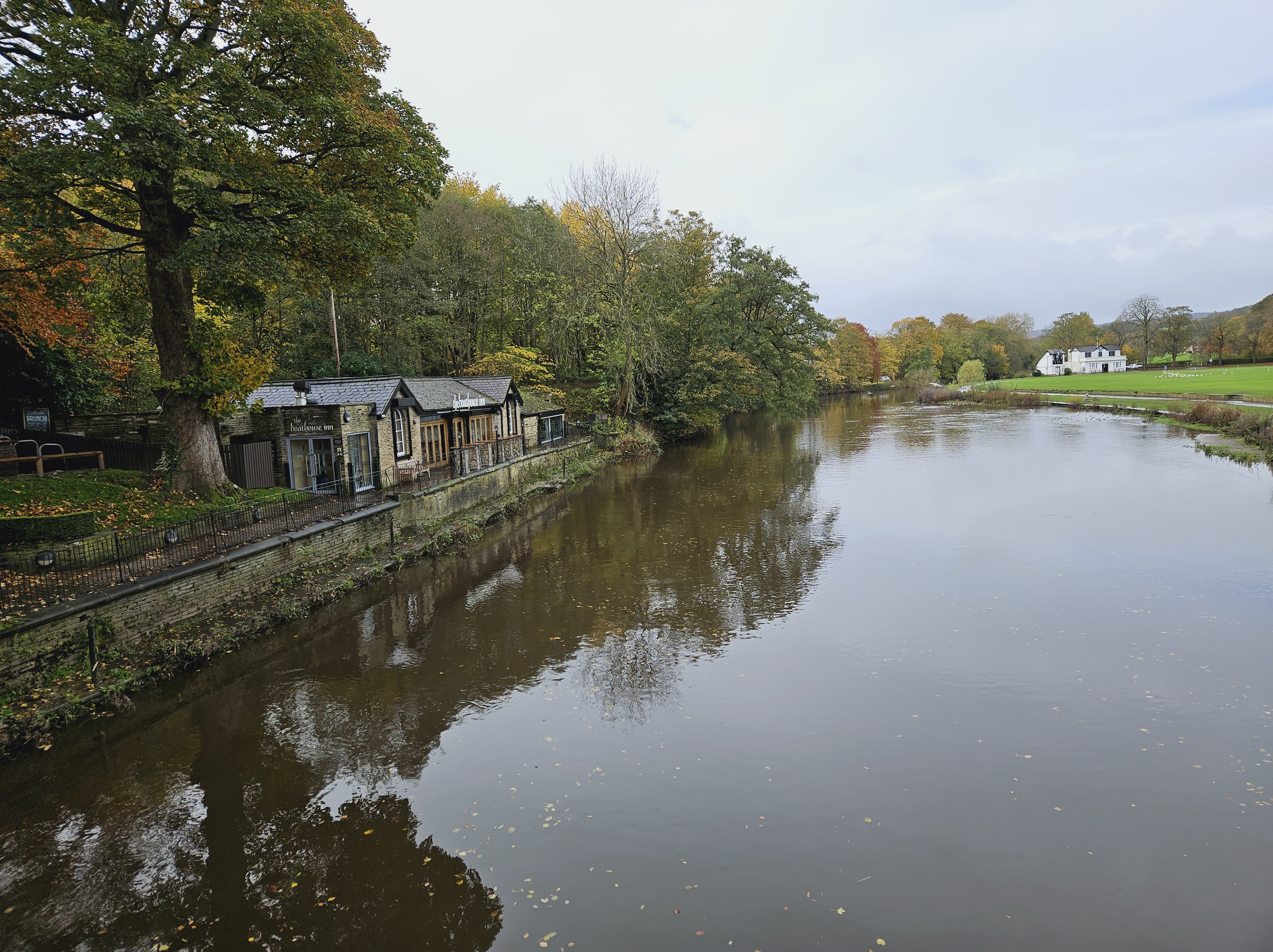
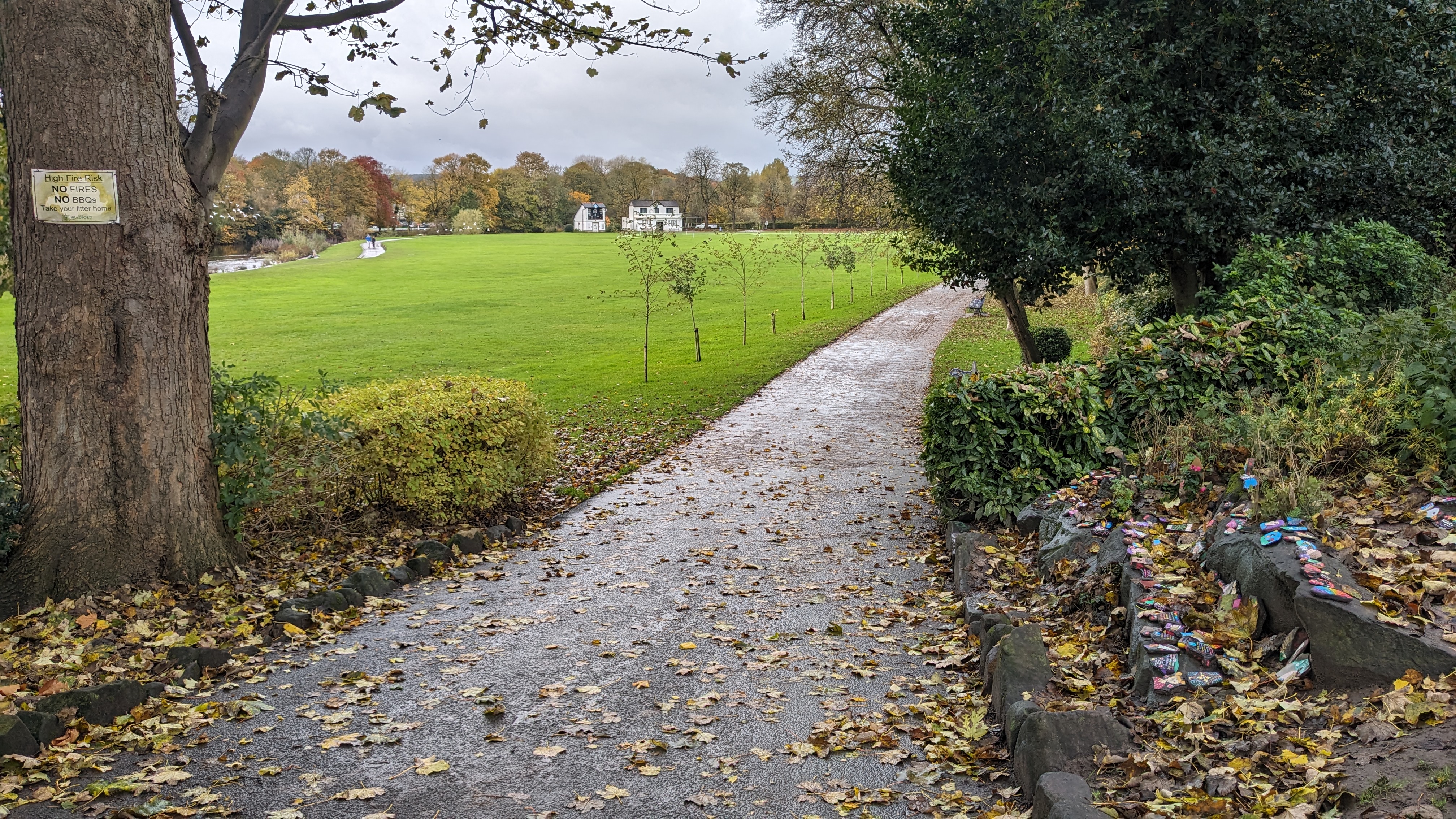
We dined in what had been Salt’s communal boat house, wedged between the canal and the river, and spent a happy hour or so gazing over Salt’s park on the opposite bank. The food was OK, too.

After Saltaire, our daylight was limited but we jumped in the car and headed towards Pateley Bridge, deep in the Yorkshire Dales. This thing with the daylight was an issue as it was almost dark at 4pm. However, we did get to see plenty of stunning Dales scenery, and couldn’t help humming the Emmerdale theme tune all the while.

It had been another long day, but a worthwhile day. If you’re in central Yorkshire, put Saltaire on your list, you won’t be disappointed.

England ’23 – Liverpool

Tags

, , ,

Liverpool. Beatle Country. Somewhere we’d always been reluctant to visit, but now having committed to go, the forces of evil tried very hard to prevent us from getting there.

We had planned a train ride from Huddersfield, about half-an-hour’s drive away from Holmfirth, to Liverpool Lime Street station. The day before the trip, though, I had an e-mail to say that the train we were booked on, and the return train, were cancelled. A wise woman of our acquaintance had suggested this might happen, so we were disappointed but not too surprised. The train company did at least offer some alternatives, one of them being a refund, and after some deliberation we decided on that option.

In sorting out a refund, the rail company, Trans-Pennine Express (TPE), demanded that I supply all the relevant information, which I duly lifted, word for word, from the e-mail they sent me. I then had to send them a scan of the evidence. We hadn’t collected our actual tickets, so I sent a PDF scan of the e-mail I’d used to copy down all the information they wanted. The e-mail, that is, that TPE sent to me in the first place. They promised a reply within 28 days. 28 days? They have systems to swiftly take money from you, but giving it back, when it was they who cancelled the train, seems to require a massive amount of nugatory effort on my part. Bastards. *Late news: The refund was approved and paid in under two weeks.

Our alternative plan was to drive to Liverpool South Parkway station, close to Liverpool’s John Lennon airport, where there was a big, free car park that we could leave the car, and enjoy a train ride into the city. Before we set off from Holmfirth, I heard on the news that trains were further disrupted at Huddersfield that morning after a landslip. Driving was the only option then, obviously.

On arrival at Parkway station, there wasn’t a single space left in the car park, not one. I spoke to the fellow at the information desk, and he said that it’s full at 8am every weekday. So much for using public transport.

Yesterday I had gone off the idea of parking in central Liverpool after reading a couple of reviews of car parks there. Liverpool has a poor reputation for petty crime, and stealing from cars was high on the list. However, the good Mrs. M looked at Google again and suggested some of the Waterfront attractions car parks might work. So, Navi reprogrammed, off we set towards the city centre. After a slight issue when we thought there was no parking available at our chosen destination, we saw there was a gated car park, half-empty, right next to the Royal Albert Dock. Undoubtedly it wouldn’t be cheap (it turned out to be £11, the same price as two train tickets), but for the sheer convenience of it, this was going to be worth it.

I’d never been to Liverpool, so to see the regenerated waterfront with plenty of people around, even on a cold and wet November morning, was most encouraging. First things first, though, a visit to a toilet was on the cards, and possibly some refreshment.

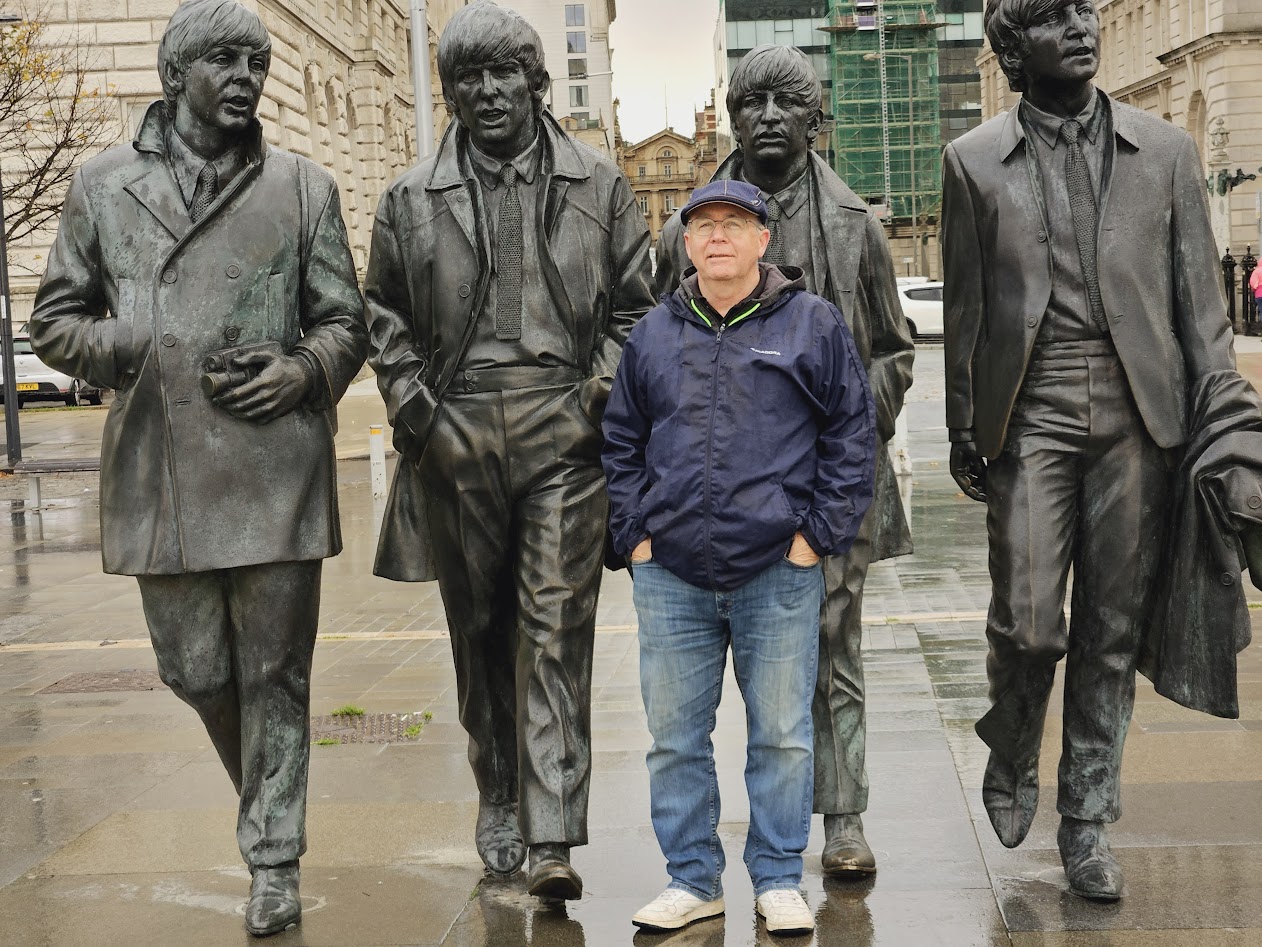
We went into a store that sold nothing but Beatles memorabilia, looking for the advertised Fab Four Café. It turned out that both the café and the store were at the end of a Beatles exhibition which we wouldn’t have the time to see. No matter, though, we used the toilets had some coffee (or Fanta) and listened to the endless loop of Beatles music. Even the loos were Beatle-themed, and the music was on a different loop in there.

The waterfront attractions looked good, but I did want to go to Matthew Street, in the town, to see the Cavern Club, where the Beatles first made their mark on the British music scene.

A wet walk through the city was interrupted by an odd visit to a key cutting shop. I’d stopped to admire the huge range of shoe cleaning products there, when the good Mrs. Mayne decided she wanted some big, heavy keys to go on a key ring she’d bought earlier. First she had to persuade the bemused looking key cutter that she wanted to buy two blank keys. I don’t know that anyone had asked for that before, especially not a wet tourist. Having established that she would buy the keys without having them cut, the man behind the counter supplied the keys and we set off into the rain again, leaving the bemused proprietor scratching his head. But it didn’t end there. The good Mrs. Mayne really wanted the blank keys cut, so when I’d found an old key in the recesses of my bag, she hot-footed it back to the shop to have her new keys cut. I wouldn’t go into the shop again, preferring to stand out in the rain and watch the Liverpool office workers on their lunch breaks. Fair play to the missus, though, she now has two keys, cut to a lock that I don’t even know exists still, but at least she’s happy.

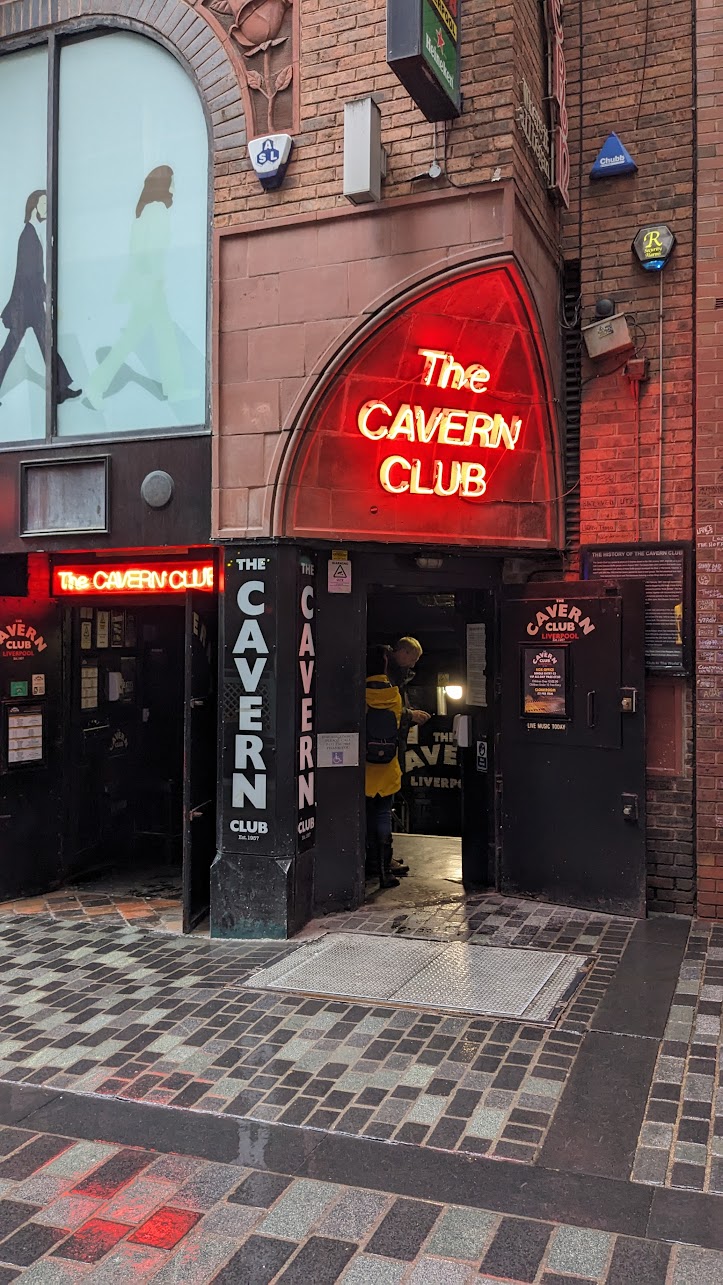
Matthew Street and the Cavern Club were a disappointment. The street is narrow but is crammed with all things Beatle. The weather wasn’t great, but it was dark and dingy and, basically, full of tat. The Cavern itself was charging £5 each for entry, plus £2 to take your coat. There were three, yes three, bouncers crowding the tiny lobby, so I decided not to go in. I was happy enough to have my photo taken there. Perhaps I’d go in when there was some live music on, but it all felt a bit crap. I have no doubt that Matthew Street was always a bit shabby, but the Beatles crap everywhere really didn’t help. I guess that’s people making a living, though.

Despite the rain, we walked back to the waterfront. We decided against a trip on the Mersey Ferry (You’re already humming the tune, aren’t you?) and started back towards the Albert Dock. Unusually for me, I got caught short and had to make an unaccustomed dash for the toilets, which were further away than I thought. Relief was achieved, though, so then we made for the International Museum of Slavery, incorporating the Maritime Museum. Liverpool played its part in the Slave Trade, and much of the city’s prosperity came from either trading enslaved Africans, or the cotton and sugar their labours produced. The museum was full of kids on school trips, and rightly so. Many of the kids were themselves of distant African origin (a huge assumption on my part, of course), so it was all as it should be. We didn’t have sufficient time to give the place our full attention, and only skimmed the Maritime Museum, but it was well worth the visit.

Our meal of the day was in the Italian restaurant called Gusto. It’s a chain, but the place was OK with a view over the docks. The food was good, too, with plenty of vegan options on the menu. Our server, a very knowledgeable lady from Sardinia (Italy, but I’m sure she’d claim Sardinian first), who helped us out hugely by pointing out our error in ordering two huge starters when one would do. The final bill wasn’t as awful as I’d thought it would be, either, so well done Gusto Liverpool.

We’d headed off to look at a shop within the dock buildings when I realised that I’d left my phone in the restaurant, which started a major panic. Luckily it was still there when I dashed back. As the great Homer Simpson would say, Doh!

Our final act of our Liverpool day was to spend a king’s ransom in the Beatle memorabilia shop. I mean, who doesn’t want a tiny music box that plays Hey Jude?

We really enjoyed Liverpool, with the possible exception of Matthew Street, and could easily have spent a few days there. The people are friendly, and the city’s architecture is really worth a look. The only thing is that you really have to be able to put up with all things Beatle. The Beatles are everywhere, you cannot escape them. I just hope that Paul and Ringo are getting their cut, and that the estates of John and George are getting theirs, too.

England ’23 – Leeds Again

Tags

, , ,

A quick rearrangement of the planned schedule due to the prospect of reasonable weather had us motoring north again to Leeds. Goodness, it’s a busy city.

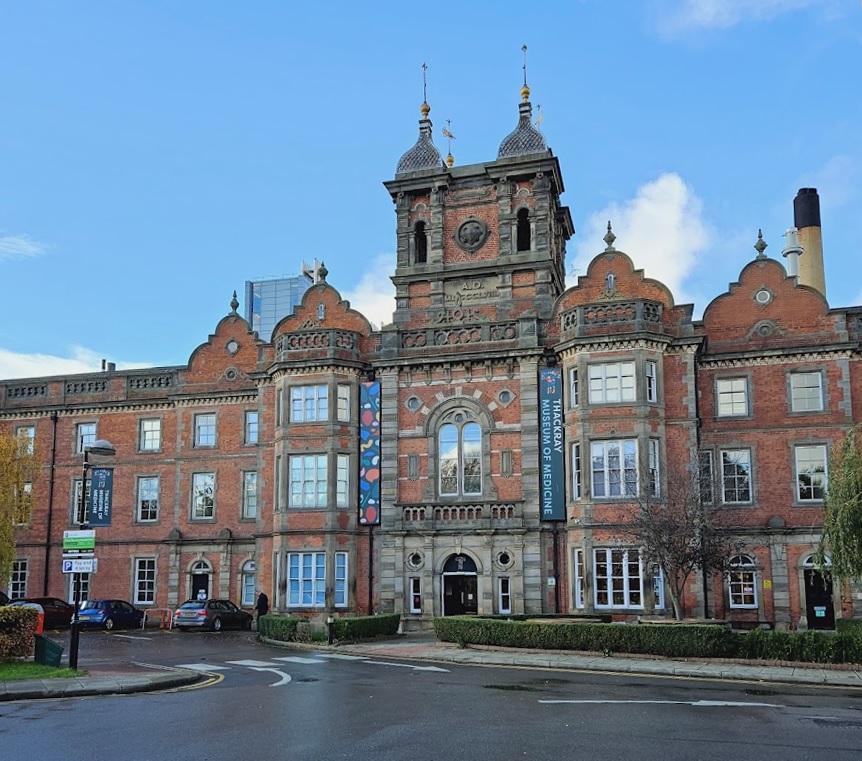
We drove up the motorway again and into the east side of the city, to make our way to the Thackray Medical Museum, just next to Leeds’ famous St. James Infirmary. Parking at the museum was billed as “Pay and Display at the front of the building”, but there wasn’t a single space to be had in that area. If you’ve ever tried to park in or close to any major hospital in the UK, you’ll know that the staff and visitors to the hospital get there very early.

Parkopedia showed some car parks nearby, so we scuttled off, only to find that the supposedly free car park nearby was in fact a Morrison’s grocery store. We didn’t want to get a ticket for parking there more than two hours and pretending we were shoppers, so the good Mrs. M. downloaded the Euro Car Parks app, went through the process of buying an electronic ticket that allowed us legal parking there, but kept getting bounced back with an error. So much for that.

We motored back to St. James’ Infirmary and found its mega-sized multi-storey car park, and even found a space on the road level. That enabled us to walk through the hospital campus, around and through the loading bays, and back to the museum, which was just fine and dandy.

The museum itself was really good. Housed in what had been a workhouse, then part of the hospital, it’s aimed at younger people and takes you through medical care throughout the years. There was a part called Disease Street, where they’ve tried to recreate what nineteenth century Leeds was like, with the horrible housing, overcrowding, lack of sanitation, and back breaking work for all. Given we were in Leeds to look at where some of my ancestors came from, and they were from poor stock, it was an apposite exhibition.

Further around and we were able to chat with one of the volunteer guides, a former Anesthetist, who gave us a mini-talk about the dreaded Iron Lung, used for Polio sufferers in the fifties. That, and a few other things in the museum, should give people thought about vaccination. Who has Polio these days? Hardly anybody. Why? Because of vaccination. The museum guide summed it up when she said that people had responsibility for more than just themselves when considering vaccination.

Being a weekday, there were parties of school students moving around the museum. Noisy, for sure, but I think they were enjoying it.

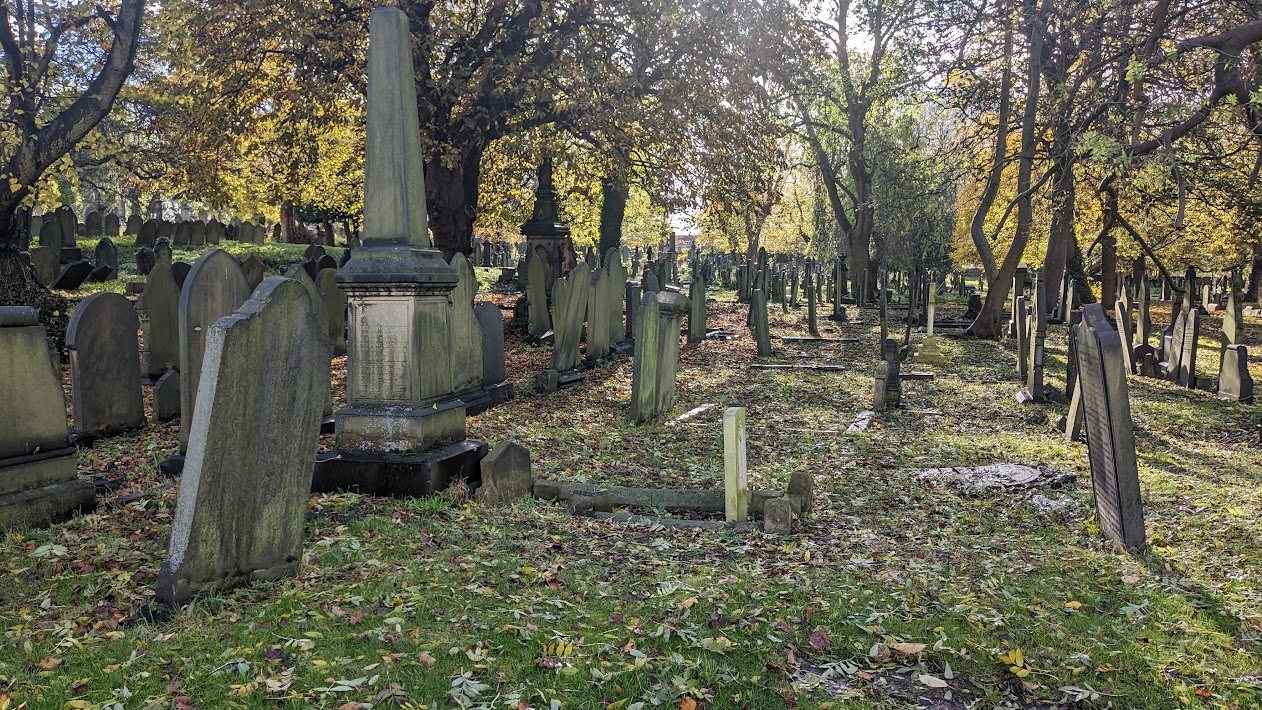
After the museum, we stepped across the road and into the Beckett Street Cemetery, one of the large burial grounds built in Leeds as the population boomed (and died) during the nineteenth century. Our reason for visiting was to find the grave markers for a handful of my ancestors who lie there. On entering the cemetery, we were confronted with thousands of Victorian grave monuments, all blackened from years of soot, and looking fabulous in the bright autumn sunshine. The people that run the cemetery (handed over from Leeds Corporation), have a great guidebook and there is a trail to follow to find the local worthies. It’s a big place and obviously takes a lot of work just to keep it from becoming totally wild, but it was clear enough for us to find the grave markers we wanted to find. If you’re ever in Leeds, it’s a great place just for stroll.

Following that cemetery, we made our way to the University District to find St. George’s Field, the former Leeds General Cemetery, where at least twenty of my ancestors lie. Getting there was an issue, though. There are more cars than there are available parking spaces in Leeds, so every single available space is already taken. Cutting a long story short, I did find a place to park eventually, quite by accident and it was restriction-free. But, unless you have a Leeds city parking permit, you’re generally stuffed. Also, we were both taken aback at the number of university students walking about. Yes, it’s the university district, but the streets were full of young people making their way to and from the campus, and seemingly it’s a permanent state in term time. I guess it’s because most of the university buildings, and its students, are concentrated in a small area.

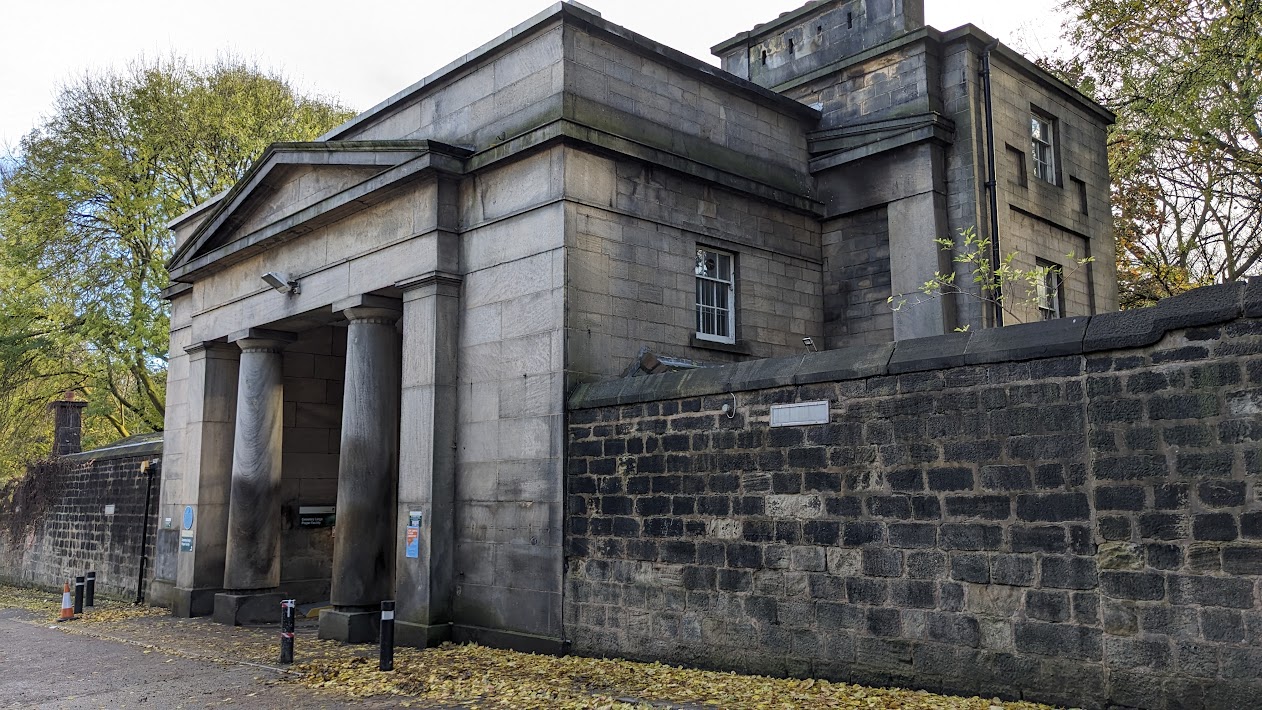
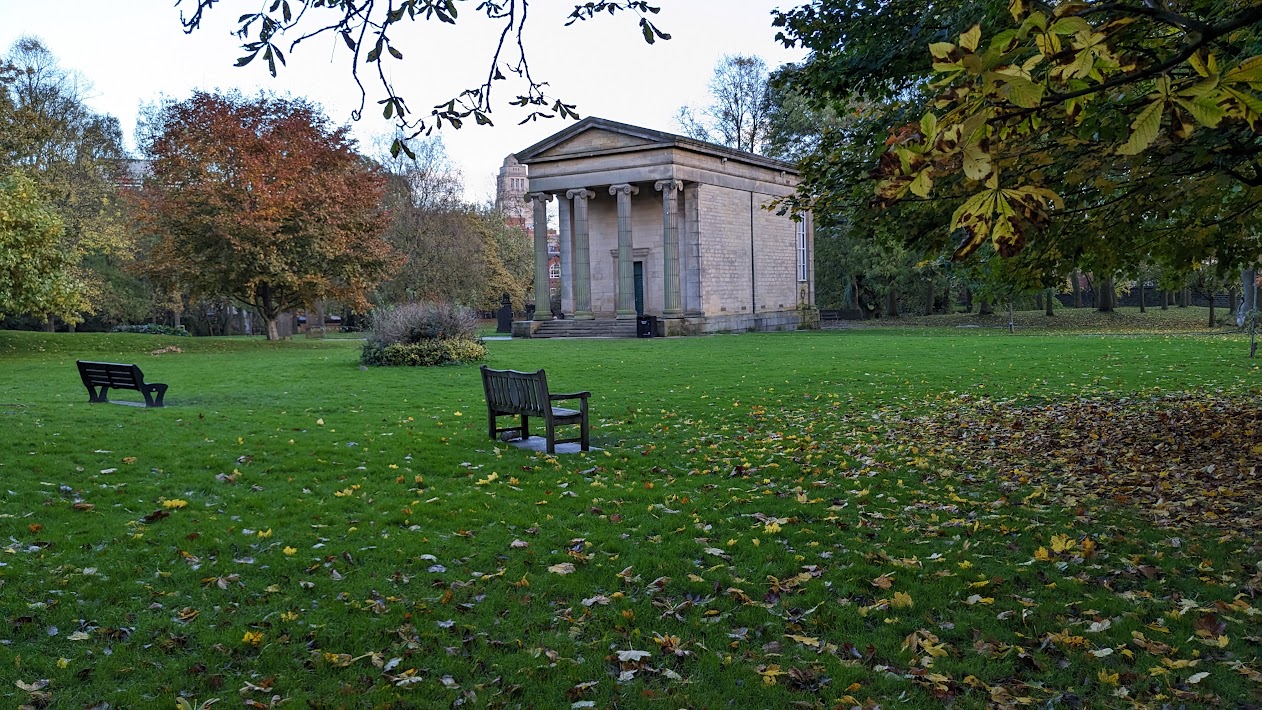
The cemetery has long since been closed, and all but a few of the grave markers have been cleared away, leaving a beautiful walled park area within the university campus. The main gate, still imposing, remains, as does the chapel in the centre. Many of the City’s poor were buried here, often ten or more to a burial plot, and some of those plain, City-provided grave markers have been laid down as pathways. We spent a fruitless half hour searching for Maynes but didn’t find any. There can only have been a fraction of the original markers used, given the tens of thousands buried there. Still, it was reasonable work on rapidly darkening autumn afternoon.

I was very pleased to have stood where the ground was full of the remains of Maynes, and families associated with Maynes, including the Linskills, the Longbottoms and the Pickersgills.

After the cemetery, we repaired to the old Public Lending Library, which fortunately had been converted into a pub. A pub for students. Boy, did we raise the average age when we walked in. We did have a chat with a first year student called Coren, from Wales, who was studying Civil Engineering in Leeds. He was such a nice young fellow, and his mother should be proud of him.

After a long day, we motored back to Holmfirth (disobeying the lady in the Navi system), and basically crashed out, although not without a couple of hours on BBC iPlayer first.  There was something we had to do though, but that comes in the next post.

England ’23 – Eastwards

Tags

, , ,

A day in the car was the plan, and so it turned out to be.

We set off across the hills towards Barnsley, joined the motorway to head north to York, then left the motorway and drove gently through the Wolds to one of Yorkshire’s most easterly points, Flamborough Head.

The traffic was reasonable the whole way, the weather was better than it could have been, and the driving seemed quite easy, even with the truck traffic on the motorways. We had seen, or rather passed, Barnsley, Wakefield, Leeds, Tadcaster and York, running through the delightfully named village of Wetwang, onto Bridlington and finally Flamborough Head.

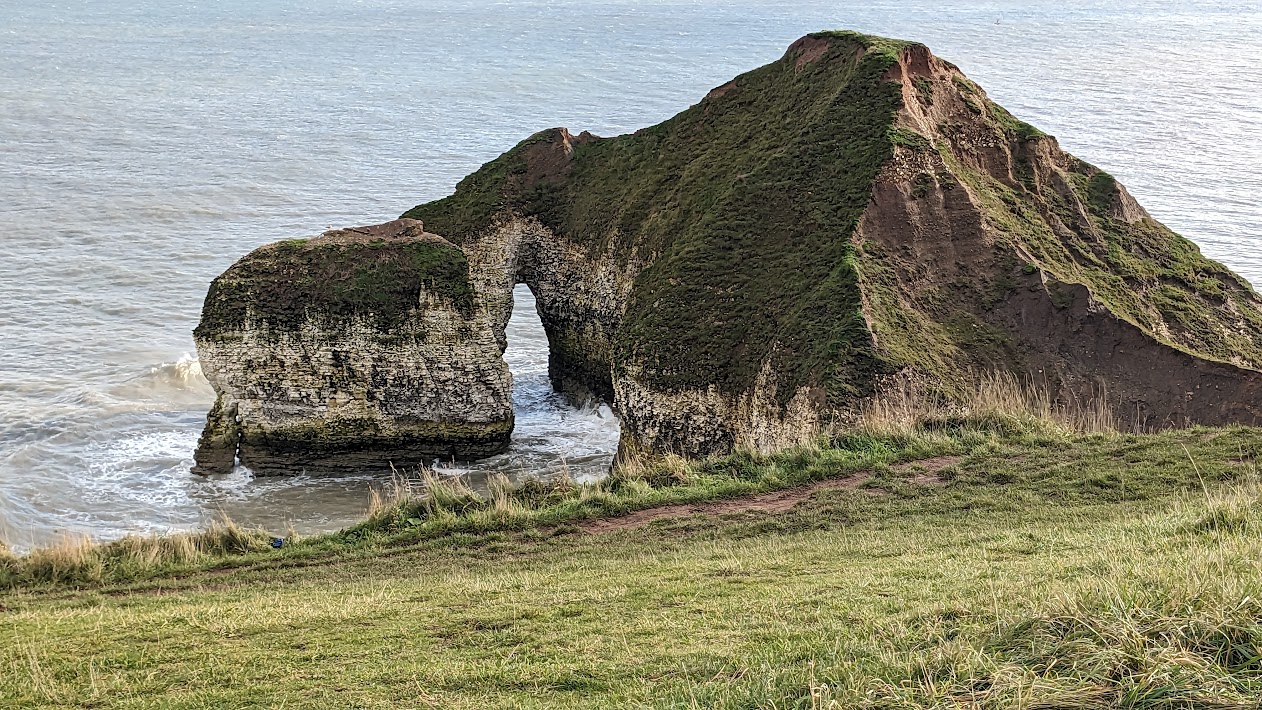
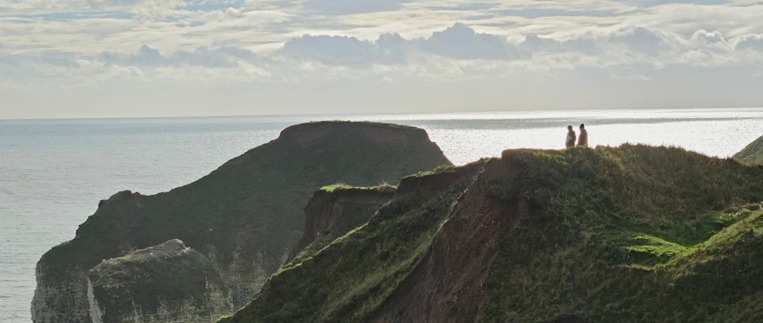
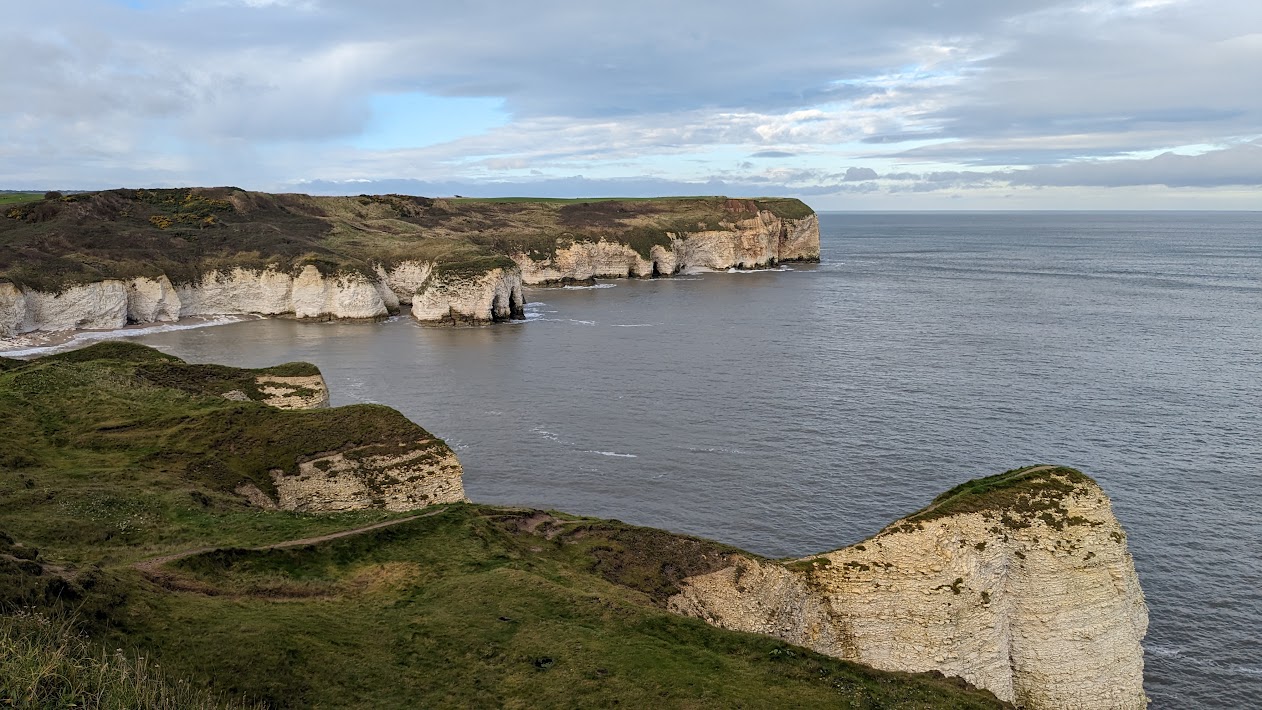
Flamborough Head is a chalky outcrop that juts out into the North Sea, about halfway up Yorkshire’s East Coast. There is a working Trinity House Lighthouse up there, plus some other navigational equipment used by today’s ships. High up on the cliff top, the white(ish) cliffs looked marvellous standing in the fairly calm sea, and the view up and down the coastline was excellent, especially as it wasn’t raining and there was good visibility.

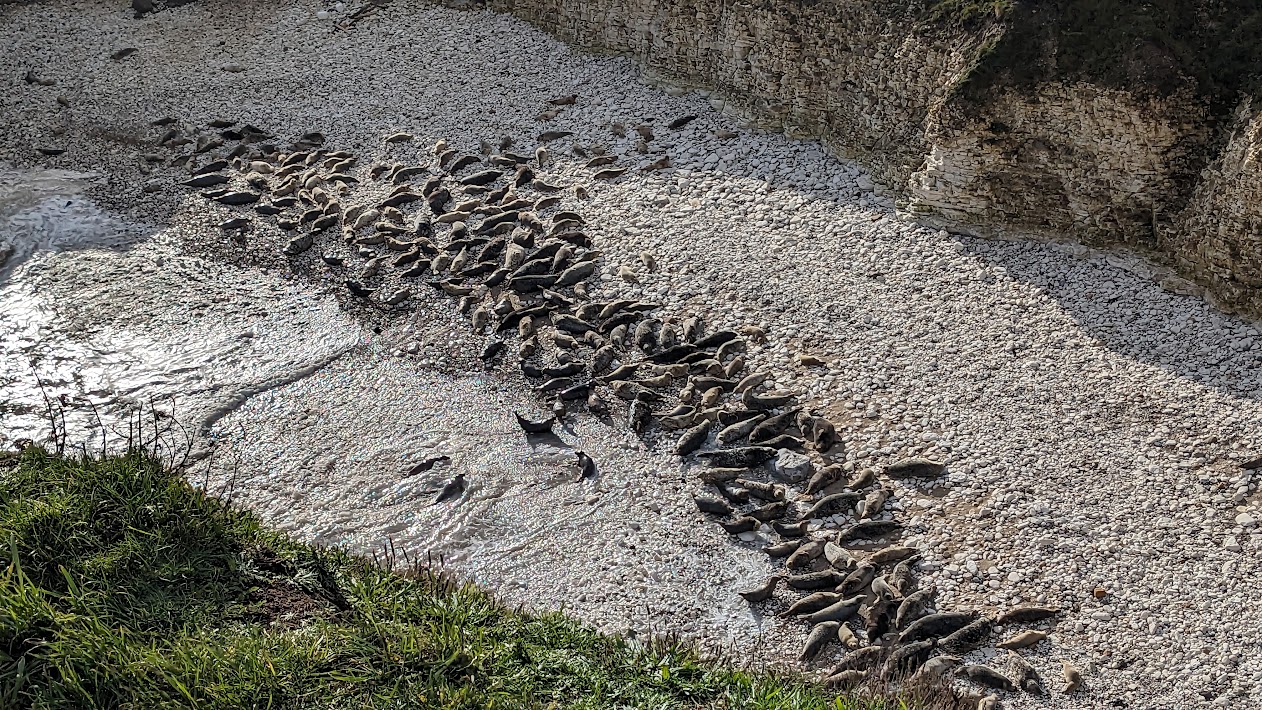
Flamborough Head is known as a haven for migratory birds, and while it was the wrong time of year for the Puffins, there were Shearwaters, Cormorants and many types of gulls to be seen. The stars of the visit, though, and in abundance, were the Seals. We saw them in the water first, heads up like a load of grey buoys, but diving below the surface to reappear a few yards away. Moving around to look down on another beach, we saw the Seals laying on the shingle and sand, easily a of hundred of them, big and small, laying still or fighting with each other. I had never seen so many Seals like that, except on TV, so that was quite the sight, even if we had to stand perilously close to the edge of the hundred foot cliff to see them.

We dawdled for quite a while there, watched the boats, big and small, fishing the local waters, and while couldn’t quite see The Netherlands from our vantage point, we could see an oil rig out on the horizon. It was very wet underfoot, though, and the surprisingly large number of visitors there, given that it was a grey Monday in November, were churning up the grass and making all the pathways into rivers of mud. Winter sightseeing, eh?

From Flamborough we took the coast road to Robin Hood’s Bay, a little fishing village nestled at the top and bottom of a cliff, where the North York Moors meet the North Sea. On the family tree front, I have a a picture of my mum, my dad and my uncle at Robin Hood’s Bay, taken in the very early 1950s. I wasn’t out to recreate the photograph, but it was nice to know that my mum and dad had been here together.

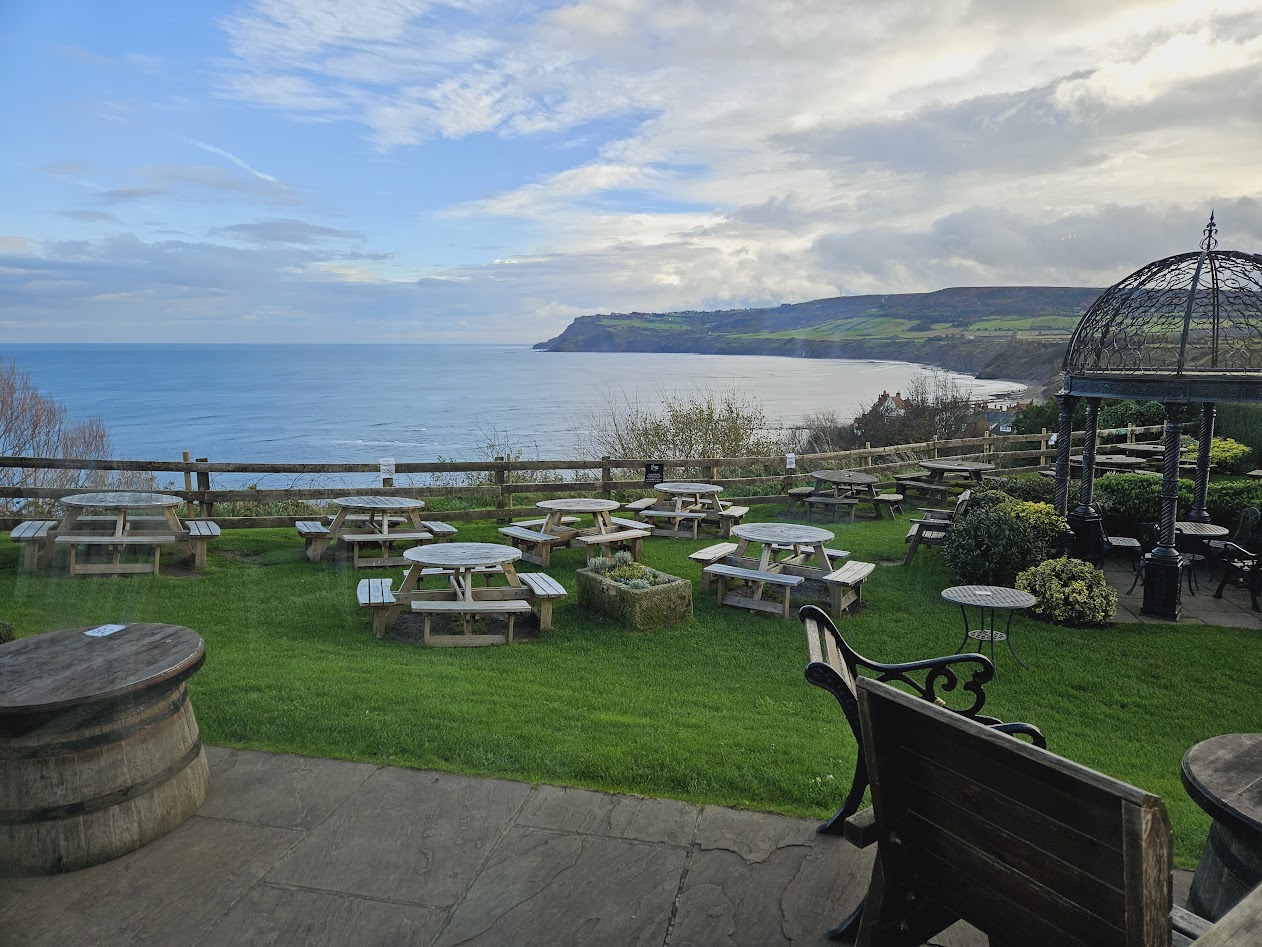
Private cars are not allowed to drive down to the lower level of the village, as there’s no room to park at the bottom, and very few spaces to turn around, so everyone must park at the top and walk down. Top marks to the Council for closing all the Pay and Display parking machines for the winter, as I do love a bit of free parking. Before we started our descent, though, we availed ourselves of a very nice two-course lunch (it would have been three but there was too much to eat), at the Victoria Hotel. The food was good, much on the vegan menu for the good Mrs. M., and the view across the bay was second to none.

The walk down into the old village was steep, but the little houses built up high into the valley sides, were gorgeous. It’s very touristy, as you’d expect, and most things were still open despite the lateness of the year, for which I applaud the local business owners. Mind you, there was no shortage of people down there, and on the beach, so I guess there was money to be made. It’s quite the place, with the stone built rows of cottages clinging to the cliff. I can see why it’s such a popular destination.

The walk back up to the car was also steep, just in the wrong direction. We took it easy, though, as befits old people, and attained the car park without a medical emergency.

From Robin Hood’s Bay we went still further north, to Whitby. We might have had a look around there only it was virtually dark by the time we emerged from the Sainsbury’s store. Well, there are always things you need, aren’t there?

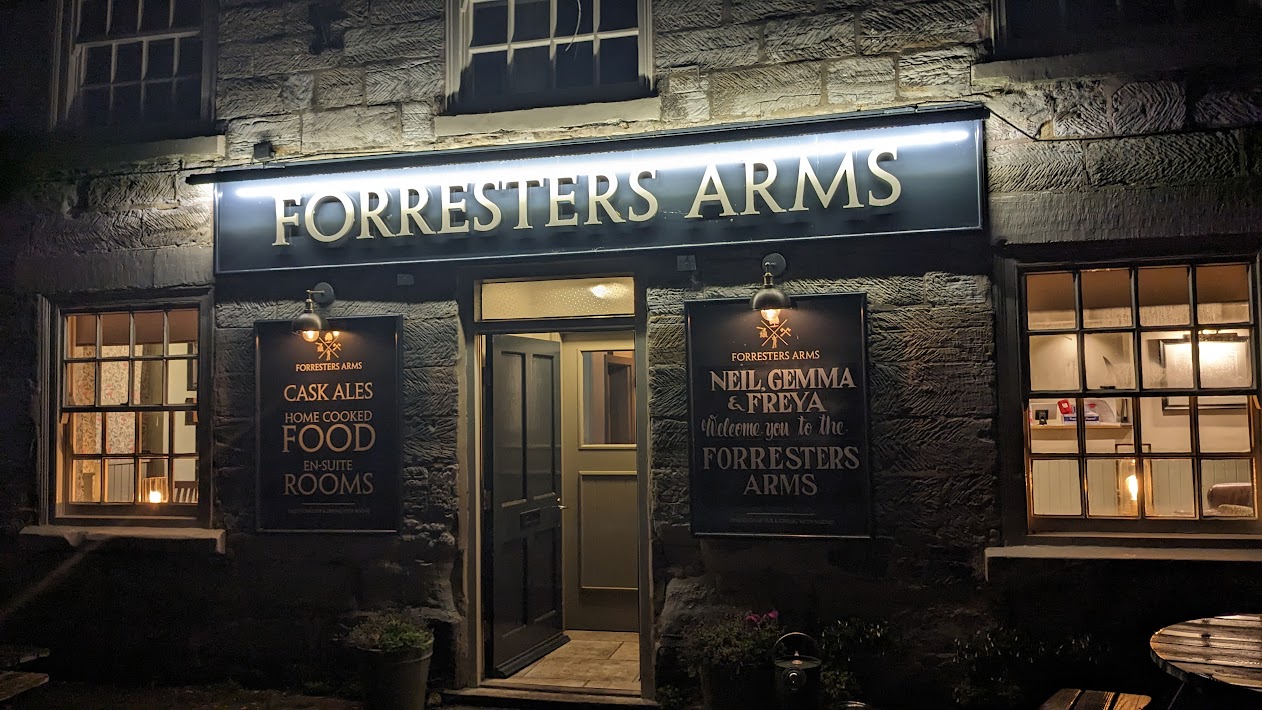
We were a long way from Holmfirth at this point, much closer to Teesside than York, so we knew we’d be in for a long drive back. We elected though, in the spirit of more family tree work, to visit the Forrester’s Arms, a pub in the North Yorkshire village of Kilburn. My uncle had run the pub in the sixties, and we visited in 1968 and stayed there a week. This was my first trip back since then. The drive from Whitby took us over the moors, which are not very interesting in the dark, and through Pickering and Helmsley. When we needed to drop down off the moor and into the Vale of York, we took the back road down Sutton Bank, a steep run down a big escarpment. It would have been fun in the daylight, but it was dark and raining, so the single-track road with it’s hairpin bends and precipitous drops, was even more fun. The odd thing was that once down the hill, we were in the flattest of flat farmland, and quickly coming to a halt in the village square, right in front of the pub.

The place had been spruced up somewhat but was essentially as I remembered. I enjoyed a good pint of Theakston’s Bitter and listened to the other customers with their broad Yorkshire accents. It was lovely. It would have been nice to stay longer, and eat from the extensive menu, but it had been a long day.

The run back south allowed us to hit trunk roads for much of the journey, running from Thirsk to Barnsley on motorways alone. The run back from Barnsley to Holmfirth wasn’t so much fun, pitch dark on wet roads, but we made it safely.

The day had turned out as anticipated, a long drive but some great sightseeing and a wonderful grown ups lunch. An excellent day’s vacation.

England ’23 – Coronation Street

Tags

, , , , ,

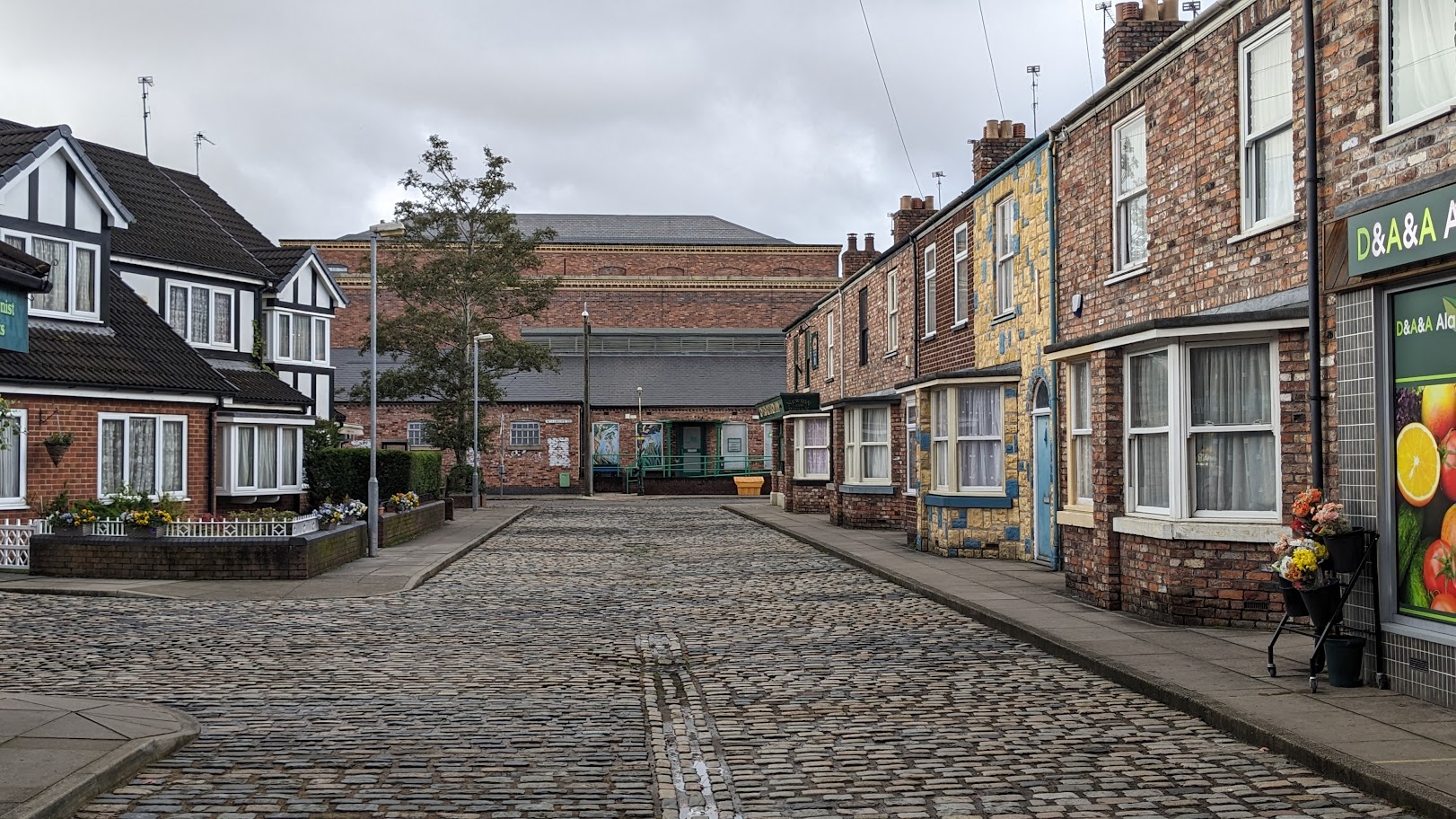
Today we went to Manchester. Not to a trendy eatery, or a hot night spot, but to the set of TV’s longest running soap opera, Coronation Street.

The “Coronation Street Experience” is a tour of the actual set, a closed area in the part of Manchester known as Media City UK. A largish group of us was given a guided tour of the set, at least the bits they use to film the exteriors for the show, and jolly nice it was, too. The Street has been going since 1960, and I have watched it on and off since the late sixties, so there was a genuine interest here. The tour guide, Alfie, was quite good, being professional, funny and he found time to impart some little nuggets of information that I’d not heard before. He gave us some insight to the tricks that are used to make each corner of the set look bigger than it actually is, and how they give the impression that places are further away from each other than the reality, which is usually quite different. Of course, standing on the actual Corrie cobbles was the real treat.

The little exhibition area after the set tour was interesting, including such delights as all the dead character’s coffin nameplates, which was hardly mawkish at all. One big omission was the actors’ names, which were nowhere to be seen, perhaps in an attempt to continue the fantasy.

It was a fun morning, though, especially for the real fans.

I should mention the Imperial War Museum North, right next door. It’s free and while we didn’t see its exhibitions, we did buy some stuff in the gift shop. The museum’s parking, which was where us Corrie types had to park, was run by National Car Parks (NCP). They use a fancy system of spying your plate as you enter and then you can pay as you leave, or later online. One fellow hadn’t worked the system out, had driven in and paid up front. The system of course assumed that he was leaving and gave him ten minutes to leave before being given a penalty charge. Did I mention he was Irish? He did!

After the Street, we hit the M&S Foodhall that lies within the shadow of Old Trafford Stadium, home of Manchester United (boo hiss), and sampled some of Manchester’s finest traffic jams.

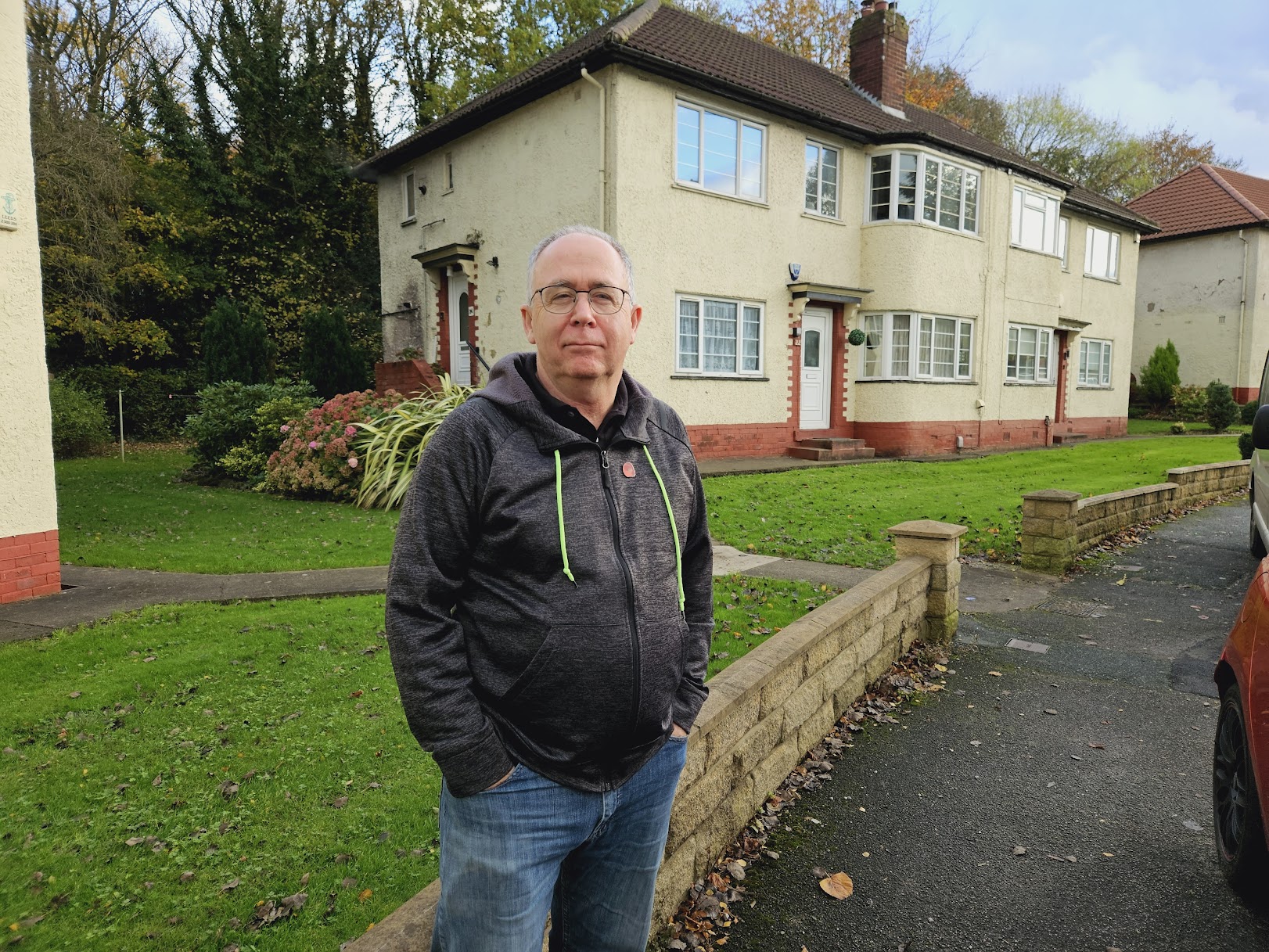
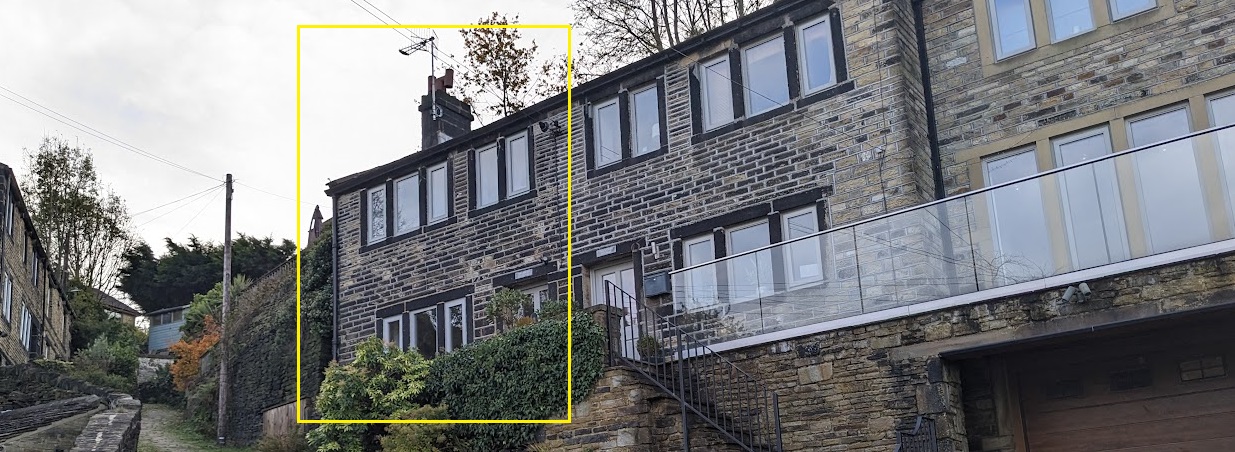
Then it was over to Leeds, across the Pennines, to visit the house I was born in on this very day, sixty-five years ago. I hadn’t been back since 1959, which is quite the gap, but at the least the place was still standing, and looked much as it did all those years ago (I don’t have that good a memory, but I do have the photographic evidence). Someone has taken the Blue Plaque off the wall, though… (If you know, you know). The good Mrs. Mayne wanted me to go and knock on the door and introduce myself, but that would be so far beyond my comfort zone that it doesn’t even bear thinking about. I took photographs instead, although even that was a bit dodgy.

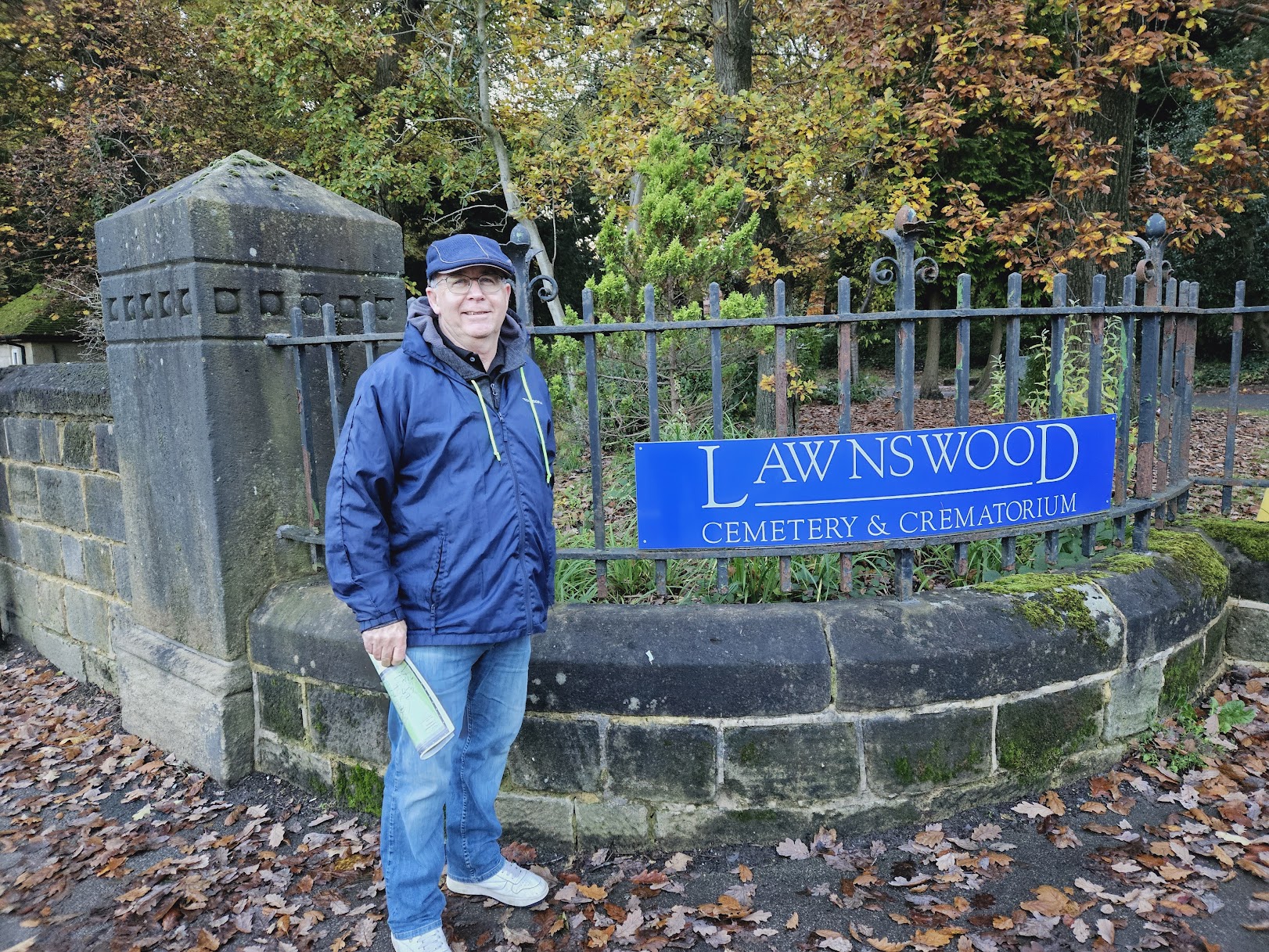
As the sun disappears at about 3:45pm in northern England, the light was fading fast. However, we managed a quick dash to Lawnswood Cemetery to have a look at my Grandparents’ grave, something I’d never done before. Given that they both died before I was born there wasn’t too much of an emotional issue for me, but it was a significant task on my list of things to do. I also searched out another family grave (it wasn’t far away), which will add nicely to my family tree knowledge.

Driving in Leeds is a bit of an eye-opener, even on a Sunday. It’s not a huge place but the traffic is constantly heavy, and everyone else seems to be in a dreadful hurry. However, we burst out of the City limits, past Leeds United’s Elland Road ground (again) and headed south on the M1. As we cut across the hills towards Holmfirth, I made a mental not to take too much notice of the Google lady giving instructions, because she had some pretty odd routes for me to take.

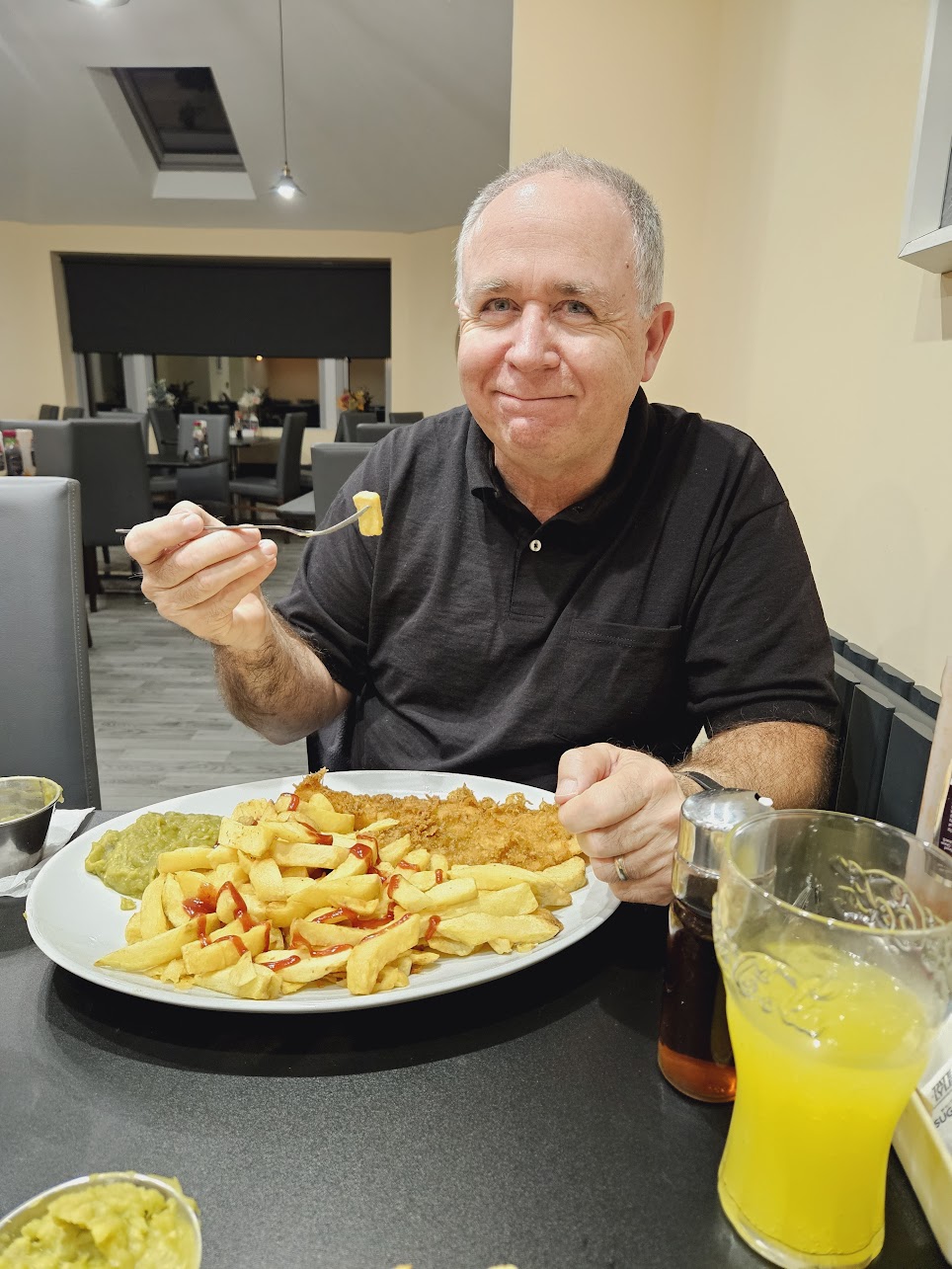
My birthday meal was taken at the famous Compo’s Fish and Chip restaurant in Holmfirth. Compo is a reference to the TV show previously mentioned, of course. The food was nice, and the service good, especially given that it was a Sunday night. It most definitely would not have been open in Canada.

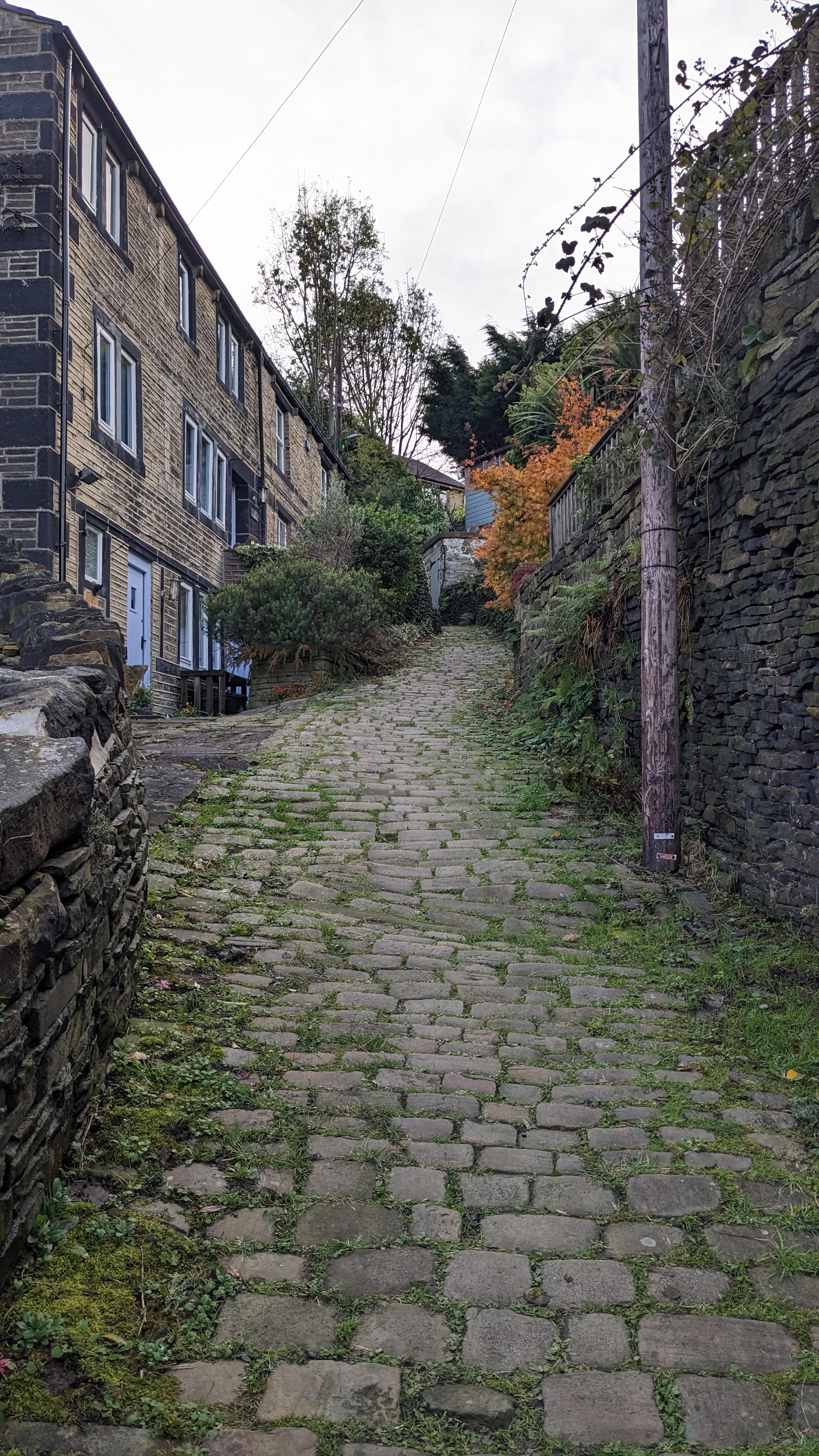
Back at the cottage, I made the mistake of trying to reposition the car on its steep, cobbled parking space and found out about the limits of tyre traction on wet cobbles. I discovered that the only way to do it was to take a run at the cobbles and try to stop before hitting the wall. What fun.

It was a long day, and an enjoyable day, and we ticked three things off the list, so that was good.

England ’23 – Bramble Cottage

Tags

, , ,

We booked a week in the Yorkshire town of Holmfirth, just on the northern edge of the Peak District and just a few miles east of the border with Lancashire. The area is known as the location for the (very long lived, maybe overly-long lived) TV series, The Last of the Summer Wine and is undoubtedly a beautiful part of the country.

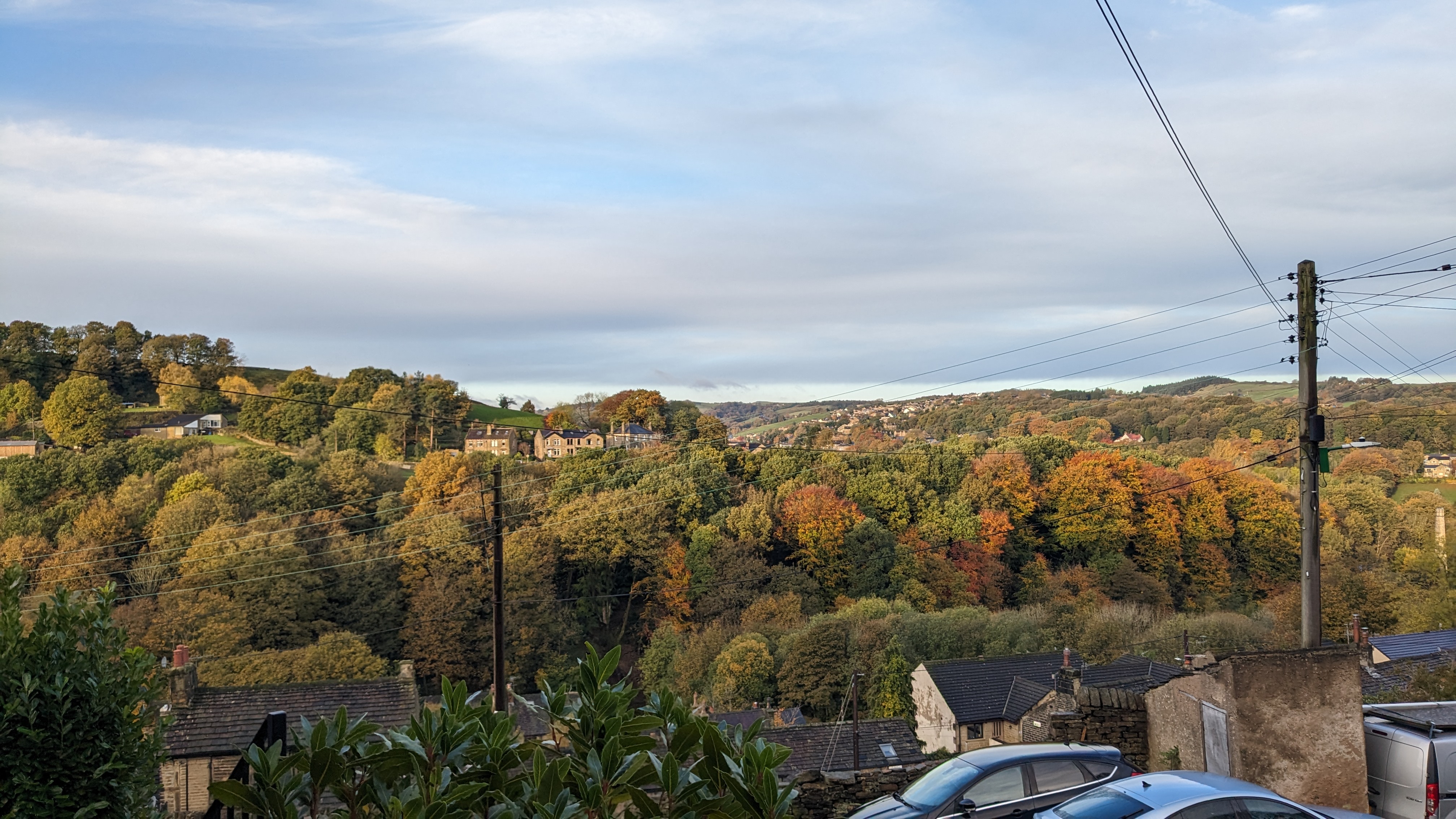
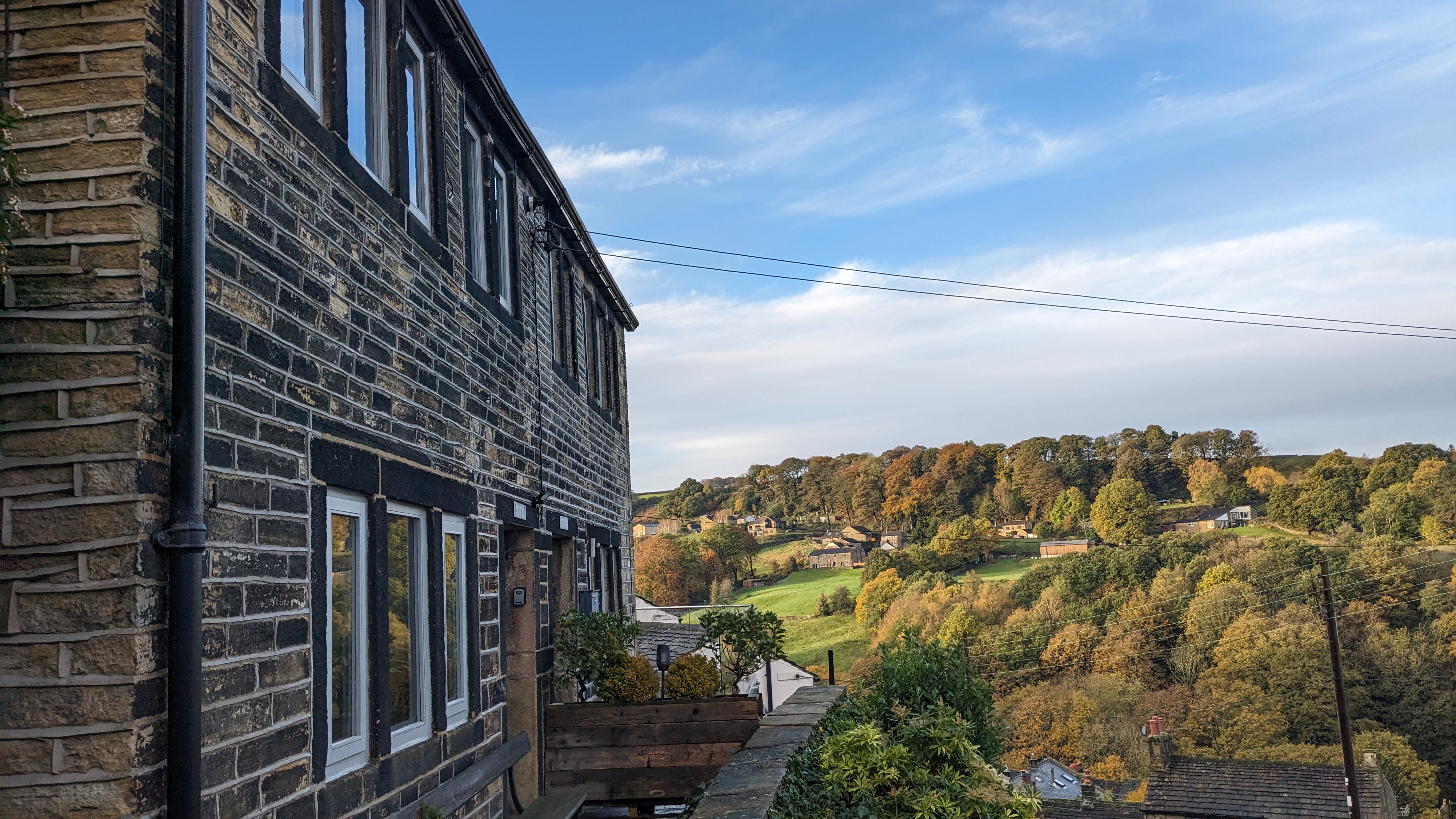
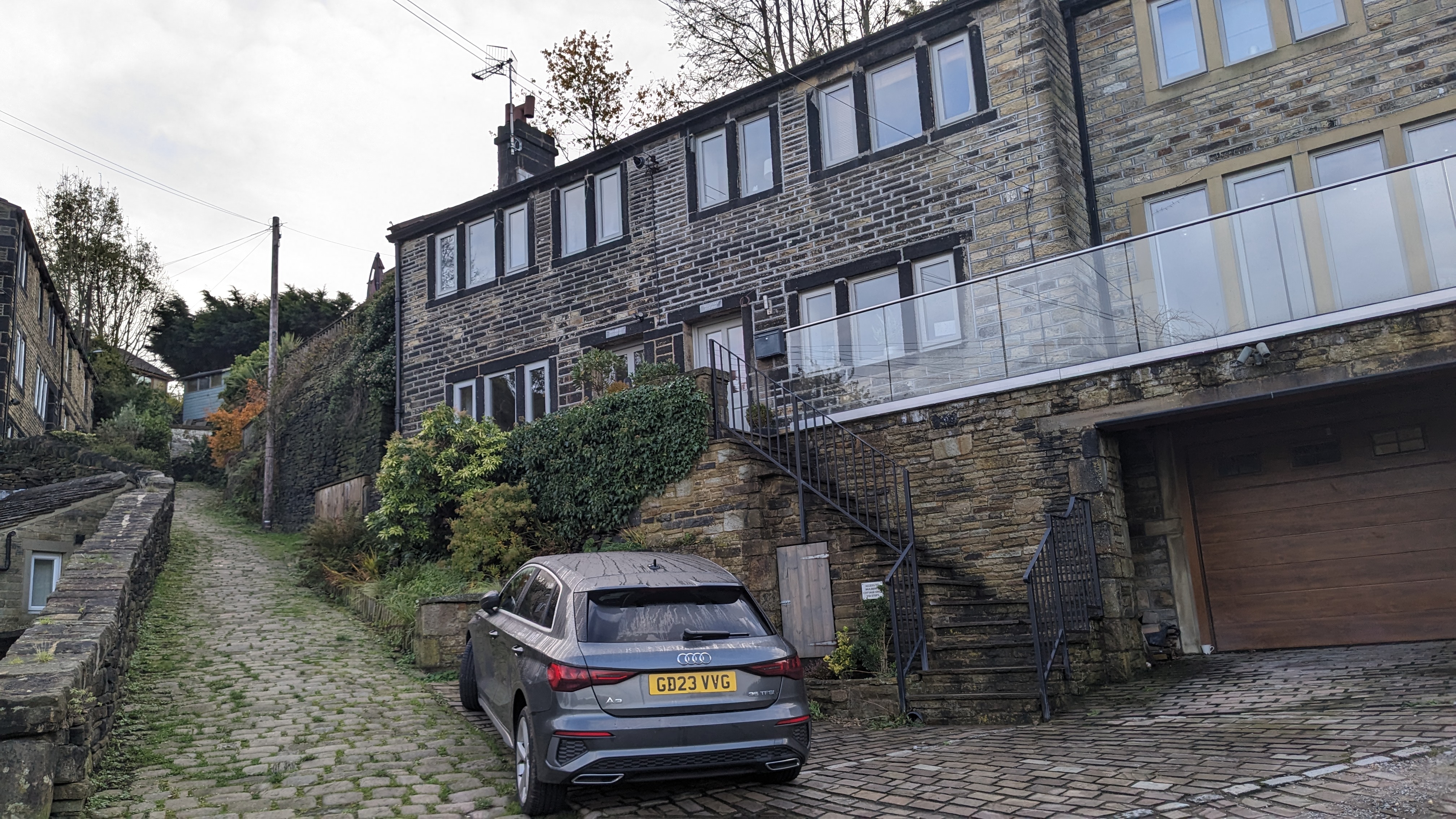
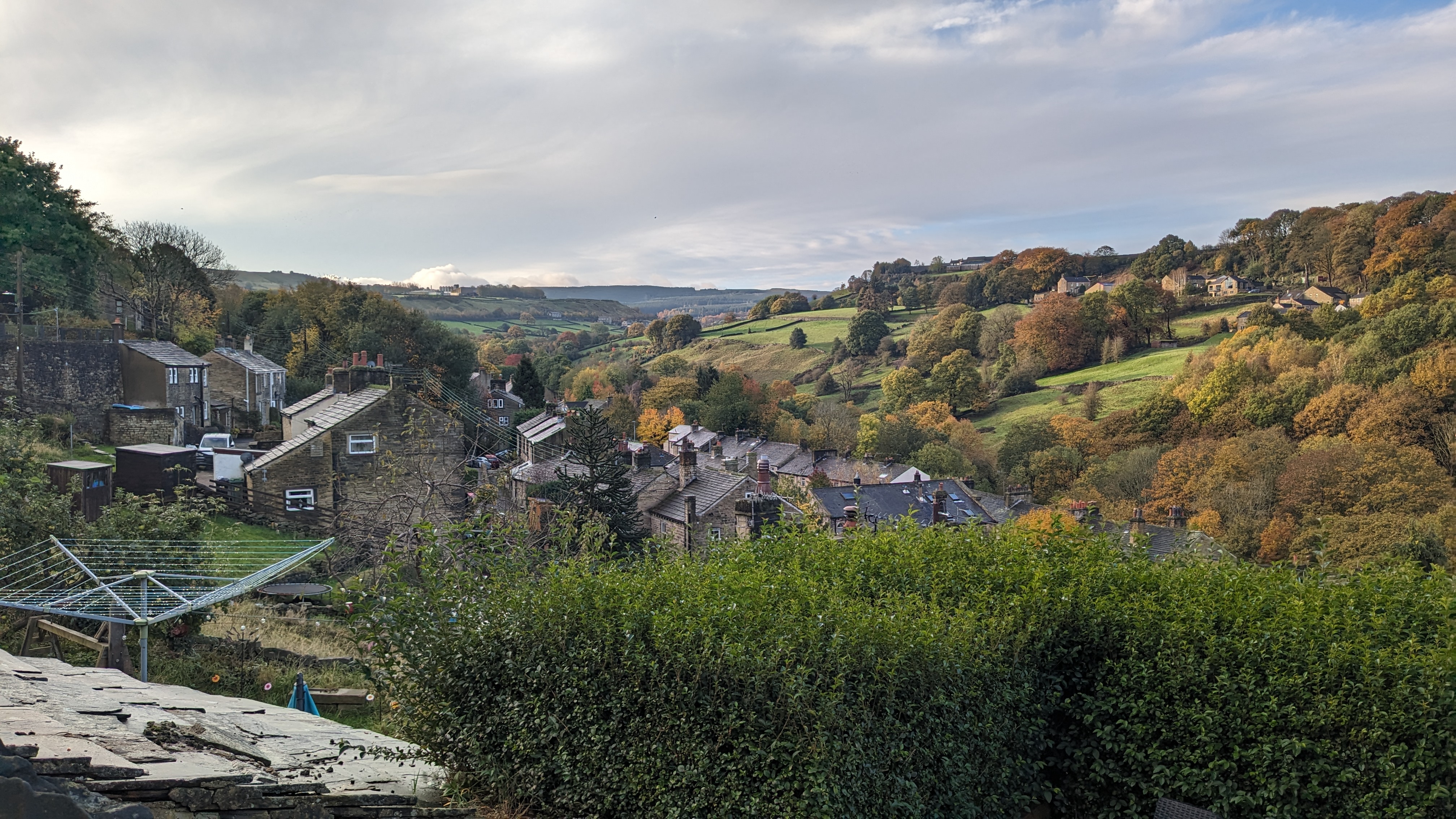
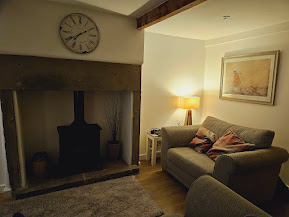
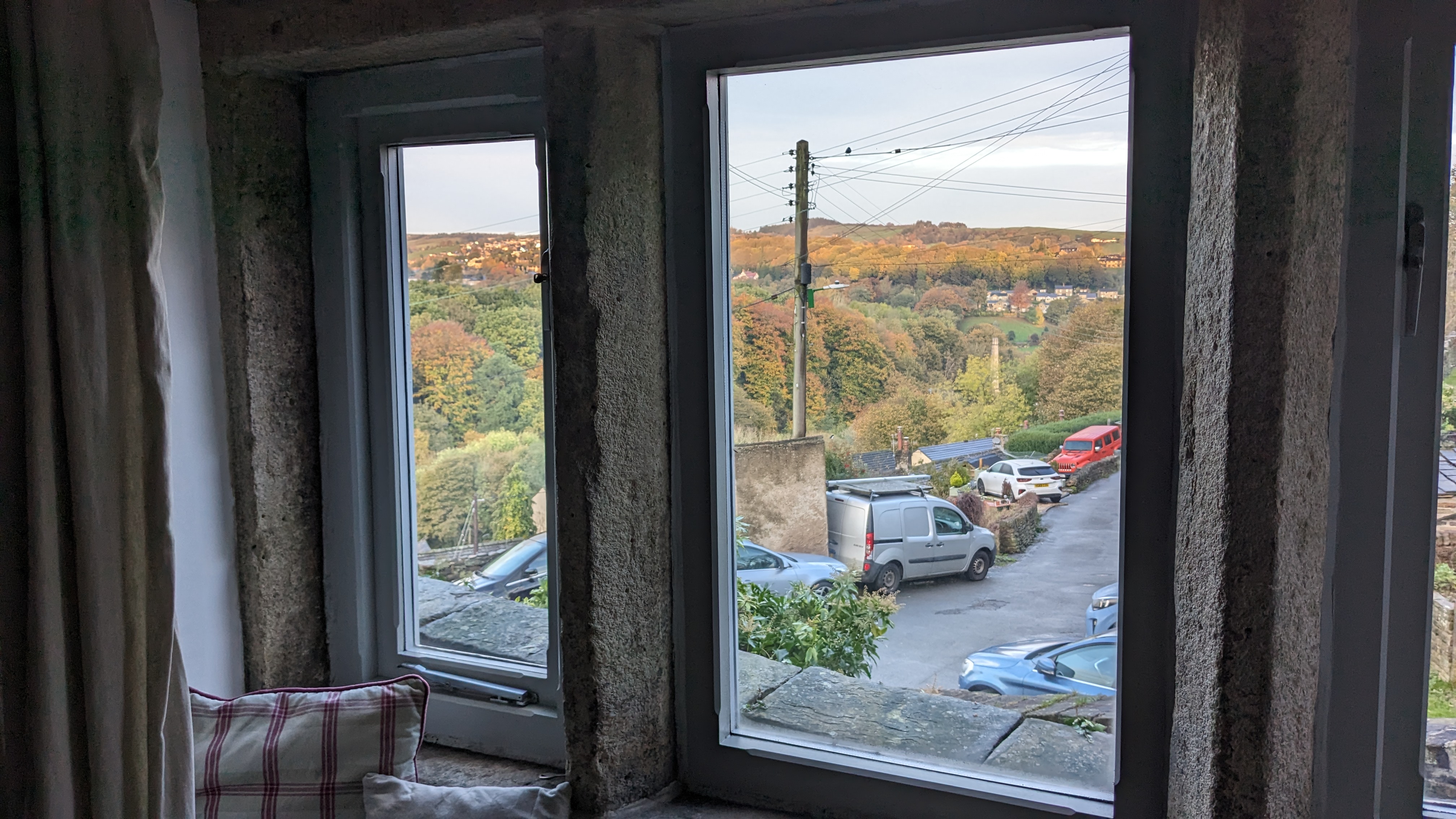
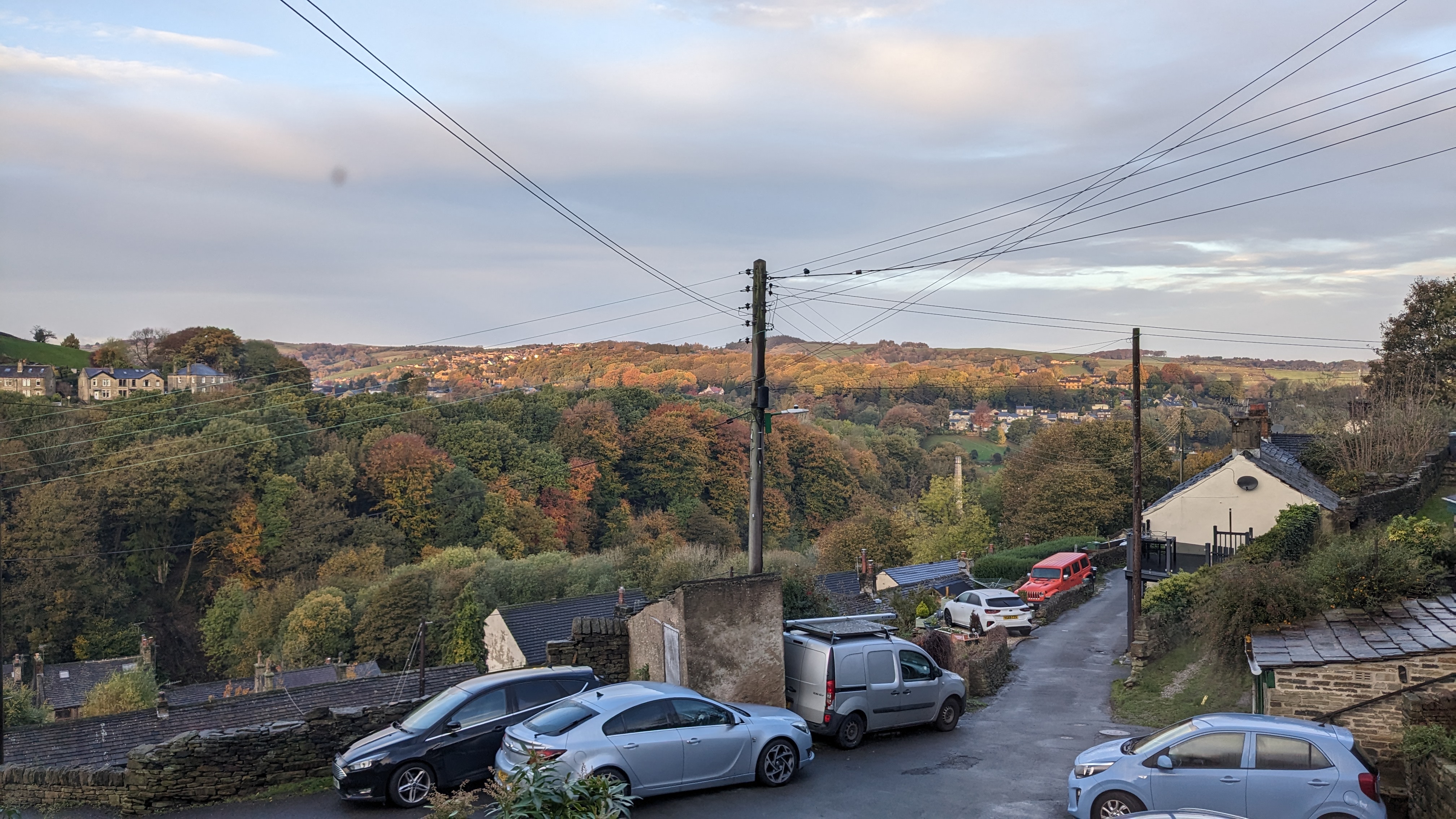
Bramble Cottage is a nineteenth century workers’ cottage, perched on the steep valley sides, and overlooking the centre of the village. The cottage itself has been wonderfully refurbished by the owners, who live next door, and it’s a very comfortable one bedroom holiday let, with every modern convenience. The original cottage would have been just one room downstairs and one room upstairs, but the owners have dug into the hillside at the back to create space for a modern, if narrow, kitchen downstairs, and a bathroom upstairs. It was warm inside, even though it was stone built and prone to a little condensation, and to be honest, we couldn’t fault it.

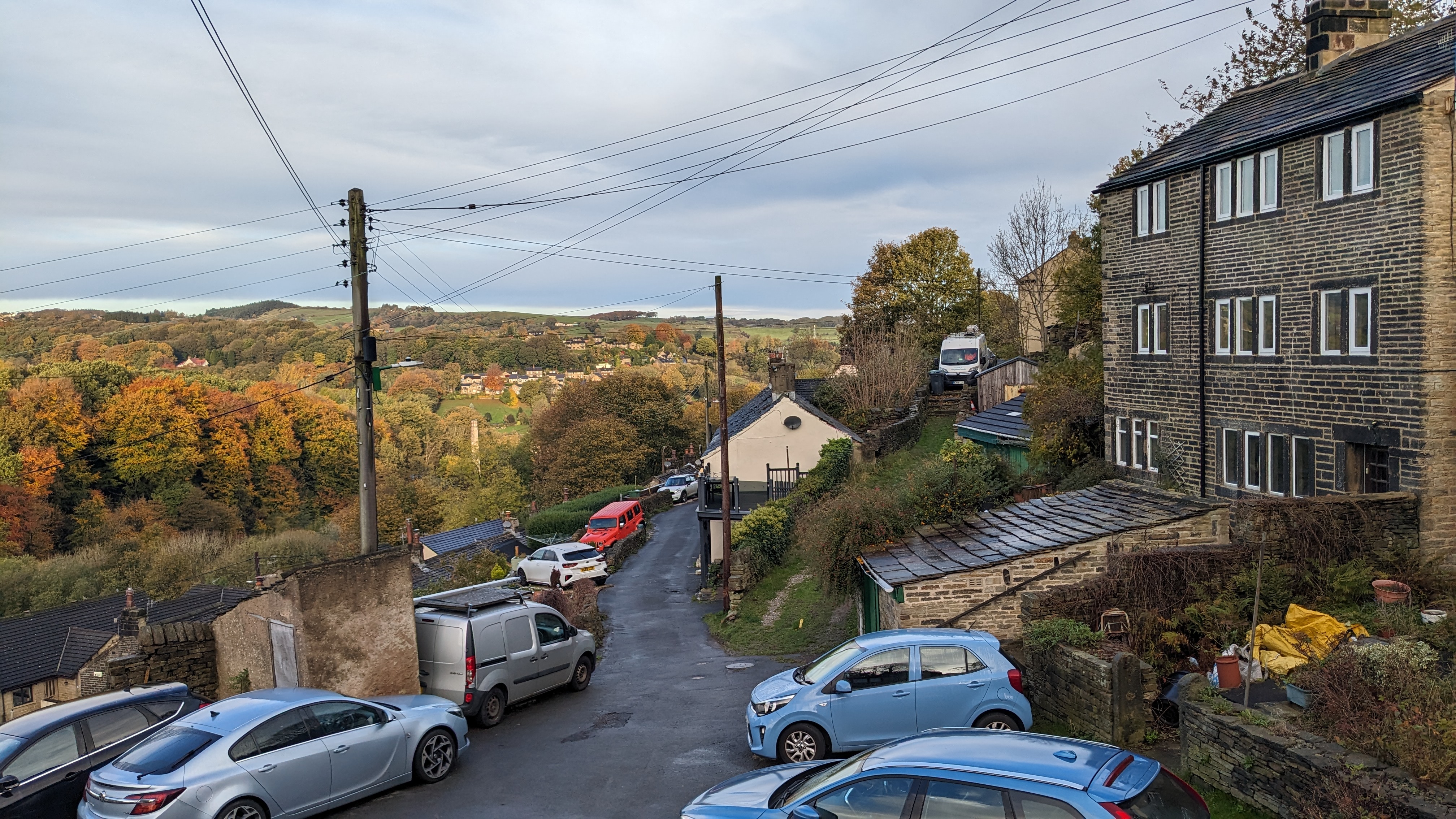
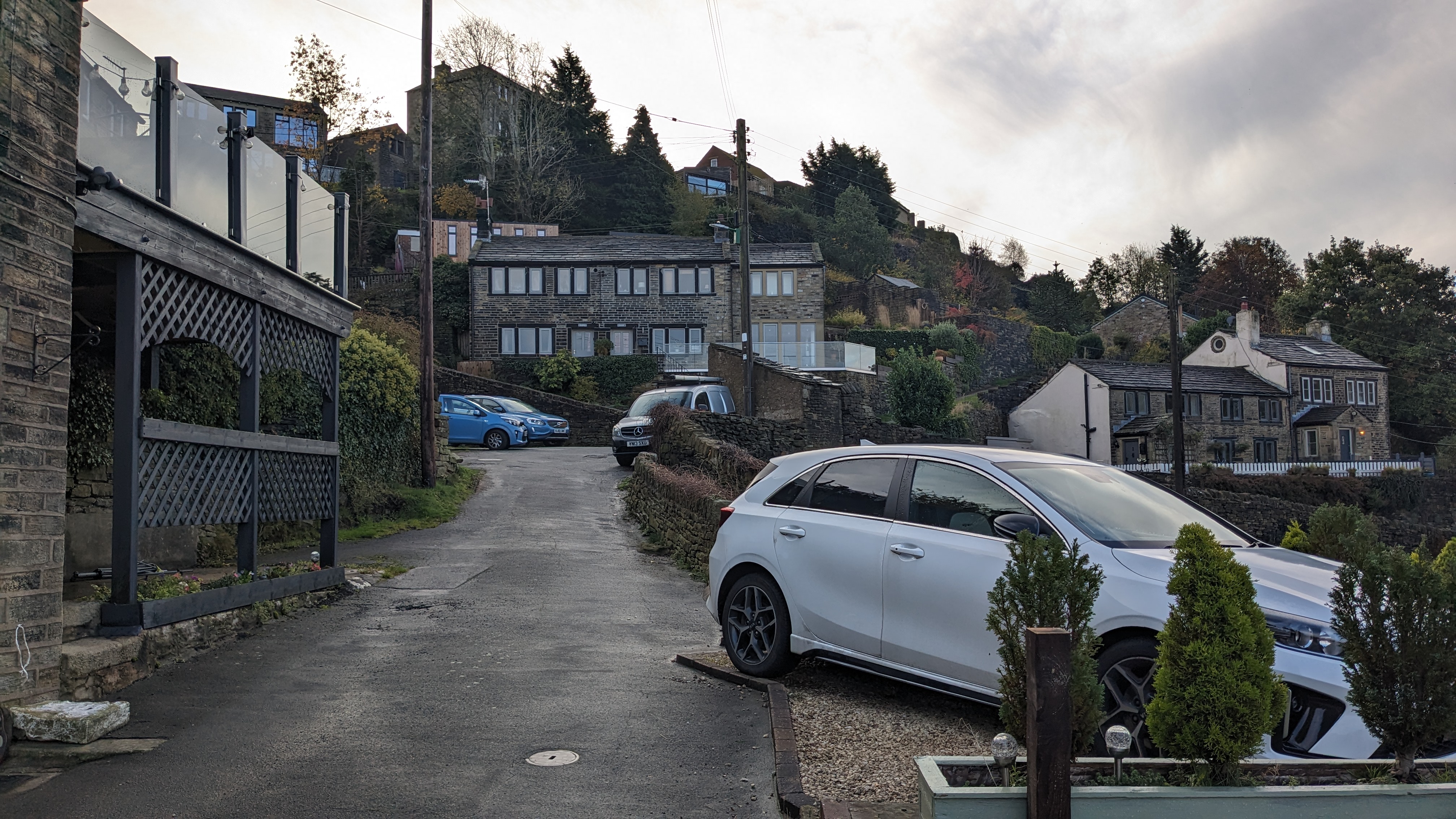
It’s not a great place if you’re not too steady on your pins, though, as all the slopes are very steep, and it’s quite a climb up from the town below. We’d been warned that the parking space was small, which it was, but the hill it was on was really quite steep. You had to take a run at it in the car, avoiding the low walls and parked cars, because once on the cobbled surface, there was no grip at all. If you didn’t get into the space first time then you had to roll back to the asphalted road to start again. you’re also going to have to have total confidence in your handbrake. I’m making it sound worse than it was, because after a couple of days I had it mastered. There was alternative parking, but it would need a walk up a steep cobbled path to reach it.

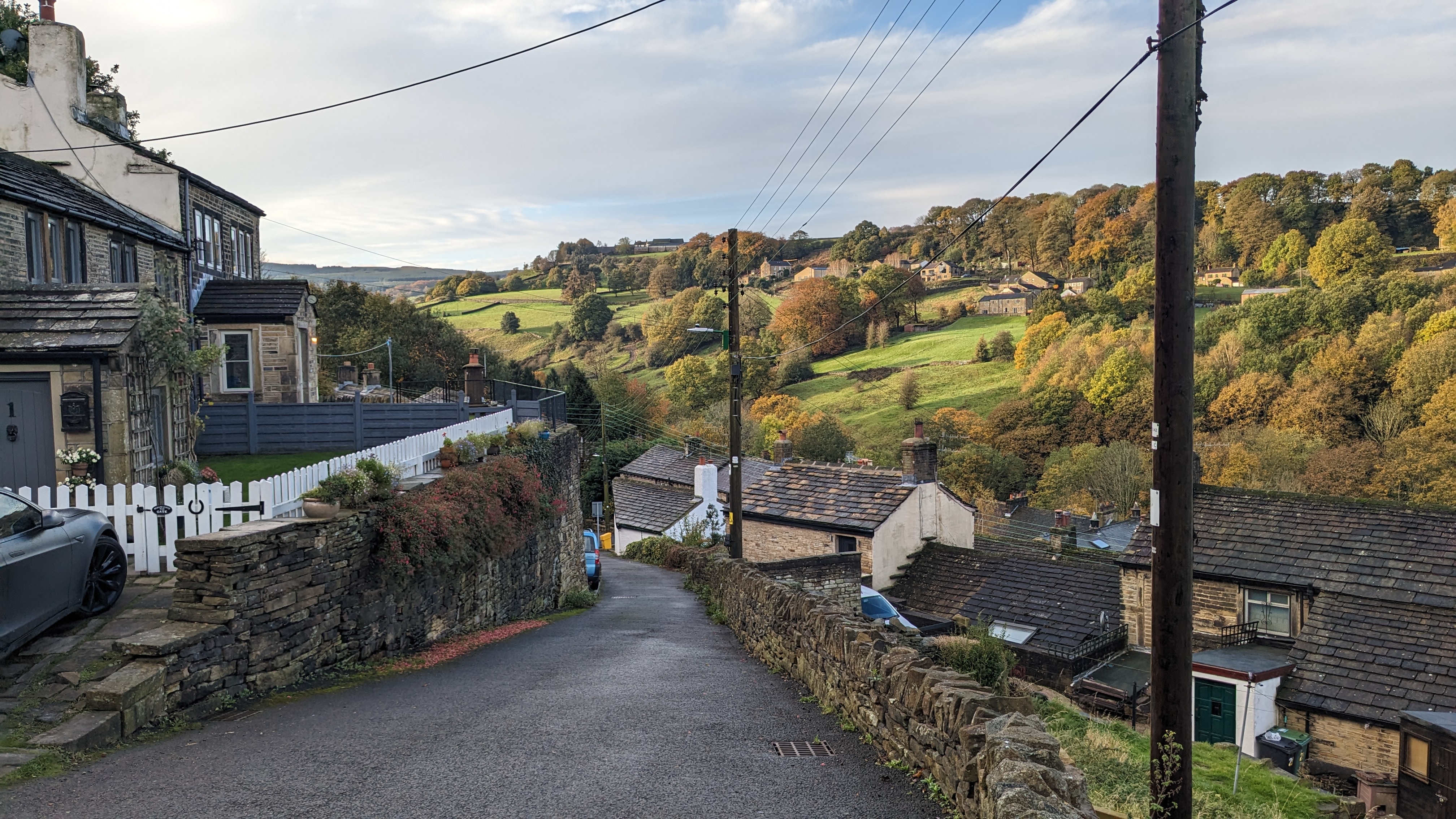
The cottage’s location worked very well for us as we visited Manchester, Leeds and Liverpool, all without going much beyond an hour’s drive away. The roads in the town, or at least in the valleys, were scarily narrow and steep, and had parked cars everywhere. I know parked cars act as speed limiters, but when you’re not used to hill starts, blind bends and gaps just big enough to take a car, it’s challenging. We had a very nice Audi A3 as a rental, with an automatic gearbox and handbrake, and they were both put to the severest tests.

My only complaint about Holmfirth, and it applies equally across Yorkshire and probably beyond, was the constant traffic. On the two main streets it was never ending, even in early November. It’s not like there is no public transit, either, because there were plenty of buses. But we have all become accustomed to being able to drive anywhere we like, and that’s what the problem is. I am of course extremely aware that in our rental car, we were part of the problem, and I fully accept that.

Would I go back to Bramble Cottage? Yes, I would. That is the best recommendation of all.

England ’23 – Yorkshire-bound

Tags

, , , ,

Saturday November 4th

Plymouth Travelodge hotel. It’s Saturday morning, 3am, and I’ve woken in a sweat and heard someone clumping around the room above. At 3am. My trip to the loo woke the missus, and we lay chatting in the dark for quite a while trying to decipher the sounds from above. My conclusion was that there were wakeful children moving around, but who knows in these basic but reasonably priced hotels?

We did go back to sleep, but my alarm was set for 6:30am, so it wasn’t long before I was up again. With a five or six hour drive ahead of us, a broken night’s sleep wasn’t in the plan. Still, we did have plenty of time to prepare.

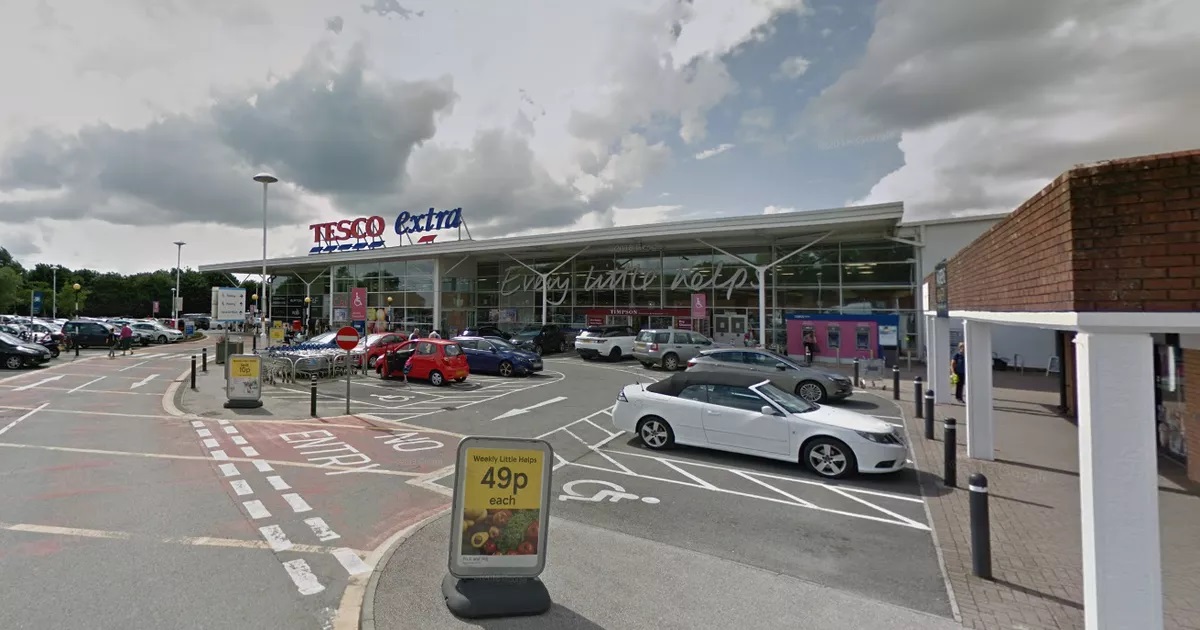
Our first stop, though, was the Tesco Extra superstore, that cornucopia all things grocery related, and a bit more. We had a list of a few basics to buy for the coming week in God’s Country, Yorkshire, plus some exciting things to take for the journey. We also bought some Cornish Pasties in Warreners (“The Oldest Pastie Maker In Plymouth”), which was conveniently located next to Tesco. Handy, that.

Oh, and we bought petrol, knowing how expensive it would be at the motorway service centres. It was £1.53 a litre at Tesco. Make a note of that.

I set the Navi (it’s been promoted from being a Sat Nav, or Twat Nav, to being a Navi) for our destination and watched the system work things out for us. From our location, Plymouth, it would be a drive of 307 Miles (494 Km), to Holmfirth, and would take a little over five hours if we didn’t stop or get held up. I didn’t really need the Navi, at least not until Manchester, but it was good to watch the miles and the time slowly drop on the display.

It being Saturday, and still relatively early, the roads were surprisingly busy, but did lack the usual big trucks. The weather was fairly calm as well, so we were off the A38 and onto the M5 at Exeter in good time. We stopped at Sedgemoor, just south of Bristol for a natural break and a pastie, before negotiating Bristol, which wasn’t so bad, even through the road works.

Remember I asked you to note the price of petrol in Plymouth? £1.53? Well here at Sedgemoor services on the M5, that same petrol was £1.83 a litre. For those with number difficulties, that 30 pence per litre difference, and I have no idea how that can be justified.

North of Bristol we encountered some dreadful rain. We could see it coming, too, and it didn’t disappoint. Then around Worcester, still in the rain, we were reduced to a crawl for quite a while, supposedly for road works, but I didn’t see any.

South of Birmingham, the Navi decided to change the agreed route, supposedly because of heavy traffic. I didn’t hear her instructions at first, partly because of the noise of the rain, and partly because there appears to be a glitch in the Navi software whereby, we can’t increase the nice lady’s voice volume. Anyway, I ignored her and carried on up the M5 towards Walsall and the M6. We had another stop, this time at Frankley Services, just to the south-west of Birmingham. The M&S sandwiches were very nice.

Back on the road, the Navi kept trying to re-route us, and I kept ignoring her, and we crawled up to, though, and past, the junction with the M6. We pressed on, through Staffordshire and Cheshire, before a last stop, at Knutsford this time, for a quick splash and dash.

Here we left the M6 and veered eastwards, onto the ring of motorways surround Manchester. The roads were teeming with expensive cars here, all racing around at speed, which gives some indication that there’s money in Manchester, and the place is living up to it’s perceived reputation as England’s second city. Leaving that particular vehicular hellscape at Ashton-Under-Lyne, we started into the Pennine Hills at Mossley, though villages made of darkened stone, although they were bright with the shops and pubs open. The rain was still coming down, and the hill tops were shrouded in mist, so by the time we had reached the top of Saddleworth Moor, it was foggy, rainy and getting dark, even though it was only about 3:30pm.

Then it was across the border into Yorkshire, down into the deep valley of the River Holme, and into the little town of Holmfirth. We were nearly there.

We did take an alternate route through Holmfirth to Bramble cottage, up steep hills, narrow and littered with parked cars. The oncoming cars were without mercy, dashing around as locals tend to do in these places, and at the very last right turn I had to make, across the traffic, a car sped around the blind bend and we both screeched to a halt. The other car, who had the right of way, simply passed me on the wrong side of the road and carried on with his or her speedy descent of the hill.

The final couple of hundred yards of narrow road, again narrowed with parked cars, was completed at walking pace and with very little room to spare on either side of the car. But then Bramble Cottage appeared through the rain, and we had arrived, just about seven hours after we had left Plymouth. The two hours on top of the Navi’s estimate was down to the driving breaks, and to the on-road delays, but for all that, I was happy to get there before 4pm.

I was knackered, though, and my bed beckoned, especially as it was pretty much completely dark by the time we’d unloaded the car.

There will be more about Bramble Cottage in a later post, as I get a chance to sort through the photographs.

England ’23

Tags

, , , ,

Multi-Modal Travel

The first part of the multi-modal journey began with a thrash up Highway 401, to Lester B. Pearson International Airport in Toronto. I say Toronto, but it’s more Mississauga, which works for us because it’s on the western end of the conurbation that forms the metropolis of Toronto. Just two of us, two bags, two backpacks and already checked in, we left super-early and arrived at the airport super-early, given that it was a clear run, if quite busy in parts.

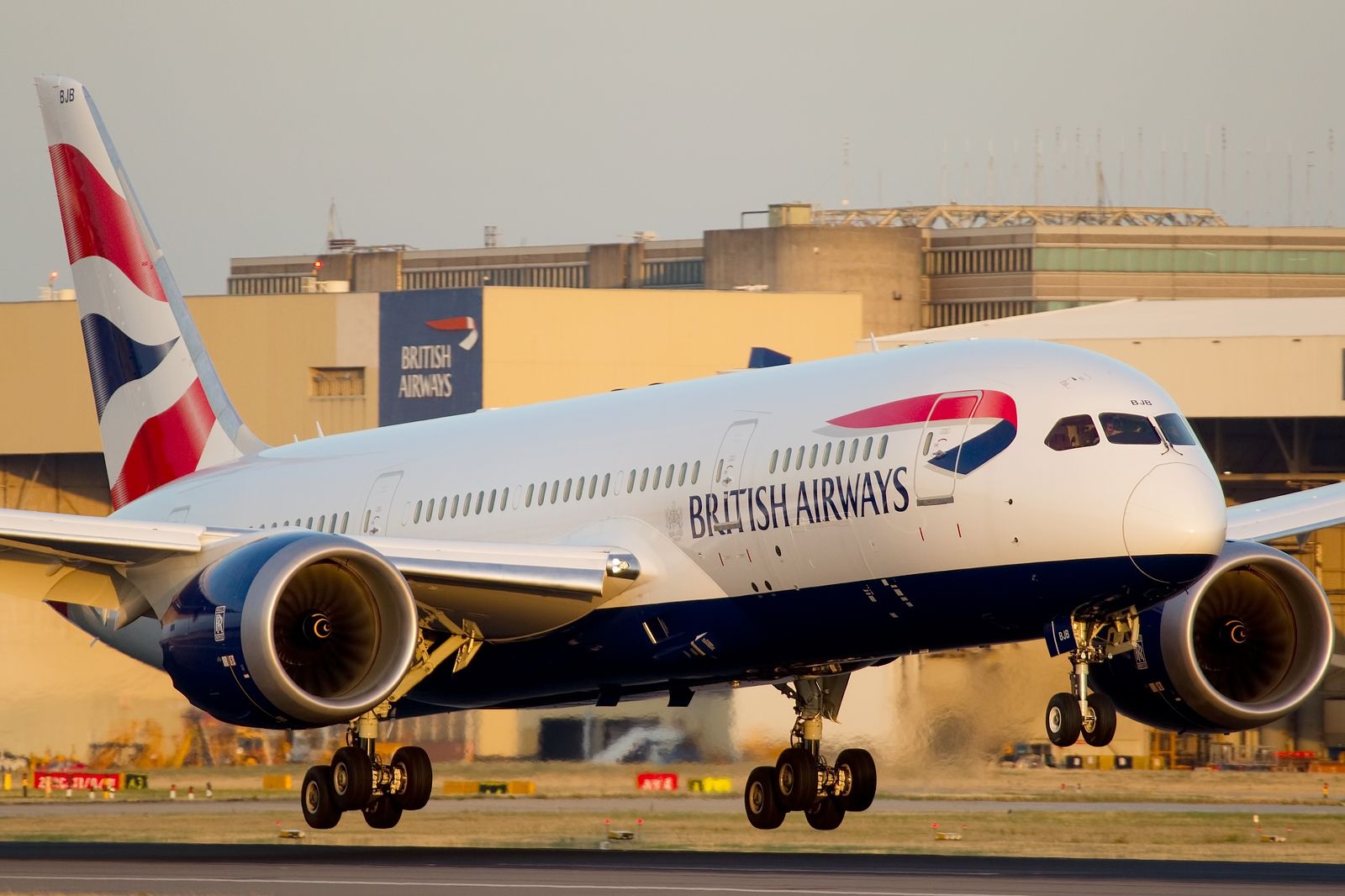
Pearson Terminal 3 was our departure point because we’d opted for British Airways this time. It was nothing to do with love of the mother country, but everything to do with the fares being half of those demanded by Air Canada this time around.

Bag drop and security were quick and efficient, due largely to there being a real person checking in the bags, and Security being very quiet. We whiled away our free time eating our homemade sandwiches and doing a bit of people watching. Indeed, we enjoyed the sandwiches all the more for having seen that a single sandwich in the airport, before tax, was retailing at $14.99! I still get a bit riled up at the airport when I see all the iPad bedecked tables that replaced the regular seating a while back, because the desire to part you from your money at Pearson is all pervading. Sitting at a table and ordering drinks and food on an iPad may be a little bit of fun, but it’s a premium service with premium prices.

Our chariot for the evening was a Boeing 787, the famous plastic aeroplane. Our Premium Economy seats were OK, certainly roomier that those in Economy, but flying in the twenty-first century is never a marvellous experience because of the feeling you get that you’re packed in far too tightly. It may be efficient to do that, but spending six or seven hours in close quarters with strangers isn’t my idea of fun. The 787 is certainly quiet on the inside, comparatively speaking at least, but having to share the cabin with a lot of other people snuffling, sneezing and chomping their way through their in-flight meal isn’t ideal. Still, it was going to be a quick flight (six hours), and overnight, so I could at least sleep through some of it.

I was disappointed by the meal choices, which were too fancy and too curry-based. There should be a bland menu available for people like me. The one non-curry dish was pan-fried Cod on Polenta, surrounded by peppers and Kale, which really isn’t my bag, man. As for the breakfast sandwich, well the less said about that the better. There was just one cup of coffee offered throughout the whole flight, too, which is not great.

The aircraft took a southerly route, flew at 41,000 feet (thank you, Flight Information screen) and arrived in London a full fifteen minutes ahead of the scheduled six hours, due entirely to a wickedly fast Jetstream up high, and Storm Ceiran hitting the UK that very day.

It took a little while for our bags to appear, and a little while for us to find the Sixt Car Rental place in the Sofitel, but we were out on the wet English roads soon enough and enjoying the Audi A3 that the young fellow at Sixt had skillfully upsold us.

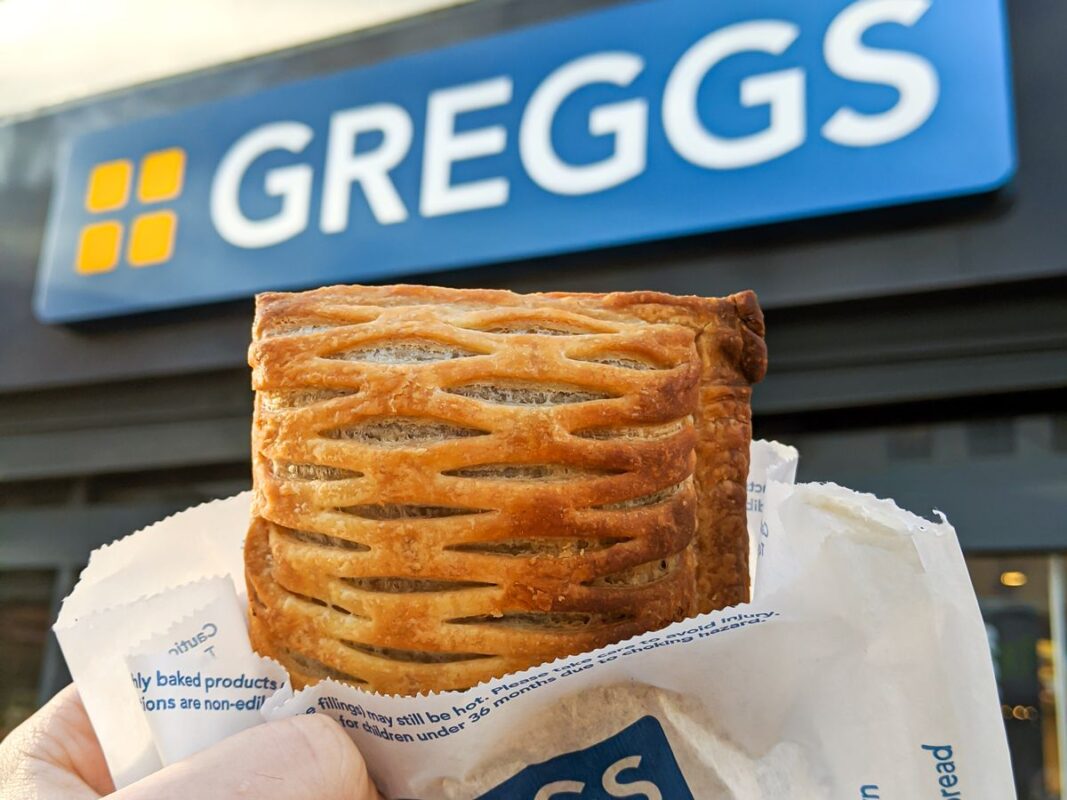
Driving along the M4 motorway, I took some time to adjust to English driving again. It’s not the driving on the left, but rather the fairly gentle speeds that most people were keeping. The National Speed Limit is 70 miles per hour, but not many were even close to that. Anything from 55 to 70 seemed to be the general flow, and that was perfect to allow me to settle into things. We did stop off at Reading Services, me for a coffee and a Cornish Pastie, and the missus for a tour of M&S and a couple of Greggs’ vegan sausage rolls. Very, very expensive it all was because of the motorway services premium, but it was all much needed. Oh, and our English bank account cards seemed to be functioning nicely, too.

Driving west along the M4, then south, and south-west, on the M5, the weather worsened but the driving was fine. Another stop, at Sedgemoor services this time, was required for natural purposes, and to buy some sweeties, which are required by law when making any road trip.

We rolled into the Travelodge (very basic, but sensibly priced) Plymouth hotel in good time. The rooms are sparse in these places, but this one was clean and sufficient for our needs. A quick shower was taken, and I hopped into bed to snatch a couple of hours of much needed sleep.

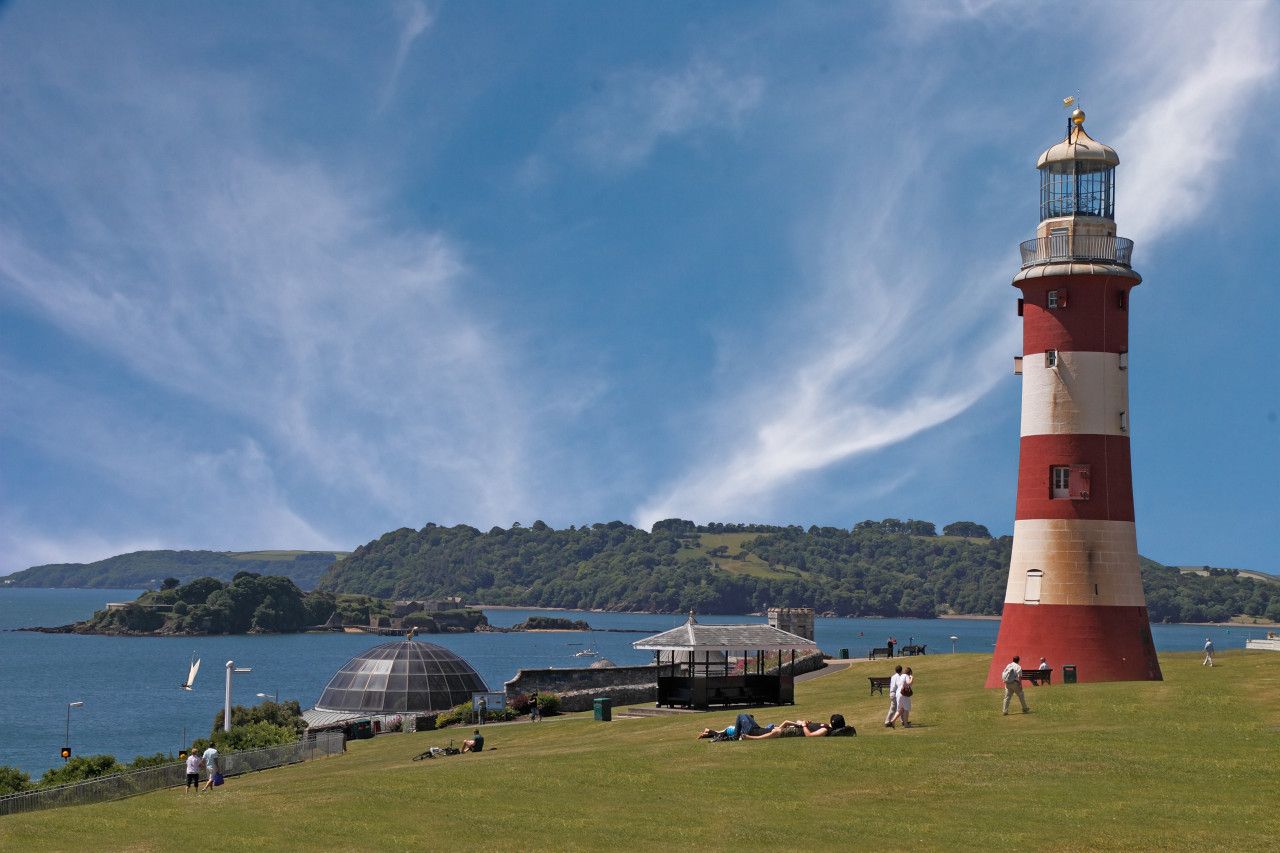
It is at this point, dear reader, that I will close this journal entry. We’re in Plymouth to visit family, and that’s not really the right material for my tales from Blighty. My next volume will begin when we’re setting off for Yorkshire in a day or two’s time, when we tackle one of the main reasons we’re here at all, and that’s delving into the past, specifically my family’s past.

England ’23 – Back Home

Tags

, ,

Or: “That Went Far Too Quickly”

We’re back from our jaunt to our ancestral homeland, and ancestral home in fact. I have returned with a handful of draft blog entries which I will clean up, add photos, and publish, probably in chronological order, although it’s not important if they’re not in time order.

Firstly, though, I wanted to say a word or two about the drivers in Ontario. I drove for ten days in England, and while the traffic is dreadful there, the drivers are generally not. They drive in a co-operative manner, never putting people in danger to maintain a right of way, largely sticking to the speed limit, understanding that the limit is not the minimum, and being aware of what’s going on around them. Of course, in that little country there are far more cars than the whole of Canada, which will make for attentive drivers, but those wide open spaces on this side of the pond make for some pretty awful drivers.

Coming back along the 401 today, we witnessed everyone, and I mean everyone, speeding. The 100kph limit is entirely ignored and 110 seems to be the absolute minimum. US plated cars seemed to be among the worst offenders, too.

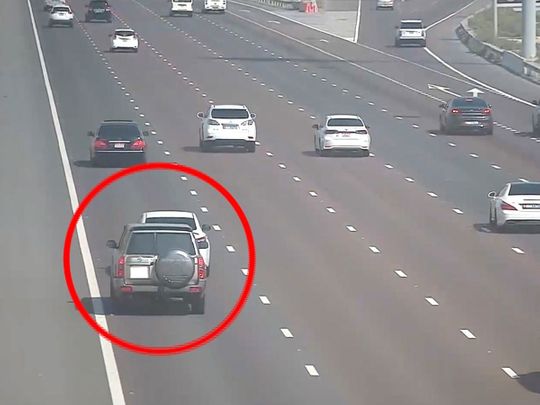
Then there are the tailgaters. Seriously, a Hyundai SUV was doing around 120-130, about a car length behind a pick-up truck. The SUV driver couldn’t possibly see anything except the rear of the truck, and if the truck driver had slowed for any reason, the SUV driver wouldn’t have time to even reach the brake pedal before hitting the truck, let alone use it. That scene was played out by countless other vehicles just this morning, on a relatively quiet Sunday.

There were also the lane weavers, attempting to make up some ground, weaving from lane to lane, always at speeds well in excess of the limit. Again, one slight mistake from another driver and they simply would have nowhere to go. It’s craziness.